

Dyehouse pollution releases harmful chemicals into water sources, contaminating ecosystems and endangering health. Traditional dyeing methods often ignore environmental impacts, leading to chemical runoff and waste buildup. Safer alternatives like natural dyes from plants and minerals produce less waste, are biodegradable, and use less water and energy. Switching to eco-friendly dyeing practices helps protect water quality and communities. If you want to explore more about sustainable solutions, there’s plenty of essential information ahead.
Key Takeaways
- Traditional dyeing processes release hazardous chemicals into water sources, causing long-term environmental and health issues.
- Natural dyes from plants and minerals produce less toxic waste and are biodegradable, reducing pollution.
- Implementing eco-friendly dyeing methods and closed-loop systems minimizes chemical runoff and water contamination.
- Safer dyeing practices help protect aquatic ecosystems, improve community health, and reduce textile waste in landfills.
- Transitioning to sustainable dyeing techniques supports environmental conservation and aligns with global pollution reduction goals.
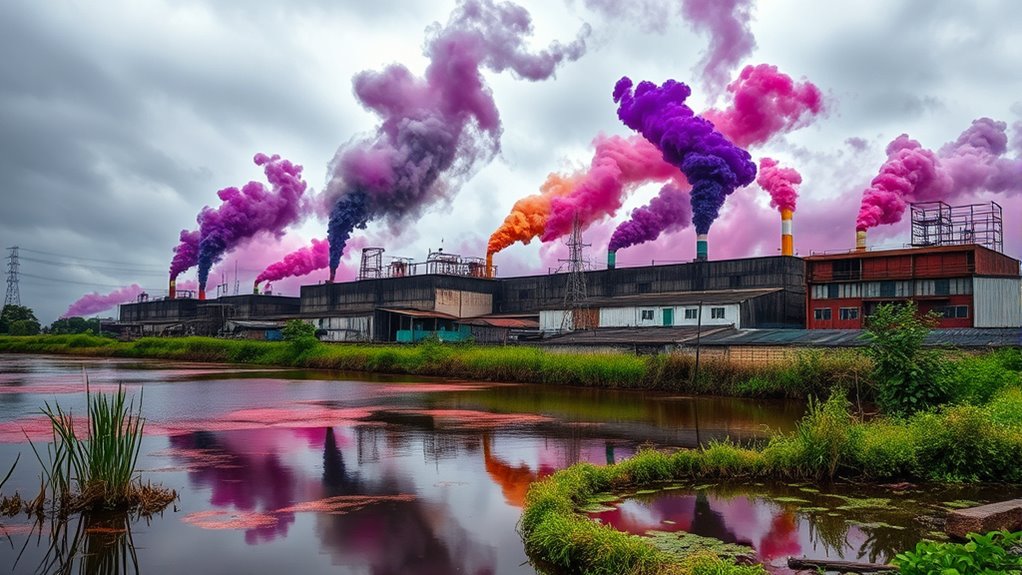
Pollution remains a major challenge that affects our health, environment, and quality of life. One of the most pressing issues in the textile industry is dyehouse pollution, which involves the release of harmful substances into water sources. When dyeing fabrics, large amounts of textile waste are generated, often ending up in landfills or waterways. This waste isn’t just unsightly; it contains chemicals that can leach into the environment, contaminating soil and water. Chemical runoff from dyeing processes is especially problematic because it carries toxins that threaten aquatic life and pose health risks to communities relying on these water sources. As someone concerned about environmental sustainability, you should know that traditional dyeing methods often ignore the broader impact, leading to significant pollution that persists long after production ends.
The chemical runoff from dyehouses doesn’t stay confined to the water used in the process. It can seep into groundwater, flowing into rivers and lakes, affecting ecosystems and human populations alike. This runoff often contains heavy metals, dyes, and other hazardous substances that are difficult to remove once they enter waterways. The result is polluted water that’s unsafe for drinking, fishing, and recreation. In many cases, local communities suffer the most, as they rely on these contaminated water sources for daily needs. You might not always see the direct impact of textile waste and chemical runoff, but their effects ripple through ecosystems and affect the health of vulnerable populations. You should also be aware that adopting safer dyeing techniques can significantly reduce environmental harm. Reducing this pollution requires a shift toward safer alternatives that minimize waste and use less harmful chemicals.
Innovative, eco-friendly dyeing techniques are emerging as promising solutions. These methods often involve natural dyes, which are derived from plants, minerals, or other organic sources. Natural dyes produce less textile waste because they are biodegradable and generate fewer by-products. Additionally, they tend to require less water and energy, reducing the overall environmental footprint of dyeing processes. You can also support or advocate for the adoption of closed-loop systems, which recycle water and chemicals, preventing runoff and minimizing waste. Using less toxic dyes and adopting sustainable practices helps protect water sources, reduces chemical runoff, and diminishes textile waste. Not only do these alternatives help mitigate pollution, but they also promote a healthier planet and safer communities.
natural fabric dyes for clothing
As an affiliate, we earn on qualifying purchases.
As an affiliate, we earn on qualifying purchases.
Frequently Asked Questions
What Are the Long-Term Health Effects of Dyehouse Pollutants?
You might face long-term health effects from dyehouse pollutants, including water contamination and respiratory issues. Continuous exposure can lead to chronic illnesses like asthma, bronchitis, and even cancer. Pollutants seep into water sources, risking your health through contaminated drinking water. Over time, these toxins can accumulate in your body, causing serious health problems. Protect yourself by supporting cleaner practices and advocating for safer dyeing methods to reduce these risks.
How Do Dyehouse Regulations Vary Globally?
You should know that dyehouse regulations differ widely worldwide; for example, some countries enforce strict international compliance standards, while others face significant regulatory disparities. In many regions, enforcement is weak or inconsistent, risking environmental and health impacts. Globally, this inconsistency hampers efforts to reduce pollution. Understanding these variations helps you appreciate why international cooperation is essential for establishing safer, more uniform dyehouse practices and protecting communities everywhere.
Are There Biodegradable Dye Options Available?
Yes, biodegradable dyes are available, providing eco friendly alternatives to traditional dyes. These dyes break down naturally in the environment, reducing pollution and harm to ecosystems. You can choose from plant-based, mineral, or microbial options that are designed to be biodegradable. Incorporating these dyes into your process helps minimize environmental impact and supports sustainable practices while still achieving vibrant, lasting colors in your textiles.
What Training Is Needed for Safer Dyeing Practices?
Think of dyeing safety as your shield in a busy workshop. You need proper worker training to stay protected. Focus on understanding chemical handling, proper equipment use, and emergency procedures. Your training should include safe dyeing practices, hazard identification, and waste management. This guarantees you’re prepared for any situation, reducing risks and promoting a safer environment. Invest in thorough worker training, and you’ll turn dyeing safety into your strongest armor.
How Can Consumers Identify Eco-Friendly Textiles?
You can identify eco-friendly textiles by looking for natural fibers like organic cotton, hemp, or bamboo, which are more sustainable. Check for eco certifications such as GOTS, OEKO-TEX, or Fair Trade, which guarantee the textiles meet strict environmental and social standards. These labels help you make informed choices, supporting brands committed to reducing environmental impact and promoting safer, more sustainable production practices.
eco-friendly textile dyeing kits
As an affiliate, we earn on qualifying purchases.
As an affiliate, we earn on qualifying purchases.
Conclusion
By choosing cleaner, greener options, you can curb costly chemical contamination and combat cruel consequences. Switching to safer solutions not only safeguards your surroundings but also sustains your soul, sparing your space from sinister substances. So, step confidently towards change, championing eco-friendly choices that foster freshness, foster fairness, and forge a future free from foul fumes. Together, your conscious efforts can create a cleaner, calmer, and more compassionate community for everyone.
biodegradable dye powders
As an affiliate, we earn on qualifying purchases.
As an affiliate, we earn on qualifying purchases.
waterless dyeing machines
As an affiliate, we earn on qualifying purchases.
As an affiliate, we earn on qualifying purchases.

Born in Dubai to Pakistani parents, Aisha deeply understands Middle Eastern and South Asian luxury markets. She excels in forging strategic partnerships with top-tier luxury brands worldwide, fostering cross-cultural collaborations that enhance our global presence.