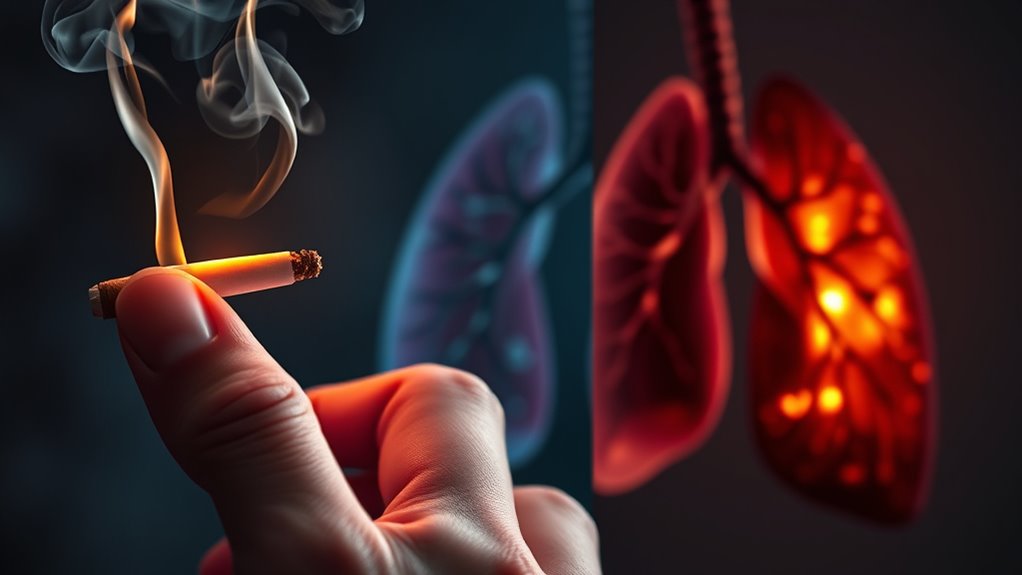

Many smokers believe myths like light cigarettes are safer or that quitting is just about willpower, but these are false. Secondhand smoke harms others and increases serious health risks, while nicotine addiction is a biological condition, not just a lack of willpower. Switching to low-tar doesn’t eliminate danger, and support helps you quit more easily. Get the facts straight, as understanding these myths can strengthen your efforts to protect yourself and those around you—discover more as you continue.
Key Takeaways
- Secondhand smoke harms others, despite being invisible and odorless, increasing their risk of respiratory and heart issues.
- Light or low-tar cigarettes are not safer; they often lead to deeper inhalation and greater chemical exposure.
- Quitting smoking involves more than willpower; support, counseling, and nicotine replacement increase success rates.
- Myths about smoking’s impacts can lead to poor health choices and hinder efforts to quit.
- Recognizing addiction and understanding the real risks empower smokers to make informed health decisions.

Have you ever wondered which beliefs about smoking are true and which are just myths? Many common ideas about smoking circulate, but some are simply misconceptions. One widespread myth is that smoking only harms the smoker. While it’s true that smoking damages your lungs and heart, it also affects those around you through secondhand smoke. This invisible, odorless gas contains many of the same harmful chemicals that you inhale directly. When you smoke, you’re not just putting your health at risk—you’re also exposing friends, family, and even strangers to dangerous toxins. Secondhand smoke can cause respiratory issues, increase the risk of heart disease, and even contribute to sudden infant death syndrome (SIDS) in children. So, harmful effects extend beyond your own body, affecting the community around you.
Another common myth is that quitting smoking is just a matter of willpower. While mindset plays a role, nicotine addiction is a powerful force that makes quitting difficult. Nicotine is highly addictive because it stimulates your brain’s reward system, creating cravings and withdrawal symptoms when you try to stop. Many people believe that if they really want to quit, they can do it easily, but addiction often requires support, counseling, or nicotine replacement therapies. The idea that quitting is just a matter of “strength” oversimplifies the process and may discourage those who struggle. Recognizing nicotine addiction as a biological condition helps you understand why quitting can be so challenging and emphasizes the importance of seeking help or using proven methods to succeed.
There’s also a myth that light or low-tar cigarettes are safer than regular ones. Many think that choosing these options reduces health risks, but the truth is, they’re not much safer. Light cigarettes often lead smokers to inhale more deeply or smoke more to satisfy their nicotine cravings, which increases exposure to harmful chemicals. The misconception that these are healthier alternatives can actually lead to more harm rather than less. The best choice for your health is to quit altogether, rather than switching to supposedly “safer” cigarettes.
Understanding these myths is essential if you want to make informed decisions about smoking. It’s easy to fall for misconceptions, but knowing the facts empowers you to protect yourself and those around you. Recognizing that secondhand smoke is dangerous and that nicotine addiction is real can motivate you to seek support or consider quitting. Additionally, using specialized vacuums designed for delicate surfaces can help maintain your environment while you work on quitting. The path to quitting might be tough, but with accurate information and help, you stand a much better chance of overcoming the addiction and improving your health.
nicotine replacement therapy products
As an affiliate, we earn on qualifying purchases.
As an affiliate, we earn on qualifying purchases.
Frequently Asked Questions
Can Quitting Smoking Reverse All Health Damages?
When you quit smoking, your body begins healing, but it doesn’t reverse all damage. Lung recovery can improve over time, reducing coughing and breathlessness, and cardiovascular healing reduces your risk of heart disease. However, some damage, like emphysema or cancer, might be irreversible. The sooner you quit, the better your chances for recovery. So, take action now to support your health and improve your long-term well-being.
Are E-Cigarettes Safer Than Traditional Cigarettes?
You’re wondering if e-cigarettes are safer than traditional cigarettes. While vaping risks are generally lower, e cigarette safety isn’t guaranteed. Vaping can still expose you to harmful chemicals and nicotine addiction. It’s tempting to think e-cigarettes are a safe alternative, but they carry their own health risks. Always stay informed about the latest research to make smarter choices about your health and avoid misconceptions about vaping.
How Long Does It Take to See Health Improvements After Quitting?
You might worry about how long it takes to see health improvements after quitting. While nicotine withdrawal can be challenging initially, your body starts healing quickly. Within days, your lung function begins to improve, and you’ll notice better breathing. Over weeks to months, lung recovery accelerates, reducing coughing and phlegm. Keep in mind, every smoke-free day brings you closer to better health, making the effort well worth it.
Do Certain Foods Reduce the Risks Associated With Smoking?
Certain foods can help reduce smoking risks through diet modification. Incorporate antioxidant foods like berries, nuts, and leafy greens, which combat oxidative stress caused by smoking. While these foods won’t undo the damage, they support your body’s healing process and improve lung health. Staying consistent with antioxidant intake, combined with quitting smoking, boosts your chances of reducing health risks and promoting overall wellness.
Is Smoking Less Harmful Than Quitting Altogether?
You might think smoking less is safer, but it’s not true. Reducing smoking frequency can lower some risks, but it doesn’t eliminate harm. Harm reduction strategies might help, but quitting altogether is the only way to profoundly decrease your health risks. Every cigarette you smoke still exposes you to dangerous chemicals. So, if you’re serious about health, quitting entirely is the best choice, not just cutting back.
smoking cessation support tools
As an affiliate, we earn on qualifying purchases.
As an affiliate, we earn on qualifying purchases.
Conclusion
Understanding the truth about smoking is like clearing fog from your path—you see things more clearly. Now that you know the myths versus facts, you’re better equipped to make healthier choices. Remember, quitting smoking isn’t just about avoiding risks; it’s about reclaiming control over your life. Don’t let false beliefs hold you back. Take that first step today, and watch your future brighten like a sunrise after a storm.
secondhand smoke protection masks
As an affiliate, we earn on qualifying purchases.
As an affiliate, we earn on qualifying purchases.
quit smoking counseling programs
As an affiliate, we earn on qualifying purchases.
As an affiliate, we earn on qualifying purchases.

Emma is a culinary expert from New York City, USA, with extensive experience in gourmet cooking and food journalism. She collaborates with prestigious food publications and high-end restaurants, bringing exquisite taste and culinary insights to the A Luxury Lifestyle platform. Emma’s expertise elevates our gastronomic offerings.