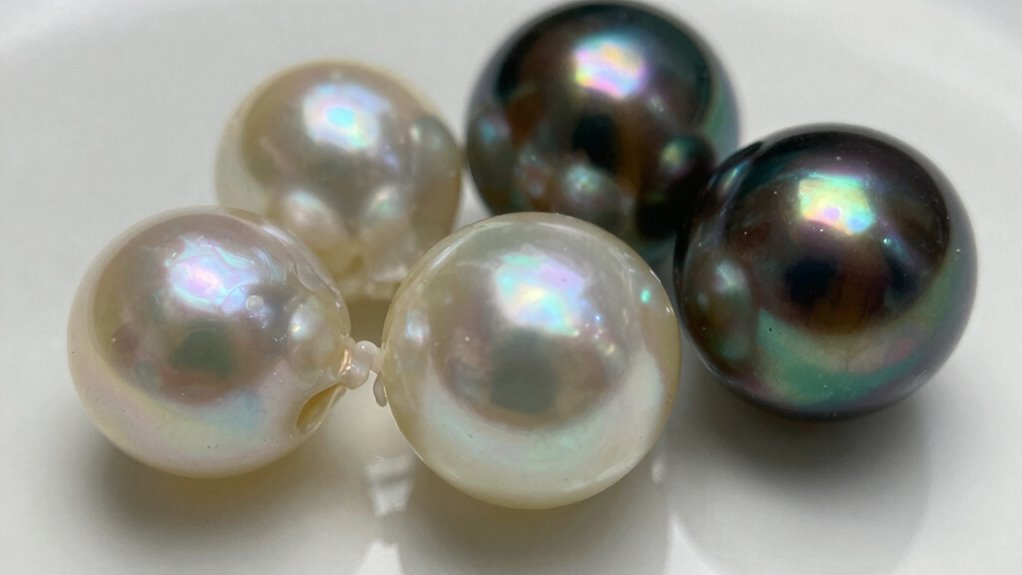

When choosing between freshwater, Akoya, and Tahitian pearls, you’ll notice differences in appearance, origin, and quality. Freshwater pearls are versatile and affordable, with softer luster and pastel shades. Akoya pearls offer a bright, mirror-like shine and are typically rounder, while Tahitian pearls are larger, darker, and have a mysterious glow. Understanding these variations helps you pick the perfect pearl for your style and budget—explore further to find out which suits you best.
Key Takeaways
- Freshwater pearls are cultivated in lakes and rivers, typically smaller, with softer luster and more surface imperfections.
- Akoya pearls are produced in oysters with small bead nuclei, offering high luster and perfectly round shapes.
- Tahitian pearls originate from black-lipped oysters in French Polynesia, known for their large size and dark, exotic hues.
- Freshwater pearls are generally more affordable and versatile, while Akoya and Tahitian pearls are more valuable and luxurious.
- Luster, surface quality, size, and color are key factors distinguishing these pearl types and their ideal styling options.

PAVOI Womens Handpicked AAA+ Freshwater Cultured Single Pearl- Yellow-Gold-Plated-Silver Necklace with Pendant
HIGHLIGHTS: Handpicked AAA-quality 7.5–8.5mm button freshwater cultured pearl choker necklace. Measures 16 inches with a 2-inch extension. A…
As an affiliate, we earn on qualifying purchases.
As an affiliate, we earn on qualifying purchases.
What Are the Main Types of Pearls and How Do They Differ?
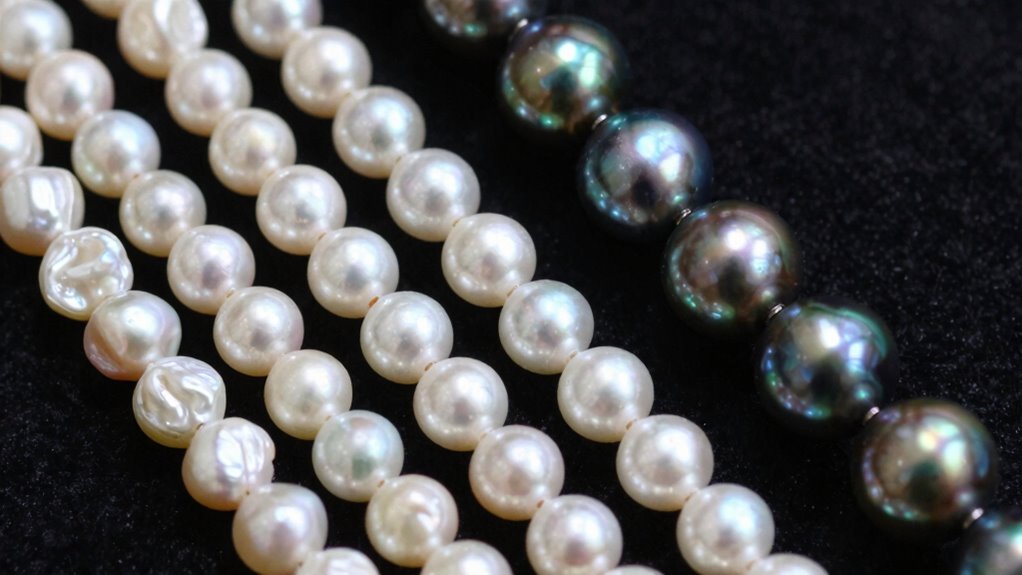
There are three main types of pearls: freshwater, Akoya, and Tahitian, each with unique characteristics that set them apart. You’ll notice differences in pearl luster, which ranges from soft to high, affecting their shine and beauty. Freshwater pearls typically have a softer luster, but they can still be stunning. Akoya pearls are known for their exceptional luster, giving them a mirror-like shine. Tahitian pearls often have a deep, mysterious luster that’s highly prized. Nacre thickness varies among these types, influencing durability and appearance. Freshwater pearls generally have thinner nacre but can still be beautiful. Akoya pearls tend to have a thicker nacre, providing a richer luster. Tahitian pearls also boast thick nacre, contributing to their durability and unique color play. Additionally, color variety among these pearls ranges from white and cream to black and gray, adding to their appeal and versatility in jewelry. The culturing process for each type also impacts their overall quality and price, making them suitable for different preferences and budgets. Furthermore, differences in luster quality can significantly influence the value and desirability of each pearl type. Understanding the grading standards helps in assessing their true worth and selecting the best pearls for your collection.

THE PEARL SOURCE White Japanese Akoya Real Pearl Earrings for Women – 14k Gold Stud Pearl Earrings | Hypoallergenic Earrings with Genuine Cultured Pearls, 4.5-5.0mm
JAPANESE AKOYA PEARLS – ELEGANT EARRINGS: These earrings feature hand-selected real cultured japanese akoya pearls in a beautiful…
As an affiliate, we earn on qualifying purchases.
As an affiliate, we earn on qualifying purchases.
Where Do Freshwater, Akoya, and Tahitian Pearls Come From and How Are They Cultivated?
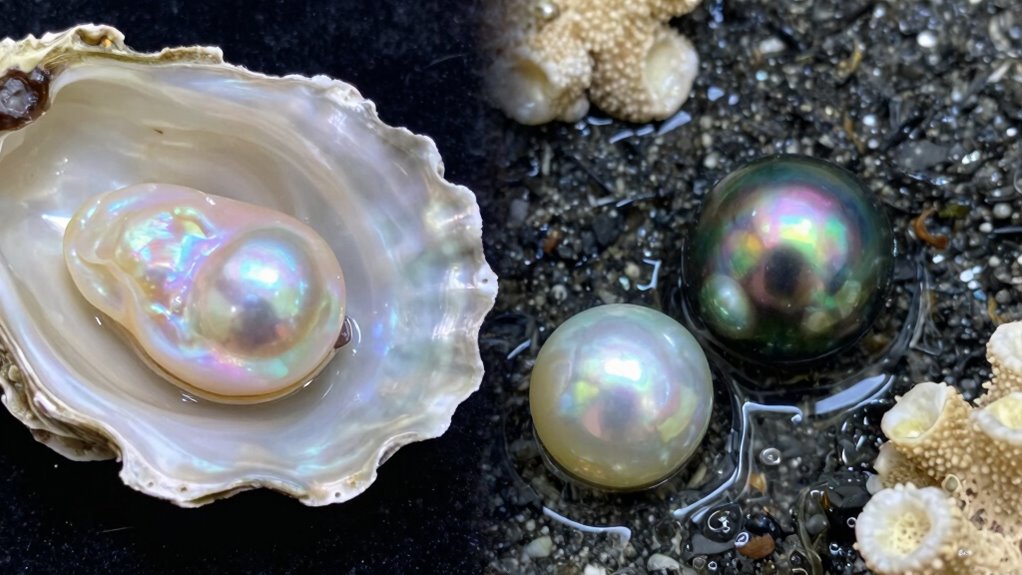
Freshwater, Akoya, and Tahitian pearls each have distinct origins and cultivation methods that influence their appearance and value. Pearl farming involves carefully inserting a nucleus or piece of tissue into mollusks to encourage pearl formation. In freshwater pearl cultivation, farmers cultivate mussels in lakes and rivers, often producing multiple pearls per mollusk using tissue grafts. Akoya pearls come from oysters in controlled farm environments, where a small bead is inserted to create round, lustrous pearls. Tahitian pearls are cultivated in black-lipped oysters in French Polynesia, using similar methods but often with larger nuclei to produce darker, unique pearls. Each cultivation method impacts the pearl’s size, shape, and quality, making understanding their origins essential for appreciating their distinct qualities.

Genuine Tahitian Pearl Bracelet for Women – 3pcs 9-10mm Ocean-Grown Baroque Pearls, Wedding Anniversary Birthday Christmas Gift for Wife Mom Girlfriend Daughter Grandma, Length 6.2”+ 2” Extender
DIRECT FROM OUR TAHITIAN PEARL FARM: As the RIKITEA brand, we control every step, from nurturing the oysters…
As an affiliate, we earn on qualifying purchases.
As an affiliate, we earn on qualifying purchases.
How Can You Tell Freshwater, Akoya, and Tahitian Pearls Apart by Looks?
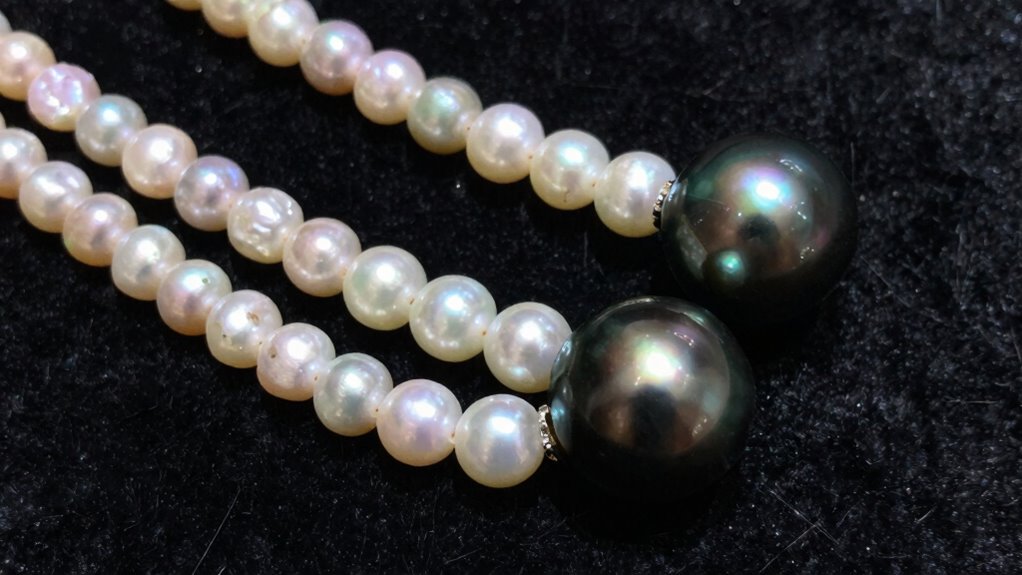
You can often distinguish freshwater, Akoya, and Tahitian pearls by their appearance, as each type exhibits unique visual traits. A key factor is luster comparison: Akoya pearls typically have a bright, mirror-like shine, while Tahitian pearls tend to have a more subdued, smoky glow. Freshwater pearls usually display a softer, less intense sheen. Surface quality also varies; Akoya pearls generally have smoother surfaces with fewer blemishes, whereas Tahitian and freshwater pearls may show more imperfections. Tahitian pearls are often larger and darker, with hues ranging from green to black, while freshwater pearls tend to be smaller and come in a variety of pastel shades. Additionally, cultural significance and cultivation methods influence their appearance, helping collectors and jewelers distinguish each type more accurately. Paying attention to these visual cues helps you identify each pearl type more accurately.

VIKI LYNN Freshwater Cultured Pearl Necklace Set Includes Stunning Bracelet and Stud Earrings Jewelry for Women
Luxury jewelry for women sets: Women's jewelry set features an 18-inch pearl necklace with pearls beads measuring approximately…
As an affiliate, we earn on qualifying purchases.
As an affiliate, we earn on qualifying purchases.
What Factors Affect the Value, Price, and Quality of Pearls?

Several key factors influence the value, price, and quality of pearls, with luster being the most important. High-quality pearls reflect light vividly, giving them a bright, mirror-like shine that enhances their appeal. Pearl grading considers surface quality, shape, color, and size, which all play roles in valuation. Cultivation techniques also impact the pearl’s quality; carefully managed farming results in smoother, more lustrous pearls. For instance, Akoya pearls are cultivated with precise bead nucleation, producing well-matched, round pearls, while Tahitian pearls often have darker, unique hues influenced by their environment. The overall rarity and consistency of these factors determine how pearls are priced. Understanding these elements helps you recognize quality and make informed purchasing decisions.
How to Choose the Best Pearl for Your Style and Budget?
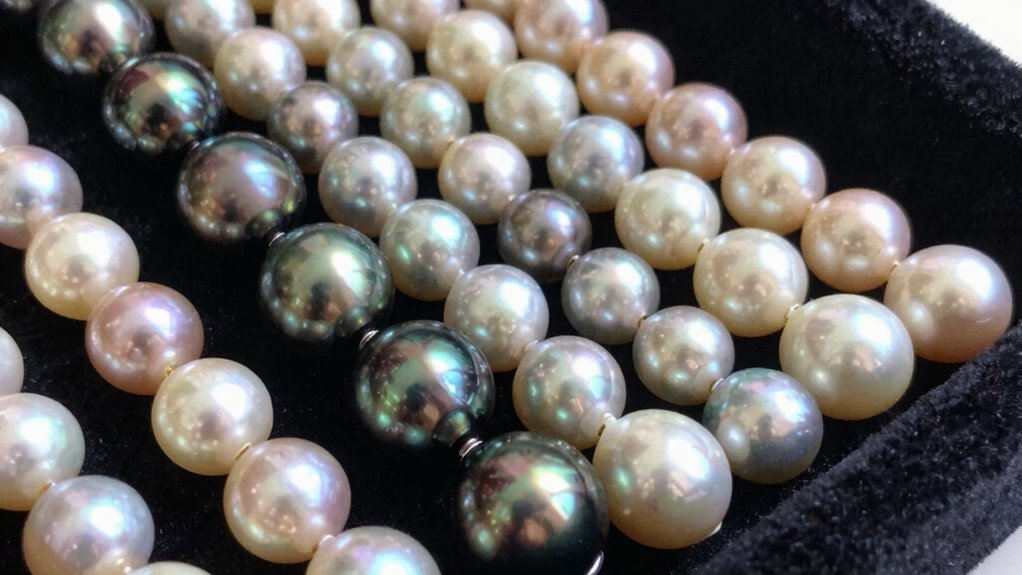
Choosing the right pearl depends on balancing your personal style with your budget. Start by exploring pearl color options—classic white or cream suits formal occasions, while pink or black pearls add a bold touch for casual or trendy looks. Consider jewelry styling tips: larger pearls make statement pieces, while smaller ones are perfect for everyday elegance. If you’re new to pearl jewelry, freshwater pearls often offer affordability and variety, ideal for experimenting with different styles. Akoya pearls provide a refined, traditional look, while Tahitian pearls add exotic flair. Think about your wardrobe and the occasions you’ll wear the jewelry. This way, you can select a pearl that complements your style without overspending, ensuring your jewelry feels both personal and practical. Additionally, understanding the sustainability of pearl sources can help you make more environmentally conscious choices. For those interested in conservation efforts, choosing pearls from responsible farms can support ethical practices and environmental health. Being aware of the power of electric bikes can also inspire eco-friendly transportation options in your daily life.
Frequently Asked Questions
What Are the Environmental Impacts of Pearl Farming?
You might not realize it, but pearl farming can impact the environment through pearl farm pollution, which affects local water quality. While efforts are made to minimize this, some farms still pose risks. Additionally, sustainable practices support coral reef conservation by preventing damage to surrounding ecosystems. If you choose ethically farmed pearls, you help reduce environmental harm and promote healthier marine environments.
How Do Pearl Treatments Affect Their Value and Durability?
Pearl treatments can considerably impact both their value and durability. When you opt for untreated or minimally treated pearls, they tend to be more valuable and retain their natural luster longer. However, treatments like bleaching or coating may enhance appearance but can also reduce durability over time. These treatments can make pearls less resistant to scratches and damage, so knowing how they are treated helps you choose pearls that balance beauty, longevity, and worth.
Can Pearls Be Ethically Sourced and Sustainably Farmed?
Yes, you can find pearls that are ethically sourced and sustainably farmed. Look for brands committed to eco-friendly farming practices and ethical harvesting, ensuring minimal environmental impact and fair treatment of workers. By choosing certified pearls, you support responsible aquaculture. This approach not only helps preserve marine ecosystems but also guarantees you’re purchasing beautiful, high-quality pearls that align with your values.
How Long Does It Take for Pearls to Develop Naturally?
Imagine waiting a year for a perfect gift—that’s similar to natural pearl formation. It takes about 10 to 20 years for a pearl to develop naturally, depending on oyster species and environmental conditions. The pearl cultivation timeline accelerates this process with human intervention, but natural formation remains a slow, patient journey. During this time, a tiny irritant transforms into a lustrous, beautiful pearl through natural processes.
Are There Health Considerations When Wearing Pearl Jewelry?
You should be aware that wearing pearl jewelry generally poses minimal health risks, but care and allergies can vary. If you have sensitive skin or allergies, make sure your pearls are well-cleaned to prevent irritation. Pearls hold deep cultural significance in many traditions, symbolizing purity and wisdom. While they’re beautiful and safe for most, always check for any allergic reactions and follow proper care to maintain their luster and your skin’s health.
Conclusion
Now that you’re armed with the knowledge of freshwater, Akoya, and Tahitian pearls, you can navigate the jewelry world with the confidence of a seasoned collector. Like a skilled sailor steering through shimmering waters, you’ll choose pearls that reflect your style and budget perfectly. Remember, each pearl tells a story—your story—so trust your eye and enjoy the journey of finding that perfect, luminous gem that makes you feel truly radiant.