
When you look at a diamond, your eye is naturally drawn first to its shape and size because these features create an immediate visual impact. Shape defines the silhouette and influences how light reflects, while size affects how striking or prominent the diamond appears. Although color and cut matter, they tend to catch your attention later. By understanding how shape and size influence perception, you’ll see why these physical traits matter most initially—and there’s more to discover to make your choice shine.

Get your wardrobe favorites delivered free with Prime
- Fast, free delivery on millions of items
- Prime Video, Amazon Music and more included
- Member-only deals all year
Key Takeaways
- Shape and size are the initial features that draw immediate attention when viewing a diamond.
- The silhouette and dimensions primarily influence the first impression of a diamond’s appearance.
- Larger diamonds tend to catch the eye more quickly than smaller ones, regardless of shape.
- The shape affects how the diamond interacts with light, impacting perceived vibrancy and size.
- The cut quality enhances brilliance, but shape and size are noticed first upon initial glance.
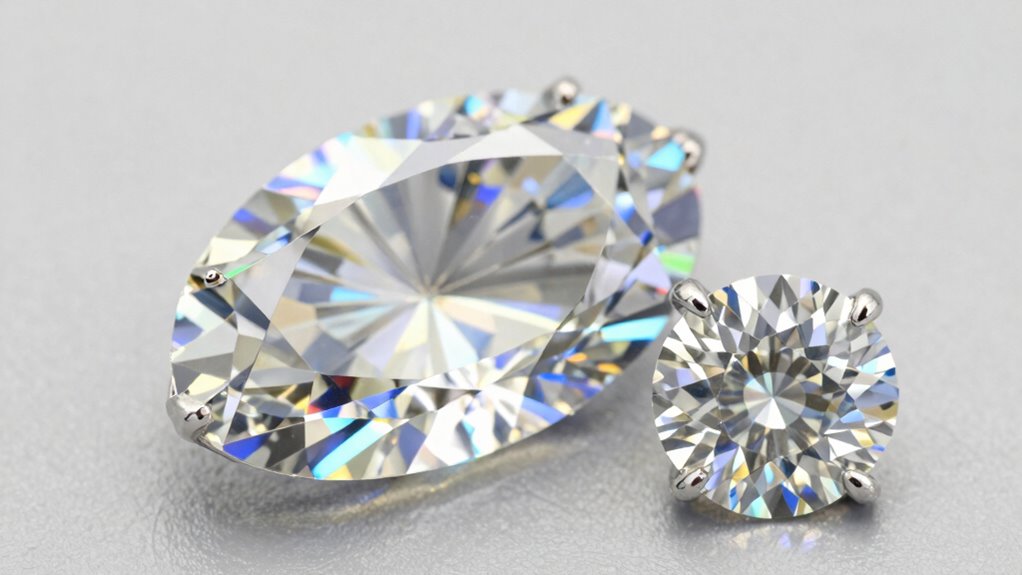
When choosing a diamond, understanding how shape and size influence its overall appearance is essential. The moment someone sees your diamond, their eyes are drawn to its shape and size first. These factors dramatically affect the visual impact and how your diamond is perceived. While color grading and cut quality also matter, your initial impression hinges on these physical attributes.
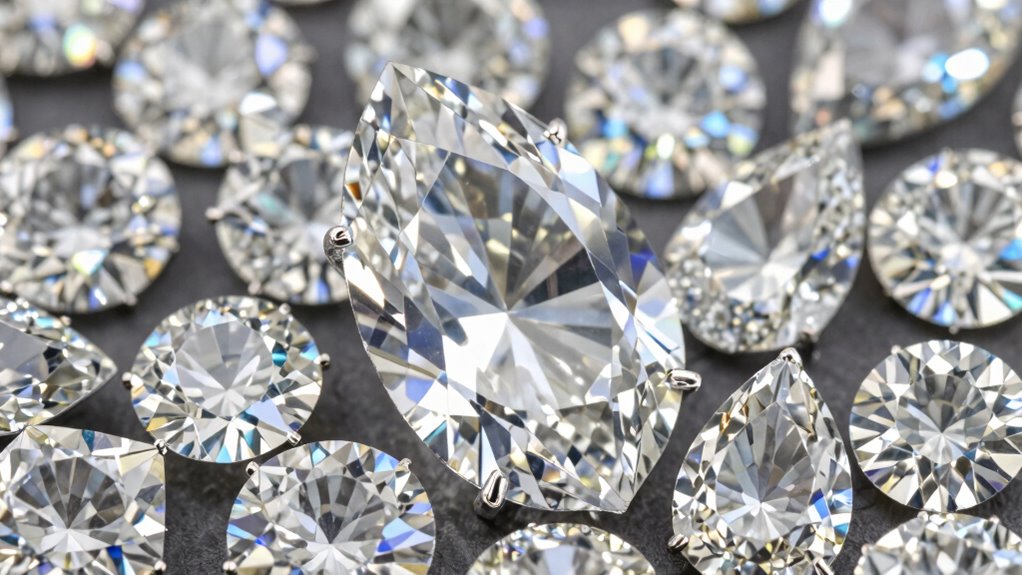
The shape of a diamond determines its silhouette, whether it’s a classic round, a romantic cushion, or a bold princess cut. Each shape interacts with light differently, influencing how vibrant or dull the diamond appears. The size, measured in carats, affects the diamond’s proportion and how prominently it stands out. A larger diamond naturally commands attention, but its brilliance and sparkle depend heavily on the cut quality. A well-cut diamond will reflect light beautifully, making even a smaller stone seem more luminous, while a poorly cut large diamond might look dull or flat.
Color grading influences how a diamond’s hue appears, but it’s often less noticeable at first glance. Most people tend to notice a diamond’s shape and size before they start scrutinizing its color. Still, a well-chosen shape can enhance the perception of color, as certain cuts tend to mask or emphasize specific hues. For example, a round brilliant cut can hide slight color tints better than elongated shapes. The cut quality is crucial here because it determines how well the diamond interacts with light. A high-quality cut maximizes brilliance, making the diamond sparkle intensely and drawing the eye immediately, regardless of its size. Additionally, understanding how the light reflection varies among shapes can further refine your selection.
When you’re considering what catches the eye first, size often takes precedence because larger diamonds tend to be more striking. However, a smaller but expertly cut diamond can outperform a larger, poorly cut stone in brilliance and fire. The visual impact of different shapes can help you choose a diamond that maximizes your desired effect. Considering how perceived size can be influenced by shape and cut can help you select a diamond that appears bigger without necessarily increasing the carat weight. Moreover, the way a diamond’s appearance is perceived can be subtly influenced by its cut and shape, making skillful selection crucial. A diamond’s proportions also play a significant role in how large it appears and how well it balances its overall look. In the end, your choice should balance shape and size to match your personal style and the visual impact you desire. Remember, a diamond’s cut quality and color grading support the overall appearance, but it’s the shape and size that immediately catch the eye. By understanding these aspects, you can select a diamond that not only looks stunning but also feels perfectly suited to you.
As an affiliate, we earn on qualifying purchases.
Frequently Asked Questions
How Does Diamond Shape Affect Overall Appearance and Style?
Your choice of diamond shape greatly impacts the overall appearance and style. A classic round shape maximizes brilliance, highlighting color intensity and seemingly increasing carat weight, making it look larger. Modern shapes like princess or emerald offer a sleek, unique look, drawing attention to the diamond’s color and clarity. Ultimately, the shape influences how your diamond interacts with light, shaping the overall elegance and style you project.
Can a Larger Diamond Compensate for a Less Favorable Shape?
A larger diamond can sometimes compensate for a less favorable shape, but only if the cut quality is excellent and color consistency remains high. You might notice the size more, drawing attention away from shape flaws, but poor cut quality can dull brilliance and reduce sparkle. Remember, the overall appearance depends on a balance; a bigger diamond with inferior cut or inconsistent color won’t look as stunning as a well-cut, smaller one.
Are Certain Diamond Shapes More Popular for Specific Occasions?
You might think certain diamond shapes are just for specific occasions, but it’s a bit ironic—oval or pear shapes often steal the spotlight at vintage-themed events, blending vintage appeal with modern elegance. Meanwhile, classic round diamonds shine brightest at formal galas, embodying timeless sophistication. Whether you prefer a bold princess cut or an exotic marquise, choosing a shape depends on your style’s story, not just tradition or trend.
How Does Shape Influence the Diamond’s Brilliance Versus Size?
Your choice of diamond shape directly impacts brilliance more than size, especially with cut quality. A well-cut round or princess cut maximizes light reflection, making the diamond appear more brilliant regardless of size. Shape also influences color perception; for instance, certain cuts hide color tints better. Consequently, selecting a shape with superior cut quality enhances brilliance and maintains color vibrancy, ensuring your diamond looks stunning whether small or large.
Which Shape Hides Imperfections Better Regardless of Size?
Think of a round diamond as a smooth pond reflecting imperfections, making clarity concealment easier. Its symmetrical shape minimizes visible flaws, hiding imperfections better regardless of size. In contrast, shapes like princess or emerald cuts can reveal more clarity issues due to shape distortion and sharp corners. So, if concealment is your priority, the classic round shape is your best choice for hiding imperfections effectively.
Conclusion
When it comes to catching your eye, the shape of a diamond often steals the spotlight before size even enters the room. Think of shape as the face of a diamond—it’s what instantly grabs your attention, much like a striking smile. While size matters, it’s the unique silhouette that leaves a lasting impression. So, next time you’re choosing jewelry, remember that an enchanting shape can make all the difference—like a signature in a sea of sameness.
Halloween Picks
halloween
As an affiliate, we earn on qualifying purchases.