Water level control is vital for maintaining steady water flow and system stability, and surge tanks help absorb pressure variations during fluctuations. By regulating water levels with efficient pumps and selecting suitable tank materials, you can prevent disruptions and extend equipment life. Surge tanks act as buffers, reducing water hammer effects and managing pressure spikes. If you want to guarantee smooth operation and minimal downtime, exploring how these components work together will give you valuable insights.
Key Takeaways
- Surge tanks help maintain stable water levels by absorbing pressure fluctuations and preventing water hammer effects.
- Effective water level control ensures system stability, reduces operational disruptions, and optimizes water delivery.
- Proper pump efficiency minimizes energy use and supports consistent water level management.
- Selecting durable tank materials like reinforced concrete or high-density polyethylene enhances system reliability and longevity.
- Integrating surge tanks with automated control systems improves overall system resilience and reduces manual maintenance needs.
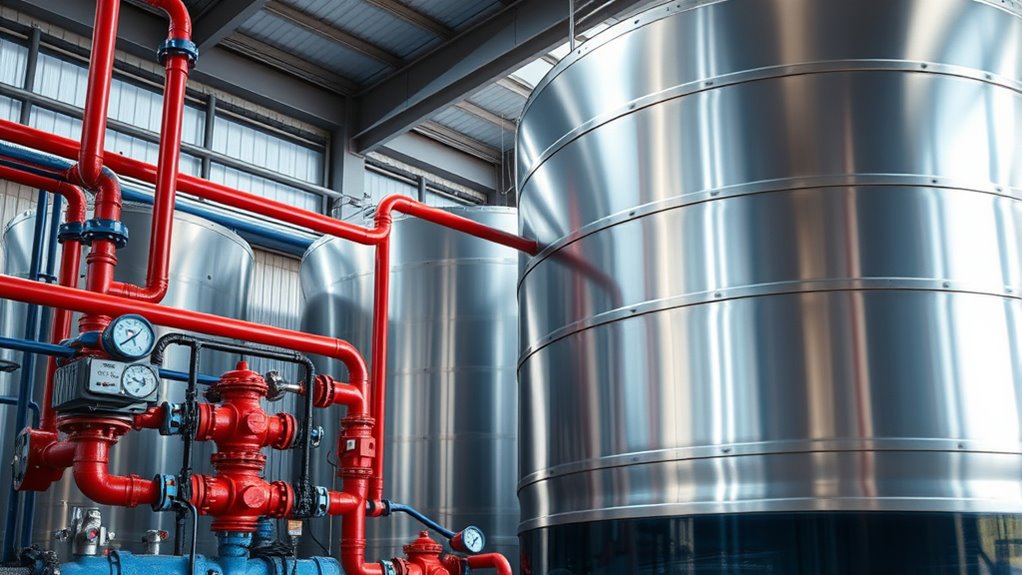
Effective water level control is vital for maintaining the stability and efficiency of water systems, especially in large-scale infrastructure. When managing water flow, the way you control water levels directly impacts the system’s overall performance. One key factor is pump efficiency. Pumps are responsible for moving water through the system, and their efficiency determines how effectively this process occurs. A highly efficient pump reduces energy consumption, minimizes operational costs, and guarantees consistent water delivery. To maximize pump efficiency, you should consider selecting pumps that are properly sized for your system and operate within their ideal performance range. Regular maintenance, such as cleaning impellers and checking for wear, also helps keep pumps running smoothly, preventing unnecessary energy waste and maintaining steady water levels.
Tank material selection plays a vital role in water level control as well. The choice of tank material affects durability, corrosion resistance, and maintenance needs, all of which influence how reliably you can regulate water levels. For example, tanks made from reinforced concrete are robust and suitable for large-scale applications, but they may require more extensive maintenance. On the other hand, tanks constructed from high-density polyethylene or stainless steel offer corrosion resistance and lighter weight, making installation and upkeep easier. The right material choice ensures that tanks withstand the pressure and environmental conditions they face, reducing the risk of leaks or failures that could disrupt water levels. This reliability simplifies automation and control processes, allowing sensors and control systems to operate more effectively without frequent manual intervention.
Additionally, the integration of good tank material selection with efficient pump operation creates a synergistic effect. You can design a system where pumps are matched to tanks that resist corrosion and structural fatigue, leading to longer service life and fewer operational disruptions. Properly selected tank materials also enable better insulation and temperature control, which can further stabilize water levels and prevent fluctuations caused by thermal expansion or contraction. An understanding of surge tanks is also crucial, as they help absorb pressure variations and protect the system from water hammer effects. When you pay attention to both pump efficiency and tank material selection, you’re setting the groundwork for a resilient water system that minimizes energy costs, reduces maintenance needs, and guarantees consistent water availability. This strategic approach ultimately guarantees your system operates smoothly, efficiently, and with minimal downtime.
Frequently Asked Questions
What Are the Maintenance Requirements for Surge Tanks?
You need to regularly perform inspection protocols on surge tanks to identify any signs of wear or damage. Make certain you check for corrosion and implement prevention measures like coating or cathodic protection to extend tank life. Maintain proper drainage and cleanliness to prevent buildup. Schedule routine maintenance to monitor structural integrity, and promptly address any leaks or corrosion issues to avoid costly repairs and ensure safe, reliable operation.
How Do Temperature Changes Affect Water Level Control?
Think of water as a dancer responding to temperature changes. When it warms, thermal expansion causes water to take up more space, making it harder to maintain accurate water levels. Conversely, colder temperatures increase water density, shrinking its volume. These fluctuations challenge your water level control systems, requiring adjustments to keep everything steady. So, temperature swings can make your water dance unpredictable, demanding careful calibration to keep the rhythm smooth.
Can Surge Tanks Handle Variable Flow Rates?
Yes, surge tanks can handle variable flow rates effectively. They are designed with sufficient tank capacity to absorb flow rate variability, preventing pressure surges and water hammer. When flow rates fluctuate, surge tanks accommodate these changes by providing extra space for water expansion or contraction. This guarantees a steady water supply and protects the pipeline system, making them reliable components in managing diverse flow conditions.
What Safety Features Are Integrated Into Water Level Control Systems?
You’ll find that water level control systems incorporate safety features like pressure regulation to prevent overpressure situations. Alarm systems alert you instantly if water levels rise too high or drop too low, ensuring prompt responses to potential issues. These features work together to maintain system stability, protect equipment, and keep operations safe, giving you peace of mind that any abnormal conditions are quickly detected and addressed.
How Do Surge Tanks Impact Overall System Efficiency?
Surge tanks improve overall system efficiency by buffering pressure fluctuations, preventing sudden shocks that can damage equipment. They help maintain system stability by absorbing excess water during rapid flow changes, reducing stress on pipes and valves. This stability ensures a smoother operation, minimizes downtime, and prolongs equipment life. As a result, your system runs more reliably and efficiently, saving you maintenance costs and optimizing performance over time.
Conclusion
In mastering water level control and surge tanks, you master the method of maintaining manageable, measurable, and meaningful water movements. By balancing basins and bypasses, you bring about a better, balanced flow, preventing pressure problems and pipe pulsations. With wise water management, you’ll ward off water waste, ward off warning signs, and win the war against water wastage. Keep control, keep calm, and confidently conquer your water management challenges.

Born in Dubai to Pakistani parents, Aisha deeply understands Middle Eastern and South Asian luxury markets. She excels in forging strategic partnerships with top-tier luxury brands worldwide, fostering cross-cultural collaborations that enhance our global presence.