
To manage waterfall noise and improve your soundscape, consider installing acoustic barriers made from dense materials like wood or concrete to block or absorb sound. Combining these with sound masking devices emitting gentle background noises can effectively blend overwhelming sounds and restore tranquility. Proper placement and material choices are key to maximizing results. If you want to find out how to create a peaceful natural environment, there’s more you can explore below.
Key Takeaways
- Use acoustic barriers made of dense materials positioned strategically around waterfalls to absorb or block sound waves.
- Implement sound masking devices emitting white noise or ambient sounds to blend with waterfall noise, reducing its disruptive effect.
- Combine physical barriers with sound masking for layered noise control, enhancing tranquility in natural or recreational areas.
- Proper placement and material choice for barriers are crucial to maximize sound reduction without harming natural aesthetics.
- Understanding soundscape principles helps optimize noise management, balancing natural beauty with a peaceful auditory environment.
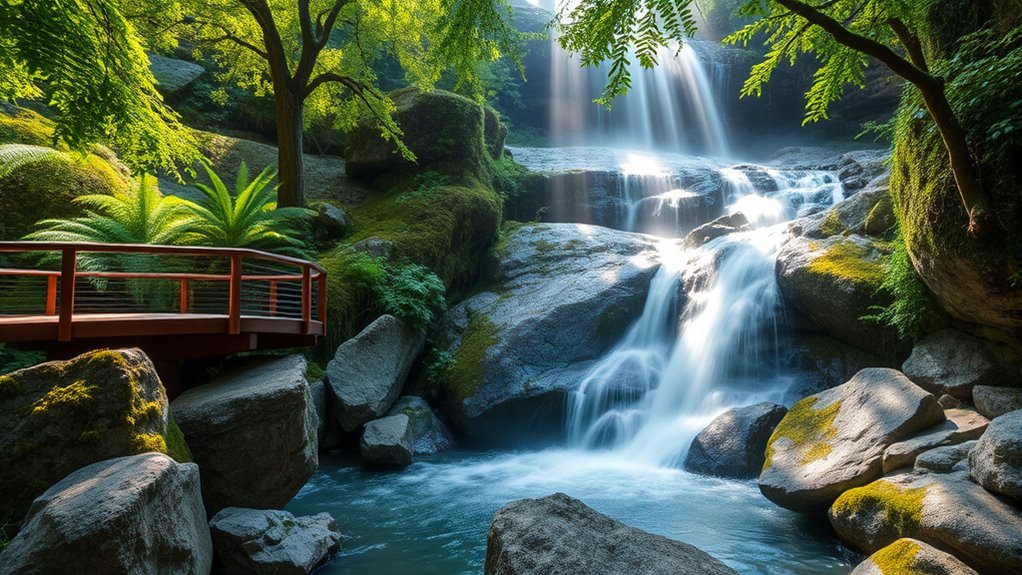
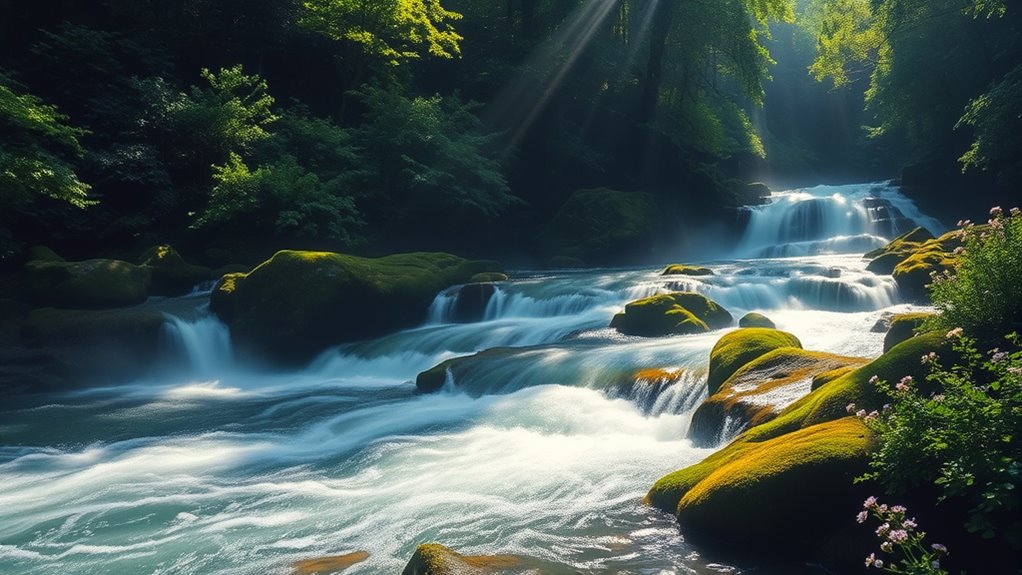
Waterfalls create stunning natural soundscapes, but their continuous roar can also become overwhelming or disruptive. If you’re nearby, the relentless sound might interfere with conversations, relaxation, or even sleep. Fortunately, there are effective ways to manage and mitigate waterfall noise without losing the tranquility these natural features provide. One approach involves the strategic use of acoustic barriers. These barriers, made from dense materials like wood, concrete, or specially designed soundproof panels, can be positioned around the waterfall area to absorb or block sound waves. By installing acoustic barriers, you create a physical shield that reduces the intensity of the roar reaching your ears, helping to restore a sense of calm and clarity.
Another useful method is sound masking, which involves introducing background noises that are softer and more consistent than the waterfall’s roar. Sound masking devices emit a gentle, white noise or similar ambient sounds that blend with the waterfall noise, making it less noticeable and less disruptive. This technique is especially effective in environments where silence amplifies the waterfall’s loudness or in spaces where you need to focus or relax. When properly calibrated, sound masking helps your brain filter out the more intrusive sounds, allowing you to enjoy the natural beauty without feeling overwhelmed by it.
Combining acoustic barriers with sound masking can produce even better results. For example, you might install a physical barrier to block direct sound waves and then use a sound masking system to fill in the remaining background noise. This layered approach creates a more controlled acoustic environment, reducing the waterfall’s disruptive qualities while preserving its natural charm. It’s important to contemplate the placement and materials used for barriers to maximize effectiveness, and to choose sound masking sounds that are soothing and non-intrusive.
Additionally, understanding the principles of soundscapes from professional audio design can help in optimizing these solutions for different environments. Ultimately, managing waterfall noise isn’t about eliminating the sound entirely — it’s about controlling it to suit your needs. Whether you’re seeking peace in your backyard or a quieter space for work or rest, these techniques can help you enjoy the natural ambiance without the distraction or discomfort of relentless noise. With thoughtful application of acoustic barriers and sound masking, you can strike a balance that allows you to appreciate the beauty of waterfalls while maintaining a peaceful environment.
acoustic barriers for water features
As an affiliate, we earn on qualifying purchases.
As an affiliate, we earn on qualifying purchases.
Frequently Asked Questions
How Does Waterfall Noise Affect Local Wildlife?
Waterfall noise can cause wildlife disturbance and habitat disruption, making animals less likely to forage or communicate effectively. You might notice that some species avoid noisy areas, disrupting their natural behaviors and migration patterns. This constant sound can also drown out important calls or signals, leading to stress and decreased survival chances. By managing waterfall noise, you help protect local wildlife, ensuring their habitats remain healthy and balanced.
Are There Eco-Friendly Solutions to Reduce Waterfall Noise?
Yes, eco-friendly solutions exist to reduce waterfall noise. You can plant vegetation buffers around the area, which naturally absorb sound and create a calming environment. Additionally, installing sound absorption materials like natural rocks or eco-friendly barriers can further diminish noise levels without harming the ecosystem. These methods work together to protect wildlife and maintain the natural beauty, ensuring minimal environmental impact while managing the waterfall noise effectively.
Can Sound Masking Techniques Improve Visitor Experience?
Yes, sound masking techniques can considerably improve your visitor experience. By introducing gentle, ambient sounds that blend with the natural waterfall noise, you create a more pleasant environment. This helps reduce the impact of loud or disruptive sounds, making the area more relaxing. When you implement sound masking thoughtfully, visitors enjoy a calmer, more immersive experience, allowing them to appreciate the natural beauty without discomfort or distraction.
What Are the Legal Regulations Regarding Waterfall Noise Levels?
Think of regulations like the Constitution, guiding how waterfalls can roar. You must adhere to local noise ordinances that set maximum noise levels for outdoor sounds, including waterfalls. Staying within legal compliance ensures you avoid fines or shutdowns. Check with your city or county regulations, as rules vary. Regular monitoring helps you keep waterfall noise at a permissible level, protecting both visitors’ experience and legal standards.
How Does Climate Change Influence Waterfall Soundscapes?
Climate change impacts waterfall soundscapes by altering water flow and volume, which can increase or decrease sound disturbance. You might notice louder waterfalls during heavy rains or reduced sounds during droughts, changing the natural acoustic environment. These shifts affect local wildlife and your experience of the landscape. As climate impact intensifies, it’s essential to monitor these soundscapes to preserve their ecological and aesthetic value.
sound masking device white noise
As an affiliate, we earn on qualifying purchases.
As an affiliate, we earn on qualifying purchases.
Conclusion
As you explore soundscapes to manage waterfall noise, you might find that the perfect balance appears when you least expect it. Sometimes, simply adjusting your environment or introducing gentle sounds creates harmony, turning chaos into calm. It’s a coincidence how small changes can make a big difference, helping you enjoy the soothing presence of waterfalls without the overwhelming roar. Trust the process—you’ll discover that peace often arrives when you’re not actively searching for it.
soundproof panels for outdoor use
As an affiliate, we earn on qualifying purchases.
As an affiliate, we earn on qualifying purchases.
waterfall noise reduction solutions
As an affiliate, we earn on qualifying purchases.
As an affiliate, we earn on qualifying purchases.

Born in Dubai to Pakistani parents, Aisha deeply understands Middle Eastern and South Asian luxury markets. She excels in forging strategic partnerships with top-tier luxury brands worldwide, fostering cross-cultural collaborations that enhance our global presence.