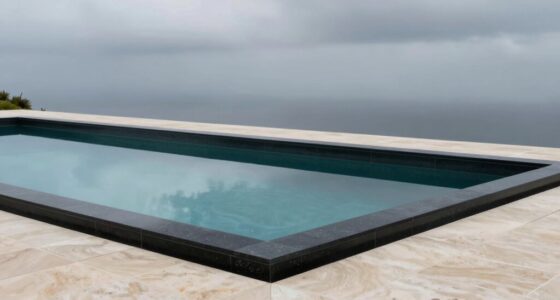
Your site’s topography plays a key role in shaping your infinity pool’s design. It guides the pool’s shape, placement, and level differences to blend seamlessly with the natural landscape. Steep slopes can create stunning infinity edges that merge into the horizon or water nearby, while gentler terrain allows for a more expansive, single-level pool. By considering land contours and water flow, you craft a harmonious, sustainable environment. Explore further to discover how these features can transform your pool design into a true landscape extension.

Get your wardrobe favorites delivered free with Prime
- Fast, free delivery on millions of items
- Prime Video, Amazon Music and more included
- Member-only deals all year
Key Takeaways
- Natural contours influence pool shape and placement to create seamless integration with the landscape.
- Sloped terrains enable infinity edges that merge visually with horizons or water bodies.
- Topography guides water flow patterns, affecting pool location, drainage, and sustainable design.
- Land slopes determine pool depth, multi-level layouts, and structural features like retaining walls.
- Designing in harmony with natural features enhances aesthetic appeal, stability, and long-term resilience.
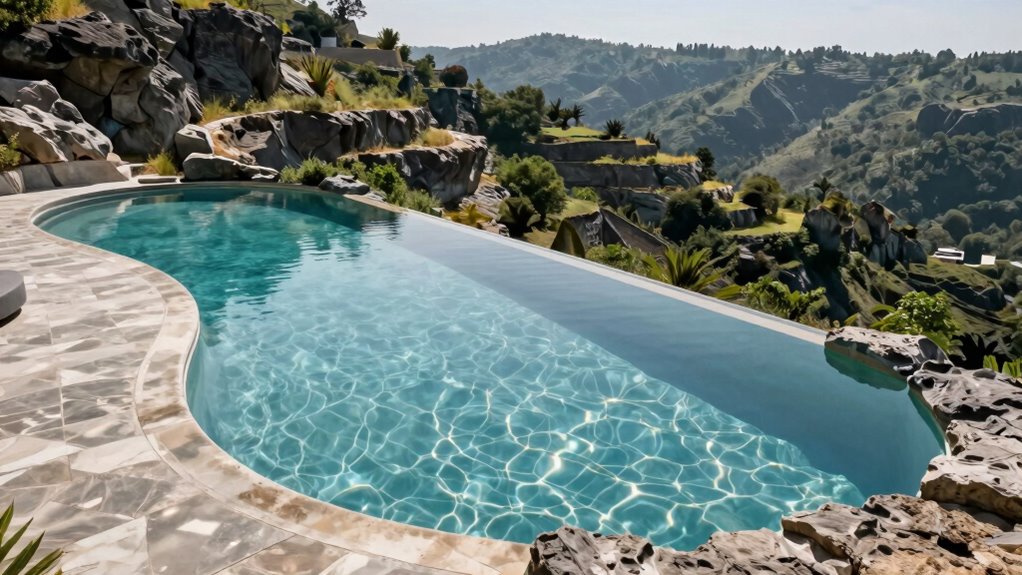
Have you ever wondered how the natural contours of a site influence the design of an infinity pool? When you’re planning a pool that seamlessly blends into its surroundings, understanding the natural landscape becomes your most valuable tool. The topography, or the shape and features of the land, directly affects how the pool is shaped, positioned, and integrated. If your site features a sloped terrain or a cliffside, you can craft a stunning infinity edge that appears to merge directly into the horizon or a distant body of water. The natural landscape guides your design choices, making the pool look like an extension of the environment rather than an addition to it.
Water flow is another critical element shaped by the site’s topography. When you work with a sloped terrain, you need to consider how water naturally moves across the land. A gentle incline can facilitate efficient water circulation and drainage, reducing the need for complex mechanical systems. Conversely, on a steeper slope, you might need retaining walls or terraces to control water flow and prevent erosion. These features don’t just serve functional purposes—they also add to the aesthetic appeal, emphasizing the natural flow of water and land. The way water flows across the landscape can inspire your pool’s placement, ensuring it complements rather than clashes with the natural movement of water on the site. Recognizing the importance of natural water flow allows you to design a pool that works harmoniously with the environment, promoting sustainability and reducing maintenance. Additionally, understanding topographical features can help prevent future issues related to erosion or water runoff, safeguarding your investment. Considering slope stability during planning not only enhances safety but also supports the long-term success of your design. Incorporating geological conditions can further inform your decisions, ensuring your pool design is resilient to the site’s natural characteristics.
The topography also influences the height and depth of your infinity pool. On a hillside, you might design a multi-level pool that takes advantage of the slope, creating an impressive visual effect. The levels can be aligned with the land’s natural features, making the transition from land to water appear seamless. If the terrain is flatter, you might opt for a single, expansive pool that captures the surrounding views. The key is to adapt your design to the land’s natural shape, ensuring that the pool enhances the landscape and respects its natural flow of water. Proper assessment of site topography ensures your design remains both functional and aesthetically pleasing.
In essence, the topography of your site isn’t just a backdrop; it’s a blueprint for your infinity pool’s design. By paying attention to the natural landscape and water flow, you create a harmonious space that feels organic and effortlessly integrated. Your pool becomes more than just a feature—it becomes a natural extension of the land, offering stunning views, functional benefits, and a seamless connection to nature.
As an affiliate, we earn on qualifying purchases.
Frequently Asked Questions
How Does Topography Influence Pool Safety Features?
Topography heavily influences your pool’s safety features by dictating landscape integration and erosion control measures. You need to adapt safety barriers, fencing, and non-slip surfaces to match the natural slope and terrain. Proper erosion control prevents instability around the pool, reducing risks of slips or collapses. By tailoring safety features to your site’s topography, you guarantee a secure, stable environment that seamlessly blends with the surroundings.
What Materials Are Best for Varying Terrains?
You’ll want to choose materials that stand up to nature’s fury—think of them as the superheroes of your landscape. For varying terrains, durable options like natural stone, concrete, or composite decking work wonders. These materials blend seamlessly with landscape integration and resist weather, erosion, and shifting ground. They guarantee your infinity pool remains stunning and safe, no matter how rugged or gentle the site’s topography.
How Does Topography Affect Pool Heating Options?
Your pool’s topography influences heating options by affecting pool orientation and exposure to sunlight. A slope might require strategic placement to maximize solar gain, especially on the sunniest side. Surrounding vegetation can also block sunlight, so you may need to contemplate additional heating methods like solar panels or heat pumps. Properly evaluating your site’s topography ensures your infinity pool remains comfortably warm year-round, regardless of terrain challenges.
Can Topography Limit Infinity Pool Size and Shape?
Think of your site’s natural landscape as a canvas, but soil stability and topography are the brushstrokes that limit your design. Steep slopes or uneven terrain can restrict infinity pool size and shape, making construction tricky. You might need to adapt your design, perhaps opting for a smaller or terraced pool, to guarantee stability and safety. Your topography acts as a silent architect, guiding what’s feasible and what’s not.
What Are Maintenance Considerations for Sloped Sites?
On sloped sites, maintenance involves checking soil stability regularly to prevent erosion or shifting that could affect your pool. You need effective drainage solutions to manage runoff and avoid water pooling or damage. Keep an eye on retaining walls and landscaping for signs of wear or movement. Consistent inspections and timely repairs guarantee your infinity pool remains safe, functional, and visually stunning despite the challenges posed by the terrain.
Conclusion
Understanding your site’s topography is like reading the landscape’s secret blueprint, guiding your infinity pool design with precision. When you embrace the natural slopes and contours, your pool becomes a seamless extension of the terrain—flowing effortlessly like water itself. By respecting the land’s unique features, you create a stunning oasis that feels born from the earth, not imposed upon it. Ultimately, your topography shapes not just the pool’s structure, but the entire experience of serenity it offers.
Halloween Picks
halloween
As an affiliate, we earn on qualifying purchases.