
To keep your infinity pool in top shape, regularly clean the catch basin by removing debris like leaves and dirt, ensuring water flows smoothly and preventing clogs. Check water levels often and adjust them as needed to avoid overflows or low water issues, using flow valves or auto-fill systems. Consistent inspection and maintenance prevent costly repairs. Continue exploring these steps in detail to maintain a pristine, safe infinity pool all year round.

Get your wardrobe favorites delivered free with Prime
- Fast, free delivery on millions of items
- Prime Video, Amazon Music and more included
- Member-only deals all year
Key Takeaways
- Regularly inspect and clean catch basins to remove debris, preventing clogs and ensuring proper water flow.
- Use appropriate tools like gloves and scoops for debris removal, avoiding system damage.
- Monitor water levels with markers, adjusting flow via valves or auto-fill systems to prevent overflow or low levels.
- Maintain balanced water chemistry and proper circulation to reduce algae growth and system issues.
- Conduct routine system inspections, especially after storms, to identify and address clogs or water level irregularities promptly.
infinity pool catch basin cleaning tools
As an affiliate, we earn on qualifying purchases.
As an affiliate, we earn on qualifying purchases.
Why Catch Basin Cleaning Is Crucial for Your Infinity Pool

Regular catch basin cleaning is essential to keep your infinity pool functioning smoothly. When debris and dirt accumulate, they can disrupt water flow and hinder proper filtration. This can lead to uneven distribution of pool chemicals, making it harder to maintain balanced water chemistry. Without regular cleaning, algae can start to grow in hidden spots, increasing algae prevention challenges. A clean catch basin ensures debris doesn’t clog filters or pump systems, helping your pool stay clear and healthy. Proper maintenance also reduces the risk of water contamination, preserving the aesthetics and safety of your infinity pool. Staying on top of catch basin cleaning is a simple step that crucially impacts overall pool performance and longevity. Incorporating connected equipment and monitoring tools can further optimize maintenance routines and improve pool health. Additionally, understanding water chemistry balance can help maintain optimal water quality and extend the lifespan of your pool equipment. Implementing preventative maintenance routines can further ensure your pool remains in excellent condition over time, especially when considering factors like natural water flow and environmental influences that can impact pool performance.
How to Inspect and Clear Your Pool’s Catch Basin Step-by-Step
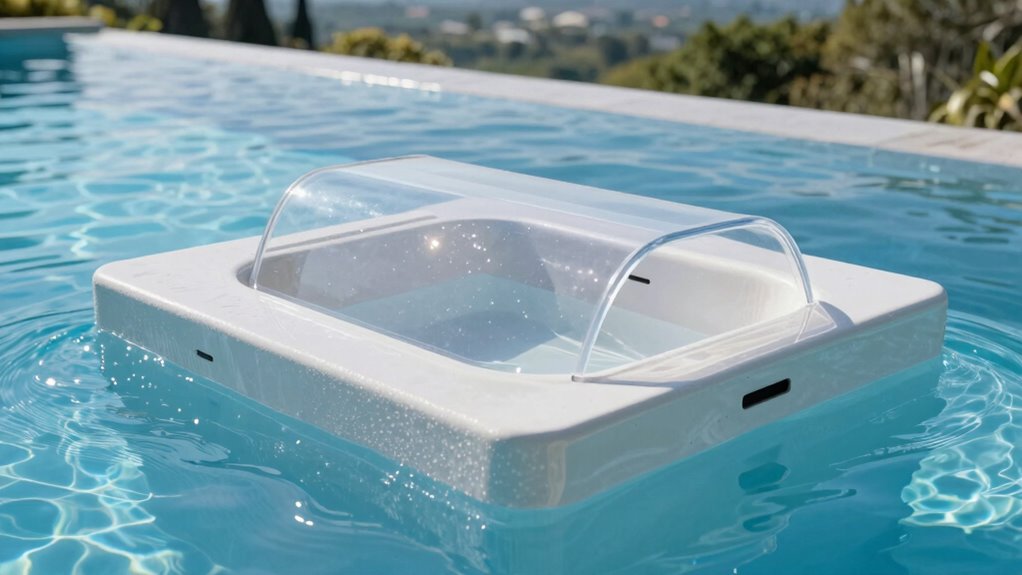
Start by locating the catch basin access point to guarantee you can reach it easily. Carefully remove any debris inside, taking care not to damage the system. Regular system inspection can help identify potential issues before they become costly repairs later. Monitoring water levels regularly ensures proper water flow and prevents overflow problems. Proper sizing and load‑planning are essential to ensure your pool’s filtration system operates efficiently and safely. Understanding home energy integration can help optimize your pool’s operation, especially when considering energy-efficient practices. Finally, check the water levels to confirm everything is functioning properly.
Locate Catch Basin Access
Have you ever wondered how to properly locate your pool’s catch basin access? First, check your pool’s deck or surrounding area for access covers or grates, often made of plastic or metal. These are typically flush with the surface and may be labeled as “catch basin” or “drain.” Ensuring easy access is essential for maintaining pool safety, especially during storms or heavy debris storms. Once located, inspect the area for any signs of wear, cracks, or obstructions. Remember, proper catch basin access helps prevent clogs that could disrupt water flow and impact chemical balancing. Regularly familiarizing yourself with the access points makes inspections safer and more efficient, reducing the risk of water level issues or damage to your pool system. Additionally, understanding security zone information can help you better assess risks related to outdoor pool equipment and access points. Being aware of zodiac traits can also help you stay vigilant about potential issues with pool maintenance during certain times of the year. Incorporating routine cleaning procedures into your maintenance schedule can further ensure optimal water flow and system performance. Moreover, adopting preventive measures can help prolong the lifespan of your pool’s infrastructure and avoid costly repairs. Regular maintenance, including clog prevention techniques, is crucial to keep your catch basin functioning properly and to ensure the longevity of your pool system.
Remove Debris Carefully
Once you’ve located your catch basin access, it’s time to inspect and clear out any debris that could block water flow. Carefully remove leaves, dirt, and other debris using gloves and a scoop if needed. Be gentle to avoid damaging the basin or dislodging parts. During debris removal, stay alert to potential hazards to maintain pool safety. Ensure the area is stable and free of sharp objects. If you encounter stubborn debris, loosen it without forcing or tearing the basin material. Proper debris removal keeps water flowing smoothly and prevents clogs that could cause water level issues or damage. Regularly inspecting the system’s integrity can help prevent unexpected failures and prolong the lifespan of your pool equipment. Additionally, taking care to maintain water levels ensures optimal operation of your infinity pool and prevents algae growth or structural issues. Conducting routine catch basin checks is crucial for early detection of potential problems and maintaining overall pool health. Regular checks of the catch basin and related components are essential for preventing clogs and ensuring safe operation. Your careful approach helps maintain a safe, well-functioning infinity pool.
Check Water Levels
To guarantee your infinity pool functions properly, checking the water levels in the catch basin is essential. Proper water levels help maintain pool chemicals balance and prevent damage to the filtration system. Start by turning off the pool pump and safety precautions, like wearing gloves, to avoid injury. Then, inspect the catch basin for any debris or blockages that could affect water flow. If the water level is too low, add water gradually until it reaches the recommended level. Conversely, if it’s too high, remove excess water carefully. Regularly checking water levels ensures your pool stays clean and safe, reduces strain on the pump, and keeps the water chemistry balanced. Paying attention to water level control can prolong the lifespan of your pool equipment and improve overall pool performance. Additionally, understanding how hydraulics influence water flow can help troubleshoot common issues more effectively. Being aware of water circulation patterns can also assist in maintaining a consistent water level and preventing imbalances.
Best Practices for Regular Catch Basin Maintenance and Cleaning
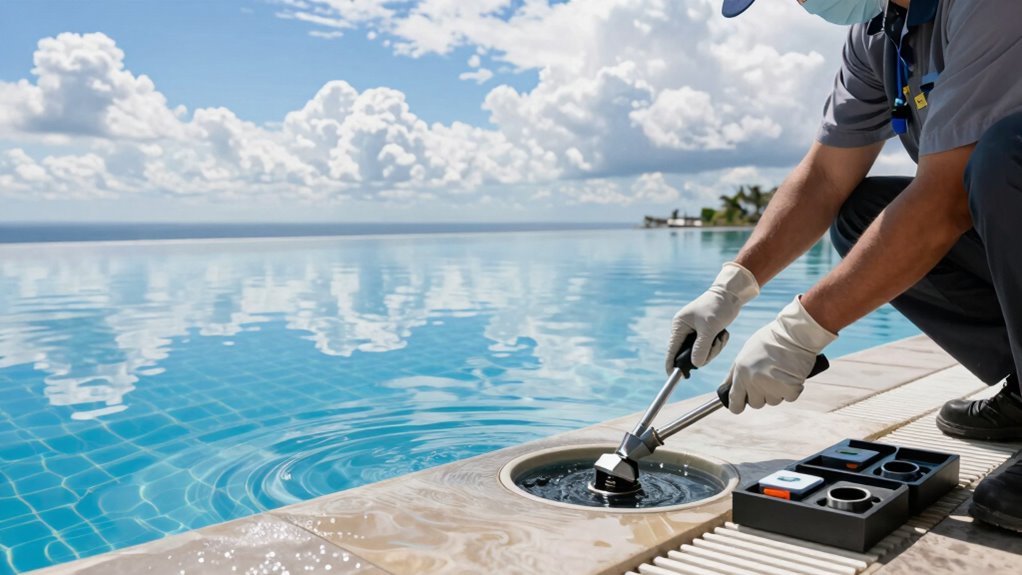
Regular catch basin maintenance is essential for preventing clogs and ensuring proper drainage in your infinity pool system. To do this effectively, inspect the catch basin regularly, especially after storms or heavy rainfall. Remove debris such as leaves, dirt, and twigs that can obstruct water flow. Incorporate your landscape design by positioning plants away from the catch basin to minimize debris falling in. Keep your pool lighting in mind: if fixtures are nearby, check for debris or algae buildup that could affect water quality. Use a net or vacuum to clear the catch basin and ensure smooth drainage. Regular upkeep helps avoid overflow issues, maintains water clarity, and extends the life of your infinity pool system. Additionally, understanding how water purification systems work can help you maintain clean water in your pool, especially if you notice persistent cloudiness or contamination. Knowing about filtration technology can assist in selecting the right systems to improve water quality and reduce maintenance needs. Implementing a routine maintenance schedule can further streamline your upkeep and prevent unexpected issues. Furthermore, scheduling inspections during off-peak hours can minimize disruption and ensure consistent maintenance routines.
How to Manage Water Levels to Prevent Overflow and Damage

Maintaining the correct water level is essential to prevent overflow and avoid damage to your infinity pool. Proper management guarantees your pool functions smoothly and prolongs its lifespan. To achieve this, regularly monitor the water level and adjust as needed, especially after heavy rainfall or heavy usage. Consider these tips:
- Keep pool chemical balancing in check to prevent water evaporation issues that can affect levels.
- Use pool lighting options wisely, as some lighting fixtures can influence water movement and evaporation rates.
- Install a reliable auto-fill system to maintain consistent water levels automatically, reducing manual checks.
Easy Techniques for Adjusting and Monitoring Water Levels

To keep your infinity pool functioning smoothly, you should regularly adjust the water flow as needed. Using water level markers helps you monitor changes and catch issues early. Don’t forget to inspect the basin frequently to guarantee everything stays in ideal condition.
Adjust Water Flow
Adjusting water flow is essential for keeping your infinity pool at the perfect level, and luckily, it’s a straightforward process. Proper water flow regulation guarantees consistent water levels and prevents overflow or low water issues. To do this, focus on pressure adjustment by tweaking valves or pumps. Here are some easy techniques:
- Check and adjust the main pump’s pressure to maintain steady flow.
- Use flow control valves to fine-tune water input and output.
- Regularly inspect the catch basin to ensure unobstructed water movement.
Use Water Level Markers
Using water level markers is a simple yet effective way to monitor and maintain your infinity pool’s water height. By placing markers at specific points, you can easily see if the water drops below or rises above desired levels. Regular water testing helps guarantee proper chemical balancing, preventing issues caused by low or high water levels. When you notice changes, adjust the water flow accordingly to keep the level steady. Accurate markers make it easier to spot evaporation or leaks early, saving you time and money. Consistently monitoring with these markers also helps sustain ideal water circulation and clarity. Keep the markers visible and clear, and perform routine water testing to stay on top of water levels and chemical balance effectively.
Regularly Inspect Basin
Regularly inspecting your infinity pool’s basin is essential for maintaining proper water levels and catching issues early. By doing so, you can prevent problems like pool algae buildup and ensure chemical balancing remains stable. During inspections, look for signs of algae growth, which can indicate poor circulation or chemical imbalance. Check the water level to ensure it’s within the recommended range, adjusting as needed. Also, examine the catch basin for debris or blockages that could hinder proper water flow.
- Look for algae or debris in the basin
- Verify water levels and adjust if necessary
- Ensure the catch basin is clear and functioning properly
Consistent inspections help you catch small issues before they escalate, keeping your infinity pool clean, balanced, and enjoyable.
Common Issues With Water Levels and Catch Basins: and How to Fix Them

Water level issues and catch basin problems are common challenges in maintaining an infinity pool. If the water isn’t at the correct level, your pool chemicals won’t balance properly, leading to cloudy water or algae growth. Low water levels can cause the skimmer and catch basin to malfunction, while high levels might overflow the basin. Debris buildup or clogged catch basins can also affect water flow, impacting lighting fixtures and overall circulation. Regularly inspect and clean your catch basin to prevent blockages. Adjust water levels using the pool’s fill valve or pump system. Ensuring proper water levels keeps your lighting fixtures working correctly and maintains a healthy, visually appealing infinity pool. Consistent maintenance prevents costly repairs and extends your pool’s lifespan.
Tips for Maintaining Your Infinity Pool Year-Round

Maintaining your infinity pool throughout the year requires consistent attention to its unique features and environmental factors. Regularly check and adjust the pool’s chemical balance to prevent algae growth and guarantee safe water. Proper pool lighting enhances aesthetics and visibility, so inspect and replace bulbs as needed to keep your pool inviting day and night. To keep your pool in top shape, consider these tips:
- Test and balance chemicals weekly, focusing on pH, chlorine, and alkalinity
- Clean and inspect pool lighting fixtures for ideal illumination
- Skim debris daily and maintain catch basins to prevent water level issues
Staying vigilant with these tasks helps preserve water clarity, safe operation, and the visual appeal of your infinity pool year-round.
Frequently Asked Questions
How Often Should I Perform Catch Basin Cleaning?
You should perform catch basin cleaning at least twice a year to maintain safety precautions and guarantee proper water flow. Regular maintenance scheduling helps prevent debris buildup that could clog the system or cause safety hazards. Keep an eye on the basin, especially after storms or heavy rains, and increase cleaning frequency if you notice debris or water flow issues. Staying consistent with maintenance protects your pool’s longevity and safety.
What Tools Are Best for Catch Basin Inspection?
For drainage inspection, you should use a sturdy flashlight, a scoop or grabber, and a camera if possible, to thoroughly assess the catch basin. Tool selection is essential; opt for durable, rust-resistant tools that allow you to remove debris easily and inspect the drainage system effectively. These tools help you identify blockages or damage early, ensuring proper water flow and preventing overflow or flooding issues.
Can Improper Water Levels Damage the Pool Structure?
Your pool’s structural integrity is at stake when water levels are improper, risking damage that’s as catastrophic as a tsunami. Maintaining correct water levels prevents issues like algae buildup and makes pool cover installation smoother. If water is too high or low, it can cause stress on the pool walls and liner, leading to cracks or leaks. Keep an eye on water levels to guarantee longevity and pristine condition.
How Do Weather Changes Affect Water Level Management?
Weather changes considerably impact your water level management. Rain impact can cause water levels to rise unexpectedly, requiring quick adjustments to prevent overflow or structural stress. Temperature fluctuations can lead to water expansion or contraction, affecting the pool’s balance and equipment function. By monitoring weather forecasts closely, you can proactively manage water levels, ensuring the pool remains safe and well-maintained regardless of changing weather conditions.
Are There Eco-Friendly Options for Pool Water Treatment?
Yes, there are eco-friendly options for pool water treatment. You can use eco-friendly filtration systems that reduce chemical reliance, and natural water treatment methods like UV sterilization or mineral-based systems. These options minimize environmental impact while keeping your pool clean and safe. By choosing natural water treatment, you support sustainability and enjoy a healthier swimming environment without harmful chemicals.
Conclusion
Keeping your infinity pool pristine isn’t just about looks—it’s about safeguarding your sanctuary. Regular catch basin cleaning and water level management act like gentle guardians, ensuring your oasis remains flawless through every season. When you nurture these small details, you create an enduring haven of serenity and elegance. Embrace these simple practices, and your pool will continue to inspire awe and tranquility, becoming a cherished retreat for years to come.
Fall Picks
fall essentials
As an affiliate, we earn on qualifying purchases.