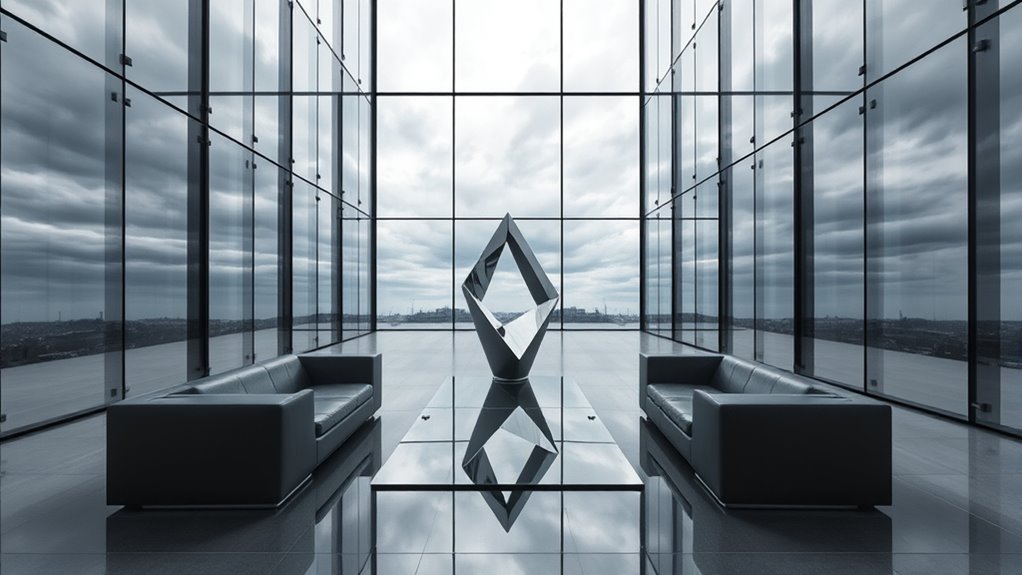

When designing with reflections and sightlines, you shape a space that feels inviting, intuitive, and visually engaging. Use mirrors and reflective surfaces to visually expand rooms and enhance natural light, while strategic sightlines guide movement and highlight key features like views or art. Proper lighting emphasizes these elements, creating mood and focus. Balancing these tools allows you to craft environments that feel larger, connected, and emotionally resonant—exploring these strategies further will reveal how to master their impact fully.
Key Takeaways
- Strategically position lighting to highlight reflections and guide sightlines, enhancing visual interest and navigation.
- Use mirrors and reflective surfaces to visually expand spaces and create seamless connections between zones.
- Design sightlines to establish visual hierarchy, directing focus toward key features or views.
- Incorporate reflections to amplify lighting effects and add dynamic visual interactions throughout the day.
- Balance reflections, sightlines, and lighting with sound design for immersive, functional, and aesthetically engaging environments.
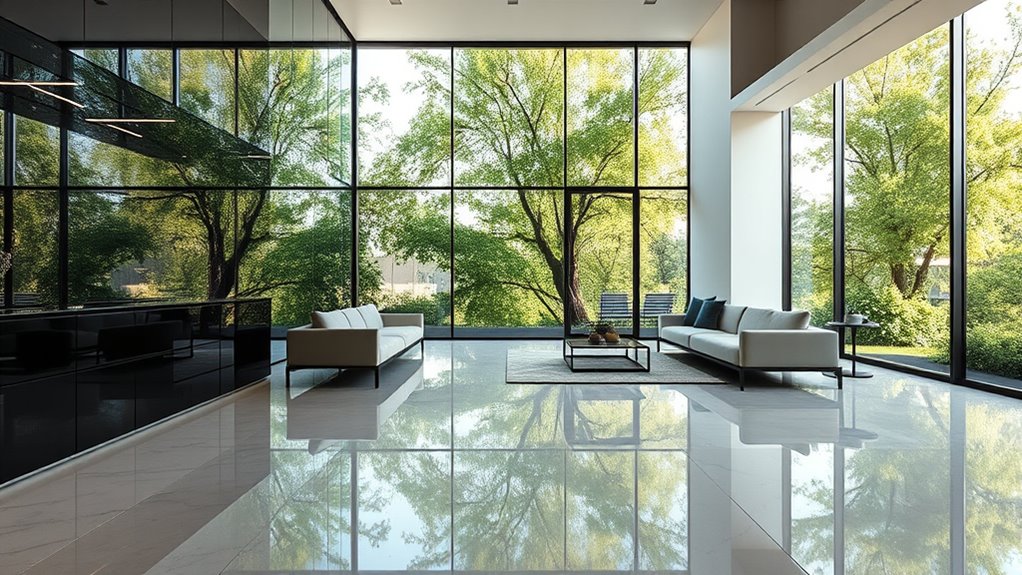
Reflections and sightlines are powerful tools in architecture that can dramatically influence how a space feels and functions. When you harness these elements effectively, you create environments that are not only visually engaging but also intuitively navigable. Lighting effects play a critical role here; they can highlight reflections, emphasize sightlines, and set the overall mood of a space. By carefully positioning light sources, you can direct attention along key sightlines, guiding people naturally through a room or building. For example, a well-placed skylight can create a reflection that draws the eye upward, expanding the perceived height and openness of a space, while subtle lighting along a corridor can subtly guide visitors from one area to another. Incorporating sound design principles, such as ambient sounds and spatial audio, can further enhance the sensory experience of a space, making it feel more immersive and cohesive.
Harness reflections, sightlines, and lighting to craft engaging, intuitive, and dynamic spatial experiences.
Your goal should be to optimize the spatial flow—how people move through and experience the environment—by thoughtfully integrating reflections and sightlines. When reflections are used strategically, they can visually extend a room, making narrow or compact spaces feel larger and more inviting. Mirrored surfaces or reflective materials placed at key angles bounce light and views, creating a seamless connection between different zones. This not only enhances the aesthetic appeal but also improves functionality, as people feel less confined and more oriented within the space.
Sightlines are equally important in establishing a clear visual hierarchy. You want to craft sightlines that naturally lead the eye toward focal points, whether that’s a piece of art, a view outside, or an architectural feature. When you design sightlines with intention, you can control how individuals experience the space, encouraging flow and reducing confusion. Be mindful of obstructions; clear, open sightlines foster a sense of transparency and accessibility, making spaces feel more interconnected. Conversely, intentional barriers or partial screens can create moments of privacy without breaking the overall flow, adding depth and interest.
Lighting effects, combined with well-planned sightlines, can also influence the ambiance and emotional response within a space. Soft, warm lighting along a sightline can evoke comfort and intimacy, while brighter, cooler light can energize and invigorate. Reflective surfaces amplify these effects by bouncing light, creating dynamic visual interactions that change throughout the day. As you design, think about how light interacts with reflections and sightlines at different times, ensuring that the space remains engaging and functional from morning to night. Understanding sound design principles, such as the use of ambient sounds and spatial audio, can further enhance the sensory experience, making environments feel more cohesive and alive. When you master these tools, you craft environments that feel cohesive, purposeful, and alive, enhancing both the aesthetic and practical experience of any space.

Simple Deluxe Arched Full Length Mirror, 71"x26"Large Floor Mirrors, for Wall Door Bedroom Bathroom Living Room (Black)
Full-Length Mirror:71" x 26" full-size mirror, enough for you to see your entire figure in a single glance…
As an affiliate, we earn on qualifying purchases.
As an affiliate, we earn on qualifying purchases.
Frequently Asked Questions
How Can Reflections Be Used to Enhance Natural Lighting?
You can enhance natural lighting by carefully positioning mirrors to reflect sunlight into darker areas. Place mirrors opposite windows to maximize light diffusion, spreading brightness throughout the space. Adjust their angles to bounce light around corners and avoid glare. This strategic mirror placement amplifies available natural light, making your space feel brighter and more inviting without additional electrical use.
What Materials Best Optimize Sightlines in Open-Plan Spaces?
Think of your open-plan space as a clear window to your style. To optimize sightlines, choose glass partitions or low-profile materials like polished concrete or sleek wood that provide durability and keep lines flowing. Consider acoustic properties too—materials like acoustic panels or soft furnishings help reduce noise, maintaining visual clarity. These choices guarantee your space feels spacious, connected, and functional, like a well-orchestrated symphony of sight and sound.
How Do Reflections Impact Privacy in Interior Design?
Reflections can considerably impact privacy concerns in your interior design. Reflective surfaces, like mirrors or glass, can create visual overlaps, making spaces feel more open but also reducing privacy. You should consider strategic placement of these surfaces to avoid unwanted visibility, especially in private areas. Using frosted or tinted glass helps maintain light flow while safeguarding privacy, balancing openness with confidentiality in your space.
Can Reflections Create Optical Illusions in Small Rooms?
Mirror tricks can subtly transform a small room into a spacious haven. By strategically placing mirrors, you create illusion effects that make the space appear larger and more open. These reflections bounce light and extend sightlines, giving the impression of added depth. Embracing these optical illusions allows you to maximize your room’s potential, turning a cozy nook into a bright, airy retreat with clever mirror placement.
What Are Common Mistakes When Designing With Reflections and Sightlines?
You often make mistakes by poor mirror placement, which can disrupt sightlines or create cluttered spaces. Avoid placing mirrors where they cause glare, as this can be uncomfortable and reduce functionality. Additionally, neglecting to contemplate natural light and reflections can lead to visual confusion or wasted space. Always plan your mirror positioning thoughtfully, balancing reflections with glare management, to enhance your room’s harmony and ensure clear sightlines.

Chuangyinggo 12" x 12" Acrylic Flexible Mirror Sheets, 12 Pack Self-Adhesive Mirror Tiles, Square Cuttable Wall Stickers, Non-Glass, Safety Reflective for DIY Craft Home Wall Decor
【DURABLE & SMOOTH】You will get 12 pcs of 12 x 12 in Plastic Mirror Wall Stickers. They are…
As an affiliate, we earn on qualifying purchases.
As an affiliate, we earn on qualifying purchases.
Conclusion
By carefully balancing reflections and sightlines, you create spaces that feel both expansive and intimate. Just as mirrors can open up a room, clear sightlines invite connection and flow. You harness the power of illusion and clarity, transforming your design from ordinary to extraordinary. Remember, when reflections and sightlines work in harmony, they shape a space that’s not only visually appealing but also emotionally resonant—turning simple areas into compelling experiences.

Art3d LED Recessed Lighting Kit – 6pcs Self-Adhesive White LED Light with Smart Switch, 3000k Touching Switch Light for Wood Slat Wall Panels, Headboards, Stairs, Under Cabinet, Home Decor
Designed for Wood Slat Wall Panels – Specifically tailored to fit wood slat and WPC wall panels, this…
As an affiliate, we earn on qualifying purchases.
As an affiliate, we earn on qualifying purchases.

Amazon Basics Full Motion Articulating TV Wall Mount, with Swivel and Tilt, for 26" to 55" TVs and Flat Panels up to 80 Lbs, VESA Compatible, Black
Important: Watch the video and learn the”Designed for" details listed below!
As an affiliate, we earn on qualifying purchases.
As an affiliate, we earn on qualifying purchases.

Born in Dubai to Pakistani parents, Aisha deeply understands Middle Eastern and South Asian luxury markets. She excels in forging strategic partnerships with top-tier luxury brands worldwide, fostering cross-cultural collaborations that enhance our global presence.