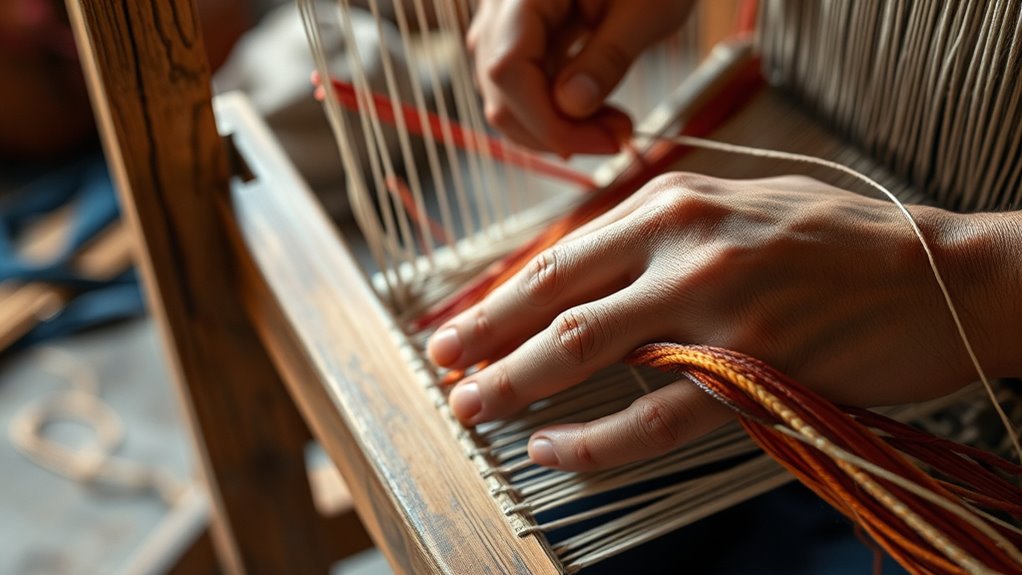

Weaving on a frame loom is simple and enjoyable, perfect for beginners. Start by warping your loom, attaching fibers securely to create a stable foundation. Focus on maintaining even tension and experiment with basic weaves like plain or twill for polished results. Choosing the right fiber, such as wool, cotton, or linen, influences texture and appearance. With patience and practice, you’ll craft beautiful textiles—if you keep exploring, you’ll discover even more creative possibilities.
Key Takeaways
- Set up the loom by warping fibers evenly to create a stable foundation.
- Maintain consistent tension during weaving to ensure a smooth, professional finish.
- Use basic weaving techniques like plain weave or twill to develop foundational skills.
- Choose fibers based on desired texture, weight, and appearance, such as wool, cotton, or synthetic fibers.
- Experiment with color, texture, and tension to enhance visual interest and refine your weaving process.
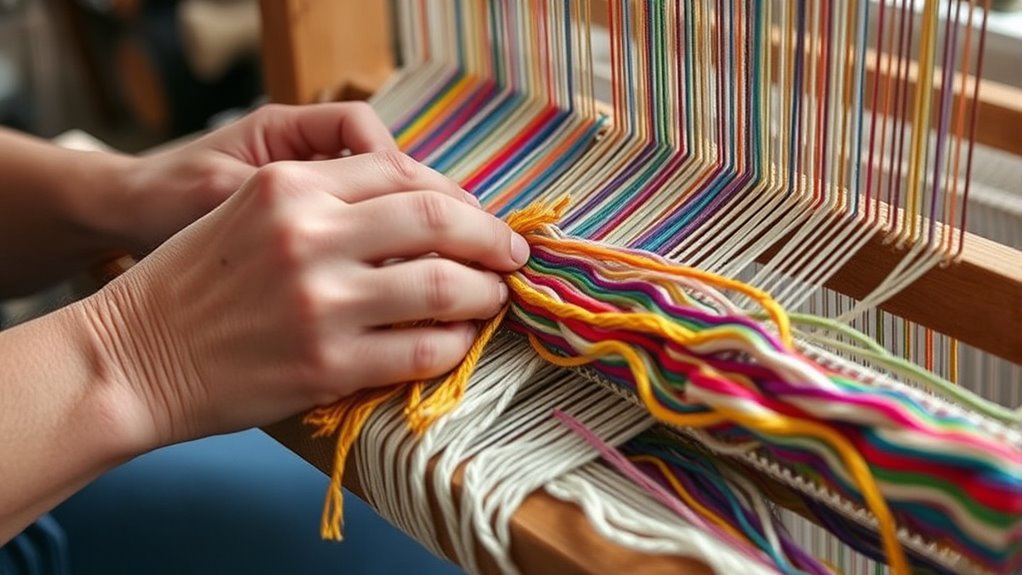
Have you ever wondered how to create a simple yet beautiful woven piece? If so, starting with a frame loom is a great way to explore weaving without feeling overwhelmed. The key to making your project stand out is understanding loom techniques and fiber selection. These elements will determine the texture, appearance, and durability of your finished piece. When you begin, focus on mastering basic loom techniques, such as warping the loom and creating a consistent tension. Warping involves attaching your chosen fibers to the frame in a way that provides a sturdy foundation for weaving. Keep the tension even; this helps prevent puckering and uneven edges. As you weave, you may experiment with different weaves like plain weave or twill, which are easy to learn and give your work a polished look. These basic loom techniques build your confidence and serve as a foundation for more complex patterns later on. Additionally, exploring remote hackathons can inspire new ideas and techniques for your weaving projects, especially if you enjoy sharing your work with a broader community.
Fiber selection is equally important. Your choice of fibers influences not just the look but also the feel and longevity of your piece. Natural fibers like wool, cotton, and linen are popular because they are accessible, versatile, and hold their shape well. Wool offers warmth and a soft texture, perfect for cozy wall hangings or scarves. Cotton is lightweight and smooth, ideal for delicate or intricate designs. Linen has a crisp feel and a subtle sheen, making it suitable for more refined projects. You can also incorporate synthetic fibers like acrylic or nylon if you want vibrant colors or added durability. When selecting fibers, consider the weight of the material; heavier fibers will create a denser, more substantial piece, while lighter fibers lend a delicate touch. Avoid using fibers that are too slippery or too stiff, as they can be difficult to work with and may not hold tension well on your loom.
Once you’ve chosen your fibers, think about color and texture. Combining different hues and textures can add visual interest to your woven piece. It’s often helpful to test small samples before starting your main project, so you can see how the fibers behave and how the colors interact. As you progress, pay attention to how the loom techniques you employ affect the overall look. For example, tight tension and even weaving create a smooth surface, while looser weaving results in a more relaxed, textured appearance. With patience and some practice, you’ll discover which loom techniques and fiber choices work best for your style. Creating a woven piece on a frame loom is a rewarding process, giving you a tangible, beautiful result that reflects your skills and creativity.

Lemonfilter Weaving Loom, Wooden Multi-Craft Frame Weaving Loom Kit for Adults, 9" x 11" DIY Hand-Knitting Arts Looms for Beginners, Perfect Crafts Gift for Birthday New Year
Wooden Weaving Loom Kit: Burr-free, eco-friendly, and durable, it does not damage yarn nor harm hands. The package…
As an affiliate, we earn on qualifying purchases.
As an affiliate, we earn on qualifying purchases.
Frequently Asked Questions
What Types of Yarn Are Best for Frame Loom Weaving?
You should choose yarns with good fiber selection and suitable yarn properties for frame loom weaving. Wool, cotton, and linen work well because they’re strong and hold shape, while acrylics and blends offer flexibility and vibrant colors. Look for yarns that aren’t too bulky or slippery, ensuring easy handling and consistent tension. This combination helps create durable, attractive woven pieces tailored to your project’s needs.
How Do I Correct Mistakes in Woven Fabric on a Frame Loom?
Did you know that nearly 80% of weavers encounter mistakes? To correct weaving mistakes on a frame loom, carefully undo the affected weft or warp. Use your fingers or a small hook for weaving adjustments, gently pulling or lifting threads to fix tension or pattern errors. Always work patiently to avoid damaging your fabric, and remember, mistakes are part of learning and improving your weaving skills.
Can I Use Recycled or Eco-Friendly Materials for Weaving?
Yes, you can definitely use recycled fibers and eco-friendly dyes for weaving. Opt for recycled textiles like old shirts or fabric scraps, and choose dyes labeled as eco-friendly to reduce environmental impact. These materials not only create beautiful, sustainable woven pieces but also help lower your carbon footprint. By selecting recycled fibers and eco dyes, you contribute to eco-conscious crafting and produce unique, environmentally responsible woven art.
How Do I Finish and Care for Woven Pieces?
Imagine your woven masterpiece shining like a star! To finish, use neat finishing techniques like hemming or fringing. For care, follow simple instructions: gently hand wash in cold water, avoid harsh detergents, and lay flat to dry. Store your piece away from direct sunlight. Proper finishing and care instructions protect your art, ensuring it remains vibrant and beautiful, dazzling everyone for years to come.
Are There Advanced Techniques for Creating Textured Weaves?
Yes, you can create textured patterns by incorporating supplementary weft into your weaving. Try adding thicker or contrasting yarns in specific areas to build raised textures, or use techniques like soumak or rya to add dimension. Experiment with different stitch patterns and varying tension to achieve unique textures. These advanced methods allow you to craft richly textured weaves that stand out and add visual interest to your woven pieces.

AHANDMAKER Weaving Loom Kit Loom Bracelet Weaving Bracelet Maker with Cotton Fiber Yarn Weaving Needle Small Weaving Loom Set for Beginners Weaving Lovers Crochet Knitting Craft Activity
Package Include: The wooden loom kit consists of three rectangular woven panels of different sizes: about 21cm x…
As an affiliate, we earn on qualifying purchases.
As an affiliate, we earn on qualifying purchases.
Conclusion
Weaving on a frame loom is a timeless craft that connects you to centuries of tradition. Did you know that over 60% of fiber artists say that working with a loom helps reduce stress and boost creativity? As you explore this art form, you’ll not only create beautiful textiles but also find a relaxing, meditative experience. So grab your frame loom and start weaving—you’re about to discover a rewarding, calming hobby that’s been cherished for generations.

Lily & Oak Weaving Loom for Adults & Kids – Weaving Loom Kit | Beginner-Friendly Table Loom & Lap Loom with Yarn, Tools & Instructions | Wooden Loom for Multicraft Projects (15.8 x 11.8 inches)
Unbox & Begin. Complete Weaving Loom Kit — Wooden frame loom with support legs, shuttle, heddle bar, comb,…
As an affiliate, we earn on qualifying purchases.
As an affiliate, we earn on qualifying purchases.

Angoily Weaving Comb Set, Wood Knitting Loom Tool with Large Eye Needle and Crochet Hook for Tapestry Wall Hanging, DIY Craft Hand Looming Accessories for Beginners
This complete 3-piece weaving comb set kit is a favorite for beginners creating mini wall tapestries or textured…
As an affiliate, we earn on qualifying purchases.
As an affiliate, we earn on qualifying purchases.

Born in Dubai to Pakistani parents, Aisha deeply understands Middle Eastern and South Asian luxury markets. She excels in forging strategic partnerships with top-tier luxury brands worldwide, fostering cross-cultural collaborations that enhance our global presence.