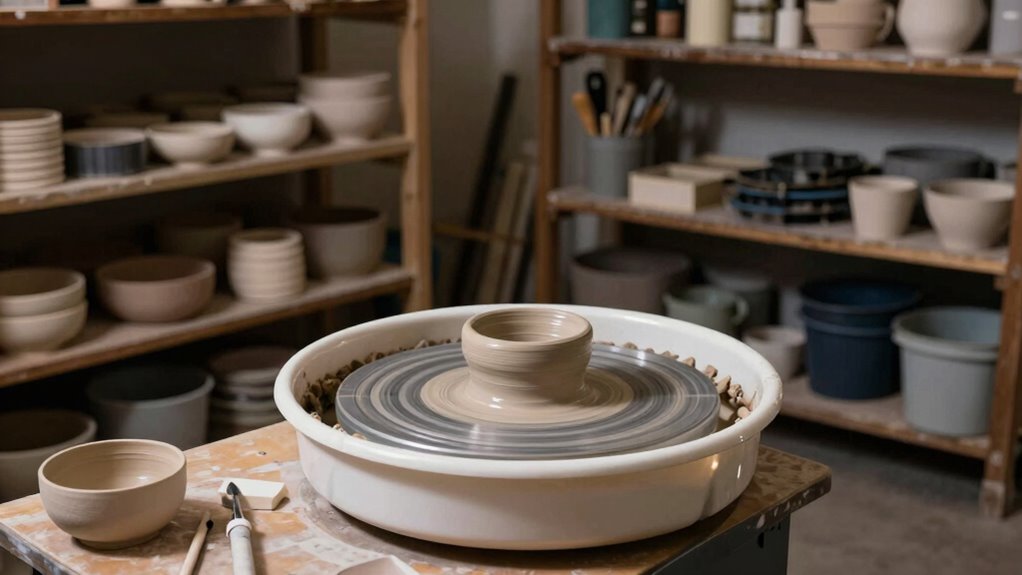

To make your pottery setup feel serious, focus on creating a dedicated workspace with good lighting and ample space around your wheel. Keep your tools organized in containers and use quality materials like high-grade clay and glazes. Invest in reliable equipment and a comfortable seat to support steady practice. Maintaining a tidy, disciplined environment helps improve your skills and stay motivated. Stay with us, and you’ll discover even more ways to elevate your studio.

Get your wardrobe favorites delivered free — and shop member deals
- Fast, free delivery on millions of items
- Access to Prime Big Deal Days deals on October 6–7
- Prime Video, Amazon Music and more included
Key Takeaways
- A dedicated, organized workspace with proper lighting and ample space signals commitment and professionalism.
- High-quality tools and materials ensure consistent, skilled results, reflecting serious craftsmanship.
- Structured storage and organization reduce distractions, fostering focus and discipline during practice.
- Consistent setup with a sturdy, level surface and ergonomic seating supports proper technique and comfort.
- An environment that encourages regular practice and growth demonstrates a genuine dedication to pottery artistry.
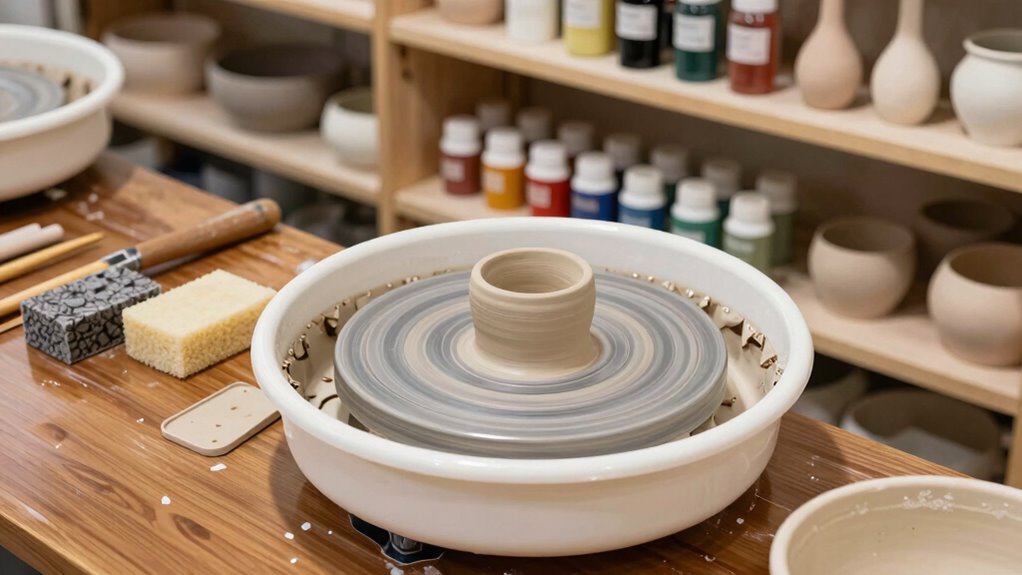
Setting up a pottery wheel in your home studio can transform your creative space into a personal workshop where you can craft pottery anytime you want. When you create a dedicated area for your wheel, it signals that you’re serious about honing your craft. A well-organized studio not only makes your work more efficient but also inspires you to practice consistently. To truly feel like you’re running a professional setup, focus on mastering ceramic techniques. These techniques—like centering clay, throwing on the wheel, and glazing—are the core skills that elevate your work from casual hobby to serious artistry.
Creating a dedicated, organized pottery space helps you develop skills and turn your hobby into professional art.
A crucial part of making your setup feel professional involves studio organization. You want your tools, clay, and supplies within easy reach, so you spend less time hunting and more time creating. Invest in shelves or storage units that keep your supplies tidy and accessible. Keep your tools—ribs, needles, trimming tools—organized in a dedicated container or a small toolbox. This not only saves time but also keeps your workspace clean, which is essential for practicing precise ceramic techniques. An organized studio helps reinforce your commitment and makes your workspace feel more like a professional studio rather than a cluttered corner. Incorporating studio organization into your setup can significantly enhance your workflow and motivation.
Your pottery wheel’s placement also plays a role in establishing a serious setup. Position it on a sturdy, level surface with ample space around it. Good lighting is essential; natural light or adjustable lamps help you see details clearly, especially when working on fine ceramic techniques like carving or glazing. Consider adding a comfortable stool or chair that supports proper posture, ensuring you can work for hours without fatigue. With a dedicated, well-organized space, you’ll develop a rhythm and discipline that turns your hobby into a serious craft. Incorporating professional-grade tools can further elevate your work and boost your confidence in your craft.
Having a set of quality tools and materials also signals your commitment. Use high-grade clay and reliable glazes, and keep your tools in good condition. Practicing consistent ceramic techniques—such as properly centering your clay or skillfully trimming your pieces—sets a professional tone for your work. When your workspace is thoughtfully arranged and your skills are focused, it reflects that you take your pottery seriously. Over time, this dedicated environment will foster growth, helping you refine your craft and produce work that stands out.
Ultimately, a serious pottery setup isn’t just about having a wheel; it’s about creating a space that encourages discipline, skill development, and creativity. When your studio is organized, your tools are quality, and your ceramic techniques are deliberate, you’ll find yourself more motivated and confident in your pottery journey.
As an affiliate, we earn on qualifying purchases.
Frequently Asked Questions
What Safety Equipment Is Essential for a Home Pottery Studio?
You need essential safety equipment like protective gear, including gloves and masks, to safeguard against dust and chemicals. Proper ventilation systems are vital to prevent inhaling harmful fumes and dust particles. Always wear eye protection when working with glazes or sprays. Ensuring good airflow and using protective gear keeps your home pottery studio safe, allowing you to focus on creating without health worries.
How Much Space Is Needed to Set up a Pottery Wheel at Home?
You’ll need at least a dedicated 6-8 feet of space to set up your pottery wheel comfortably. This allows for smooth studio aesthetics and easy wheel maintenance. But don’t underestimate the importance of leaving room to move around, store supplies, and work without feeling cramped. Creating a functional setup isn’t just about size; it’s about ensuring your space inspires creativity while keeping your equipment in top shape.
What Are the Best Storage Solutions for Pottery Tools?
You should choose storage solutions that prioritize clay organization and tool accessibility. Use labeled bins or drawers to keep your tools sorted by type, making it easy to find what you need quickly. Consider a wall-mounted rack for frequently used tools, and incorporate small containers or trays for clay scraps. These options keep your workspace tidy, enhance efficiency, and guarantee your tools are always within reach, making your setup feel professional.
How Do I Choose the Right Lighting for My Studio?
Think of your studio as Da Vinci’s workspace—bright and inspiring. You should prioritize natural light for an authentic, vibrant feel, ideally with large windows or skylights. Supplement with adjustable artificial lighting, like LED lamps, to guarantee consistent illumination during evening sessions. Opt for daylight bulbs to mimic natural light, reducing eye strain and enhancing color accuracy. This combination creates a balanced environment, perfect for precise and creative pottery work.
Can I Run a Pottery Studio in an Apartment?
Yes, you can run a pottery studio in an apartment, but you need to take into account apartment noise and building regulations. Keep pottery noise minimal by using quieter equipment and soundproofing methods. Check your building’s rules to guarantee pottery work is allowed, especially if it involves kiln firing or loud tools. Staying compliant helps you enjoy your craft without risking fines or eviction, making your studio setup both serious and sustainable.
Conclusion
So, you’ve got your pottery wheel, a few handmade shelves, and maybe a vintage apron. Congratulations, you’re officially a “serious” studio owner—at least in your own mind. Just remember, a setup isn’t about the flashy equipment or Pinterest-perfect decor; it’s about the passion you pour into every spin and splash. Keep shaping, keep dreaming, and maybe, just maybe, your home studio will be the envy of all the ceramic critics out there.
Halloween Picks
halloween
As an affiliate, we earn on qualifying purchases.