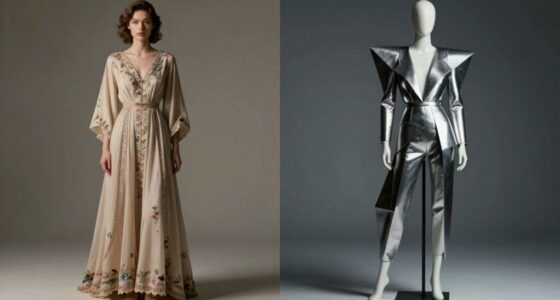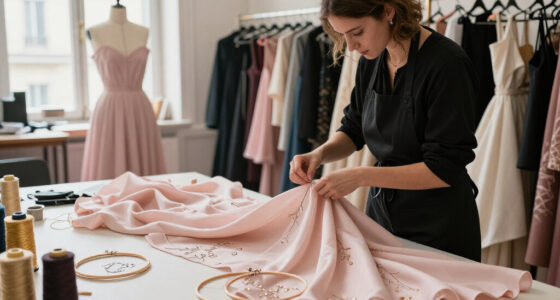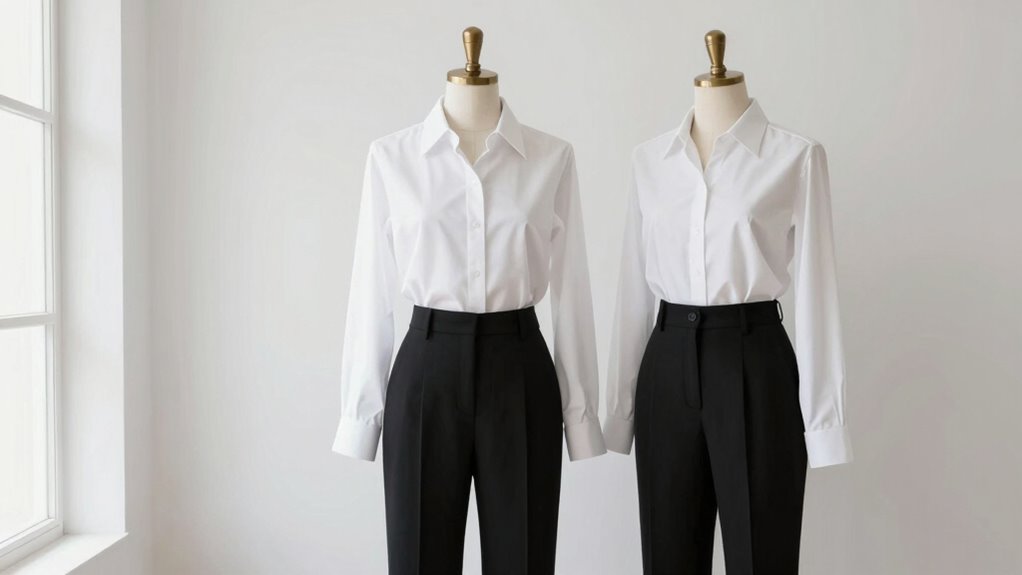

The most useful fashion skill is knowing what not to add. By avoiding over-accessorizing and choosing only a few statement pieces, you prevent your outfit from feeling cluttered. Focus on color harmony and restraint, removing anything unnecessary that distracts from your natural style. A simple, cohesive look always looks more polished. If you want to master this skill and elevate your wardrobe, there’s more to discover that can transform your overall style.

Get your wardrobe favorites delivered free with Prime
- Fast, free delivery on millions of items
- Prime Video, Amazon Music and more included
- Member-only deals all year
Key Takeaways
- Prioritize quality over quantity by selecting only essential, statement accessories that enhance rather than clutter your outfit.
- Use neutral tones as a foundation, adding color selectively to maintain a cohesive and balanced look.
- Regularly evaluate your outfit to remove unnecessary or distracting items for a polished appearance.
- Develop awareness of sustainable, ethical fashion choices to build a responsible and stylish wardrobe.
- Focus on mastering color harmony and minimal accessories to create impactful, refined outfits without overdoing it.

Mastering the art of dressing well can dramatically boost your confidence and style. One of the most valuable skills you can develop is knowing what not to add to your outfit. It’s a common mistake to think that more accessories or colors mean better style, but in reality, overdoing it can quickly undermine your look. When you’re mindful of accessorizing mistakes, you create a balanced, polished appearance. For example, piling on multiple necklaces, bracelets, and earrings can detract from your overall look rather than enhance it. Instead, choose a few statement pieces that complement your outfit, allowing each item to stand out without competing for attention. Less is often more, especially when it comes to accessories.
Less is more—choose statement accessories wisely to create a polished, balanced look.
Color coordination is another crucial aspect of dressing well. It’s tempting to mix and match every hue you own, believing it will make your outfit more vibrant or interesting. However, clashing colors can create a chaotic visual that distracts and diminishes your style. You don’t need to be a fashion expert to master color coordination—simply stick to a palette that works well together. Neutral tones like black, white, beige, and navy are versatile and easy to pair, serving as a foundation. Then, add a pop of color through one or two accessories or clothing items that complement your base colors. This approach ensures your outfit looks intentional and cohesive rather than chaotic or mismatched.
Knowing what not to add also involves understanding when to stop. Sometimes, less is more, and restraint is key. If your outfit feels cluttered or overwhelming, take a step back and evaluate what’s necessary. Remove any accessories that don’t serve a purpose or don’t enhance the overall look. This might mean ditching that extra bracelet or that overly bright scarf. The same principle applies to color choices—if you’re unsure, opt for a monochromatic look or stick to a simple color scheme. Developing an awareness of fashion sustainability and eco-friendly fabrics can help you make more sustainable choices, such as selecting eco-friendly fabrics or supporting ethical brands. This not only benefits the environment but also encourages a more thoughtful approach to wardrobe building.
Ultimately, the most useful fashion skill you can develop is discernment—knowing what to leave out. Avoid accessorizing mistakes by selecting pieces carefully, and master color coordination to create harmonious outfits. When you focus on these principles, your style becomes more refined and your confidence grows. Remember, fashion isn’t just about adding more; it’s about choosing what’s essential and letting your natural style shine through. Less distraction, more impact—that’s the secret to dressing well.
As an affiliate, we earn on qualifying purchases.
Frequently Asked Questions
How Can I Tell if an Accessory Is Too Much?
You can tell if an accessory is too much by watching for accessory overload—when your look feels cluttered or overwhelming. If your statement pieces dominate or clash, it’s a sign to pare down. A good rule is to choose one bold accessory and keep the rest subtle. When everything competes for attention, you’re likely overdoing it. Simplify your accessories to let your main pieces shine without distracting from your overall style.
Does Minimalism Always Mean Boring?
Minimalism doesn’t have to be boring; it’s about smartly using color coordination and pattern mixing. When you choose a simple outfit, add one statement piece or play with textures and subtle patterns to keep it interesting. Focus on clean lines and neutral tones, then introduce pops of color or unexpected details. This balance keeps your look fresh and sophisticated without overwhelming, proving minimalism can be both elegant and engaging.
When Is It Okay to Break Fashion Rules?
You should break fashion rules when you feel confident enough to experiment with your style—about 60% of fashion enthusiasts say daring choices boost self-expression. Avoiding fashion faux pas is key, but style experimentation lets you showcase your personality. When you mix patterns or colors unexpectedly, it’s okay to break the rules, as long as you own your look. Confidence transforms a risky move into a bold fashion statement.
How Do I Balance Trendy and Timeless Pieces?
To balance trendy and timeless pieces, focus on your seasonal wardrobe by mixing current trends with classic staples. Use color coordination to create harmony, pairing bold, trendy items with neutral, timeless basics. Limit statement pieces to avoid overwhelming your look, and keep versatile, enduring pieces in rotation. This approach helps you stay fashionable without sacrificing the elegance of timeless style, ensuring your outfits remain fresh yet sophisticated.
Can Knowing What Not to Add Improve My Confidence?
Yes, knowing what not to add can boost your confidence. When you understand your personal style and focus on wardrobe essentials, you avoid clutter and over-accessorizing. This clarity helps you feel more assured in your choices, making dressing effortless. By removing unnecessary items, you create a streamlined wardrobe that highlights your best features and boosts your confidence, ensuring you always look polished and authentic without second-guessing yourself.
Conclusion
Mastering what not to add is your secret weapon in fashion. By simplifying your outfits, you create a polished look effortlessly. Did you know that 80% of style experts agree that minimalism makes outfits appear more sophisticated? So, next time you dress, remember: less truly is more. Focus on quality over quantity, and trust your eye to spot what’s unnecessary. That’s how you turn everyday wear into a standout statement—without overdoing it.
Halloween Picks
halloween
As an affiliate, we earn on qualifying purchases.