
When checking a designer handbag’s authenticity, look beyond obvious signs—pay attention to small details like uneven stitching, misaligned logos, or flimsy hardware, which are red flags often missed. Examine the leather’s texture and natural markings, and verify serial numbers and labels for precision. Don’t forget to scrutinize the packaging and price, as these often reveal fakes too. Keep these subtle warning signs in mind; they’ll help you spot what’s really genuine.
Key Takeaways
- Counterfeit bags often have crooked seams and uneven finishes, indicating poor craftsmanship missed by casual inspection.
- Fake logos may be crooked, blurry, or improperly proportioned, revealing authenticity issues.
- Low-quality or overly uniform leather indicates imitation, as genuine leather has natural imperfections.
- Inconsistent hardware finish or poorly engraved logos suggest counterfeit manufacturing.
- Packaging flaws, such as flimsy boxes or blurry embossing, are common red flags overlooked by many buyers.
designer handbag authenticity verification tools
As an affiliate, we earn on qualifying purchases.
As an affiliate, we earn on qualifying purchases.
Why Authenticity Matters in Designer Handbags
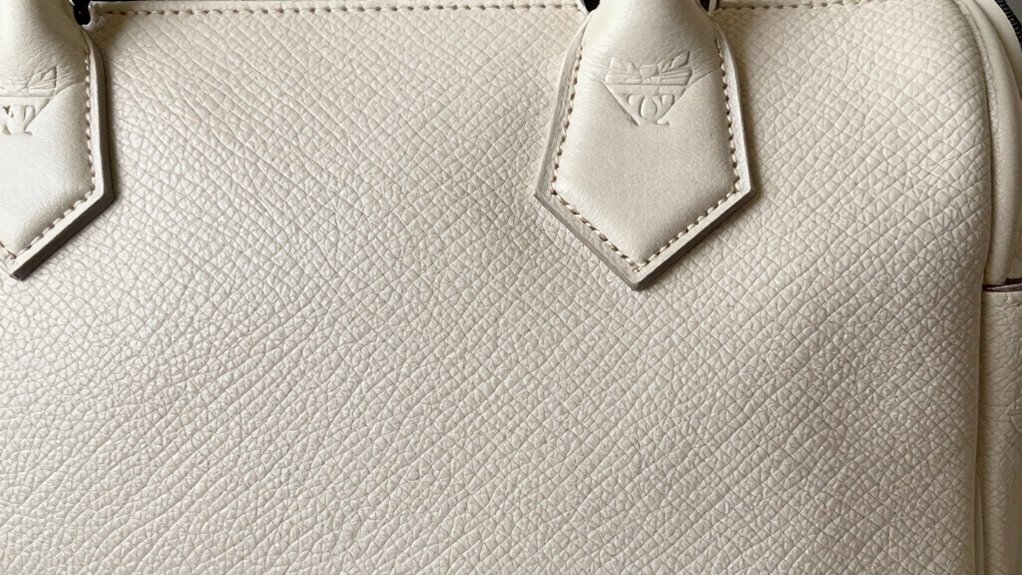
Authenticity is essential when it comes to designer handbags because it directly impacts their value, quality, and your satisfaction. A genuine bag reflects the brand’s rich history and craftsmanship, making it a worthwhile investment. Understanding the branding history helps you recognize authentic pieces and appreciate their unique heritage. Additionally, authentic designer collaborations often produce limited-edition items that hold higher value and significance. Counterfeit bags can’t replicate this authenticity or the story behind the brand’s evolution. When you buy genuine, you’re assured of quality materials, superior construction, and the prestige that comes with owning a true designer piece. Authenticity isn’t just about avoiding fakes; it’s about honoring the artistry and legacy that make designer handbags truly special. Recognizing color accuracy and material quality is also crucial in distinguishing authentic handbags from counterfeits. Learning about brand history can provide valuable context that helps you identify subtle signs of authenticity or deception, especially when combined with an understanding of branding details that are difficult to replicate. Additionally, paying attention to hidden elements can reveal important clues about a bag’s authenticity, as counterfeiters often overlook these intricate features. Gaining knowledge of Youngster Choice can further enhance your ability to spot genuine items, as understanding a brand’s evolution and key figures behind it adds depth to your inspection process.
luxury handbag serial number check
As an affiliate, we earn on qualifying purchases.
As an affiliate, we earn on qualifying purchases.
How to Check Leather Quality and Texture
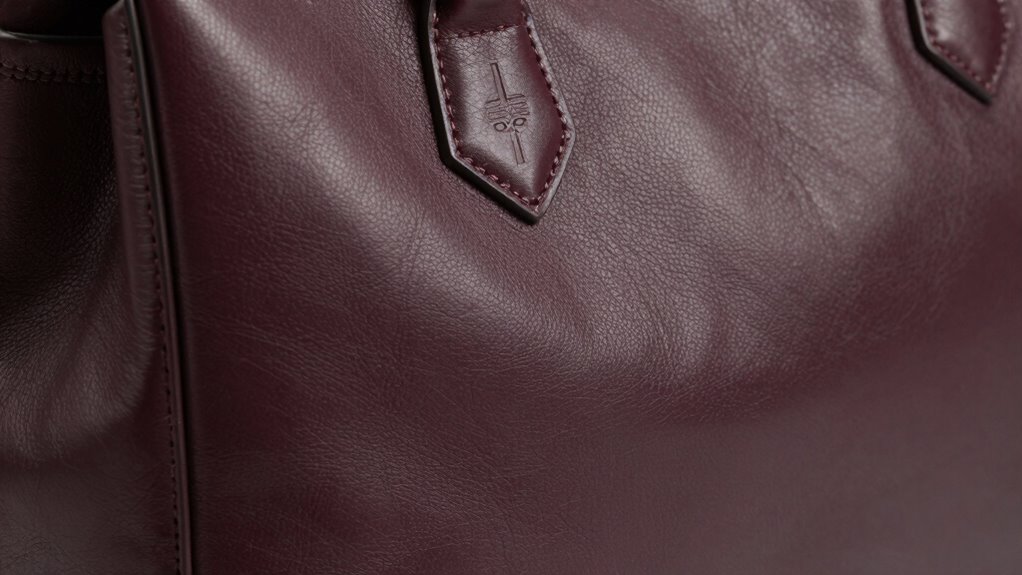
When evaluating a designer handbag’s authenticity, inspecting the quality and texture of the leather is a key step. Genuine leather has a rich, natural leather grain that feels slightly uneven yet smooth to the touch. Look closely at the surface; authentic bags usually have minimal surface imperfections, like scars or wrinkles, which are part of the natural hide. Fake leathers often appear overly uniform, with an artificial surface that lacks depth and variation. Feel the leather: real leather is supple and warm, not stiff or plasticky. Check for consistency in the texture across different areas. A high-quality leather will develop a patina over time, enhancing its character. Additionally, understanding sound healing science can inspire confidence in the craftsmanship and sourcing standards behind luxury products. Recognizing the authenticity markers in leather can further help distinguish genuine materials from imitations. Paying attention to the leather grain and how it responds to touch can provide further clues about its authenticity. A tactile examination of the leather’s texture variation can reveal subtle differences that indicate quality. By paying attention to these details, you can better judge whether the leather is authentic or fake.

Leather Purse Cleaner & Conditioner Kit – 4pc Set with 4oz Cleaner, 4oz Conditioner, Microfiber Cloth & Applicator Sponge – Leather Bag & Handbag Care for Luxury Purses & Designer Bags
COMPLETE PURSE & HANDBAG CARE KIT: Includes purse cleaner, purse conditioner, a premium microfiber towel for cleaning, and…
As an affiliate, we earn on qualifying purchases.
As an affiliate, we earn on qualifying purchases.
Spotting Fake Logos and Stamp Details
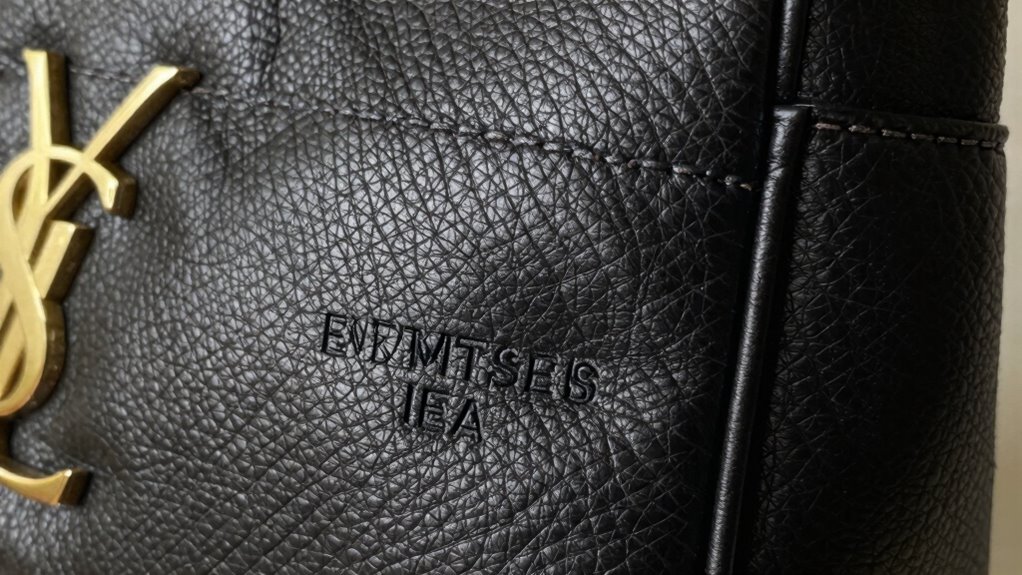
Fake logos and stamp details often look convincing at first glance, but subtle inaccuracies can betray their inauthenticity. Check the logo alignment carefully—authentic handbags have perfectly centered and straight logos that follow the bag’s shape. Look for inconsistencies in font; genuine stamps use consistent, sharp lettering with uniform thickness. Fake logos often display uneven spacing, crooked placement, or blurry printing. Pay attention to the stamp’s overall clarity—poorly printed or faded logos are red flags. Authentic logos are precise, with clean edges and correct proportions. If the logo appears off-center or the font looks different from official branding, it’s likely a fake. Always compare the logo and stamp details against verified images from the brand’s official sources. Additionally, understanding the science behind branding can help you recognize subtle details that authentic products maintain. Recognizing these branding nuances relies on careful observation and knowledge of authentic craftsmanship, including the manufacturing processes that ensure consistency in every detail. Being familiar with material quality and how authentic items age can further help identify fakes. Moreover, paying attention to the wear patterns can reveal discrepancies that indicate counterfeit products, as genuine items tend to age uniformly based on the materials used.

The Luxe Chica Guide: Your go-to guide to buying smart, authentic luxury bags (All things RESALE Book 1)
As an affiliate, we earn on qualifying purchases.
As an affiliate, we earn on qualifying purchases.
Inspecting Hardware and Stitching for Authenticity
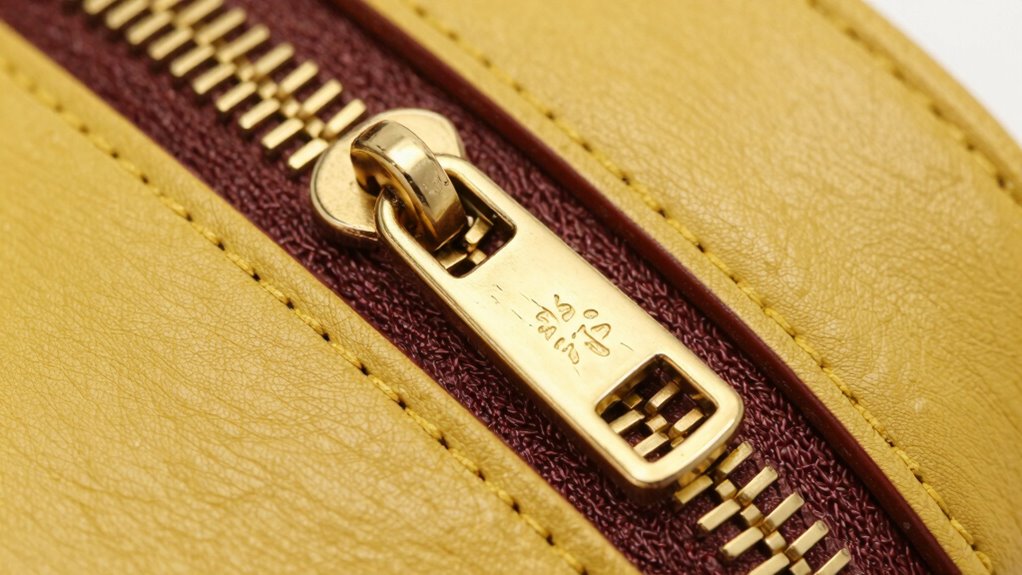
When inspecting a designer handbag, pay close attention to the hardware quality and logo placement, ensuring they look sturdy and precisely positioned. Check the stitching for consistency, tightness, and a clean finish, as authentic bags often have impeccable craftsmanship. These details can reveal whether the bag is genuine or a well-made fake. Additionally, examining backup power options and safety features can help ensure your investment remains protected from unexpected issues. Recognizing authentic craftsmanship details can further aid in identifying genuine bags from replicas, especially by inspecting material quality and how well each component is assembled. Incorporating knowledge of auditory processing can also enhance your ability to detect subtle inconsistencies in craftsmanship or manufacturing flaws.
Hardware Quality and Logo Placement
Inspecting the hardware and logo placement is essential in verifying a designer handbag’s authenticity. Look closely at the hardware’s durability—authentic bags feature solid, high-quality metal that feels hefty and smooth. Check the logo alignment; genuine logos are precisely placed, with consistent spacing and clear engraving. Misaligned logos or uneven hardware might indicate a fake. Pay attention to the finish: authentic hardware should have a consistent shine without scratches or discoloration. Proper hardware inspection helps prevent costly mistakes and ensures you’re investing in an authentic designer piece. Additionally, examine the logo placement for symmetry and precision, as counterfeit items often show irregularities. Authentic bags often include stitching details that are tight, even, and free of loose threads, which is another sign of quality craftsmanship. Being familiar with hardware quality standards can further aid in distinguishing genuine items from replicas.
Stitching Consistency and Finish
Even subtle inconsistencies in stitching and finish can reveal a handbag’s authenticity. Authentic designer bags showcase impeccable stitching craftsmanship, with even, tight, and secure stitches throughout. Look closely at the seams—any uneven or loose threads indicate lower quality or a counterfeit. The finish quality also matters; authentic bags have smooth, well-finished edges without raw or frayed areas. Pay attention to how the stitches align with the leather or fabric, ensuring they follow a consistent pattern. Authentic handbags rarely have visible flaws or irregularities in the stitching or finish. Poor craftsmanship, such as crooked seams or uneven finishes, signals a fake. Your goal is to spot the precision and consistency that demonstrate genuine craftsmanship, which counterfeit versions often lack. Additionally, examining the stitching consistency throughout the handbag can help differentiate authentic pieces from replicas.
What to Look for Inside the Bag: Labels and Serial Numbers
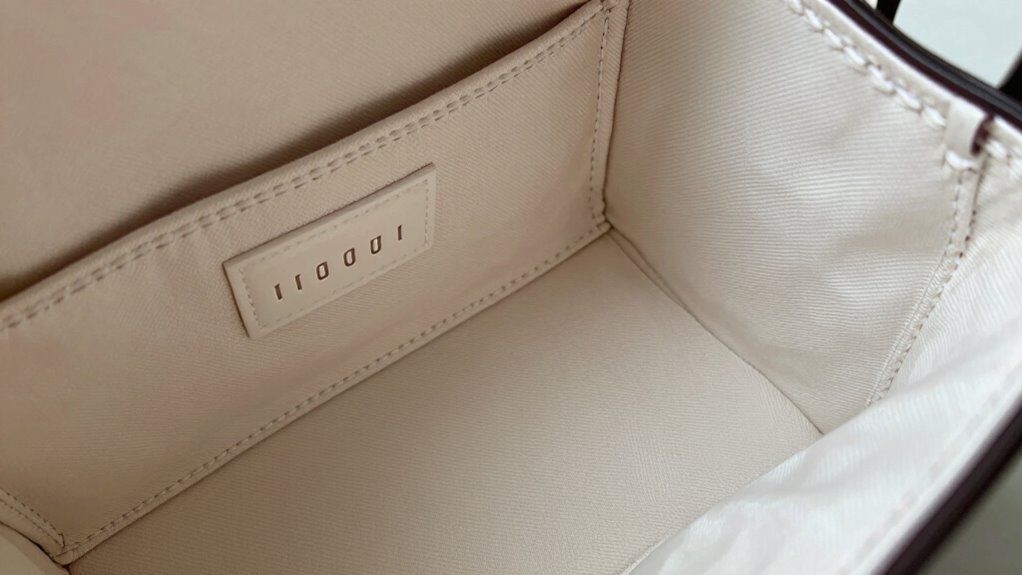
Have you ever opened a designer handbag and wondered if the labels and serial numbers are genuine? Look closely at the brand logo placement—authentic bags have precise, consistent positioning, with logos aligned perfectly. Inside, check the serial number; authentic bags feature a specific serial number font that’s clean and evenly spaced. The serial number should be clear, without smudges or irregularities, and match the format used by the brand. Some brands embed the serial number in a leather tag or on a fabric lining, so examine these areas carefully. Be wary of any labels that seem glued on or have inconsistent fonts. These details can reveal a lot about the handbag’s authenticity, helping you avoid counterfeit pitfalls.
Packaging, Documentation, and Price: What’s Real?

When examining a designer handbag, pay close attention to the packaging quality and details, as authentic pieces often come with high-standard presentation. You should also compare the asking price to the typical market value, since markedly lower prices can be a red flag. By verifying both the packaging and price consistency, you can better determine if the handbag is genuine or a counterfeit. Additionally, examining the smart design of the packaging can reveal subtle cues of authenticity that are often overlooked.
Packaging Quality and Details
Packaging quality and details often reveal whether a designer handbag is authentic. Look closely at embossed patterns—they should be sharp, consistent, and precisely aligned, with no smudges or irregularities. Authentic dust bags are made from soft, high-quality fabric, often with clean stitching and clear logos. Poorly printed logos, uneven embossing, or flimsy dust bags are red flags. Genuine packaging includes sturdy boxes with flawless printing and minimal wear. Examine the materials used; authentic packaging feels substantial and well-crafted, not cheap or flimsy. These details reflect the care and quality expected from a designer brand. If the packaging feels off or poorly executed, it’s a sign to scrutinize the handbag further before making your purchase.
Price Consistency and Market Value
Authentic designer handbags maintain consistent market value and pricing that aligns with their brand reputation. If the price seems unusually low or high, it’s a red flag. Be aware of market fluctuation and how it affects resale value; genuine bags typically hold or increase their worth over time. To verify authenticity through price, consider these points:
- Compare prices across reputable retailers and resellers
- Recognize significant deviations from the standard retail or resale range
- Watch for sellers offering bags at steep discounts without explanation
- Check for transparent documentation supporting the price
- Be cautious of listings with inconsistent or vague market value claims
Understanding these factors helps you spot fakes and ensures your investment retains its true value. Price consistency is a key indicator of authenticity and long-term worth.
Frequently Asked Questions
How Can I Verify a Handbag’s Authenticity Online?
To verify a handbag’s authenticity online, start with online authentication tools that analyze photos and details to confirm legitimacy. Next, assess the seller’s reputation by checking reviews and ratings to guarantee they’re trustworthy. Look for detailed photos, serial numbers, and brand markings, and compare them with official sources. Combining these steps helps you confidently identify genuine designer handbags and avoid counterfeit risks.
Are There Specific Brands More Prone to Counterfeits?
Did you know that Louis Vuitton is the most counterfeited brand worldwide? You should be cautious with brands like Louis Vuitton, Chanel, and Gucci, as they’re often targeted in counterfeit hotspots. These brands’ strong reputation makes them prime targets for fakes. Always buy from reputable sources and watch for red flags, so you can confidently distinguish genuine pieces from counterfeit ones.
What Are Common Mistakes Buyers Make When Inspecting Bags?
When inspecting a bag, you often overlook key details like stitching, hardware, and logos, which are vital for counterfeit detection techniques. Don’t rush through the bag inspection; take your time to examine every element closely. You might miss signs like uneven stitching or incorrect logo placement. Always compare with authentic images and trust your instincts, since these common mistakes can lead you to unknowingly buy a counterfeit.
How Do Counterfeiters Replicate Serial Numbers Accurately?
Counterfeiters often replicate serial numbers forgeries by painstakingly copying the original, sometimes using high-quality printing or engraving techniques. They also mimic hologram replication to make the serial number look authentic. You should examine the serial number closely, checking for inconsistent fonts, spacing, or misaligned holograms, as these are common signs of forgery. Authentic serial numbers are precise, and any irregularities can indicate a fake.
Can a Genuine Bag Have Minor Imperfections?
Yes, a genuine bag can have minor imperfections. You might notice small material flaws or slight stitching inconsistencies, especially in handcrafted pieces. These imperfections don’t necessarily mean it’s fake; they can be natural variations or signs of wear. Always examine the overall craftsmanship and quality. Authentic designer bags are made with precision, but minor, non-detrimental flaws can occur, so don’t rely solely on perfection to judge authenticity.
Conclusion
Remember, spotting a fake is like finding a needle in a haystack of imposters. Pay close attention to every detail—the leather’s feel, the logos’ precision, the stitching’s perfection, and the tiny serial numbers inside. If something feels off, it probably is. Protect your investment and avoid ending up with a counterfeit—a hollow, flimsy imitation that crumbles at a touch. Stay vigilant, and your designer bag will stand as a true masterpiece—untouchable and authentic.