Pattern-making transforms your design ideas into accurate templates by combining your sketches, measurements, and fabric choices. You start with concept drawings, then create flat patterns through paper or digital tools, considering body proportions. Using fabric manipulation techniques like pleating or draping helps shape the garment. Understanding fabric properties guarantees proper fit and structure. By refining your patterns with tests and adjustments, you can craft well-fitting, innovative garments—continue to explore, and you’ll learn how to master each step.
Key Takeaways
- Pattern-making transforms sketches into flat templates by drafting measurements, shapes, and seam placements for garment construction.
- It involves translating design concepts into precise paper or digital patterns, considering fabric properties and body measurements.
- Fabric manipulation techniques like pleating, draping, and gathering are integrated into pattern development for texture and structure.
- Historical patterns serve as foundational templates that can be modified or combined to create innovative designs.
- Pattern development includes creating test garments (muslins) and refining patterns through iterative adjustments for fit and aesthetic.
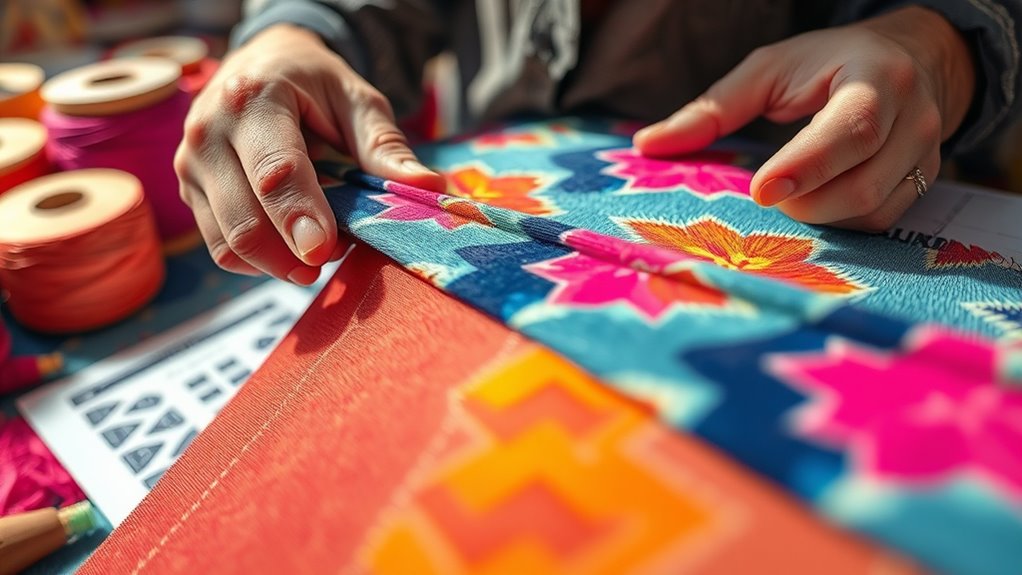
Have you ever wondered how designers transform simple ideas into complex garments? It all starts with pattern-making, a process that combines creativity, technical skill, and an understanding of fabric behavior. At the core of this process are techniques like fabric manipulation and the study of historical patterns, which help bring unique designs to life. Fabric manipulation involves shaping fabric through techniques such as pleating, draping, and gathering, giving garments texture and dimension. By skillfully manipulating fabric, designers can create intricate details or structural elements that elevate a simple pattern into a work of art. This hands-on approach allows for experimentation, enabling designers to see firsthand how a fabric responds to different manipulations, which informs their final pattern design. Additionally, understanding the fiber properties of different textiles helps designers anticipate how fabrics will behave during manipulation and construction. Historical patterns play a significant role in pattern-making, offering a foundation rooted in tradition and craftsmanship. Many modern designs draw inspiration from past eras, adapting their patterns to contemporary styles. Understanding these historical patterns helps designers recognize classic silhouette proportions, seam placements, and construction techniques. It’s like having a library of tried-and-true templates that can be modified or combined to create something new. When you study these patterns, you gain insight into how garments were constructed centuries ago, which can influence your approach to pattern drafting today. This historical knowledge also ensures that new designs respect traditional craftsmanship while pushing innovation forward. Transforming raw ideas into precise patterns involves several steps. First, you start with sketches or concept drawings that capture your vision. Next, you translate those ideas into flat patterns on paper or digital tools, carefully considering body measurements and proportions. During this phase, fabric manipulation techniques may be simulated or incorporated directly into the pattern to explore how the fabric will behave once sewn. You also reference historical patterns to ensure accuracy or to infuse your designs with a vintage touch. Once the pattern is drafted, you cut and sew a muslin or test garment. This prototype allows you to assess fit, drape, and overall aesthetic. Adjustments are made to refine the pattern until it aligns perfectly with your original vision. In essence, pattern-making is a blend of art and science. It requires understanding the properties of different fabrics and how they respond to manipulation, as well as drawing from historical patterns that have stood the test of time. When you master these elements, you gain the ability to craft garments that are both innovative and rooted in tradition. The process is iterative and hands-on, but with patience and practice, you’ll develop a keen eye for translating ideas into precise, wearable pieces. Pattern-making isn’t just about creating templates; it’s about shaping ideas into tangible, beautiful garments that tell a story through their construction.

13PCS Styling Sewing French Curve Ruler Set, Dress Makers Rulers Clear Sewing Tailors Pattern Making Ruler for Fashion Design and Guides
Update English Language Indicator Rulers: 13PCS Package including Ten Rulers, Button Ruler, Curve Ruler, Scale Triangle, Grading Ruler,…
As an affiliate, we earn on qualifying purchases.
As an affiliate, we earn on qualifying purchases.
Frequently Asked Questions
What Are the Different Types of Pattern-Making Techniques?
You can use various pattern-making techniques like draping techniques and flat patterning. Draping involves shaping fabric directly on a dress form to create a design, giving you a three-dimensional look. Flat patterning, on the other hand, uses paper patterns and measurements to develop a pattern before fabric cutting. Both methods help you craft precise, well-fitting garments, allowing for creative flexibility in your designs.
How Do Designers Choose the Right Pattern for a Project?
You choose the right pattern for your project by considering fabric selection and trend analysis. First, analyze the fabric’s weight, drape, and texture to guarantee the pattern complements it. Then, stay updated on current trends to match your design’s style with market demands. Experiment with different patterns and prototypes, trusting your intuition and technical knowledge to create a cohesive, fashionable final piece that aligns with your vision.
What Tools Are Essential for Professional Pattern-Making?
You need essential tools like rulers, French curves, and pattern paper to excel in professional pattern-making. While fabric types influence your tool choices, pattern grading guarantees your designs fit perfectly across sizes. A good set of scissors, marking tools, and a computer with CAD software streamline your workflow. These tools, combined with knowledge of fabric behavior and grading techniques, help you create precise, professional patterns that translate seamlessly into finished garments.
How Does Pattern-Making Impact the Final Garment Fit?
Pattern-making directly impacts the final garment fit by shaping how fabric drapes on your body. When you master garment draping, you guarantee the fabric flows smoothly and comfortably. Pattern grading adjusts the pattern size for different sizes, maintaining fit consistency. These techniques help you create well-fitting garments that flatter the wearer, reducing unnecessary alterations and enhancing overall comfort and style.
Can Pattern-Making Be Learned Without Formal Training?
Yes, you can learn pattern-making without formal training. With self-taught skills, you can explore online tutorials, videos, and articles to develop your understanding. Practice regularly, experiment with different techniques, and learn from others in sewing communities. While it might take time, dedication and resourcefulness can help you master pattern-making effectively, enabling you to create well-fitting garments without attending traditional classes.

Custom Pattern Making with PatternMaker Software: A Step-by-Step Manual for the Professional Studio With an Introduction to Macro Generator
As an affiliate, we earn on qualifying purchases.
As an affiliate, we earn on qualifying purchases.
Conclusion
Now that you know how pattern-making works, you hold the blueprint to bring your designs to life. Think of it as the map that guides your creativity through uncharted waters, ensuring every stitch lands perfectly. Mastering this skill transforms your ideas into tangible garments, making you the captain of your fashion journey. With practice, you’ll find yourself sailing smoothly, turning raw fabric into wearable art—your pattern is the key to opening endless possibilities.

Fabric Manipulation: 150 Creative Sewing Techniques
As an affiliate, we earn on qualifying purchases.
As an affiliate, we earn on qualifying purchases.

AK TRADING CO. Muslin Fabric/Textile Unbleached – Draping Fabric – Natural 10 Yards Medium Weight – 100% Cotton (63in. Wide)
✅ CONTENTS & SIZE: 100% cotton and 63" wide natural unbleached medium weight natural cotton muslin fabric. Order…
As an affiliate, we earn on qualifying purchases.
As an affiliate, we earn on qualifying purchases.

Born in Dubai to Pakistani parents, Aisha deeply understands Middle Eastern and South Asian luxury markets. She excels in forging strategic partnerships with top-tier luxury brands worldwide, fostering cross-cultural collaborations that enhance our global presence.