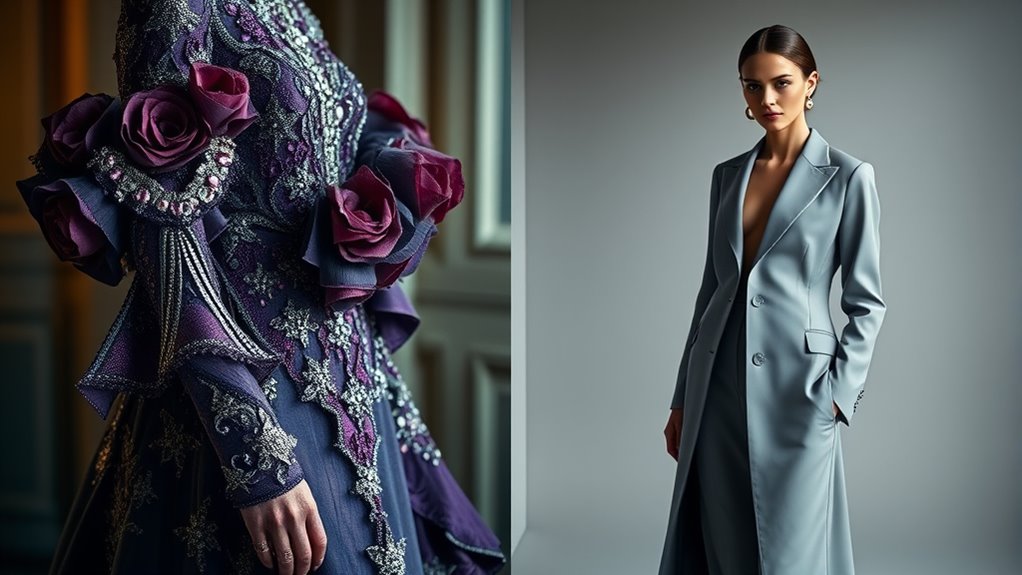

Haute couture is all about fully custom, handcrafted garments made with meticulous craftsmanship and luxurious fabrics, often taking dozens of hours to create. Demi-couture offers high-quality, limited-edition pieces that balance luxury and practicality, using some standard elements to make designs more accessible. If you’re curious about how these two luxury tiers differ in craftsmanship, personalization, and exclusivity, you’ll find more details as you explore further.
Key Takeaways
- Haute couture involves highly handcrafted, one-of-a-kind garments with complex embroidery, while demi-couture offers limited-edition pieces with standardized elements.
- Haute couture provides a personalized, collaborative experience with multiple fittings, whereas demi-couture balances quality with broader accessibility.
- Haute couture is exclusive, made in small quantities, and commands higher prices, while demi-couture is more affordable yet still luxurious.
- Haute couture emphasizes meticulous craftsmanship and luxury fabrics, with extensive time investment; demi-couture incorporates modern technology for efficiency.
- Customers of haute couture are part of an elite clientele seeking full customization; demi-couture appeals to those desiring high-end style with less investment.
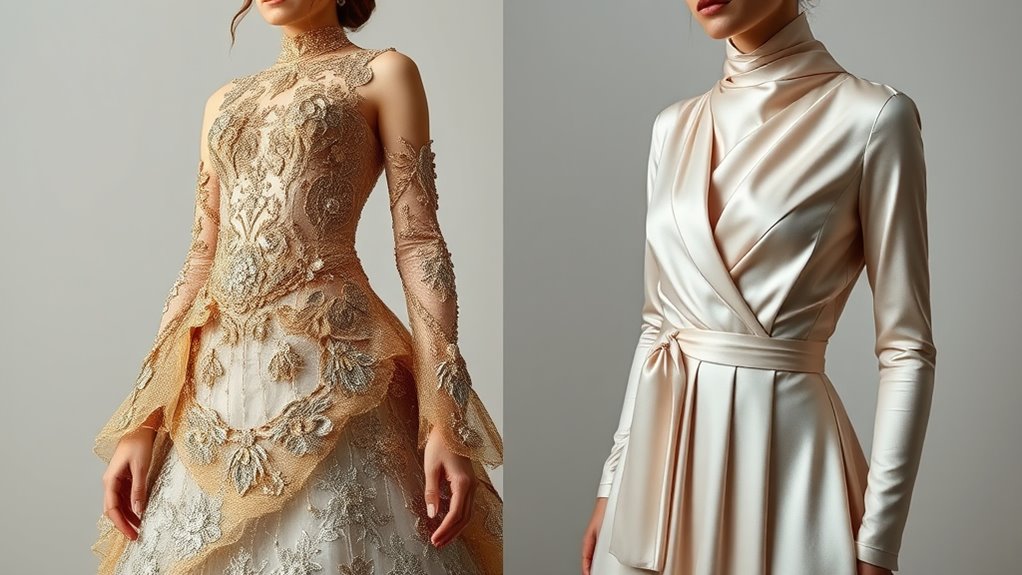
When you compare haute couture and demi-couture, it’s essential to understand that both represent luxury fashion but differ markedly in craftsmanship, exclusivity, and price. Haute couture is the pinnacle of bespoke design, characterized by meticulous fabric craftsmanship. Every piece is handcrafted by skilled artisans, often involving complex embroidery, hand-sewn details, and the use of luxurious fabrics. This level of craftsmanship means that each garment takes dozens, sometimes hundreds, of hours to complete, ensuring unparalleled quality and artistry. As a client, you’re not just purchasing a dress; you’re investing in a one-of-a-kind piece that embodies the highest standards of tailoring and material selection.
Haute couture exemplifies meticulous craftsmanship and bespoke artistry, creating exclusive, one-of-a-kind fashion masterpieces.
Client exclusivity is a core element of haute couture. When you opt for haute couture, you gain access to a highly personalized experience. Designers work closely with you to create a custom garment that fits your body perfectly and reflects your individual style. The process involves multiple fittings, fittings, and adjustments to ensure every detail aligns with your vision. Because of this tailored approach, haute couture garments are incredibly limited in number, making them truly exclusive. You’re not just another customer; you’re part of a select group who appreciates the rarity and artistry behind these creations.
In contrast, demi-couture offers a slightly more accessible approach to luxury fashion. While it still emphasizes high-quality fabrics and craftsmanship, the level of customization isn’t as extensive as with haute couture. Demi-couture pieces are often made in limited quantities, but they may be produced using some standardized elements. This allows designers to maintain a high level of quality without the intense, time-consuming process associated with haute couture. For you, demi-couture provides an opportunity to own beautifully crafted garments that carry the luxury brand’s signature style but with a bit more practicality and accessibility. Additionally, advancements in machine learning technology are beginning to influence the production and customization processes in high-end fashion, potentially expanding options for consumers.
Price-wise, haute couture commands astronomical prices due to the extensive craftsmanship, personalized service, and exclusivity involved. Demi-couture, while still expensive, is generally more affordable, making it appealing to those who desire luxury but aren’t ready to invest in a fully bespoke piece. Ultimately, your choice depends on whether you prioritize full customization and exclusivity or prefer a high-end garment that still offers exceptional quality and design, but with a slightly broader reach. Both options represent the finest in fashion, but understanding these distinctions helps you make an informed decision about what aligns best with your style and values.
haute couture evening gown
As an affiliate, we earn on qualifying purchases.
As an affiliate, we earn on qualifying purchases.
Frequently Asked Questions
What Materials Are Exclusive to Haute Couture?
You’ll find that haute couture uses exclusive luxury fabrics like silk taffeta, velvet, and brocade, which are often custom-dyed or woven for each piece. Hand embroidery is a hallmark, with intricate beadwork and appliqué that elevate the design. These materials and techniques make haute couture garments unique, luxurious, and highly labor-intensive, setting them apart from other fashion levels.
How Long Does It Take to Create a Couture Piece?
Creating a couture piece takes time, effort, and patience. You’ll spend weeks perfecting fabric manipulation, ensuring each fold and drape is flawless. You’ll dedicate hours to hand embroidery, adding intricate details that bring the design to life. Every stitch and fabric choice is deliberate. So, expect a process of meticulous craftsmanship, where precision in fabric manipulation and hand embroidery transforms a concept into a stunning, one-of-a-kind masterpiece.
Are Demi-Couture Garments Customizable?
Yes, demi-couture garments are customizable. You can work with designers to achieve tailoring precision and select fabrics that suit your style and preferences. While they may not involve the same level of handcrafting as haute couture, demi-couture pieces still offer personalized touches, allowing you to influence details like fit, fabric choices, and minor design adjustments. This makes each piece uniquely tailored to your desires without the extensive craftsmanship of haute couture.
What Is the Average Cost Difference Between the Two?
Imagine stepping into a domain where each stitch whispers exclusivity. You’ll find that haute couture typically costs 3 to 4 times more than demi-couture, reflecting a significant price premium from luxury brands. This difference symbolizes the meticulous craftsmanship and personalized touch that define haute couture, making it a true investment in artistry. As you explore, expect haute couture to be a lavish symbol of ultimate luxury, while demi-couture offers refined elegance at a more accessible price.
Do Both Follow the Same Fashion Calendar?
You might think both follow the same fashion calendar, but they don’t. Haute Couture designers adhere to a strict seasonal scheduling, showcasing their collections during dedicated runway presentations in January and July. Demi-Couture, however, often has a more flexible approach, with some designers aligning with couture schedules or presenting collections throughout the year. So, while both are fashion-forward, their seasonal timing and runway events differ markedly.
demi-couture designer dress
As an affiliate, we earn on qualifying purchases.
As an affiliate, we earn on qualifying purchases.
Conclusion
Ultimately, choosing between haute couture and demi-couture depends on your style and needs. Imagine attending a wedding where you want a one-of-a-kind gown—haute couture offers that exclusivity. Or, if you prefer something luxurious yet more accessible, demi-couture provides elegance with a quicker turnaround. Whether you’re inspired by a famous designer’s custom piece or a bespoke but ready-to-wear option, understanding these differences helps you make the perfect statement for any special occasion.
luxury custom tailored dress
As an affiliate, we earn on qualifying purchases.
As an affiliate, we earn on qualifying purchases.
limited edition high-end fashion
As an affiliate, we earn on qualifying purchases.
As an affiliate, we earn on qualifying purchases.
Born in Dubai to Pakistani parents, Aisha deeply understands Middle Eastern and South Asian luxury markets. She excels in forging strategic partnerships with top-tier luxury brands worldwide, fostering cross-cultural collaborations that enhance our global presence.