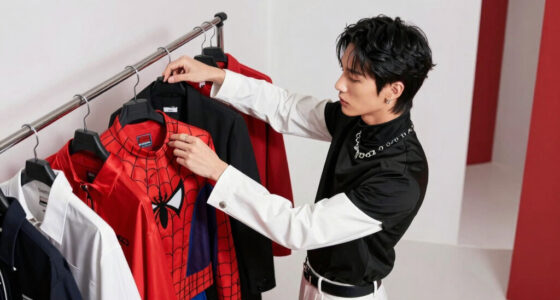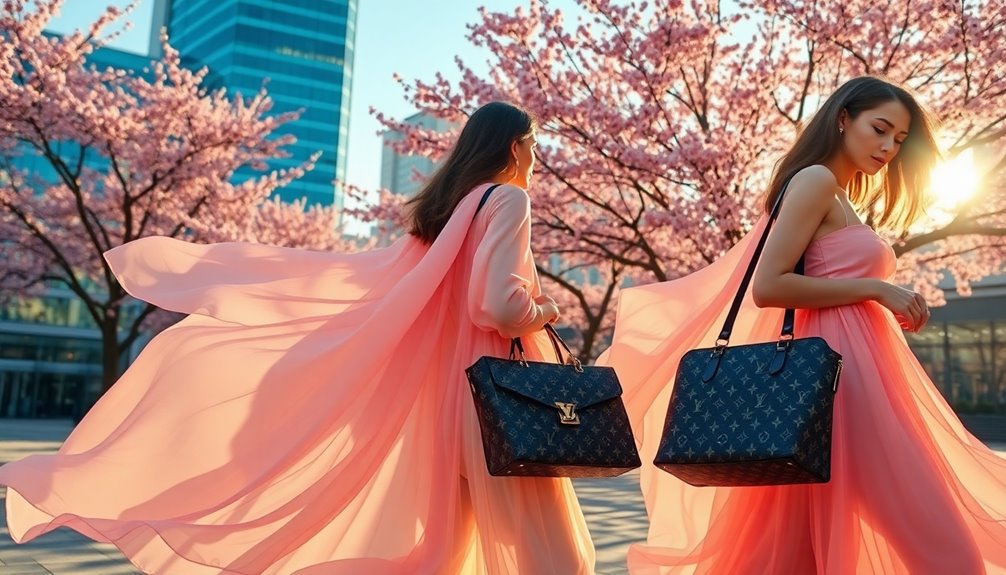
To build outfit contrast through shape, finish, and weight, mix fitted pieces with loose, flowing garments to create visual interest. Combine different fabric finishes, like matte and glossy, to add depth and highlight textures. Use varied fabric weights—pair heavier fabrics with lighter ones—to create tactile contrast and structure. Balancing these elements keeps your look dynamic and cohesive; exploring these techniques further will help you master stylish, eye-catching outfits.

Get your wardrobe favorites delivered free with Prime
- Fast, free delivery on millions of items
- Prime Video, Amazon Music and more included
- Member-only deals all year
Key Takeaways
- Mix fitted and loose garments to create dynamic shapes and emphasize contrast in silhouette.
- Combine matte and glossy fabrics to add visual interest through finish variation.
- Use heavier fabrics with lighter ones to enhance tactile and visual contrast.
- Juxtapose structured, angular shapes with soft, rounded silhouettes for balanced contrast.
- Coordinate colors to complement contrasting shapes and textures, maintaining overall harmony.

Creating a striking outfit often comes down to building effective contrast. When you think about contrast, it’s not just about pairing different colors; it’s about creating visual interest through various elements like shape, finish, and weight. One of the most powerful techniques is leveraging textural interplay. By combining fabrics with different textures—say, pairing a smooth silk top with a chunky knit sweater—you add depth and dimension that catch the eye. This contrast in texture makes your outfit more dynamic, inviting viewers to explore the details rather than just glance over it. Simultaneously, good color coordination guarantees those textural differences don’t clash but instead complement each other. Consider balancing bold, vibrant hues with muted tones or pairing a dark shade with a pop of bright color. This harmony in your color palette anchors the textural contrast, preventing the look from becoming chaotic.
Effective contrast in outfits comes from blending textures and balancing colors for visual interest and harmony.
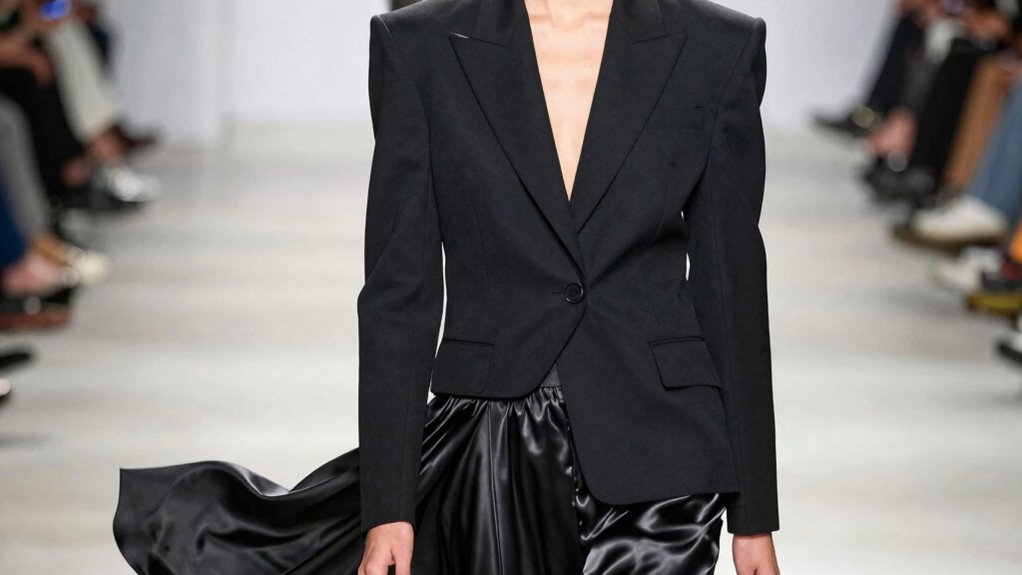
When experimenting with shape, think about juxtaposing fitted pieces with loose, flowing ones. For example, a tailored blazer worn over a billowy blouse creates a pleasing contrast that emphasizes the different silhouettes. You might also contrast sharp, angular lines with soft, rounded shapes to make each element stand out more vividly. The key is to strike a balance—if one shape dominates, it can overwhelm the outfit, so aim for a mix that guides the eye naturally across your ensemble. Additionally, understanding how fabric finish impacts the overall look helps in making more intentional choices, as different finishes can drastically alter the perception of your outfit. Recognizing the visual impact of these finishes enables you to craft more cohesive and striking outfits. Furthermore, exploring fabric weight allows you to tailor the structure and flow of your garments for a more personalized style. Incorporating sustainable fabrics into your choices can also add an eco-conscious dimension, aligning your style with sustainable living practices.
Finish, or the surface treatment of your clothing, plays a vital role, too. Matte fabrics tend to absorb light, creating a subtle, understated look, while shiny or glossy finishes reflect light and draw attention. Combining matte trousers with a glossed leather jacket instantly introduces a visual contrast that makes each piece pop. Weight, or the heaviness of the fabric, also influences how an outfit reads. Heavier fabrics like tweed or wool can provide structure and gravitas, while lighter fabrics such as chiffon or linen evoke airiness and movement. Mixing these weights can lead to a compelling contrast that’s both visually appealing and tactilely interesting.
Ultimately, building contrast through shape, finish, and weight involves thoughtful pairing. You want your outfit to look intentional, with each element working together to create a balanced yet intriguing visual story. When you pay attention to how textures interplay, how colors coordinate, and how different weights and finishes interact, you craft looks that are not only eye-catching but also sophisticated. It’s about creating a harmony where contrast highlights your style rather than overwhelms it, making every outfit a deliberate, compelling statement.
fitted and loose women's blouses
As an affiliate, we earn on qualifying purchases.
As an affiliate, we earn on qualifying purchases.
Frequently Asked Questions
How Do I Choose the Right Contrast for My Skin Tone?
To choose the right contrast for your skin tone, consider your skin’s undertones and aim for color harmony. If you have warm undertones, opt for earthy shades and rich hues that complement your warmth. For cool undertones, select colors with blue or purple bases to enhance your skin’s natural brightness. This balance guarantees your outfit highlights your features without clashing, creating a stylish, cohesive look.
Can Mixing Too Many Shapes Ruin the Outfit?
Yes, mixing too many shapes can ruin your outfit if you don’t balance them well. Overdoing pattern mixing and ignoring color coordination can make your look chaotic. To avoid this, choose a dominant shape and incorporate complementary or contrasting shapes sparingly. Keep the color palette simple to unify the outfit. This way, you create intentional contrast without overwhelming your overall style, ensuring your outfit stays polished and cohesive.
What Accessories Best Complement Contrasting Outfits?
You should choose accessories that amplify your outfit’s contrast—think bold jewelry pairing that adds sparkle or edgy shoes that anchor your look. Going for statement pieces or contrasting textures makes your style pop even more. Remember, your jewelry and shoes are the finishing touches, so pick ones that complement your contrast—whether it’s sleek and modern or chunky and playful—making your outfit unforgettable.
How Do Fabric Finishes Affect Comfort and Style?
Fabric finishes directly influence comfort and style by affecting durability and appearance. A smooth finish feels soft against your skin, enhancing comfort, while a matte finish offers a casual vibe. High-gloss finishes add sophistication but may require more care. Keep in mind, finishes impact fabric durability and color saturation; shiny or textured finishes may fade faster, so choose wisely based on your needs. The right finish balances style with long-lasting comfort.
Is Contrast Suitable for Formal or Casual Occasions?
Contrast can work well for both formal and casual occasions if you consider color harmony and pattern coordination. For formal events, subtle contrast with refined shapes and muted tones creates elegance. For casual settings, bold contrasts with varied patterns make your outfit lively and expressive. Always balance the contrast to avoid clashing, ensuring your shapes, finishes, and weights complement each other, so your look remains harmonious and appropriate for the occasion.
Conclusion
By playing with shapes, finishes, and weights, you create outfit contrast that’s as dynamic as a conversation. Mix structured and flowing pieces, matte and glossy textures, or light and heavy fabrics to keep your look interesting and balanced. Think of your outfit as a dance—each element contrasting yet complementing the other. With this approach, your style becomes a bold statement, where differences don’t clash but come together in perfect harmony.
Halloween Picks
halloween
As an affiliate, we earn on qualifying purchases.