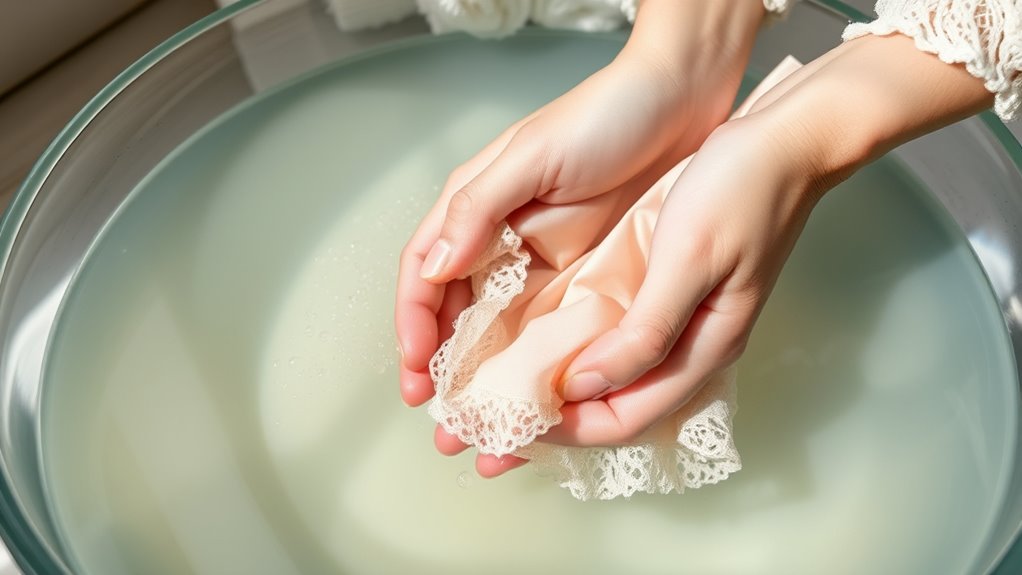
To care for delicates, fill a basin or sink with lukewarm water and add gentle, hypoallergenic fabric softener if suitable. Submerge your garment carefully, swirl gently, and soak for about 10-15 minutes. Rinse with cool water, then support the fabric by laying it flat on a towel or a drying rack to prevent stretching. Avoid wringing or tumble drying to keep your delicate pieces looking their best—more tips await if you keep exploring.
Key Takeaways
- Use lukewarm water and gentle fabric softeners suitable for delicate fabrics.
- Submerge garments gently, swirl softly, and soak for 10-15 minutes without scrubbing.
- Rinse with cool water and gently press out excess moisture without wringing.
- Lay flat on a towel or drying rack to support shape and prevent stretching.
- Avoid using a dryer; air dry in a well-ventilated area to protect delicate fibers.
Are you unsure how to keep your delicate garments looking their best? Handwashing is the gentle method you need to preserve fabrics that can’t withstand harsh machine cycles. When caring for delicates, choosing the right washing and drying techniques is essential. Start by filling a clean basin or sink with lukewarm water—hot water can damage delicate fibers, while cold water might not remove dirt effectively. To enhance softness and reduce static, you can add a small amount of fabric softeners, but be cautious. Not all softeners suit every fabric; some can coat fibers and cause buildup or reduce the fabric’s breathability. Always check the garment’s care label for specific instructions regarding fabric softeners. If you decide to use them, opt for gentle, hypoallergenic options, and use only a small amount to prevent residue that can affect the garment’s texture over time.
When washing, gently submerge the garment and swirl it around without wringing or twisting, which can stretch or distort the fabric. Let it soak for about 10-15 minutes, then carefully rinse with cool water to remove soap and softener residues. Avoid harsh scrubbing, as it can damage fragile fibers. Once cleaned, gently press out excess water—never wring or twist—as this can cause stretching or misshaping. Instead, lay the item flat on a clean towel and roll it up to absorb moisture or press it softly between two towels. For drying, the best approach is to lay your delicate items flat on a drying rack or a clean towel in a well-ventilated area. This method prevents stretching and allows the fabric to retain its shape. If you prefer hanging your delicates, use padded hangers or lay a towel underneath to help support the shape, but be aware that hanging can sometimes cause stretching, especially if the fabric is heavy when wet.
Additionally, understanding the importance of robotics integration in logistics can help inform how modern technology supports efficient garment care processes in the future. Avoid using a dryer altogether, as the heat and tumbling action can weaken fibers and cause shrinkage or damage. If you must speed up drying, opt for a cool, low-heat setting and remove the garment promptly once dry. Remember, patience is key when caring for delicates. By paying close attention to proper drying techniques and using fabric softeners judiciously, you’ll help extend the life of your delicate garments and keep them looking their best wash after wash. Proper handwashing isn’t just about cleanliness; it’s about preserving the fabric’s integrity, softness, and appearance so that your favorite delicate pieces stay beautiful for years to come.
Frequently Asked Questions
Can I Handwash All Types of Delicate Fabrics Safely?
You can handwash most delicate fabrics safely, but it’s crucial to assess fabric compatibility and dye stability first. Some materials like silk or wool require gentle handling, while others may not be suitable for handwashing. Always check the care label for specific instructions. Test dye stability by rinsing a small area first; if the color bleeds, dry cleaning might be a better option. This approach helps prevent damage and color loss.
How Often Should I Handwash Delicates to Maintain Their Quality?
Like a trusty knight’s armor, your delicates need regular care. You should handwash your delicate fabrics after every 3-4 wears or when they’re visibly soiled. Follow the frequency guidelines to prevent damage and maintain softness. For ideal maintenance tips, gently wash and air-dry to keep their quality intact. This routine ensures your fabrics stay fresh and beautiful, prolonging their lifespan and preserving their delicate charm.
What Is the Best Way to Remove Stains From Delicate Fabrics?
To remove stains from delicate fabrics, act quickly with stain removal. Gently dab a small amount of mild detergent or a specialized fabric treatment onto the stain, avoiding rubbing to prevent damage. Let it sit for a few minutes, then carefully handwash the fabric in cool water. If needed, repeat the process. Always test the fabric treatment on a hidden area first to avoid discoloration or damage.
Should I Use Fabric Softener When Handwashing Delicates?
Did you know that 65% of people avoid fabric softeners because they worry about damage? When handwashing delicates, it’s best to skip fabric softener because it can weaken fibers over time. Instead, opt for fabric softener benefits like softening delicate fabrics without harsh chemicals. If you choose to use it, do so sparingly, ensuring it’s suitable for your fabrics, and always dilute it properly to protect your delicate garments.
How Do I Properly Dry Delicate Items Without Damage?
To dry delicate items without damage, you should air dry them carefully. Lay the item flat on a clean towel or hang it on a padded hanger in a well-ventilated area. Use air drying techniques like avoiding direct sunlight, which can fade fabrics. To remove excess moisture, gently press with a towel or use moisture absorption methods like blotting. This prevents stretching or fabric distortion, keeping your delicates in perfect shape.
Conclusion
Now that you know how to handwash your delicates, you might wonder if it truly extends their lifespan. Research suggests gentle handling and proper care can markedly reduce fabric wear and color fading. While some believe dry cleaning is always better, studies show that careful handwashing with mild detergents often preserves delicate fabrics just as well—and sometimes better. So, trust your hands; a little extra effort keeps your favorite pieces looking new longer.

Born in Dubai to Pakistani parents, Aisha deeply understands Middle Eastern and South Asian luxury markets. She excels in forging strategic partnerships with top-tier luxury brands worldwide, fostering cross-cultural collaborations that enhance our global presence.