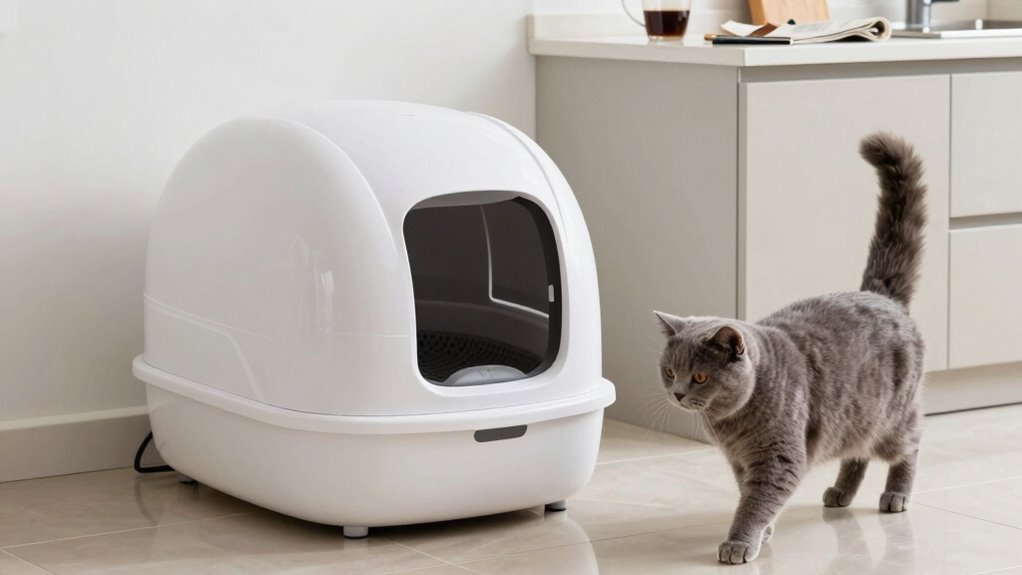

Switching to an automatic litter box makes your daily routine easier by reducing manual scooping and controlling odors better. However, it means you’ll need to adjust your habits to include regular maintenance, like cleaning sensors and replacing batteries, to keep it working smoothly. While it offers more convenience, staying vigilant with system checks remains important. Keep an eye on the signs of trouble, and you’ll find ways to seamlessly incorporate it into your day. Discover more tips to optimize your experience.
Listen free for 30 days with Audible
Thousands of audiobooks and originals — cancel anytime.
As an affiliate, we earn on qualifying purchases.
Key Takeaways
- Automatic litter boxes save time by reducing manual scooping, integrating seamlessly into daily routines for convenience.
- Relying solely on automation may lead to neglecting manual checks and maintenance habits.
- Transitioning to automated systems requires adjusting routines to include sensor cleaning and occasional manual interventions.
- Users balance the convenience of automatic cleaning with the need for regular system troubleshooting and upkeep.
- Proper familiarity with device operation ensures consistent performance, blending automation with necessary daily maintenance.

Automatic litter boxes are transforming daily routines for pet owners by making litter maintenance effortless. With the integration of sensor technology, these devices detect when your cat has used the box and respond automatically, reducing the need for manual scooping. This innovation can save you time and effort, especially during busy mornings or late nights. Sensors work by monitoring changes in weight or motion within the box, triggering the cleaning cycle as soon as your cat leaves. The result is a cleaner, more hygienic environment for your pet and fewer odors lingering around your home.
However, despite their advantages, automatic litter boxes come with their own set of maintenance challenges. Sensors can sometimes malfunction or become less accurate over time, especially if not properly maintained or if debris interferes with their operation. You might find yourself troubleshooting false triggers or incomplete cleaning cycles, which can be frustrating. Regularly cleaning sensor components and replacing batteries, if applicable, are necessary to keep the device functioning smoothly. Without proper attention, these maintenance challenges can negate some of the convenience they promise, leading you to spend extra time fixing issues rather than enjoying the benefits of automation. Additionally, understanding the household items involved can help you optimize the maintenance process and prolong the lifespan of your automatic litter box. Familiarity with sensor technology and proper cleaning routines is essential for maximizing efficiency. A better understanding of automated cleaning systems can also help you anticipate and prevent common problems before they arise. Staying informed about maintenance routines ensures your system continues to operate reliably and extends its overall longevity.
The shift from traditional to automatic litter boxes requires you to adapt your routine and develop new habits. Many pet owners initially see the device as a complete replacement for manual cleaning, but it’s often more about complementing your existing routines. You might still need to regularly check for clumps or empty the waste drawer, especially if the sensor system misses a cycle or if the box fills up unexpectedly. While the technology offers significant time savings, it doesn’t eliminate all maintenance tasks. Instead, it shifts your focus toward ensuring the system remains operational and clean, which can become a new part of your daily or weekly routine.
Some owners find comfort in the idea that automatic litter boxes reduce direct contact with waste and help control odors, making the daily cleaning process less unpleasant. Others, however, might feel uneasy about relying entirely on technology, preferring the tactile reassurance of manual scooping. Ultimately, it boils down to balancing convenience with a willingness to perform periodic maintenance. If you’re willing to familiarize yourself with the sensor system, troubleshoot minor issues, and keep the unit clean, you’ll likely find that these devices truly enhance your daily routine. By embracing the technological advances, you can enjoy a cleaner home and more quality time with your pet, all while maintaining the habits that work best for you.
automatic cat litter box with sensor
As an affiliate, we earn on qualifying purchases.
As an affiliate, we earn on qualifying purchases.
Frequently Asked Questions
How Do Automatic Litter Boxes Handle Multiple Cats?
Automatic litter boxes often handle multiple cats well by offering larger litter box capacity and multiple waste chambers. They monitor each cat’s usage, preventing cross-contamination. You should choose models designed for multiple cat management, which can accommodate higher litter capacity and include features like separate compartments or multiple sensors. This way, your cats stay comfortable, and you maintain a clean environment without constant maintenance.
Are Automatic Litter Boxes Noisy During Operation?
Automatic litter boxes can be like a gentle whisper or a loud drum, depending on the model. Their operational sounds range from quiet hums to noticeable noises, but newer designs focus on minimizing noise levels for your peace of mind. During operation, you might hear a soft whirring or clicking, which usually isn’t disruptive. If noise bothers you, look for models specifically engineered for quiet operation to keep your home peaceful.
What Is the Average Lifespan of an Automatic Litter Box?
You can expect an automatic litter box to last around 3 to 5 years. Maintenance challenges, such as cleaning sensors and replacing parts, can impact its lifespan. Cost considerations also matter—more durable models tend to be pricier initially but save money long-term. Regular upkeep keeps the device functioning well, extending its life. Ultimately, choosing a quality unit and staying on top of maintenance helps guarantee you get the most from your investment.
Can Automatic Litter Boxes Be Used Outdoors?
You can use automatic litter boxes outdoors, but only if you consider weather conditions. About 30% of pet owners place litter boxes outside, often in sheltered areas. Outdoor placement exposes the box to rain, snow, and dirt, which can cause malfunctions or odors. Weather considerations are vital; make certain the area is protected from elements and regularly cleaned to keep your cat comfortable and the box functioning properly.
Do Automatic Litter Boxes Require Special Types of Litter?
Automatic litter boxes typically don’t require special types of litter, but using clumping, low-dust litter helps with litter box maintenance and odor control. It’s best to avoid non-clumping or very fine litter, as they can clog the system or reduce efficiency. Regularly cleaning and refilling the litter guarantees your automatic box functions properly, keeps odors at bay, and makes maintenance easier for you.
Conclusion
Switching to an automatic litter box can streamline your daily routine, saving you time and effort. While it offers convenience, it’s important to evaluate whether it fits into your habits and lifestyle. Sometimes, it’s the small changes that make the biggest difference—like adding a new tool to your routine. Ultimately, it’s about finding a balance that works for you and your pet, because a happy pet makes for a happy home.
Evergreen bestsellers Picks
bestsellers
As an affiliate, we earn on qualifying purchases.