
When considering the ethics of cultural appreciation, it’s important to respect the deep meaning behind cultural symbols and avoid treating them as costumes or trends. You should seek permission from community members, listen to their voices, and make certain your actions honor their traditions rather than reinforce stereotypes. Being aware of potential harm, approaching with humility, and understanding the context helps foster respectful engagement. If you want to understand how to navigate these boundaries thoughtfully, there’s more to explore below.
Key Takeaways
- Respect cultural symbols as meaningful, not as commodities or costumes, recognizing their historical and spiritual significance.
- Seek permission and listen to voices from within the culture before adopting or representing cultural elements.
- Be aware that cultural borrowing can reinforce stereotypes or perpetuate colonial attitudes if not approached thoughtfully.
- Engage in ongoing learning about cultural contexts, history, and significance to ensure respectful appreciation.
- Use cultural intelligence and humility to navigate cross-cultural interactions ethically and avoid misrepresentation.
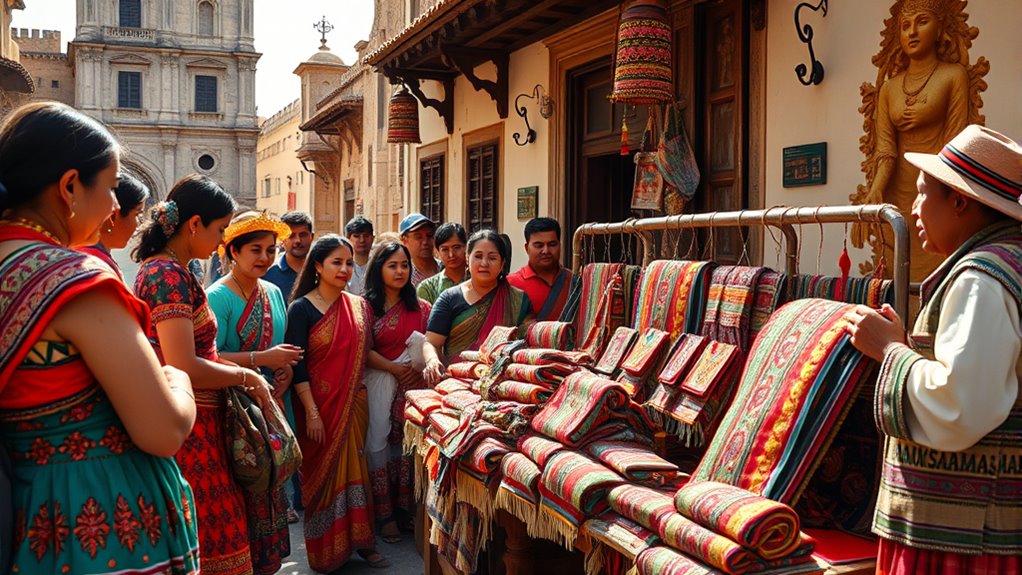
Cultural appreciation can be a meaningful way to celebrate and learn from different traditions, but it also raises important ethical questions. When you engage with cultures outside your own, it’s essential to consider cultural boundaries and how your actions might impact the communities involved. Respectful engagement is key; it’s about recognizing that cultural elements are not mere commodities or costumes but often hold deep significance and history. If you approach cultural appreciation without awareness, you risk crossing boundaries that can lead to disrespect, misrepresentation, or cultural insensitivity.
You need to be mindful of the power dynamics at play. For example, when you borrow symbols, clothing, or practices from a marginalized community, it’s vital to ask whether your actions honor the origin or perpetuate stereotypes. Respectful engagement means doing your homework—learning about the history, significance, and context behind cultural elements before incorporating them into your life or celebrations. It’s not enough to simply admire or mimic; you should seek genuine understanding and be willing to listen to voices from that community.
Respectfully learn the history and significance of cultural symbols before adopting them.
Understanding and respecting cultural boundaries also involves recognizing when your participation might be inappropriate or harmful. Sometimes, well-meaning gestures can inadvertently reinforce colonial attitudes or cultural appropriation. For instance, wearing traditional attire as a costume or using sacred symbols as fashion accessories can trivialize their importance. When you act without awareness, you risk commodifying or misrepresenting cultures, which can cause offense or alienation. Respectful engagement involves approaching cultural elements with humility, acknowledging that your perspective may be limited, and being open to correction.
Engaging respectfully also means allowing communities to control their narratives. Instead of assuming you know what’s best or what’s appropriate, listen to voices from within the culture. Seek permission if needed, and be receptive to feedback. This approach fosters genuine appreciation rather than superficial admiration. It’s about building bridges, not walls, by showing that you value and respect the integrity of the culture you’re engaging with.
Ultimately, practicing respectful engagement requires ongoing learning and self-awareness. Cultural boundaries aren’t always clear-cut, and what might seem harmless to you could be offensive to others. Keep questioning your motives, educate yourself continuously, and prioritize the feelings and perspectives of the communities involved. Additionally, understanding Cultural Intelligence (CQ) can help you navigate cross-cultural interactions more ethically and effectively. When you do this, your appreciation becomes a positive force—one that celebrates diversity without exploiting or misrepresenting it. Remember, ethical cultural appreciation isn’t just about admiration; it’s about honoring the people and traditions behind what you admire.

The Story of Tea: A Cultural History and Drinking Guide
Used Book in Good Condition
As an affiliate, we earn on qualifying purchases.
As an affiliate, we earn on qualifying purchases.
Frequently Asked Questions
How Can I Respectfully Engage With Another Culture’s Traditions?
You can respectfully engage with another culture’s traditions by practicing cultural sensitivity and approaching with an open mind. Listen actively and ask respectful questions to foster understanding, rather than making assumptions. Engage in respectful dialogue, showing genuine appreciation for their practices without appropriating or misrepresenting them. Remember, it’s about learning and honoring their customs, not taking ownership of them. Your genuine respect and curiosity will help build meaningful connections.
What Are Common Mistakes to Avoid in Cultural Appreciation?
You should avoid cultural insensitivity by not appropriating symbols or practices without understanding their significance. Always practice respectful communication, asking permission when necessary and listening to authentic voices from that culture. Be cautious of stereotypes and avoid exoticizing traditions. Stay open-minded and humble, recognizing your own cultural biases. By prioritizing cultural sensitivity, you guarantee your appreciation remains genuine and respectful, fostering positive cross-cultural interactions.
How Does Cultural Appreciation Differ From Cultural Appropriation?
Cultural appreciation involves respecting and valuing another culture through authentic representation, while cultural appropriation often ignores power dynamics and exploits elements without understanding their significance. You actively honor traditions and seek permission or guidance, ensuring you’re not taking from a marginalized community. By being mindful of these differences, you foster genuine respect and avoid harm, creating meaningful connections rather than superficial or disrespectful exchanges.
Can Cultural Appreciation Promote Cross-Cultural Understanding?
Did you know that 70% of travelers believe cultural exchange fosters better understanding? You can promote cross-cultural understanding through genuine cultural appreciation by engaging in ethical tourism and respecting local traditions. When you approach other cultures with curiosity and sensitivity, you build bridges rather than barriers. This not only enriches your experience but also encourages mutual respect, helping to break down stereotypes and deepen connections across diverse communities.
What Role Does Context Play in Cultural Exchanges?
You need to recognize that context plays a crucial role in cultural exchanges. Cultural sensitivity helps you avoid misunderstandings, while understanding the historical context ensures you respect the significance behind traditions or symbols. When you consider these factors, your interactions become more respectful and meaningful. By paying attention to the context, you foster genuine cross-cultural understanding and avoid unintentional cultural insensitivity.

Westco KI7208 7-Piece Multicultural Rhythm Kit: Diverse Collection of Classroom Percussion Instruments – Chilean Rainstick, Agogo Bell, Maracas & More – Instructional DVD & Storage Container Included
Essential multicultural percussion kit for classrooms: West Music selected a practical set of rhythm instruments to support core…
As an affiliate, we earn on qualifying purchases.
As an affiliate, we earn on qualifying purchases.
Conclusion
In the end, being mindful of cultural appreciation means walking a fine line—you don’t want to step on toes or come across as insincere. Respect and understanding should guide your actions, not just curiosity or admiration. Remember, you’re treading on delicate ground, and it’s easy to stumble if you’re not careful. When you approach other cultures with genuine respect, you’re more likely to build bridges rather than burn them. It’s better to be safe than sorry.

Cultural Issues in Play Therapy
As an affiliate, we earn on qualifying purchases.
As an affiliate, we earn on qualifying purchases.

Sikh Khanda Symbol Brooch Pins for Women Men Stainless Steel Faith Based Lapel Pin Religious Jewelry Cultural Accessory for Amrit Sanskar (A-G)
Meaningful Khanda Symbol & Sikh Faith Representation: This brooch features the Khanda symbol, a central icon in Sikhism…
As an affiliate, we earn on qualifying purchases.
As an affiliate, we earn on qualifying purchases.

Born in Dubai to Pakistani parents, Aisha deeply understands Middle Eastern and South Asian luxury markets. She excels in forging strategic partnerships with top-tier luxury brands worldwide, fostering cross-cultural collaborations that enhance our global presence.