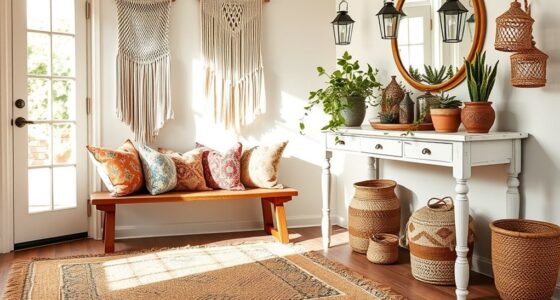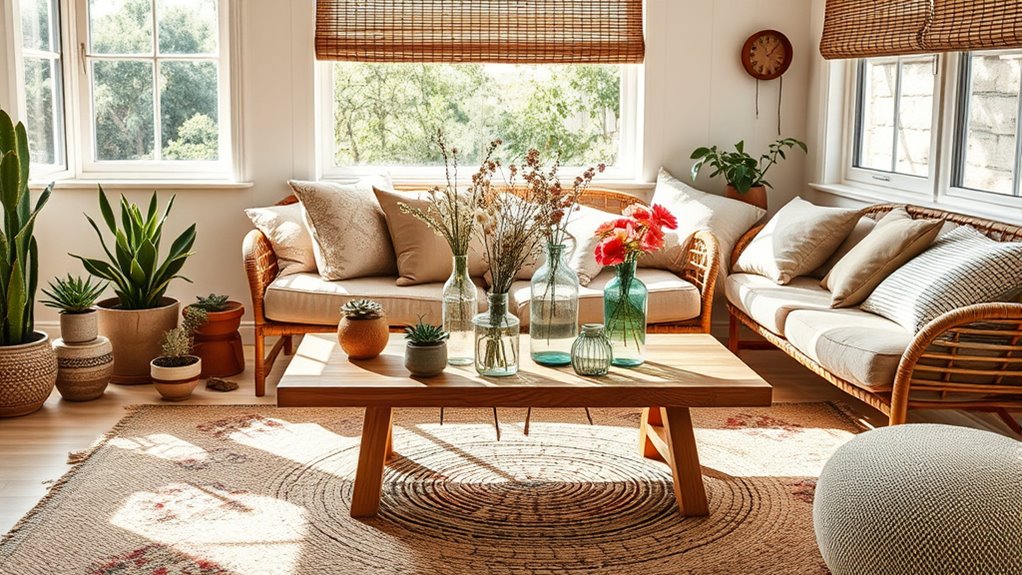

To create a sustainable boho home, focus on eco-friendly materials like reclaimed wood and organic textiles. Reclaimed wood adds warmth and character while reducing waste, and natural textiles like linen or cotton create a soft, relaxed vibe. Pairing these materials with plants and natural light enhances the earthy atmosphere. By choosing local and artisan-made items, you support the environment and community. Keep exploring to learn more about transforming your space sustainably.
Key Takeaways
- Incorporate reclaimed wood for furniture, accent walls, and shelving to add warmth and reduce waste.
- Use organic textiles like linen and cotton for pillows, curtains, and rugs to promote sustainability and comfort.
- Combine reclaimed wood with organic fibers in textiles and decor to enhance natural textures and eco-friendly design.
- Integrate plants and natural light to reinforce the eco-conscious, calming atmosphere of a boho space.
- Source materials locally and support artisans to minimize carbon footprint and foster community involvement.

Creating a boho home that’s both stylish and eco-friendly is easier than you might think. The key is choosing sustainable materials that add character and warmth without harming the planet. Reclaimed wood is a fantastic starting point. It brings a rich history and unique imperfections to your space, giving it that authentic boho vibe. Whether you use it for furniture, accent walls, or shelving, reclaimed wood reduces waste and minimizes the demand for new timber. Its weathered look pairs beautifully with other natural textures, creating an inviting, earthy atmosphere. Plus, sourcing reclaimed wood supports recycling and keeps old materials out of landfills, aligning perfectly with eco-conscious living.
Reclaimed wood adds warmth, character, and sustainability to your stylish boho home.
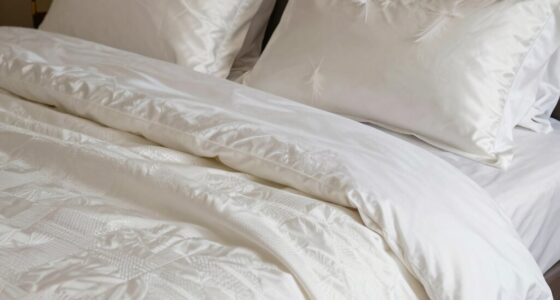
Next, consider incorporating organic textiles into your decor. Unlike conventional fabrics that often contain synthetic dyes and chemicals, organic textiles are grown without pesticides or artificial fertilizers. They’re softer, safer, and better for the environment. Think of cozy throw pillows, curtains, and rugs made from organic cotton, hemp, or linen. These textiles add tactile interest and a relaxed, lived-in feel that’s essential to boho style. When you choose organic textiles, you not only enhance your home’s aesthetic but also support sustainable farming practices. This helps reduce pollution and conserves water, making your decorating choices more responsible.
When mixing reclaimed wood and organic textiles, focus on creating layers and textures that invite touch and relaxation. For example, pair a reclaimed wood coffee table with a linen throw blanket or organic cotton cushions. These natural materials work together to craft a space that feels grounded and effortless. You can also explore handwoven rugs or macramé wall hangings made from organic fibers, which add visual interest and reinforce your commitment to sustainability. Incorporating plants and natural light further amplifies this eco-friendly approach, transforming your home into a peaceful retreat that respects the environment. Additionally, paying attention to local sourcing helps reduce carbon footprints and supports community artisans.
Ultimately, designing a boho space with sustainable materials is about intentionality. Reclaimed wood and organic textiles are just the beginning. By choosing eco-friendly options, you create a home that reflects your style and values. It’s about celebrating natural beauty, supporting sustainable practices, and making conscious choices that benefit both the planet and your peace of mind. With a little creativity and effort, you’ll have a stunning, eco-conscious boho home that feels warm, inviting, and truly you.
Frequently Asked Questions
Are Sustainable Materials More Cost-Effective Long-Term?
Yes, sustainable materials can be more cost-effective long-term. While the initial investment might be higher, a good cost comparison shows they often last longer and require less maintenance. You save money over time by avoiding frequent replacements and repairs. Plus, eco-friendly options can lower energy bills. So, investing upfront in sustainable materials for your boho home can pay off in the long run, making it a smart choice.
How Do Sustainable Materials Impact Indoor Air Quality?
Sustainable materials improve your indoor air quality by reducing air pollution through chemical-free finishes and natural alternatives. These eco-friendly choices emit fewer volatile organic compounds (VOCs), helping you breathe easier and minimizing health risks. By prioritizing sustainable options, you create a healthier, more comfortable environment, free from harmful chemical fumes and pollutants that often come with conventional building materials. This not only benefits your well-being but also promotes a greener home.
Can Sustainable Materials Be Easily Refurbished or Recycled?
Yes, sustainable materials can often be easily refurbished or recycled. You’ll find that their recycling potential allows you to repurpose or break them down for new projects, reducing waste. Their refurbishment durability means they withstand multiple updates and repairs, extending their lifespan. By choosing these materials, you’re making eco-friendly choices that support a circular economy, helping your home stay stylish while minimizing environmental impact.
What Are the Best Sustainable Options for Outdoor Furniture?
You’ll love choosing outdoor furniture made from eco-friendly finishes and renewable sources like bamboo or reclaimed wood. These options not only blend seamlessly into a boho aesthetic but also reduce environmental impact. Look for pieces treated with natural, non-toxic coatings that stand up to weather. By selecting sustainable materials, you create a beautiful, eco-conscious outdoor space that’s both inviting and kind to the planet.
Do Sustainable Materials Require Special Maintenance or Cleaning?
Sustainable materials often need gentle care, but they don’t require special maintenance. You should use eco-friendly finishes to protect the surfaces and prolong their life. For cleaning, opt for natural methods like vinegar and water or mild soap, avoiding harsh chemicals. Regularly wipe down your furniture to keep it looking fresh, and follow manufacturer guidelines to make certain your eco-friendly pieces stay beautiful and durable over time.
Conclusion
By choosing these sustainable materials for your boho home, you’re not just decorating—you’re transforming your space into a lush, eco-friendly paradise that could rival the most extravagant jungle or desert oasis! Every eco-conscious choice you make is like planting a tiny seed that blooms into a magnificent, sustainable haven. So go ahead, embrace these materials and turn your home into a legendary sanctuary that’ll leave everyone in awe — and save the planet while you’re at it!

Born in Dubai to Pakistani parents, Aisha deeply understands Middle Eastern and South Asian luxury markets. She excels in forging strategic partnerships with top-tier luxury brands worldwide, fostering cross-cultural collaborations that enhance our global presence.