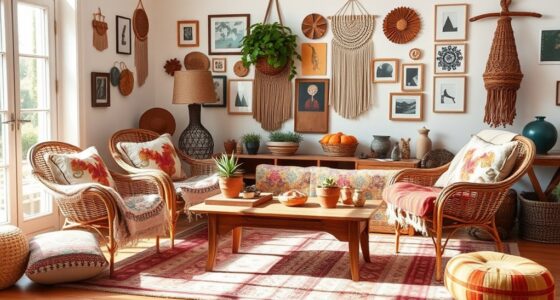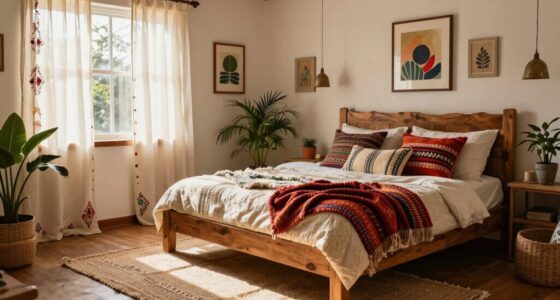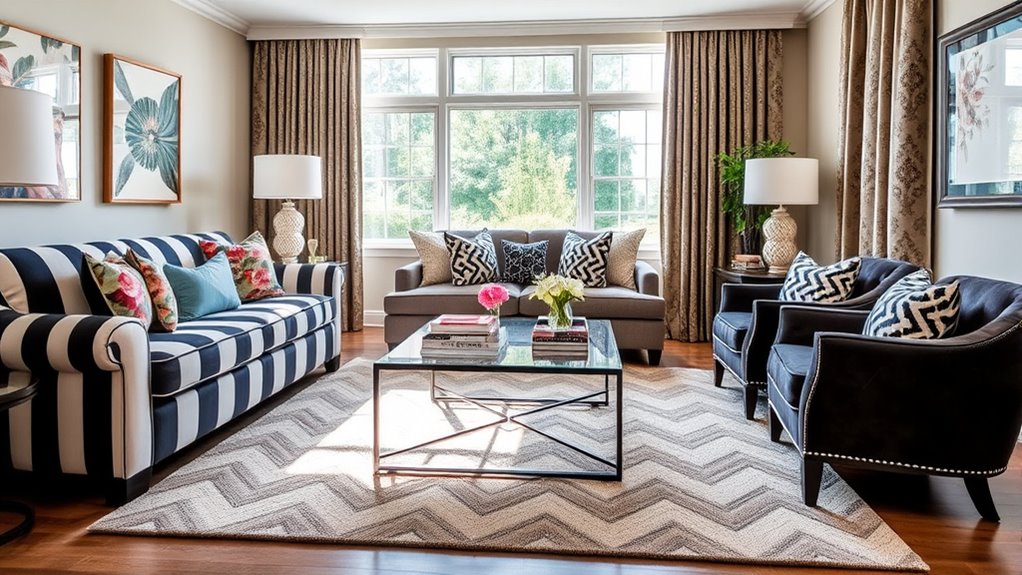

To mix patterns without chaos, start by choosing a common color palette or complementary hues to create cohesion. Balance large, bold patterns with smaller, subtle ones to add visual interest without overwhelming the space. Incorporate natural elements like plants or neutral decor to soften busy patterns, and maintain a clear visual hierarchy by contrasting statement pieces with understated accents. Keep experimenting with these tips, and you’ll discover how to achieve a stylish, balanced look effortlessly.
Key Takeaways
- Mix large and small patterns to create visual interest while maintaining a balanced, cohesive look.
- Use a unified color palette or complementary hues to tie different patterns together seamlessly.
- Incorporate neutral or subdued backgrounds to temper busy patterns and prevent visual clutter.
- Balance bold patterns with minimal decor and natural elements to add harmony and calmness.
- Establish a clear visual hierarchy by pairing statement patterns with subtle accessories for a polished space.

Creating a cohesive interior often feels challenging when mixing patterns, but it doesn’t have to lead to chaos. The key is understanding how to balance different designs so they complement each other rather than clash. One of the most effective ways to do this is by paying close attention to pattern scale and color coordination. When you get these aspects right, even bold patterns can coexist harmoniously within your space.
Start with pattern scale. Think of it as the visual weight each pattern carries. Large-scale patterns, like a bold floral or oversized stripes, draw immediate attention and should be used thoughtfully. These are perfect for accent walls, large furniture pieces, or statement textiles. Smaller patterns, such as tiny geometric prints or subtle polka dots, work well for accessories like throw pillows, curtains, or rugs. Mixing a large-scale pattern with a smaller one helps create visual interest without overwhelming the eye. The contrast in size creates a rhythm that guides the eye smoothly across the room, rather than making it feel cluttered or chaotic.
Large patterns catch the eye; balance them with smaller, subtle designs for harmony.
Color coordination is equally important when mixing patterns. You want to select patterns that share a common color palette or complementary hues. This doesn’t mean everything has to match perfectly, but the colors should feel intentional and cohesive. For instance, if your dominant color is navy, incorporate patterns that include shades of navy, white, or light gray. This creates a sense of unity, even when the patterns themselves are different. If you prefer a more eclectic look, consider using a neutral background on most patterns and adding pops of a vibrant color throughout. This approach ensures that your patterns work together rather than compete for attention.
Additionally, consider the overall mood you want to establish. Cooler tones like blues and greens tend to create calm, soothing environments, while warmer tones such as reds and oranges energize a space. Once you’ve established your color theme, stick to it across your patterns to maintain harmony. You can also vary the intensity or saturation of colors within your patterns to add depth without losing cohesion. For example, pairing a muted floral with a more vibrant geometric pattern can add visual interest while still feeling connected through their shared color tones.
Another helpful tip is understanding how self watering plant pots can be integrated into your space to add natural elements that soften busy patterns and bring harmony. Lastly, don’t forget to balance busy patterns with more subdued elements. If you’re working with multiple bold patterns, keep other decor minimal and understated. Conversely, if your patterns are more subtle, you can afford to be a little more adventurous with your choices. The trick is to create a visual hierarchy that guides the eye naturally and makes your space feel curated rather than chaotic. With attention to pattern scale and color coordination, you can confidently mix patterns and enjoy a dynamic, stylish interior without the chaos.

Pallene Faux Fur Plush Throw Pillow Covers 18x18 Set of 2, Luxury Soft Fluffy Striped Decorative Pillow Covers for Sofa, Couch, Living Room, Cream White
Super Soft: Crafted from velvet and faux rabbit fur, our cream white pillow covers offer a fluffy touch...
As an affiliate, we earn on qualifying purchases.
Frequently Asked Questions
Can Mixing Patterns Work in Small Spaces Effectively?
Yes, mixing patterns can work well in small spaces if you pay attention to pattern scale and placement. Use larger patterns sparingly as focal points, and balance them with smaller, subtler designs. Keep the color palette cohesive to prevent visual overload. Proper pattern placement guarantees your space feels intentional and lively without feeling cluttered. This approach creates a dynamic, stylish environment even in limited areas.
What Color Schemes Complement Mixed Patterns Best?
Imagine a symphony where colors dance in harmony, creating a visual melody. You should choose color schemes with balanced hues like neutrals, soft pastels, or analogous shades to complement mixed patterns. This guarantees color harmony and pattern balance, preventing chaos. Stick to a cohesive palette, and let your patterns sing together like instruments in perfect tune, making your space lively yet unified.
How Many Patterns Should I Combine in One Room?
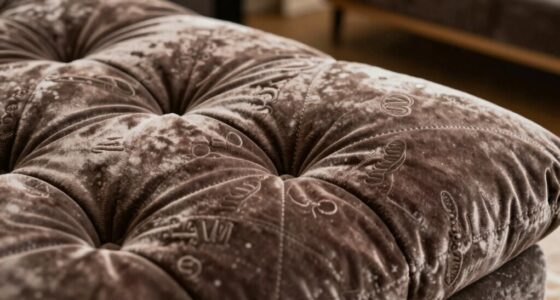
You should aim to combine three to four patterns in one room, balancing pattern proportions to avoid overwhelming the space. Mix fabric textures like velvet, linen, and silk to add visual interest and depth. Keep a unifying color palette to maintain harmony, and vary the size of the patterns—large, medium, and small—to create a cohesive yet dynamic look without chaos.
Are There Specific Patterns That Clash More Often?
You should watch out for patterns with high intensity, like bold florals or geometric shapes, as they tend to clash more often. Pair them with softer or more subdued patterns to balance the look. Also, mix different fabric textures—smooth with rough—for added visual interest. By combining varied pattern intensities and fabric textures thoughtfully, you’ll create a cohesive, stylish space without chaos.
Can Mixing Patterns Be Suitable for All Interior Styles?
Yes, mixing patterns can suit all interior styles if you pay attention to pattern scale and symmetry. You’ll want to balance larger, bold patterns with smaller, subtle ones, ensuring they complement rather than clash. Symmetry helps create harmony, especially in traditional spaces, while asymmetrical patterns work well in modern or eclectic styles. Keep a consistent color palette to unify diverse patterns and avoid chaos, making your space feel cohesive and stylish.

Rugcomf Vintage Paisley Rugs for Living Room 5'x7' - Machine Washable Area Rug, Non-Slip Low Pile Floral Carpet for Bedroom, Dining Room, Farmhouse, Office, Kids Playroom - Beige
Paisley-patterned—Elevate your space with this Paisley-patterned area rug, blending timeless bohemian charm with modern minimalism. It balances aesthetics...
As an affiliate, we earn on qualifying purchases.
Conclusion
Now that you know how to mix patterns without chaos, it’s time to get creative. Remember, balancing bold with subtle and contrasting with complementary can create a stunning look. Don’t be afraid to experiment and trust your eye. After all, isn’t a little bit of chaos just the spark that makes your style uniquely yours? So go ahead, combine those patterns, and turn your space into a harmonious masterpiece that reflects your personality.

Srugn Washable Rugs 8x10 Area Rugs for Living Room,Ultra Soft Faux Wool Retro Rugs for Bedroom,Dining Room,Non Slip&Non-Shedding Low Pile Vintage Print Rug Indoor Large Carpets for Home Office Decor
CUSHIONED AND SOFT: Washable rugs might already exist, but none are as luxurious to touch as ours. More...
As an affiliate, we earn on qualifying purchases.

RELEANY Washable Area Rugs 5'x7' Non-Slip Modern Abstract Soft for Living Room Entryway Bedroom Nursery, Print Pattern, Blue Grey Navy Gray
Tides Series – Effortless style that flows with your life.This modern machine-washable non-slip rug features reinforced edges and...
As an affiliate, we earn on qualifying purchases.

Born in Dubai to Pakistani parents, Aisha deeply understands Middle Eastern and South Asian luxury markets. She excels in forging strategic partnerships with top-tier luxury brands worldwide, fostering cross-cultural collaborations that enhance our global presence.