
Before installing a smart lock, consider your security needs, compatibility with existing devices, and preferred access methods like biometrics or remote control. Check the lock’s power options, weather resistance, and ease of installation. Guarantee it supports strong encryption and user management features for privacy and security. Reliability, brand reputation, and budget are also important. Keep these factors in mind to make a smart choice, and if you want to go further, there’s more to discover.
Key Takeaways
- Ensure the smart lock offers robust security features like strong encryption, multi-factor authentication, and secure access logs.
- Confirm compatibility with your existing home automation system, cameras, and voice assistants for seamless integration.
- Check for reliable connectivity options (Wi-Fi, Bluetooth) and user-friendly app controls for remote management.
- Verify weather resistance, installation ease, and battery life to ensure durability and consistent performance outdoors.
- Set a budget, research trusted brands, and compare features such as biometric options and user management capabilities.
Assess Your Security Needs and Compatibility
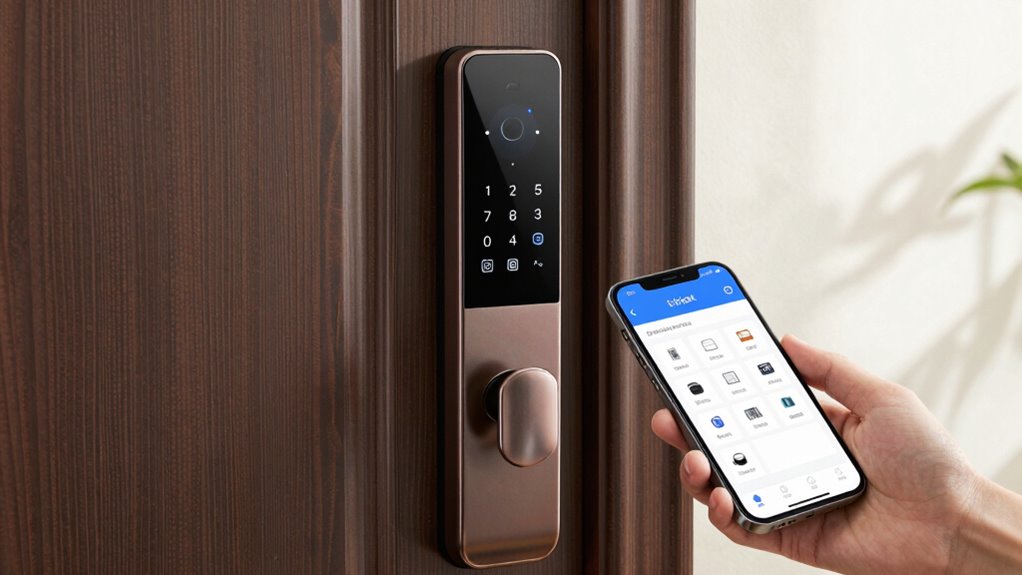
Before choosing a smart lock, you should clearly identify your security needs and guarantee compatibility with your existing setup. Consider how the lock fits into your overall home automation system and whether it enhances user convenience. Think about the levels of security you require—do you need advanced encryption or remote access? Check if the smart lock integrates smoothly with your smart home devices, such as voice assistants or security cameras. Ensuring compatibility avoids unnecessary upgrades or replacements later. Also, assess if the lock offers features that align with your lifestyle, like keyless entry or temporary access codes. Clarifying these needs upfront helps you select a device that not only secures your home but also simplifies daily routines. Assessing security features is essential to ensure the smart lock meets your specific safety requirements. Additionally, understanding smart home integration can help you choose a device that seamlessly fits into your existing automation ecosystem. Taking the time to evaluate device compatibility can prevent potential frustrations and ensure smooth operation in your smart home setup. Moreover, considering the performance quality of the lock, including durability and reliability, will help you make a more informed decision. Recognizing the importance of security standards can further guide your selection process to ensure maximum protection.
Choose Access Methods and Manage User Access
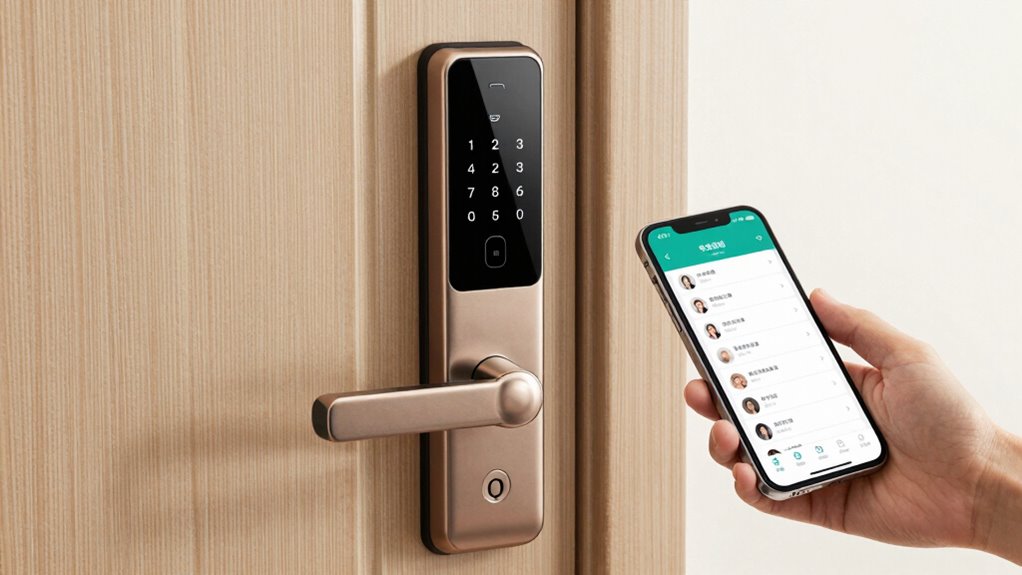
Choosing the right access methods is vital to guarantee convenient and secure entry for everyone in your household. Look for smart locks offering biometric options like fingerprint or facial recognition, which provide quick, keyless access. These methods enhance security and user convenience. Additionally, make certain the lock includes a physical key backup, so you can still gain entry if electronic components fail or the batteries die. Managing user access is also indispensable—select a lock that allows you to easily add, remove, or customize access permissions for family members, friends, or service providers. Some models enable temporary codes or digital keys, giving you control over who enters and when. Incorporating access management features can also improve the security and management of your smart lock system, ensuring your data remains protected. Balancing biometric options with traditional backups ensures reliable, versatile, and secure access for all users.
Prioritize Connectivity and App Control
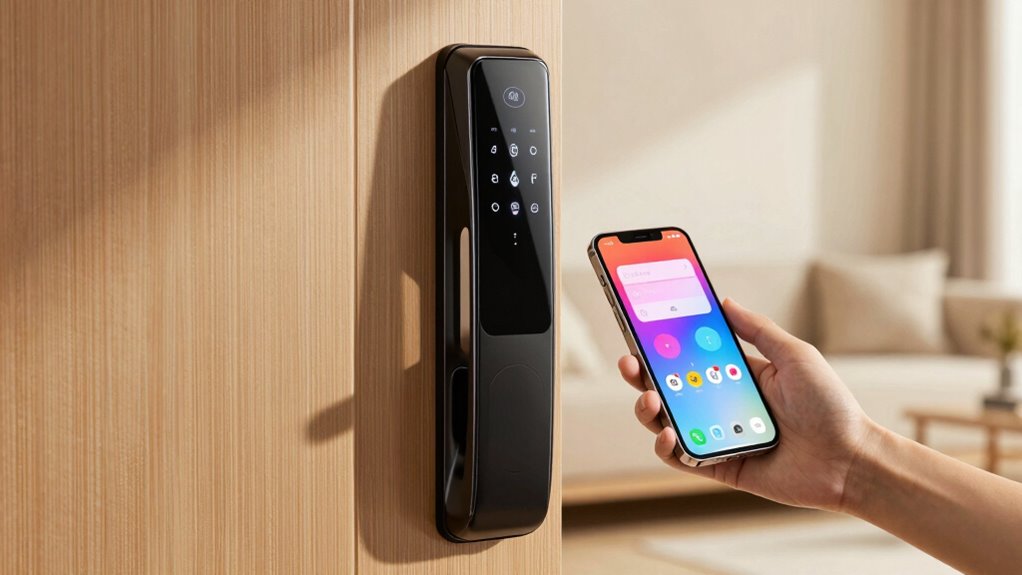
To guarantee smooth operation, prioritize smart locks with reliable wireless connectivity standards and broad mobile app compatibility. Look for models that offer convenient remote access features so you can control your lock from anywhere. Making these choices guarantees you stay connected and in control at all times, especially considering the importance of essential oil benefits for maintaining overall well-being. Additionally, consider security features like tamper alerts and encryption to protect your home and loved ones. Ensuring your lock utilizes automotive repair software or similar reliable technology can further enhance your security and connectivity options. Being aware of wireless standards helps ensure the lock performs consistently in your environment, which can also improve device interoperability with other smart home systems.
Wireless Connectivity Standards
Wireless connectivity standards are the foundation for seamless smart lock operation and reliable app control. You want a lock that quickly pairs via Bluetooth and maintains a stable connection. Wi-Fi protocols like WPA2 or WPA3 guarantee your lock stays secure and responsive. Compatibility with your home network is key for smooth remote access and updates. Additionally, choosing a standard that supports local automation can enhance your smart lock’s integration with other devices and routines. Ensuring your lock supports interoperable protocols can further improve compatibility across different smart home systems. Selecting a standard that offers robust security features helps protect your smart lock from vulnerabilities and unauthorized access. Incorporating wireless standards that prioritize security and reliability is essential for long-term peace of mind. Prioritizing connectivity stability ensures your smart lock remains dependable during everyday use.
Mobile App Compatibility
Ensuring your smart lock is compatible with your mobile app is essential for effortless control and reliable connectivity. A well-designed app makes managing your lock simple and intuitive, so check the user interface design for clarity and ease of use. Look for regular mobile app updates, which indicate active developer support and improved functionality. These updates often enhance security, fix bugs, and introduce new features. Compatibility across your devices, whether iOS or Android, is vital to avoid issues with connectivity or control. An app with a seamless interface boosts confidence in managing access remotely. Prioritize a smart lock that offers a stable, user-friendly app experience, so you’re always in control, no matter where you are. Device connectivity also depends on robust wireless protocols, so confirm the lock supports the latest standards for reliable performance. Additionally, understanding Vegan considerations can help ensure the product aligns with your lifestyle preferences. A thorough review of security features can further safeguard your home and provide peace of mind. Moreover, assessing the power source options ensures reliable operation even during power outages or connectivity issues. It’s also beneficial to consider wireless protocol standards, which can significantly impact the overall stability and responsiveness of your smart lock.
Remote Access Features
Having reliable remote access is essential for convenient control of your smart lock, especially when you’re away from home. Guarantee your lock supports strong connectivity options like Wi-Fi or Bluetooth for seamless app control. Look for features such as voice control compatibility with Alexa or Google Assistant, allowing you to lock or open remotely. Biometric access, like fingerprint scanners, adds an extra layer of security, enabling quick entry without keys or codes. Incorporating connected home fitness technology can also enhance your overall wellness by integrating your home security with your health monitoring systems. Ensuring your smart lock integrates with a home automation ecosystem can further streamline your smart home experience and enhance security. Additionally, verifying that the device uses robust encryption protocols can protect your access data from potential cyber threats.
Check Power Options and Battery Life
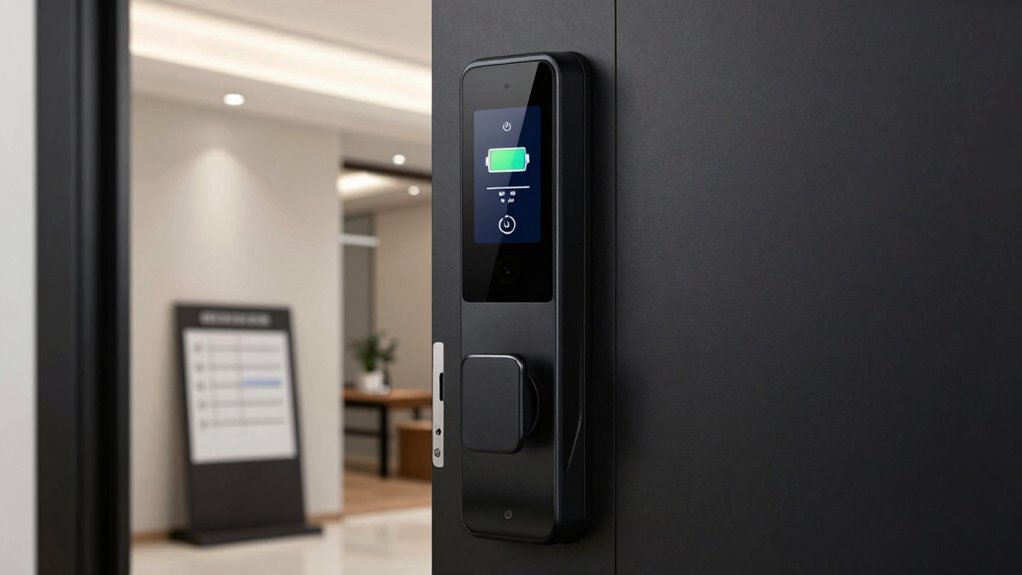
Before installing or using your smart lock, it’s important to verify that it has sufficient power. Check the battery lifespan to ensure longevity and avoid unexpected lockouts. Understand the power source options available, such as batteries, wired connections, or hybrid solutions, to choose what’s best for your setup. Consider how often you’ll need to replace or recharge batteries and whether the lock offers low-battery alerts.
Ensure your smart lock has sufficient power with reliable batteries and low-battery alerts to avoid lockouts.
Key points to review include:
- The estimated battery lifespan based on your usage patterns
- Available power source options, like rechargeable or replaceable batteries
- Features that notify you when power is low to prevent lockouts
Ensuring reliable power supply helps maintain your smart lock’s performance and security.
Ensure Easy Installation and Weather Resistance

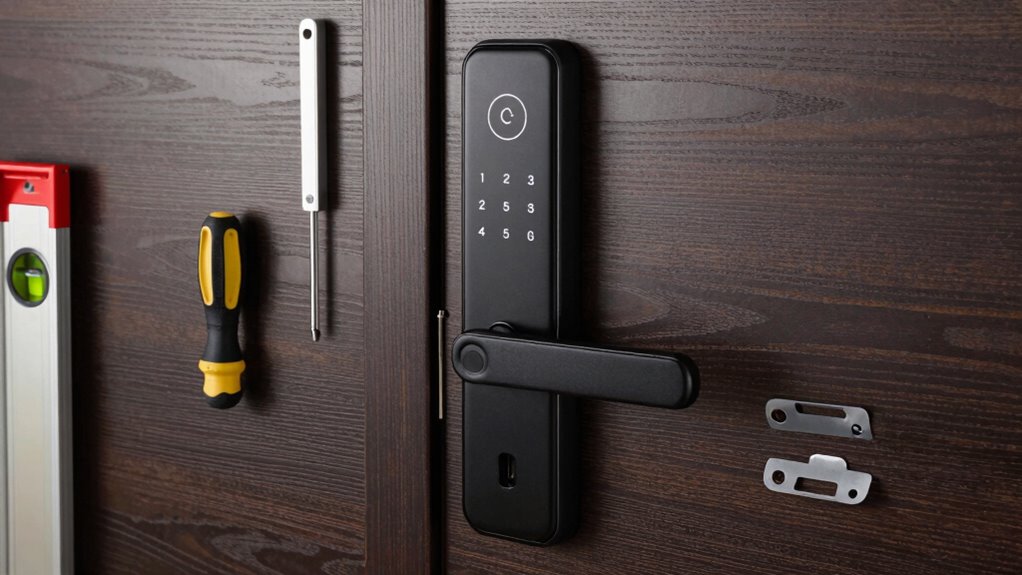
To get your smart lock up and running smoothly, focus on making installation straightforward and ensuring it can withstand weather conditions. Look for smart locks with clear installation tips in the user manual or online guides, which can save you time and frustration. A weatherproof design is essential if your lock will be exposed to rain, snow, or extreme temperatures. Check that the lock has an IP (Ingress Protection) rating indicating resistance to dust and water. Proper installation not only simplifies setup but also guarantees durability over time. Consider models that offer tools or step-by-step instructions to make the process easier. Prioritizing easy installation tips and weatherproof features helps you enjoy a secure, hassle-free smart lock that performs reliably in any weather.
Review Smart Lock Security Features and Privacy
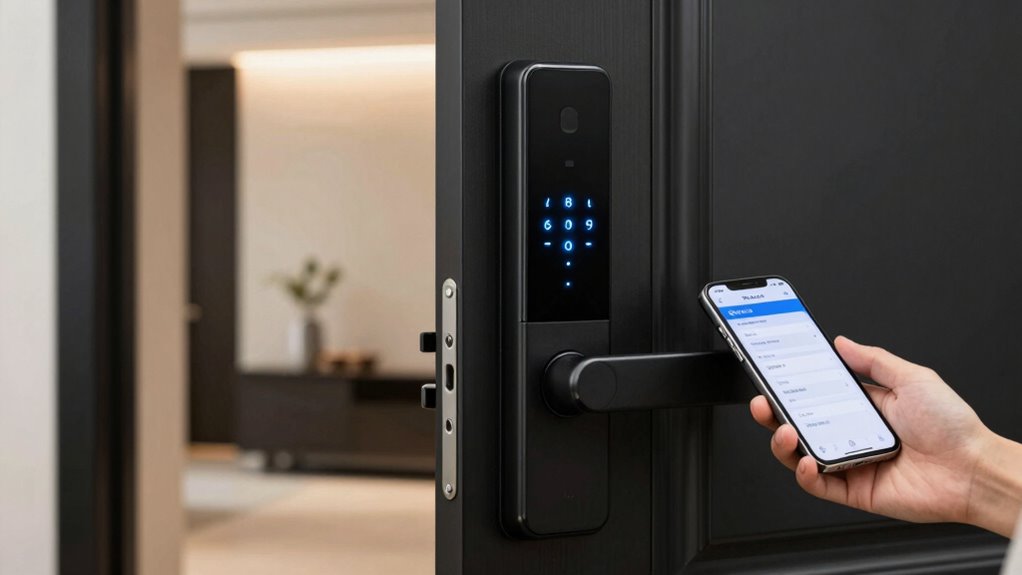
Ensuring your smart lock offers robust security features and protects your privacy is essential for peace of mind. You should verify that it uses strong encryption protocols to safeguard your data. Look for locks that prioritize data privacy, ensuring your personal information isn’t shared or stored insecurely. Check if the lock supports multi-factor authentication for added security. Additionally, review the manufacturer’s privacy policy to understand how your data is handled.
Prioritize smart locks with strong encryption, privacy policies, and multi-factor authentication for secure, private access.
- Use of advanced encryption protocols like AES or TLS
- Clear privacy policies detailing data collection and sharing
- Features supporting multi-factor authentication and secure access logs
Set Your Budget and Research Trusted Brands
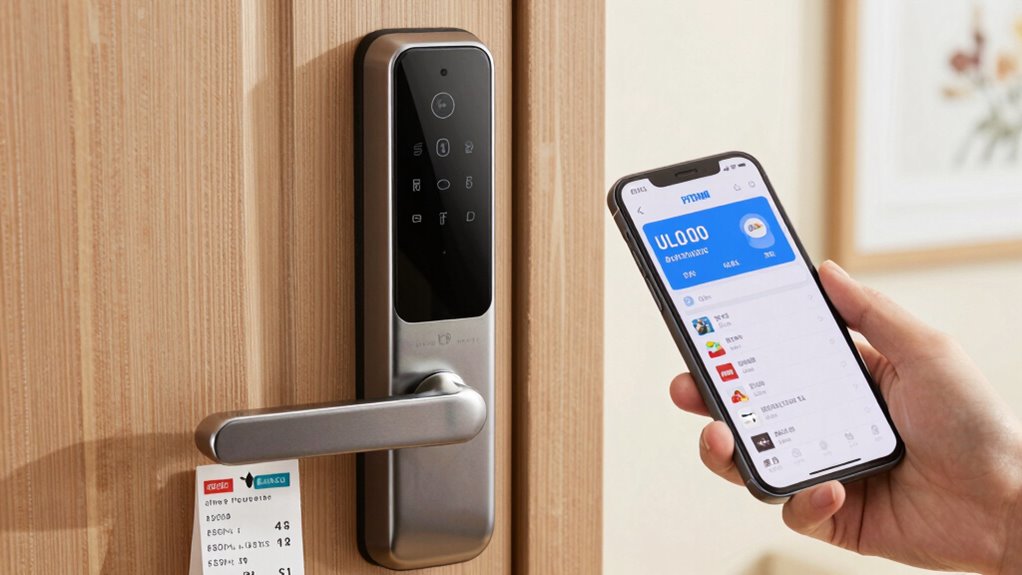
Before choosing a smart lock, you need to set a clear budget to narrow your options. It’s also important to research trusted brands known for quality and reliability, so you avoid scams or subpar products. Finally, compare the features each brand offers to find the best balance of price and functionality for your home.
Define Your Budget
Setting a clear budget helps you narrow down your options and avoid overspending. Determine your price range early on, considering your overall budget considerations. This will help you focus on smart locks that fit your financial plan without sacrificing essential features. Keep in mind that prices can vary widely, so knowing your limits prevents unnecessary stress. When setting your budget, think about:
- The features you need versus those you want
- Compatibility with your existing smart home devices
- Long-term costs, like batteries or subscription services
Explore Brand Reputation
Once you’ve established your budget, it’s time to look into the reputation of the brands you’re considering. Brand credibility matters because trusted brands are more likely to offer reliable, secure smart locks. Start by researching each company’s history and customer reviews to gauge overall satisfaction. Positive reviews often highlight durability, ease of use, and good customer support, while negative reviews can reveal recurring issues. Pay attention to feedback about software updates, compatibility, and security features. A reputable brand typically has a strong presence in the market and transparent policies. By evaluating customer reviews and brand credibility, you can narrow down your options and choose a smart lock from a trusted manufacturer, ensuring your investment is secure and long-lasting.
Compare Feature Sets
After narrowing down your trusted brands, it is essential to compare their feature sets to find the best fit for your needs. Focus on key functionalities like biometric options, which enhance security, and how well they integrate with your smart home system. Check if the lock offers multiple biometric options, such as fingerprint or facial recognition, for convenience. Consider compatibility with your existing smart devices to guarantee seamless integration. Also, evaluate features like remote access, auto-lock, and user management for added flexibility.
- Biometric options like fingerprint or facial recognition
- Integration with your smart home ecosystem
- Remote control and user access management
Frequently Asked Questions
Can Smart Locks Be Integrated With Existing Home Security Systems?
Yes, smart locks can be integrated with your existing home security system. You just need to guarantee they support home automation and wireless connectivity. When you choose a compatible smart lock, it connects seamlessly with your security setup, allowing you to control access remotely and monitor activity. This integration enhances your home’s security and convenience, making it easier to manage locks alongside other smart devices in your system.
Are Smart Locks Compatible With All Smartphone Models and Operating Systems?
Think of your smartphone as the key to your digital kingdom—smart locks are generally compatible, but not with every device. You need to check smartphone compatibility and operating system support before you buy. Most smart locks support major platforms like iOS and Android, but some might have limitations. Make sure your device’s OS is compatible and that the app functions smoothly on your phone to avoid any lockout surprises.
What Is the Average Lifespan of a Smart Lock’s Batteries?
Your smart lock’s batteries typically last between 6 to 12 months, depending on its battery life and power consumption. To maximize lifespan, choose models with efficient power use and low energy consumption. Keep spare batteries handy, and monitor battery status regularly through the app or lock indicator. Proper maintenance guarantees your smart lock remains functional, providing security without frequent replacements or power issues.
How Do Smart Locks Perform During Power Outages or Internet Disruptions?
During power outages or internet disruptions, smart locks still work if they have a reliable power backup, like batteries or an uninterruptible power supply. Signal reliability is essential, so make certain your lock uses a strong Wi-Fi connection or Bluetooth. Some models include offline modes or manual keys, giving you access when digital systems fail. Always check these features beforehand to keep your home secure in any situation.
Are There Any Legal Restrictions or Regulations for Installing Smart Locks?
You need to check local laws and regulations before installing smart locks to guarantee legal compliance. Some areas require installation permits, especially for commercial properties or multi-unit buildings. Failing to obtain necessary permits or breaking regulations could lead to fines or legal issues. Always research your city’s rules and consult with local authorities if unsure, so your smart lock installation remains lawful and hassle-free.
Conclusion
Before you install a smart lock, make sure it fits your security needs and budget. Did you know that over 60% of homeowners now prefer smart locks for their convenience and security? By choosing the right access methods, connectivity, and trusted brands, you’ll enjoy peace of mind and easy control. Take your time to evaluate features, power options, and weather resistance — it’s worth the effort for a safer, smarter home.