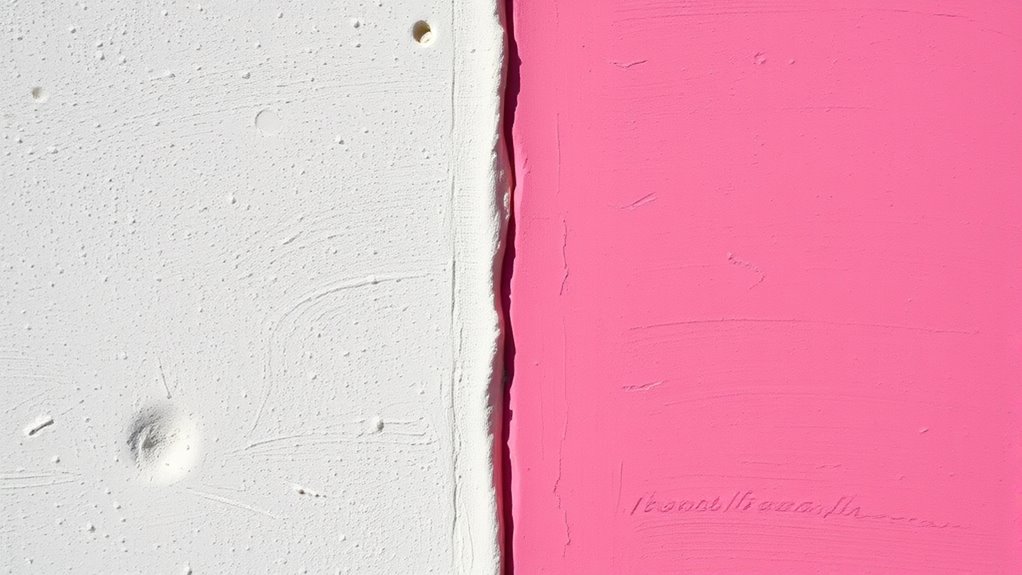

Limewash creates a textured, matte surface with a weathered, authentic look that adds character and charm to your walls. Its natural, breathable finish allows moisture to escape, giving a unique, rustic feel perfect for historic or rustic styles. Paint, on the other hand, often offers a smoother, uniform surface with a glossy or matte finish, lacking the rich texture of limewash. To explore how these differences can truly transform your space, keep exploring the details.
Key Takeaways
- Limewash offers a textured, matte finish with a weathered, authentic look, unlike the smooth, uniform surface of traditional paint.
- Its breathable, mineral-based surface develops a unique patina over time, transforming the wall’s appearance naturally.
- Limewash’s rougher texture enhances rustic or historic aesthetics, whereas paint provides a sleek, modern finish.
- The textured surface of limewash helps regulate moisture, contributing to a more dynamic, evolving appearance.
- Paint typically maintains a consistent look, while limewash’s texture and patina evolve, creating a transformative visual effect over years.

When choosing between limewash and paint for your home or project, understanding their differences is essential. Both options can dramatically influence the look, feel, and sustainability of your space. Limewash, with its rich history, has been used for centuries, especially in Mediterranean and European architecture. Its historical applications reveal a versatile material that’s been employed to coat walls, creating a timeless, textured finish. Unlike modern paints, limewash was prized for its breathable qualities, allowing walls to release moisture and reducing issues like mold or dampness. This traditional use underscores its durability in hot, humid climates and its ability to develop a beautiful, weathered patina over time. If authenticity and a connection to history matter to you, limewash offers a unique, textured aesthetic that’s hard to replicate with paint.
From an environmental perspective, limewash shines brightly. Made from natural materials like limestone, water, and sometimes earth pigments, it has a minimal environmental impact. Its production process requires less energy compared to synthetic paints, and it contains no volatile organic compounds (VOCs), making it a healthier choice for your indoor air quality. When you opt for limewash, you’re choosing a sustainable option that aligns with eco-friendly values. Additionally, limewash’s breathability and moisture regulation properties help maintain healthier wall environments. In contrast, traditional paints often contain chemical additives and VOCs, which can off-gas over time, contributing to indoor air pollution and environmental degradation. The eco-conscious benefits of limewash extend beyond its composition; since it’s biodegradable and long-lasting, it reduces waste and the need for frequent reapplications. If sustainability is a priority for your project, limewash clearly leads the way, offering a natural, environmentally friendly alternative to conventional paints.
Frequently Asked Questions
How Long Does Limewash Typically Last Compared to Paint?
Limewash typically lasts 5 to 8 years, but its durability comparison to paint depends on aging effects and maintenance. While paint may need reapplication every 5-10 years, limewash ages gracefully, developing a charming patina over time. Its natural composition allows it to breathe, reducing cracking and peeling. You might find limewash’s lifespan longer in suitable conditions, but regular upkeep is key to maintaining its textured beauty.
Is Limewash Suitable for Exterior or Interior Surfaces?
Limewash is perfect for both exterior and interior surfaces, especially if you seek historical authenticity. You might worry about durability, but with proper surface preparation, it forms a breathable, eco-friendly layer that ages beautifully. For exteriors, it withstands weather, while indoors, it adds a unique texture. Just guarantee surfaces are clean and sound, and you’ll enjoy its timeless charm and natural finish in any space.
Can Limewash Be Applied Over Existing Paint or Wallpaper?
You can apply limewash over existing paint or wallpaper, but proper wall preparation is essential. First, remove any loose or peeling material, then clean the surface thoroughly. In most cases, applying a primer isn’t necessary, but if the existing paint is glossy, a matte primer helps improve adhesion. Guarantee the surface is dry and smooth for the best results, and always follow limewash manufacturer instructions for ideal application.
What Maintenance Is Required for Limewashed Walls?
Think of limewashed walls as a living canvas that needs gentle care. To maintain their charm, you should periodically dust them and spot-clean with a soft brush or damp cloth, avoiding harsh chemicals. Limewash boasts impressive durability, but over time, minor touch-ups might be needed to keep the finish vibrant. Regular wall cleaning techniques preserve its appearance, ensuring your walls stay beautiful and resilient, like a well-tended garden.
Are There Environmentally Friendly Paint Options That Mimic Limewash Texture?
Yes, you can find eco-friendly coatings that mimic limewash texture. Look for paints with natural pigment options, which are made from sustainable, non-toxic ingredients. These environmentally friendly paints provide a similar matte, textured finish, giving your walls a rustic, authentic look without harming the environment. By choosing these natural and sustainable options, you get the aesthetic appeal of limewash while prioritizing eco-conscious living.
Conclusion
Choosing between limewash and paint is like picking the perfect brushstroke for your home’s story. Limewash offers a whisper of old-world charm, adding a textured, weathered patina that feels like a gentle hug from history. Paint, on the other hand, is your bold, vibrant voice—smooth and modern. Whichever you choose, your walls will tell a unique tale, transforming your space into a canvas that reflects your personality, one brushstroke at a time.

Born in Dubai to Pakistani parents, Aisha deeply understands Middle Eastern and South Asian luxury markets. She excels in forging strategic partnerships with top-tier luxury brands worldwide, fostering cross-cultural collaborations that enhance our global presence.