To avoid wearing yourself out at a standing desk, you should follow a balanced routine that includes proper ergonomic adjustments, such as keeping your feet flat and monitor at eye level, and regularly shifting between standing and sitting. Use the 20-8-2 rule—stand 8 minutes, sit 20, move 2—to maintain circulation and prevent fatigue. Incorporate small stretches and use a cushioned mat. If you stick with these tips, you’ll discover how to build a sustainable, comfortable workspace.

Get your wardrobe favorites delivered free with Prime
- Fast, free delivery on millions of items
- Prime Video, Amazon Music and more included
- Member-only deals all year
Key Takeaways
- Follow the 20-8-2 rule: sit 20 minutes, stand 8 minutes, move for 2 minutes to prevent fatigue.
- Keep proper ergonomic posture during standing, with feet flat, hips level, and monitor at eye level.
- Incorporate regular small movements and stretches to promote circulation and reduce stiffness.
- Use a cushioned standing desk mat to absorb impact and increase comfort during prolonged standing.
- Vary standing and sitting intervals consistently, listening to your body’s signals to avoid overexertion.
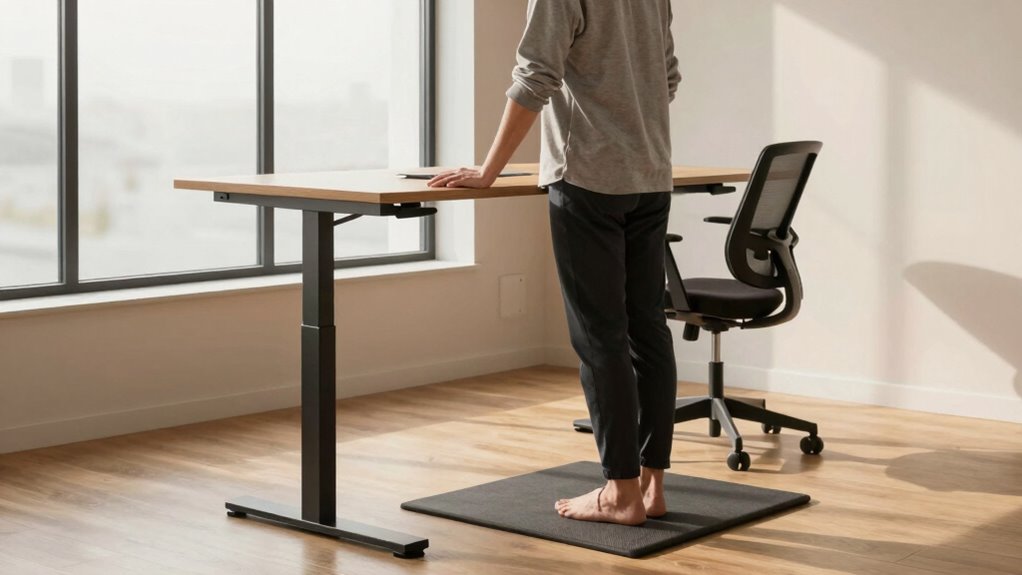
Have you ever wondered how to make standing at your desk feel more natural and sustainable? Finding a comfortable rhythm requires more than just switching from sitting to standing; it involves making thoughtful ergonomic adjustments that support your body. When you start standing, focus on aligning your posture properly. Keep your feet flat on the ground, about hip-width apart, and let your knees gently bend. Your hips should be level, not tilted forward or backward, and your shoulders should relax away from your ears. Your monitor should be at eye level, so you’re not craning your neck up or down. These small adjustments promote better posture alignment, reducing strain and fatigue over time. Incorporating ergonomic principles into your workspace setup can further enhance comfort and prevent issues.
Align your posture: keep feet flat, hips level, shoulders relaxed, and monitor at eye level for comfortable standing.
Once you’ve set up your workspace with proper ergonomic adjustments, it’s essential to pace your standing sessions. Avoid standing continuously for hours; instead, aim for a rhythm that alternates between sitting and standing. A common approach is the 20-8-2 rule: sit for about 20 minutes, stand for 8, and move around for 2. This prevents overuse of any one posture and keeps your muscles engaged without overtaxing them. As you get used to this pattern, listen to your body. If you start feeling discomfort or fatigue, it’s a sign to adjust your posture, shift your weight, or sit down for a while. Over time, your muscles will adapt, and standing will feel more natural. Additionally, paying attention to air quality can help maintain your comfort and focus during these adjustments, as fresh, clean air supports better circulation and overall well-being.
In addition to ergonomic adjustments and posture alignment, paying attention to your movement patterns is key. Incorporate small stretches and shifts throughout your work session—stretch your calves, roll your shoulders, or gently sway side to side. These motions stimulate circulation and prevent stiffness. Be mindful not to lock your knees or stay rigid; keep a slight bend to reduce pressure and promote comfort. Using a standing desk mat can also absorb impact and provide extra cushioning, making your standing routine easier on your joints. Maintaining body awareness is crucial for recognizing when you need to change position or take a break, ensuring you don’t push yourself too hard.
Ultimately, establishing a standing desk rhythm is about consistency and listening to your body. Adjust your workspace to support good posture, vary your standing intervals, and incorporate movement to avoid fatigue. With patience, you’ll find a sustainable balance that keeps you energized and comfortable throughout your workday. Standing doesn’t have to be tiring when you take these steps to optimize your ergonomic setup and maintain proper posture alignment.
Popular right now

Bose QuietComfort Ultra Earbuds (2nd Gen), Deep Plum

Sony WH-1000XM4C Wireless Noise-Cancelling Headphones, Black

Philips 4400 Series Fully Automatic Espresso Machine with LatteGo Milk System
As an affiliate, we earn on qualifying purchases.
Frequently Asked Questions
How Long Should I Stand at My Desk Each Day?
You should aim to stand at your desk for about 2 to 4 hours daily, breaking it into intervals to avoid fatigue. Use ergonomic accessories like anti-fatigue mats and adjustable height desks to stay comfortable. Remember, standing all day is a standing desk myth; mixing sitting and standing is best. Listen to your body, and gradually increase standing time to prevent strain and maximize benefits.
What’s the Best Way to Transition Between Sitting and Standing?
Switching between sitting and standing is like shifting gears smoothly. Start by adjusting your desk height gradually with ergonomic accessories, making small changes every 15-30 minutes. Use a timer to remind you to switch, and guarantee your desk height adjustment keeps your elbows at a 90-degree angle. This way, you prevent strain and keep your rhythm steady, avoiding fatigue and maintaining productivity throughout your workday.
Are There Specific Stretches to Do While Using a Standing Desk?
Yes, you should incorporate ergonomic stretches and posture adjustments while using a standing desk. Try gentle neck stretches to reduce tension, shoulder rolls to loosen up, and hamstring stretches to prevent tightness. Make sure your wrists are neutral and your feet are flat on the ground. Regularly shifting your weight and doing these ergonomic stretches help prevent fatigue and discomfort, keeping you energized and maintaining proper posture throughout your workday.
How Can I Prevent Foot or Leg Pain From Standing All Day?
To prevent foot or leg pain, start with comfortable footwear and consider switching shoes throughout the day. Use ergonomic mats to reduce pressure on your feet and legs, making standing more comfortable. Incorporate gentle stretches or shifts in your stance periodically, and take short breaks to sit or walk around. These small changes can make a big difference, preventing discomfort and helping you stay productive without wearing yourself out.
What Footwear Is Best for Standing Desks?
Choose footwear options that prioritize comfort and support, like ergonomic shoes designed for prolonged standing. Look for shoes with cushioned insoles, good arch support, and a non-slip sole. Avoid high heels or shoes with flat, unsupportive soles. Investing in quality ergonomic shoes helps reduce foot and leg pain, keeps you comfortable all day, and encourages proper posture, making your standing desk experience more sustainable and less tiring.
Conclusion
Embracing the standing desk rhythm means staying active, adjusting your posture, and listening to your body. It’s about finding balance, maintaining focus, and avoiding fatigue. It’s about moving intentionally, standing intentionally, and resting intentionally. When you adopt this rhythm, you cultivate productivity without exhaustion, comfort without strain, and energy without burnout. Make these habits your routine, and you’ll turn your standing desk into a tool for well-being, productivity, and sustained success.