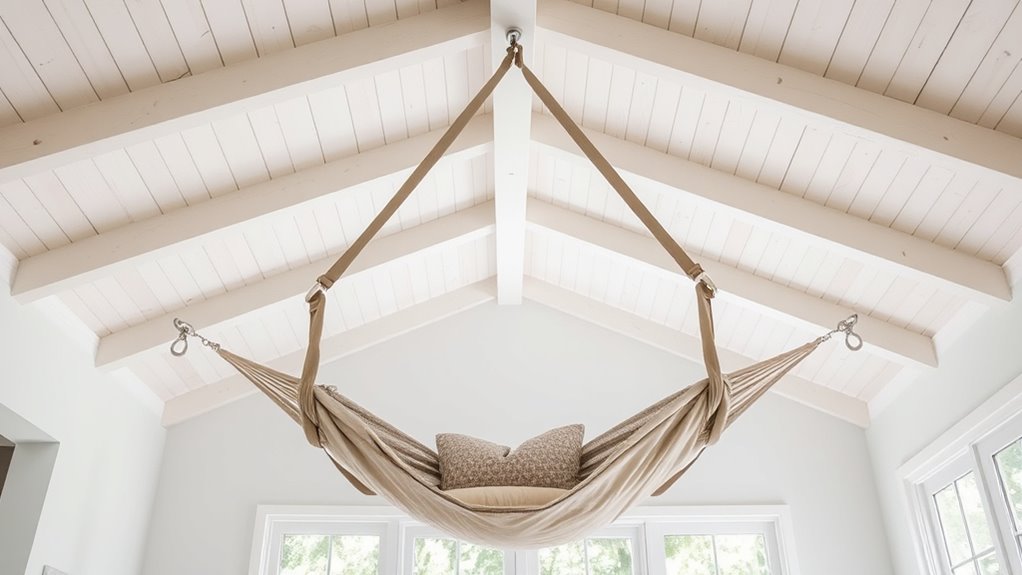

To hang a hammock indoors safely, find sturdy support points like ceiling joists or wall studs using a stud finder, and avoid drywall alone. Use heavy-duty hardware rated for the hammock’s weight, such as eye bolts or hooks, and pre-drill holes to prevent splitting. confirm hardware is tightly secured and regularly check for wear or looseness. For extra safety and comfort, follow proper height and tension guidelines. Continue to explore detailed steps for a secure, enjoyable setup.
Key Takeaways
- Locate sturdy ceiling joists, beams, or wall studs using a stud finder, and verify their weight capacity before installation.
- Use heavy-duty eye bolts or hooks rated for hammock weight, pre-drilling holes to avoid material splitting.
- Ensure hardware is tightly secured and regularly inspect for wear, loosening, or damage over time.
- Hang the hammock about 18-24 inches above the ground, adjusting tension for comfort and safety.
- Consider using a hammock stand for added safety and space efficiency, especially if ceiling or wall support is uncertain.

Ever considered turning a blank wall into a cozy retreat? Hanging a hammock indoors is a fantastic way to create a relaxing nook right in your own space. But before you get excited and start draping fabric, it’s important to plan carefully. The key to a safe and secure hammock setup begins with understanding your anchor points and guaranteeing they can handle the weight capacity. Anchor points are the sturdy spots where you’ll attach the hammock to the ceiling or wall, so choosing the right ones is crucial. You want to look for ceiling joists, strong beams, or wall studs, rather than drywall alone, which can’t support much weight. Using a stud finder helps you locate these solid support structures. Once you identify the anchor points, check their weight capacity, which indicates how much weight they can safely support. Most ceiling joists can hold between 200 to 300 pounds, but it’s wise to verify the specifications for your particular setup.
Guaranteeing the anchor points are secure is your top priority. If you’re attaching to ceiling joists, use heavy-duty eye bolts or hooks rated for your hammock’s weight capacity. Pre-drill holes to prevent splitting and screw in the hardware tightly, making sure it’s flush and stable. For wall-mounted hammocks, use wall anchors specifically designed for heavy loads, and attach them directly into studs whenever possible. Remember, the strength of your anchor points directly affects your safety, so don’t cut corners. If you’re unsure about the weight capacity of your ceiling or wall, consult a professional or opt for a hammock stand that guarantees stability without the need for wall or ceiling attachments.
Once your anchor points are securely installed, double-check their stability by gently applying pressure before hanging your hammock. Use quality straps or ropes designed for hammock use, and make sure they’re long enough to create the right tension without putting undue stress on the anchor points. Proper positioning is important—hang your hammock at a comfortable height, usually around 18 to 24 inches off the ground, to make getting in and out easy and safe. Regularly inspect the hardware and anchor points for any signs of wear or loosening over time. Additionally, understanding projector technology can help you create a comfortable and visually appealing space that complements your hammock setup. By paying attention to these details, you guarantee your indoor hammock setup remains safe and enjoyable for years to come.

GarveeHome Gold Bar Carts with 4-Tiers Storage Shelves, Mobile Bar Seving Carts on Wheels with Wine Rack and Glass Holder for Kitchen, Dining Room, Living Room
Sturdy Metal Frame: Bar carts for the home feature an open frame design with a simple and streamlined...
As an affiliate, we earn on qualifying purchases.
Frequently Asked Questions
Can I Hang a Hammock From Drywall Without Damaging It?
You can hang a hammock from drywall without damage if you choose the right drill bit and anchors. Use a masonry or toggle bolt drill bit for stronger support, especially if you’re unsure about drywall’s weight capacity. Always drill carefully, avoid over-tightening, and consider drywall patching supplies for repairs if needed later. This approach guarantees safety and minimizes damage, making your indoor hammock setup both secure and reversible.
What Tools Are Best for Installing Indoor Hammock Supports?
Imagine your support system as a sturdy tree, providing a safe haven. To achieve this, use reliable types of anchors like heavy-duty ceiling hooks or toggle bolts. Grab a drill, screwdriver, and level for precise installation, ensuring tool safety at all times. These tools help you securely attach supports, giving your hammock a firm foundation. With the right tools and anchors, your indoor hammock becomes a safe, cozy retreat.
How Much Weight Can Different Indoor Hammock Setups Support?
Indoor hammock strength varies depending on the setup, but most supports can handle between 250 to 600 pounds. Check the hammock weight capacity and make certain your supports are rated for your weight plus extra for safety. Reinforced ceiling mounts and heavy-duty hooks increase your indoor hammock’s weight capacity, providing stability and safety. Always verify the weight limits of your hardware to prevent accidents and enjoy a secure, comfortable suspension.
Are There Safety Tips for Children Using Indoor Hammocks?
You should always supervise children using indoor hammocks, guaranteeing they’re never alone while playing. Use safety harnesses or secure straps to prevent falls, and check the hammock’s stability regularly. Keep the area clear of sharp objects and hard surfaces, and encourage gentle swinging. By supervising diligently, maintaining safety gear, and creating a soft landing zone, you help ensure your child’s playtime remains fun and safe.
How Do I Prevent My Hammock From Slipping or Falling?
To prevent your hammock from slipping or falling, make certain you use strong, secure support points and reinforce the attachment points with sturdy hardware. Regularly check for hammock slippage and tighten the knots or hardware if needed. Consider adding support reinforcement, like extra straps or carabiners, to distribute weight evenly. Avoid overloading the hammock beyond its weight limit, and periodically inspect all hanging components for wear and tear to maintain safety.

Leteuke Bar Cart for Home, 3 Tier Gold Serving Rolling Carts with Wheels, Drink Cart, Liquor Stand with Marbled Wooden Shelves, Wine Rack and Glass Holder for Kitchen, Dining Room
3-Tier Large Bar Cart - Measuring 15”D x 31.49”W x 38”H, with a 2.75" height adjustment between the...
As an affiliate, we earn on qualifying purchases.
Conclusion
Hanging a hammock indoors transforms your space into a cozy oasis, but remember, safety is your guiding star. Think of it as weaving a delicate web—each strand must be secure to hold your comfort and peace of mind. Take your time, double-check your anchors, and don’t rush the process. With patience and care, your indoor hammock will become a sanctuary where relaxation flows as freely as a gentle breeze, inviting tranquility into your everyday life.

ARTPOWER Modern Coffee Bar Cabinet with Wine Glass Rack and Drawers, Green Liquor Cabinet with Pull-Out Wine Storage for Kitchen, Dining Room, Living Room
【Partitioned Storage】: The wine bar cabinet has ample internal storage space with 3 integrated stemware racks. The pull-out...
As an affiliate, we earn on qualifying purchases.

JKsmart Wine Bar Cabinet with LED Lights, Mini Wine Rack with Storage and Glass Holder, Home Bar Cart for Liquor, 3-Tier Bar Table for Kitchen, Dining Room, Living Room, Rustic Brown
【Smart LED Lights】The wine bar comes with a complimentary LED light strip, adding elegance to your wine display....
As an affiliate, we earn on qualifying purchases.

Born in Dubai to Pakistani parents, Aisha deeply understands Middle Eastern and South Asian luxury markets. She excels in forging strategic partnerships with top-tier luxury brands worldwide, fostering cross-cultural collaborations that enhance our global presence.