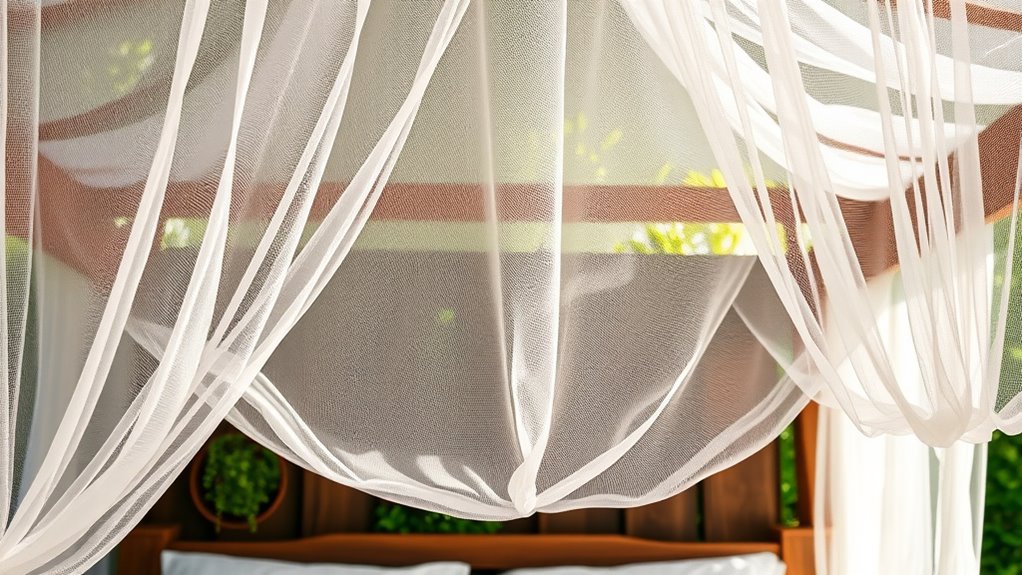

To DIY a canopy and mosquito netting, select weather-resistant fabrics like polyester or nylon with small mesh holes for insect protection and good airflow. Measure your space carefully, add extra fabric for secure edges, and use support poles or frames. Attach the netting tightly, reinforce edges, and include a door flap for easy access. This simple setup creates a durable, bug-free outdoor retreat—keep exploring for detailed steps and tips to perfect your project.
Key Takeaways
- Select weather-resistant polyester or nylon mesh with appropriate hole size for insect protection and airflow.
- Measure your space carefully, adding extra fabric for secure edges and a taut fit.
- Build a lightweight support frame using metal or wood poles anchored securely into the ground.
- Attach netting with reinforced hems, clips, or grommets, and ensure it’s stretched tight to prevent sagging.
- Incorporate doors or flaps with magnetic or hook-and-loop closures for easy access and improved insect prevention.

Ever wondered how to create a comfortable outdoor space that keeps bugs at bay? Building a DIY canopy with mosquito netting is a smart way to enjoy your patio or garden without the annoyance of insects. One of the most important steps in this project is selecting the right fabric. You want a fabric that’s durable, breathable, and easy to work with. Look for mesh or netting specifically designed for outdoor use, typically made from materials like polyester or nylon. These fabrics resist weather damage and won’t degrade quickly in sunlight. When choosing fabric, consider the size of the mesh holes: smaller holes provide better protection against tiny insects like mosquitoes but may reduce airflow, so strike a balance based on your climate and preferences. Heavier fabrics may last longer but can be harder to work with, so opt for a lightweight yet sturdy option that’s easy to cut and sew if needed. Durability is a key factor to ensure your netting lasts through seasons of use.
Once you’ve picked the perfect fabric, focus on installation tips to ensure your canopy or netting stays secure and effective. Start by measuring your space carefully—determine the length and width needed to cover your desired area comfortably, leaving some extra fabric for securing edges and creating a taut fit. When hanging the netting, use strong hooks or eye bolts anchored into sturdy support beams or posts. Attach the fabric using zip ties, clips, or even grommets if you plan to add reinforcement. Make sure the fabric is stretched tight to prevent sagging, which can create gaps for bugs to slip through. If you’re working with multiple panels, overlap the edges slightly to avoid gaps, and secure them well to prevent insects from sneaking in through the openings.
Another tip for easy installation is to create a simple frame or support structure if your space doesn’t already have one. You can use lightweight metal or wooden poles to hold the fabric aloft, making sure they’re anchored firmly into the ground or a stable base. When attaching the netting to the frame, consider sewing a hem along the edges with reinforced stitching to prevent fraying over time. For added convenience, install a door or flap with a hook-and-loop closure or magnetic strips, so you can easily enter and exit without compromising the net’s integrity. By carefully selecting your fabric and following these installation tips, you’ll craft a durable, bug-free outdoor retreat that’s both functional and inviting.

4 Light Chandelier, Industrial Ceiling Light Black Lantern Light Fixtures with Farmhouse Metal Cage Adjustable Height Rustic Geometric Hanging Light E12 Base for Kitchen Island, Entryway, Indoor
Rustic and Exquisite Appearance: Featured with black center candlestick and geometric outward appearance, the geometric lantern chandelier is...
As an affiliate, we earn on qualifying purchases.
Frequently Asked Questions
What Materials Are Best for Outdoor DIY Canopy Durability?
For outdoor DIY canopy durability, you should choose weather-resistant fabrics like polyester or acrylic, as they withstand rain and sun exposure. Make sure the fabric has reinforced stitching to prevent tears and fraying over time. Using sturdy materials and proper sewing techniques helps your canopy last longer. Additionally, consider rust-resistant hardware and waterproof coatings to enhance overall durability, ensuring your outdoor space stays protected and inviting for seasons to come.
How Do I Prevent Mosquito Netting From Tearing Easily?
To prevent mosquito netting from tearing easily, you should reinforce it with tear-resistant fabrics or add netting reinforcement along the edges and stress points. Choose durable, high-quality materials like polyester or nylon, which resist tearing better than cheaper options. Avoid pulling or stretching the netting too much, and secure it tightly to prevent sagging. Regularly inspect for small tears and repair them promptly to maintain its strength and longevity.
Can I Customize the Canopy Size to Fit Different Spaces?
Yes, you can customize the canopy size to fit different spaces. Focus on canopy customization by measuring your area accurately and adjusting the fabric or frame accordingly. Use adjustable or modular components to make space fitting easier. This way, you guarantee the canopy perfectly matches your space, providing ideal coverage and comfort. Customizing the size helps prevent gaps and enhances the overall effectiveness of your canopy setup.
What Safety Precautions Should I Consider During Installation?
While safety might seem secondary, it’s your top priority during installation. Start by using fire-resistant fabrics to reduce fire hazards and guarantee all materials meet safety standards. Secure anchoring is vital—double-check hooks, ropes, and supports to prevent collapses. Wear gloves and eye protection for added safety. Avoid working on unstable surfaces, and keep a fire extinguisher nearby. These precautions help you create a safe, durable canopy environment.
How Do I Maintain and Clean Mosquito Netting Effectively?
To maintain your mosquito netting, regularly inspect for tears or damage and address any netting repair needs promptly. Clean your netting gently with mild cleaning solutions, like a mixture of water and a small amount of soap, avoiding harsh chemicals. Hand wash or use a gentle cycle if machine washing, and let it air dry completely. This keeps your netting effective and extends its lifespan, ensuring continuous protection.

RUIYEY Modern Chandelier Ceiling Light Fixture Sputnik Chandeliers Gold and Black Farmhouse Chandelier Over Table 12-Light Height Adjustable Chandeliers for Dining Room, Living Room,Kitchen Island
Height Adjustable Chandelier: The hanging height of this chandelier can be adjusted by changing the number of rods,...
As an affiliate, we earn on qualifying purchases.
Conclusion
Creating your own canopy and mosquito netting is a simple way to enhance your outdoor space and stay protected. Did you know that mosquito-borne diseases affect over 700 million people annually worldwide? By making your own netting, you’re not only saving money but also reducing the risk of mosquito bites and related illnesses. With just a few materials and some effort, you can enjoy your outdoor areas safely and comfortably all season long.

Shine LUEST Modern LED Ceiling Light, Dimmable LED Chandelier Black Flush Mount Ceiling Lights, Remote Control Acrylic Ring Ceiling Lamp Fixture for Living Room Dining Room Bedroom, 8H-FANG-BL-04
🌈Dimmable Ceiling Light: Light memory function is easy to operate,Modern ring chandelier with stepless 5%-100% brightness, 3000-6000K color...
As an affiliate, we earn on qualifying purchases.

AIRYPHANT Gold Chandelier 47” Big High Ceiling Chandeliers Big Modern Remote Control Chandelier for Large Living Room Dining Room Foyer
Elegant Design: The gold chandelier’s unique 5 rotating 47-inch long light bars allow you adjust the shade and...
As an affiliate, we earn on qualifying purchases.

Born in Dubai to Pakistani parents, Aisha deeply understands Middle Eastern and South Asian luxury markets. She excels in forging strategic partnerships with top-tier luxury brands worldwide, fostering cross-cultural collaborations that enhance our global presence.