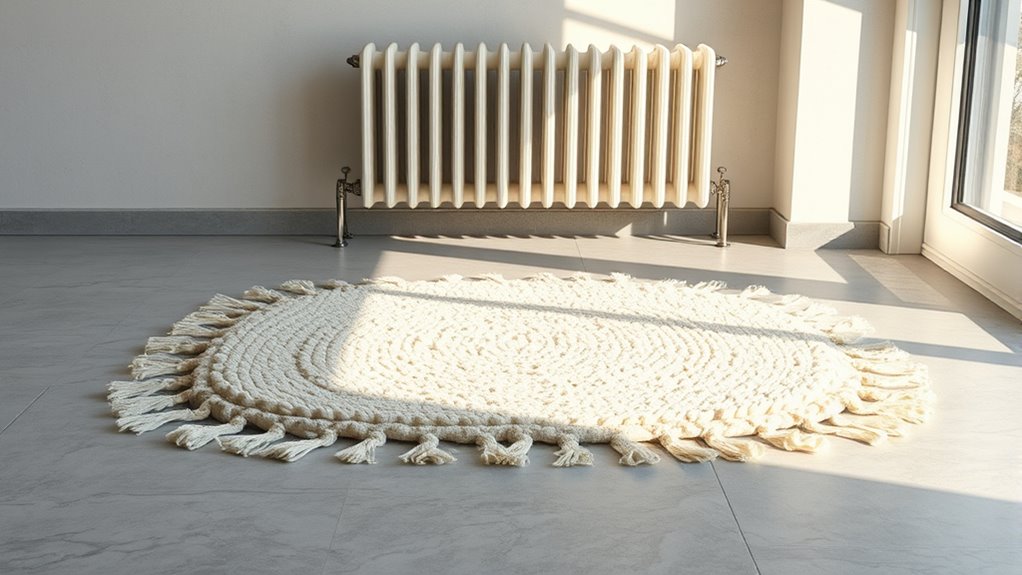

To make concrete floors feel warm and inviting, adding area rugs pairs beautifully with radiant heating systems beneath the surface. Rugs instantly soften hard surfaces, add color, and help insulate, while radiant heat evenly warms the entire space silently and efficiently. Combining these options creates a cozy, stylish vibe perfect for any decor. Keep exploring to discover how you can transform your concrete floors into comfortable, welcoming areas year-round.
Key Takeaways
- Rugs add texture, color, and softness, transforming cold concrete floors into cozy, inviting spaces.
- Natural fiber rugs like wool or jute enhance durability and warmth, complementing modern or rustic styles.
- Radiant heating systems beneath concrete floors evenly distribute heat, creating a comfortable environment.
- Combining rugs with radiant heat improves insulation, minimizes heat loss, and allows seasonal decor changes.
- This combination offers a sleek, flexible solution for turning hard concrete into warm, relaxing living areas.

Concrete floors are often associated with cold, industrial spaces, but with the right design choices, they can feel surprisingly warm and inviting. One of the simplest ways to achieve this is by adding area rugs. Placing a well-chosen rug can instantly introduce texture, color, and softness underfoot, transforming a stark concrete surface into a cozy focal point. Rugs help dampen sound, add visual interest, and make your space feel more personal. Opt for thick, plush options or layered rugs for extra comfort and warmth. Consider natural fibers like wool or jute for durability and a warm aesthetic that complements modern or rustic styles alike.
Beyond rugs, radiant heating offers a more high-tech solution to warmth. This system involves installing electric or hydronic heating elements beneath your concrete floors, which radiate heat upwards and evenly warm the entire space. Radiant heating is silent, energy-efficient, and provides a consistent temperature that feels natural and comfortable. When combined with the right area rugs, radiant heat can boost your comfort level considerably. Rugs act as a decorative layer that prevents heat loss and adds insulation, making your space even warmer without sacrificing style.
Installing radiant heating beneath concrete is a smart investment if you want a truly cozy environment. It works well with concrete because of its thermal mass, meaning it absorbs and retains heat effectively. Once warmed, the concrete acts like a giant radiator, slowly releasing heat throughout the room. This setup eliminates cold spots and drafts, creating a uniform warmth that’s especially appreciated during colder months. Plus, radiant heat can be controlled via thermostats, giving you precise temperature management and energy savings.
When combining area rugs with radiant heating, you get the best of both worlds: the aesthetic appeal of stylish rugs and the practical comfort of underfloor warmth. Rugs can be swapped out seasonally or changed to match your decor, while radiant heating provides a consistent baseline of heat that keeps your space comfortable at all times. This approach also preserves the sleek, modern look of concrete floors. You avoid bulky heaters or radiators disrupting your design, maintaining an open, clean aesthetic.
In the end, creating warmth with concrete floors doesn’t mean sacrificing style. Area rugs add charm and softness, while radiant heating ensures your space stays cozy. Together, they turn cold, hard surfaces into inviting, comfortable areas where you’ll want to spend more time. Whether you prefer a layered, bohemian vibe or sleek minimalism, these options give you the flexibility to make concrete floors feel warm, welcoming, and uniquely yours. Incorporating somatic therapy techniques into your space planning can also promote relaxation and well-being, creating a truly holistic environment.
area rugs for concrete floors
As an affiliate, we earn on qualifying purchases.
As an affiliate, we earn on qualifying purchases.
Frequently Asked Questions
How Long Does It Take to Install Radiant Heat Under Concrete?
You can expect the installation timeline for radiant heat under concrete to take about 3 to 5 days, depending on your project’s scope. First, the heating system gets installed, then the concrete is poured over it. You’ll need to allow for a curing process, which typically takes at least 28 days, before you can turn on the radiant heat system. Proper curing guarantees your system works efficiently and lasts longer.
Are There Any Health Risks Associated With Heated Concrete Floors?
You might wonder about health concerns with heated concrete floors. Generally, they’re safe, but some risks exist. Heated floors can create a dry environment, potentially irritating your skin or respiratory system. If moisture gets trapped, mold growth could become an issue, especially in poorly ventilated areas. To minimize health risks, guarantee proper installation and ventilation, and regularly check for signs of mold or moisture buildup.
Can Existing Concrete Floors Be Retrofitted With Radiant Heating?
Yes, you can retrofit existing concrete floors with radiant heating. You should explore retrofit options like hydronic or electric systems, which can be installed beneath the slab. Keep insulation considerations in mind to maximize efficiency and prevent heat loss. Consulting with a professional ensures proper installation, safety, and ideal performance, making your floor warmer and more comfortable without the need for complete removal or replacement.
What Maintenance Is Required for Radiant Heating Systems?
You’ll want to perform regular maintenance to guarantee your radiant heating system lasts. Check the thermostat and controls monthly for proper operation, and schedule an annual professional inspection. Keep the system free of debris and leaks, and flush the system if needed to prevent buildup. With consistent maintenance, your system’s longevity increases, and you’ll enjoy efficient warmth for years. Typically, maintenance frequency is once a year, but always follow the manufacturer’s guidelines.
How Do Outdoor Climate Conditions Affect Indoor Heated Concrete Floors?
Did you know that outdoor climate impact can cause indoor heated concrete floors to fluctuate in temperature by up to 15%? Cold, damp, or extremely hot weather affects how well your system maintains consistent warmth. Proper outdoor insulation helps mitigate these effects by reducing heat loss and shielding the flooring from extreme temperatures. To keep your floors comfortable year-round, make certain your insulation is adequate and weather-proofed against seasonal climate variations.
electric radiant floor heating system
As an affiliate, we earn on qualifying purchases.
As an affiliate, we earn on qualifying purchases.
Conclusion
Imagine your concrete floor as a blank canvas, waiting to be brought to life with warmth and comfort. By adding rugs and radiant heat, you transform a cold, hard surface into a cozy haven where every step feels like a gentle embrace. It’s your personal oasis, blending durability with inviting charm. With just a touch of warmth, your space becomes a haven where comfort and style dance together, making every moment barefoot and beautiful.
natural fiber rugs wool jute
As an affiliate, we earn on qualifying purchases.
As an affiliate, we earn on qualifying purchases.
underfloor radiant heating for concrete
As an affiliate, we earn on qualifying purchases.
As an affiliate, we earn on qualifying purchases.

Born in Dubai to Pakistani parents, Aisha deeply understands Middle Eastern and South Asian luxury markets. She excels in forging strategic partnerships with top-tier luxury brands worldwide, fostering cross-cultural collaborations that enhance our global presence.