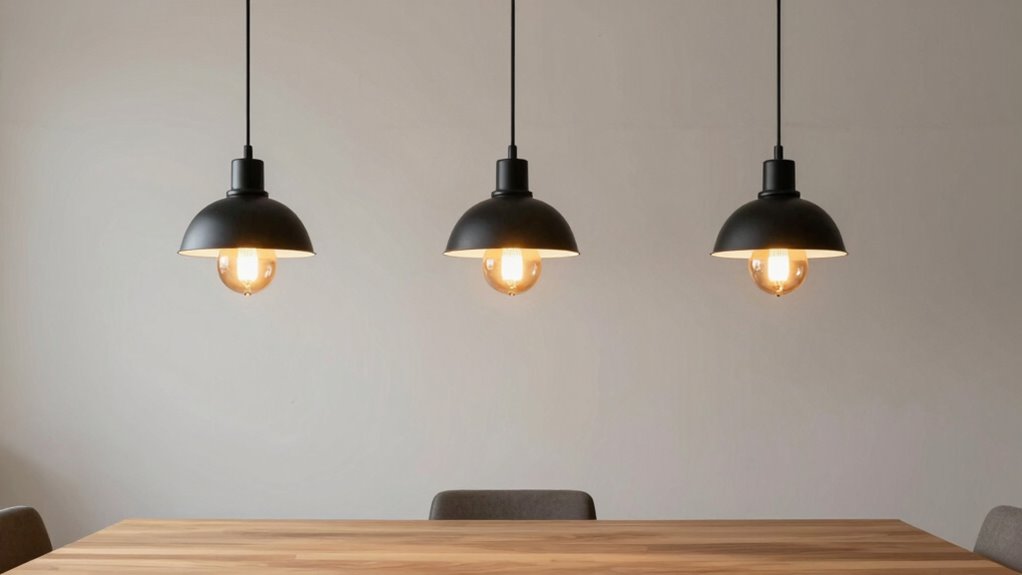

To create intentional pendant light spacing, measure the length of your surface (like an island or table) and divide it by the number of fixtures plus one. For example, with a 96-inch surface and three pendants, you’ll space each about 24 inches apart, starting from the edges inward. This simple formula guarantees your lighting looks balanced and cohesive. Keep in mind, adjusting for ceiling height can enhance the overall effect—exploring further will help you perfect your setup.
Key Takeaways
- Measure the length of your surface and divide by the number of pendants plus one for even spacing.
- Start spacing from the edges inward to ensure balanced distribution along the surface.
- Maintain consistent spacing to create a cohesive, intentional look that enhances interior harmony.
- Adjust pendant height based on ceiling height, but keep spacing uniform for visual balance.
- Choose fixtures that match your decor to complement spacing and reinforce a polished, intentional design.
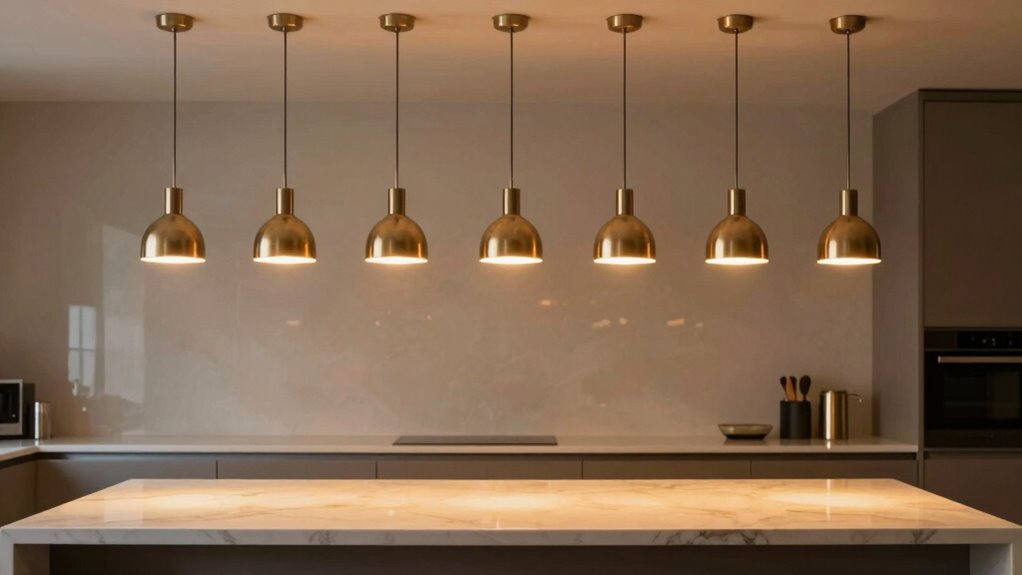
Proper pendant light spacing guarantees your lighting looks balanced and functions effectively. When you’re working on your lighting design, understanding how to space pendant lights is essential to creating a cohesive and inviting interior ambiance. Too close, and the fixtures can overwhelm the space, making it feel cluttered or overly bright. Too far apart, and the lighting can appear disconnected or fail to provide adequate illumination. Finding the right balance is key to achieving a look that feels intentional and polished.
Proper pendant spacing ensures balanced, effective, and inviting lighting for a polished interior look.
A simple, effective formula helps you determine the ideal spacing between pendant lights. Typically, you want to measure the length of the surface where the pendants will hang—like a kitchen island or dining table—and divide that measurement by the number of fixtures plus one. For example, if your table is 96 inches long and you plan to hang three pendants, divide 96 by four, which gives you 24 inches. This means you should space each pendant approximately 24 inches apart, starting from the edges and working inward. This approach ensures your lighting is evenly distributed and visually balanced, enhancing both function and style. Lighting design principles emphasize that balanced spacing contributes to a more harmonious interior.
In terms of interior ambiance, proper pendant spacing creates a harmonious atmosphere that draws attention without overwhelming the space. When lights are evenly spaced, they work together to illuminate the entire area uniformly, reducing shadows and dark spots. This uniformity adds to a sense of cohesion and calm, making your space feel more inviting and thoughtfully designed. It also helps highlight the features of your interior, whether you’re emphasizing a beautiful countertop, artwork, or architectural details. Additionally, the visual rhythm**** created by consistent spacing guides the eye naturally across the space, enhancing overall harmony.
Keep in mind that ceiling height plays a role in pendant placement. If your ceiling is higher, you might want to hang your pendants slightly lower to make a visual impact, but maintain consistent spacing along the length of the surface. Conversely, in a lower ceiling, closer spacing may be necessary to avoid a cramped look. The key is to maintain a rhythm that guides the eye along the space naturally, reinforcing your overall lighting design and interior ambiance. Additionally, considering the lighting balance can help you achieve a more inviting environment. Achieving this balance involves not only spacing but also selecting the right fixtures to match your overall decor.
pendant light fixtures for kitchen island
As an affiliate, we earn on qualifying purchases.
As an affiliate, we earn on qualifying purchases.
Frequently Asked Questions
How Do Ceiling Height and Pendant Size Affect Spacing?
You should adjust pendant light spacing based on ceiling height and pendant size. For higher ceilings, space pendants farther apart to fill the space evenly and avoid a cluttered look. Larger pendants need more room to breathe and to prevent overwhelming the area. Conversely, lower ceilings call for closer spacing to create a balanced, cozy feel. Always consider both factors to achieve a harmonious, intentional lighting design.
Can Multiple Pendant Styles Be Mixed in One Space?
Yes, you can mix multiple pendant styles in one space, but focus on color coordination and style contrast to keep it cohesive. Choose pendants that share a common color palette or finish, creating harmony. Then, contrast different styles—like sleek modern with rustic—to add visual interest without chaos. Make certain the sizes and heights are balanced, so the varied styles complement rather than compete with each other, making your space look intentional.
What Is the Ideal Spacing for Outdoor Pendant Lighting?
Imagine you’re lighting your outdoor patio with three pendant lights spaced about 24 inches apart. For ideal outdoor pendant lighting, aim for 24-30 inches between fixtures, considering your space’s size. Prioritize color coordination to complement your outdoor decor and choose fixtures with durable materials like weather-resistant metals. This spacing creates a balanced, intentional look, ensuring your lighting enhances your outdoor ambiance without feeling cluttered or sparse.
How Does Room Function Influence Pendant Placement?
Your room’s function directly influences pendant placement, shaping lighting ambiance and aesthetic harmony. In a kitchen, hang pendants lower over the island for task lighting, ensuring practicality. For a dining area, space pendants evenly to create a balanced, inviting atmosphere. In living rooms, use varied heights for visual interest. Adjust spacing based on how you use the space, ensuring the lighting complements activities and enhances the room’s overall style.
Are There Differences in Spacing for Single Versus Multiple Pendant Fixtures?
Spacing differs distinctly for single versus multiple pendants. For a single fixture, focus on foreground finesse, ensuring it’s centered and proportionate to the space. Multiple pendants require a measure of harmony, balancing between uniformity and variety. Color coordination and material harmony help unify the design, creating a cohesive look. Keep spacing strategic, aligning with the size, style, and function of your space to make your lighting look intentional and inviting.
adjustable pendant lights for ceiling height
As an affiliate, we earn on qualifying purchases.
As an affiliate, we earn on qualifying purchases.
Conclusion
By applying this simple formula, you’ll craft a lighting arrangement that feels as natural as a well-composed symphony—each pendant perfectly spaced, creating harmony and balance in your space. Like a master painter’s brushstrokes, thoughtful spacing transforms an ordinary room into a masterpiece. Remember, the key lies in intentionality; when your pendants are arranged with purpose, they’ll evoke the timeless elegance of an artful scene, elevating your decor to an artful statement of style.
balanced pendant light spacing kit
As an affiliate, we earn on qualifying purchases.
As an affiliate, we earn on qualifying purchases.
dining room pendant light set
As an affiliate, we earn on qualifying purchases.
As an affiliate, we earn on qualifying purchases.