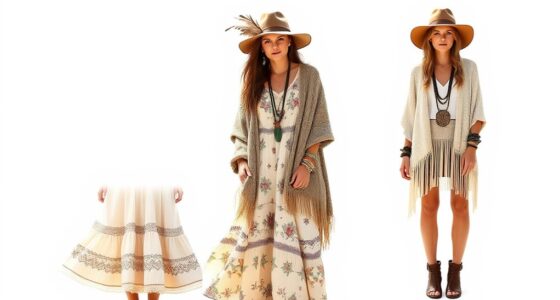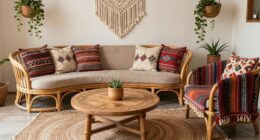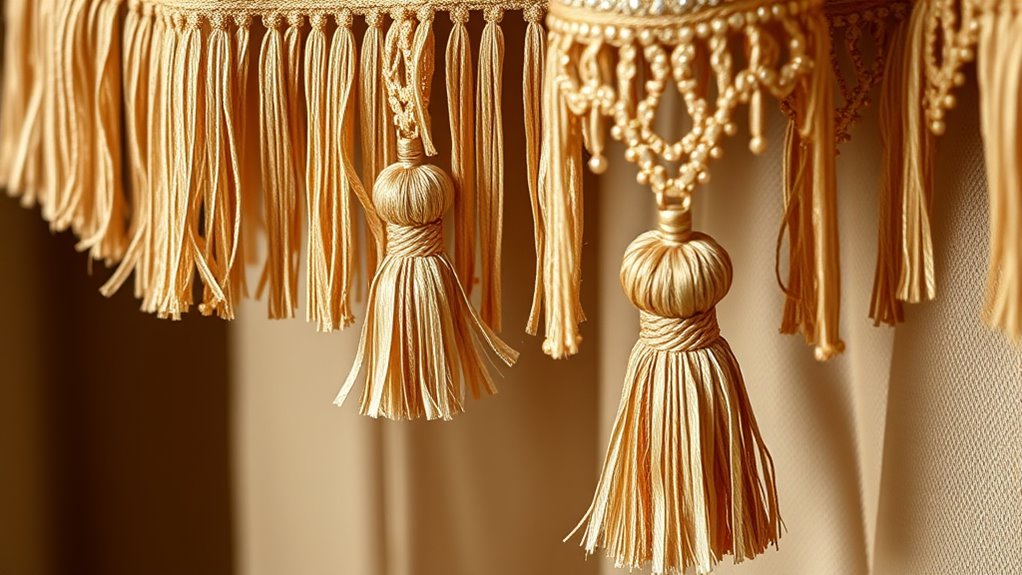

Fringe, tassels, and trim are decorative fabric details that add texture, color, and elegance to textiles and furniture. Throughout history, they’ve symbolized social status, wealth, and cultural beliefs, from ancient Egypt to European aristocracy. Today, these embellishments personalize both fashion and home decor, offering versatility and style. Each element’s material, texture, and placement reflect rich traditions and craftsmanship. Exploring these features further reveals how historical influences shape contemporary design choices.
Key Takeaways
- Fringe, tassels, and trim are decorative fabric embellishments used to enhance textiles, furniture, and fashion pieces.
- Historically, tassels symbolized status, while trims and fringes signified wealth and aristocratic style.
- Materials vary from silk, cotton, polyester, to metallic threads, affecting texture and visual appeal.
- These elements can be used in formal or casual decor to add texture, color, and cultural significance.
- Incorporating fringe, tassels, and trim connects contemporary design with centuries-old craftsmanship and symbolism.

Fringe, tassels, and trim are decorative elements that can instantly elevate the look of any fabric or piece of furniture. These embellishments, often called fabric embellishments, have been used for centuries to add texture, color, and sophistication to textiles and furnishings. Their historical usage reveals a long-standing tradition of ornamentation across cultures and eras. In ancient Egypt, for example, tassels were symbols of rank and status, frequently adorning clothing and ceremonial objects. Similarly, in European aristocratic fashion, elaborate trims and fringes decorated garments and draperies, showcasing wealth and taste. Over time, these decorative features shifted from symbols of privilege to popular design elements, used in everything from upholstery to fashion accessories.
When you choose fringe, tassels, or trim, you’re tapping into a rich history of craftsmanship and style. These elements serve more than just aesthetic purposes—they also reflect cultural influences and historical trends. For example, Victorian-era furniture often featured elaborate fringes and trims, emphasizing opulence and attention to detail. In Asian textiles, tassels have symbolic meanings and are used to ward off evil spirits. Today, these embellishments continue to be versatile, allowing you to customize and personalize your home decor or wardrobe. Whether you’re adding a fringe to a throw pillow, attaching tassels to a curtain tieback, or trimming a vintage jacket, you’re engaging with a tradition that spans centuries.
In practice, fabric embellishments like fringe, tassels, and trim can be made from a variety of materials, including silk, cotton, polyester, and metallic threads. Their textures and colors can complement or contrast with the main fabric, creating visual interest and tactile appeal. The historical usage of these elements also influences their design and placement; for example, more ornate trims might be used for formal settings, while simpler tassels suit casual decor. Additionally, understanding the health benefits of certain fabrics and materials can help you choose the best options for your projects, ensuring both style and wellness. When incorporating these features into your projects, think about the story behind them and how they can enhance the overall aesthetic. They’re not just decorative; they’re a nod to history and craftsmanship, adding depth and character to your space or style.
Ultimately, fabric embellishments like fringe, tassels, and trim allow you to craft a look that’s both timeless and personal. By understanding their historical significance and various applications, you can make more informed choices that reflect your taste and appreciation for design tradition. These details, simple yet impactful, ensure your creations stand out with a touch of elegance rooted in centuries of decorative arts.

10 Yards Boho Long Fringe Trim 2.3'' Wide Sewing Fringe Trim Cotton Tassel Trims for Clothes Lamp Shade Curtain Dress Crafts Accessories Home Decor
【Soft Material】Our tassel fringe trim is made of soft cotton material, which is comfortable and skin-friendly, has fine…
As an affiliate, we earn on qualifying purchases.
As an affiliate, we earn on qualifying purchases.
Frequently Asked Questions
What Are the Historical Origins of Fringe and Tassels in Fashion?
You might find that fringe and tassels originated from ancient decorative elements used in various cultures. Historically, these adornments held cultural significance in fashion, symbolizing status or spiritual beliefs. As you explore fashion history, you’ll see how different civilizations, like the Egyptians or Greeks, used fringes and tassels to enhance garments and express identity. Their enduring appeal shows how these elements connect modern style to rich cultural traditions.
How Do Different Materials Affect the Durability of Trims?
Different materials markedly impact the durability of trims because of their material strength and fabric compatibility. You’ll find that sturdy fabrics like leather or heavy wool provide excellent support, preventing fraying or tearing. In contrast, delicate materials like silk or fine lace may look beautiful but aren’t as durable, requiring careful handling. Choosing the right trim material depends on balancing aesthetic appeal with the material’s ability to withstand wear and tear.
Can Fringe and Tassels Be Customized for Specific Projects?
Like a tailor weaving dreams into fabric, you can customize fringe and tassels for your projects. You have access to a range of bespoke trim services and custom design options, allowing you to choose colors, materials, and lengths that perfectly symbolize your vision. This personalized approach guarantees your embellishments reflect your unique style, transforming ordinary spaces into meaningful expressions of creativity and intent.
Are There Eco-Friendly Options for Fringe and Trim Materials?
Yes, eco-friendly options for fringe and trim materials do exist. You can choose sustainable fibers like organic cotton, hemp, or bamboo, which reduce environmental impact. Recycled trims made from plastic bottles or repurposed fabrics are also great choices. These options help you create beautiful designs while supporting sustainability. By selecting recycled trims and sustainable fibers, you contribute to eco-conscious fashion and decor, making your projects both stylish and environmentally responsible.
How Do I Clean and Maintain Garments With Fringe or Tassels?
Did you know that garments with fringe and tassels often require 60% more delicate care? To clean them, use gentle washing techniques like hand washing with mild detergent, avoiding machine agitation. Store your pieces carefully—preferably hanging or flat to prevent tangling or damage. Regularly inspect and lightly brush the fringe or tassels to keep them pristine. Proper maintenance guarantees your stylish garments stay beautiful and last longer.

Fenghuangwu Colorful Tassel Key Tassel DIY Accessories for Curtain and Home Decoration-Mix blue-2PCS
Material: The Key Tassel are made of polyester, soft and touch comfortably.
As an affiliate, we earn on qualifying purchases.
As an affiliate, we earn on qualifying purchases.
Conclusion
Now that you understand the difference between fringe, tassels, and trim, you can confidently choose the perfect details to elevate your designs. Think of these embellishments as the jewelry for your fabrics—adding personality and charm. Just like a well-chosen accessory completes an outfit, the right trim transforms a piece from simple to stunning. So, experiment boldly, and let your creativity be as limitless as the threads that weave these beautiful details.

CABODYALS 20 Yards Golden Gimp Braid Trim Gold Metallic Glitter Woven Braided Lace Trimming Polyester Upholstery Fabric Ribbon Bulk for Sewing Making Crafts Clothes Costume Home Decor Wedding Dresses
Gold Braid Lace Trim: Gold braid ribbon has a wheat shaped braid design that gives it a unique…
As an affiliate, we earn on qualifying purchases.
As an affiliate, we earn on qualifying purchases.

Supkiir 16Pcs Wood Appliques, Carved Unpainted DIY Decorative Wooden Applique Trim Decal Wood Embellishments for Furniture Cabinet Dresser Bed Wall 2 Sizes
Exquisite Patterns: Each wood applique and onlays features a meticulously carved 3D pattern, showcasing exquisite details that you…
As an affiliate, we earn on qualifying purchases.
As an affiliate, we earn on qualifying purchases.

Born in Dubai to Pakistani parents, Aisha deeply understands Middle Eastern and South Asian luxury markets. She excels in forging strategic partnerships with top-tier luxury brands worldwide, fostering cross-cultural collaborations that enhance our global presence.