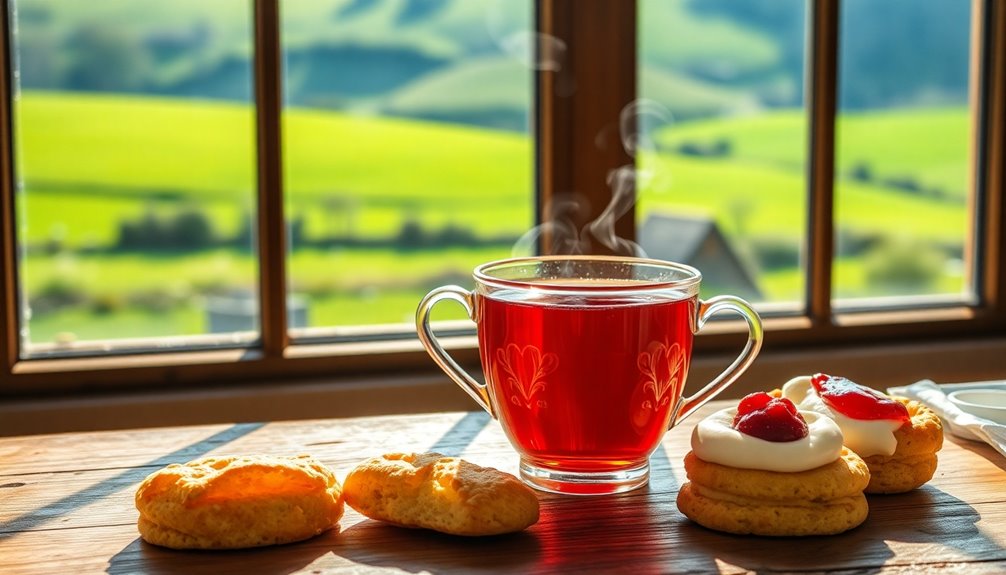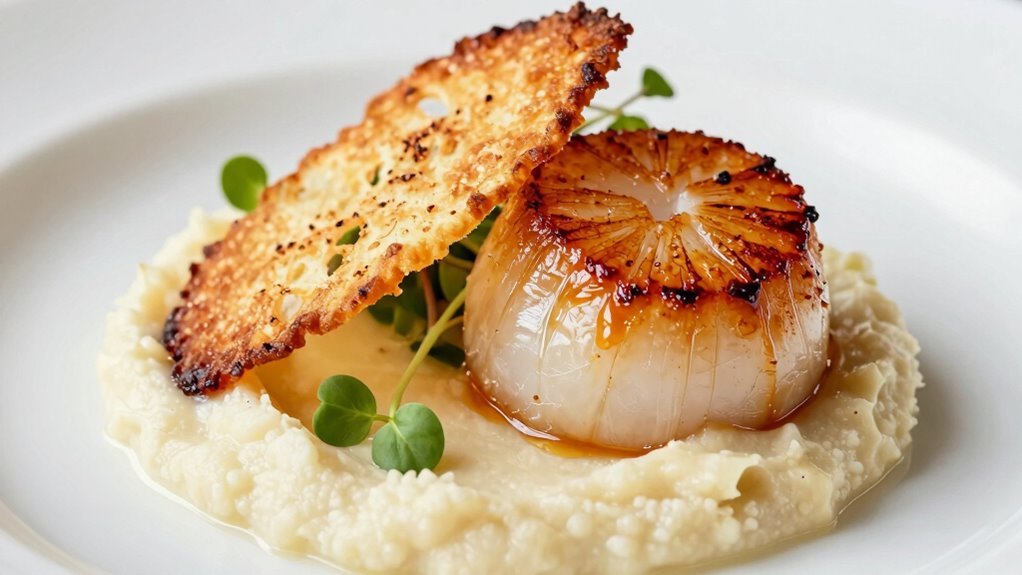

In fine dining at home, texture matters as much as flavor because it engages your senses and adds depth to each dish. The contrast between crispy, tender, or smooth elements makes your meal more exciting and memorable. Properly balanced textures enhance visual appeal and create a multi-sensory experience that makes your food stand out. When you master texture, your dishes become more intriguing and satisfying—something you can explore further to elevate every meal you prepare.

Get your wardrobe favorites delivered free with Prime
- Fast, free delivery on millions of items
- Prime Video, Amazon Music and more included
- Member-only deals all year
Key Takeaways
- Texture adds complexity and depth, enriching the overall sensory experience beyond taste alone.
- Varied textures create visual appeal and anticipation, elevating the presentation of home-cooked dishes.
- Combining different textures enhances flavor perception, making each bite more engaging and memorable.
- Balanced textures contribute to dish harmony, ensuring satisfying and refined dining experiences.
- Mastering texture transforms simple meals into sophisticated, restaurant-quality culinary moments at home.
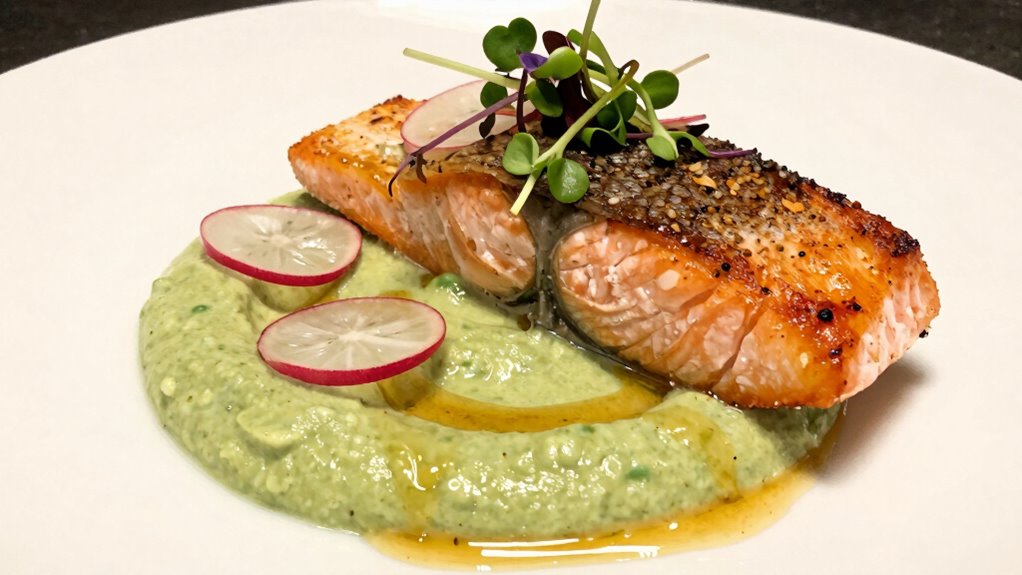
Creating a fine dining experience at home means more than just plating beautifully; it’s about mastering the interplay of texture and flavor to elevate each bite. When you pay attention to culinary presentation, you’re not just making the dish look appealing—you’re setting the stage for a memorable sensory experience. Texture influences how your palate perceives flavor, adding layers of complexity that keep every forkful interesting. A perfectly crispy exterior combined with a tender interior, for example, engages your senses more deeply than a uniform bite ever could.
Master the art of texture and flavor to create unforgettable, restaurant-quality home dining experiences.
You want your dishes to surprise and delight, and that’s where texture plays a pivotal role. Think about the contrast between a silky sauce and a crunchy garnish, or the firmness of roasted vegetables paired with a smooth puree. These combinations make each mouthful more dynamic, transforming a simple meal into a multi-sensory journey. In fine dining at home, it’s not enough for food to taste good; it needs to feel good too. When you incorporate varied textures, you give your guests an experience that’s both satisfying and memorable.
Flavor alone is powerful, but without texture, it can become flat or monotonous. Texture helps accentuate flavors—like the crunch of toasted nuts highlighting the sweetness of a fruit compote or the velvety richness of a sauce balancing out crispy elements. This interplay invites your taste buds to explore different sensations within a single dish, making every bite more engaging. You can intentionally craft this by choosing ingredients and cooking techniques that complement each other, creating harmony on the plate. Additionally, considering textural contrast in your dishes can enhance the overall dining experience by providing visual and tactile diversity.
Furthermore, considering texture elevates your culinary presentation, making dishes visually appealing and intriguing. A dish with varied textures looks more inviting and hints at the complexity within. This visual cue primes your guests’ expectations, enhancing their overall experience. When you plan your menu with texture in mind, you’re not just serving food—you’re creating an artful display that stimulates all senses.
In the end, mastering texture alongside flavor allows you to craft dishes that are as delightful to touch and feel as they are to taste. Your attention to this balance turns a simple home-cooked meal into an elevated, restaurant-quality experience. It’s about elevating every element, ensuring that each bite leaves a lasting impression rooted in the thoughtful interplay of texture and flavor.
As an affiliate, we earn on qualifying purchases.
Frequently Asked Questions
How Can I Improve Texture Contrast With Limited Ingredients?
You can improve texture contrast with limited ingredients by experimenting with ingredient substitutions that add variety, like swapping crunchy nuts for softer elements. Focus on texture layering by combining different preparation methods—think crispy, creamy, and chewy components in one dish. For example, add toasted breadcrumbs for crunch over a silky puree, or use roasted vegetables alongside fresh herbs to create a dynamic mouthfeel, elevating your home dining experience.
What Tools Help Achieve Perfect Textures at Home?
You can achieve perfect textures at home by using basic tools like a thermometer for precise cooking, a mandoline for even slicing, and a fine sieve to refine ingredients. Incorporate ingredient pairing to contrast crispy and creamy elements, and use plating techniques to enhance texture perception visually and tactilely. These tools and methods help you control cooking and presentation, elevating your dishes with thoughtful texture contrasts that impress.
How Do Texture Preferences Vary Across Different Cuisines?
You’ll notice that textures vary widely across cuisines—crisp tempura contrasts with silky tofu, chewy noodles with delicate pastries. These differences stem from cultural preferences and sensory expectations, shaping how dishes are enjoyed. In Japanese cuisine, you seek harmony between crunchy and tender, while Italian dishes celebrate al dente pasta’s firm bite. Embracing these nuances helps you craft authentic experiences, delighting your palate with textures that resonate deeply within each culinary tradition.
Can Texture Influence the Perceived Freshness of Dishes?
Yes, texture considerably influences how fresh a dish feels, as it impacts your sensory perception and culinary psychology. When a dish has crispness or a firm bite, it signals freshness and quality. Conversely, mushy or slimy textures can suggest spoilage or staleness. Your brain uses these tactile cues to assess freshness quickly, making texture a powerful element in your overall dining experience and perception of a dish’s quality.
How Do I Balance Texture and Flavor for Dietary Restrictions?
To balance texture and flavor for dietary restrictions, focus on nutritional considerations and allergen management. Incorporate a variety of textures—crisp, tender, creamy—to make dishes exciting while respecting restrictions. Use alternative ingredients or cooking methods to avoid allergens without sacrificing taste or mouthfeel. Adjust seasoning and textures thoughtfully, ensuring each bite is satisfying and safe, so you enjoy a balanced, delicious meal tailored to your dietary needs.
Conclusion
Remember, when you master the dance of texture and flavor, your home dining transforms into a symphony for the senses. Each bite becomes a note, each crunch or melt-in-your-mouth moment adds depth and surprise. So, don’t just serve a meal—craft an experience that tickles every taste bud and teases every texture. Because in the world of fine dining at home, it’s not just what’s on the plate, but how it feels that leaves a lasting impression.
Halloween Picks
halloween
As an affiliate, we earn on qualifying purchases.