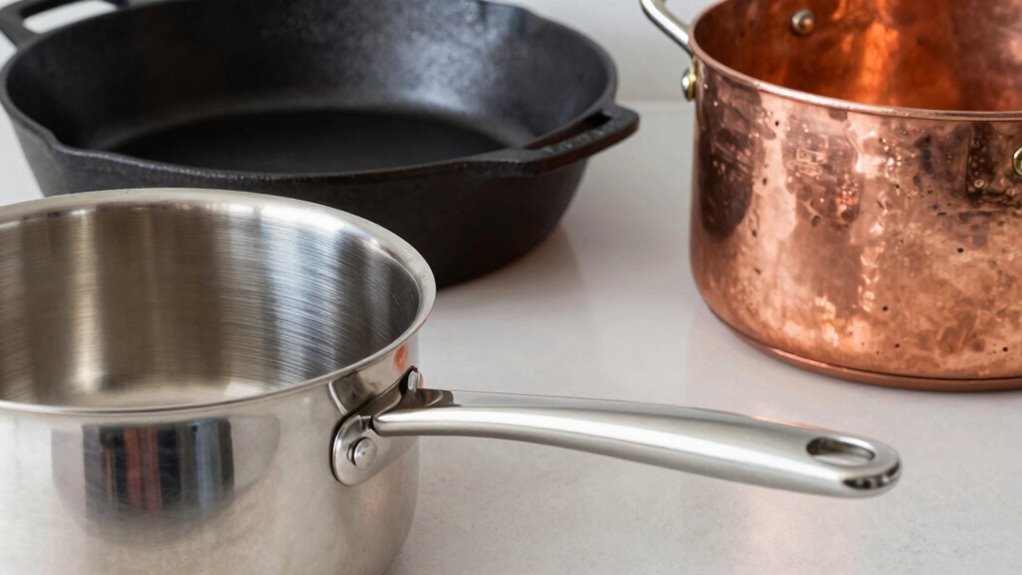

When choosing between stainless steel, cast iron, and copper cookware, consider how each material performs for your needs. Stainless steel heats quickly, resists corrosion, and is versatile, while cast iron offers durability and excellent heat retention—great for searing and slow cooking. Copper provides superior heat transfer for precise control but requires more maintenance. To make the best choice for your style and lifestyle, explore how these materials differ and what suits your cooking habits.
Key Takeaways
- Stainless steel offers quick heating, even heat distribution, and low maintenance, ideal for versatile, modern kitchens.
- Cast iron is extremely durable, retains heat well, and is perfect for high-temperature searing and long-lasting use.
- Copper provides superior thermal conductivity for precise temperature control but requires regular polishing and careful maintenance.
- Environmental impact varies: stainless steel and cast iron are more recyclable and eco-friendly, while copper mining affects ecosystems.
- Cost and longevity differ: cast iron is usually more affordable and lasts generations, whereas copper and stainless steel are higher-priced with varying upkeep needs.

Cuisinart Chef’s Classic 11-Piece Stainless Steel Pots and Pans Set, Cookware Set Compatible with Induction, Electric, Gas Cooktops, Aluminum Core for Even Heat, Cool Grip Handles, Dishwasher Safe
KITCHEN COOKWARE SET: This Cuisinart stainless steel cookware set includes 1.5 qt. & 2.5 qt. saucepans w/glass covers,…
As an affiliate, we earn on qualifying purchases.
As an affiliate, we earn on qualifying purchases.
What Are the Key Differences Between Stainless Steel, Cast Iron, and Copper Cookware
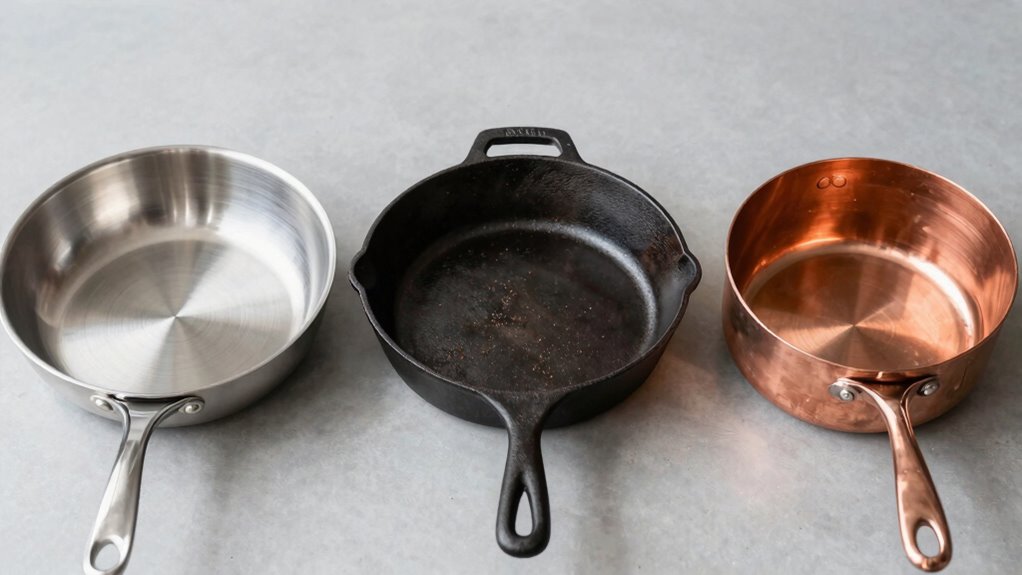
Have you ever wondered how stainless steel, cast iron, and copper cookware differ in performance and use? Their material history highlights different manufacturing processes and durability. Stainless steel, known for its corrosion resistance, is environmentally friendly because it’s recyclable and long-lasting. Cast iron has a rich history dating back centuries, valued for its durability and heat retention, but it requires more energy to produce and can be heavier on the environment. Additionally, metal thermal conductivity influences how quickly and evenly heat is distributed across cookware surfaces, impacting cooking results. Copper, prized for its excellent heat conductivity, has a more complex environmental impact; mining and processing copper can cause significant ecological disruption. Furthermore, European cloud innovation demonstrates how sustainable practices in manufacturing and resource management can minimize environmental footprints. Implementing eco-friendly production methods can help reduce the environmental impact of all these materials. While all three materials have unique benefits, their environmental footprints vary, influencing your choice based on sustainability, longevity, and historical significance.

Lodge Seasoned Cast Iron Skillet – Quality Frying Pan for the Stove, Oven, Grill & Campfire – Includes Silicone Hot Handle Holder – Non-Toxic, Nonstick & Long-Lasting – 12 Inches
Versatile Cooking Skillet: The Lodge Cast Iron Skillet is a multipurpose, everyday cooking pan that excels at searing,…
As an affiliate, we earn on qualifying purchases.
As an affiliate, we earn on qualifying purchases.
How Do These Materials Perform in Heat Retention and Distribution
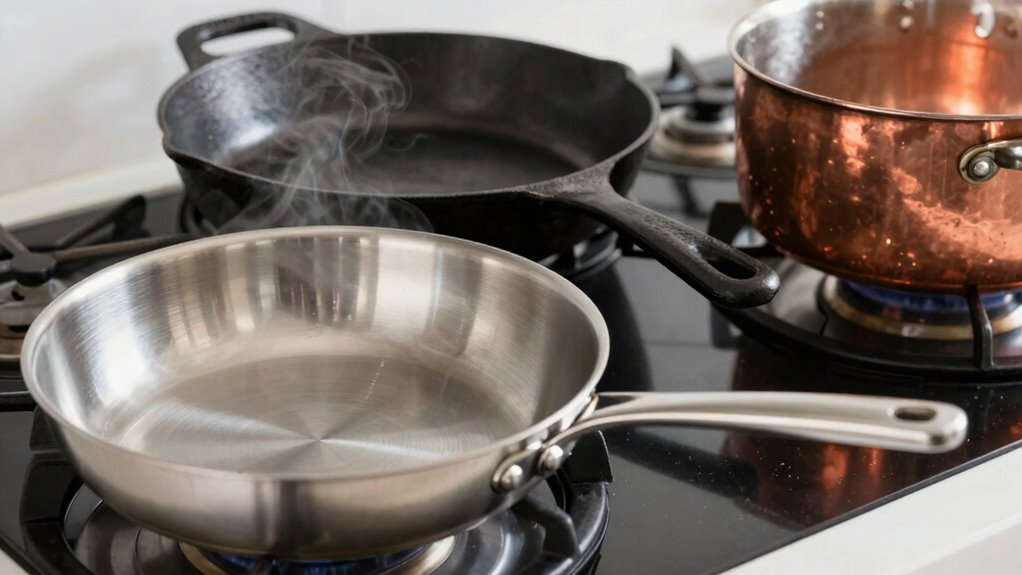
Stainless steel heats up quickly and distributes heat fairly evenly, making it versatile for many cooking tasks. Its heat transfer is reliable, but it may develop hot spots if not managed carefully. Additionally, stainless steel offers excellent corrosion resistance, ensuring longevity in the kitchen. Its durability makes it suitable for everyday use, and it is often more affordable than other materials. The ability to maintain consistent heat is a key advantage for cooking precise recipes. Copper offers superior heat transfer due to its high thermal conductivity, providing precise temperature control. Material longevity varies: stainless steel is durable and resistant to corrosion, cast iron can last for generations with proper care, and copper requires maintenance to prevent tarnish. Proper care and maintenance will help extend the lifespan of your cookware. Here’s a quick comparison: popular cookware materials

MICHELANGELO Sauce Pan with Lid, Ultra Nonstick 3 Qt Saucepan with Lid, 3 Quart Non Stick Pot Induction Compatible, Ceramic Small Pot, Copper
100% Non-Toxic Saucepan for Healthy Cooking – This 3 qt sauce pan uses PFOA/PFOS-free ceramic coating – zero…
As an affiliate, we earn on qualifying purchases.
As an affiliate, we earn on qualifying purchases.
How Durable Are These Cookware Materials and What Maintenance Do They Require
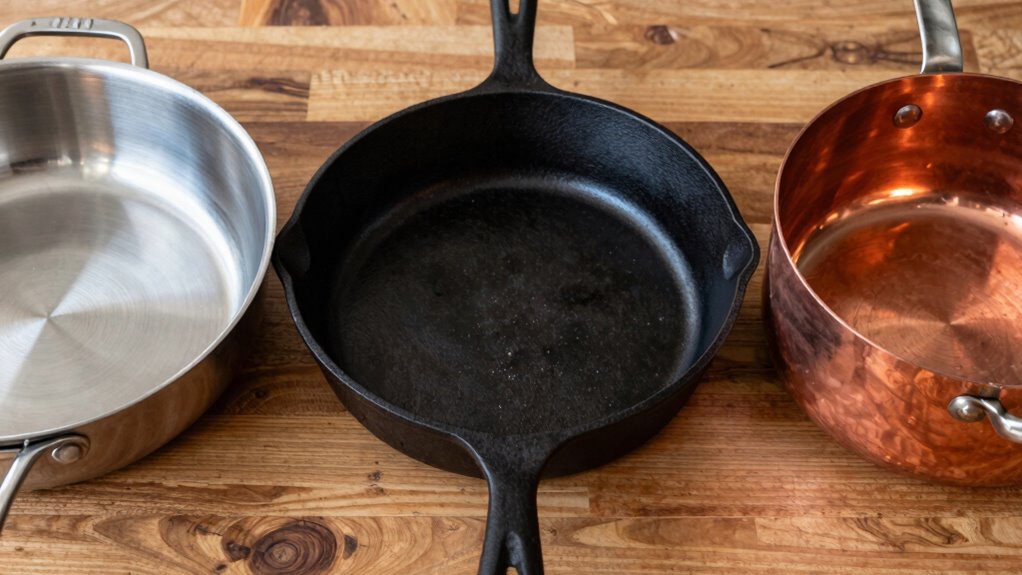
Among the common cookware materials, durability varies considerably, and understanding their maintenance needs can help you choose the right option for long-term use. Conducting a durability comparison reveals that stainless steel is highly resistant to scratches and corrosion, requiring minimal maintenance. Stainless steel also benefits from its corrosion resistance, making it a popular choice for busy kitchens. Additionally, stainless steel’s ease of cleaning contributes to its low-maintenance profile. Cast iron is incredibly durable but needs regular seasoning to prevent rust and maintain its non-stick surface. Proper seasoning not only protects the cast iron but also enhances cooking performance, ensuring even heat distribution. Recognizing the overall durability of each material can help you select cookware that fits your lifestyle and ensures your investment lasts. Regular maintenance tailored to each type extends their lifespan and preserves their performance over time.
eco-friendly cookware
As an affiliate, we earn on qualifying purchases.
As an affiliate, we earn on qualifying purchases.
Which Cookware Is Best for Specific Cooking Techniques and Uses
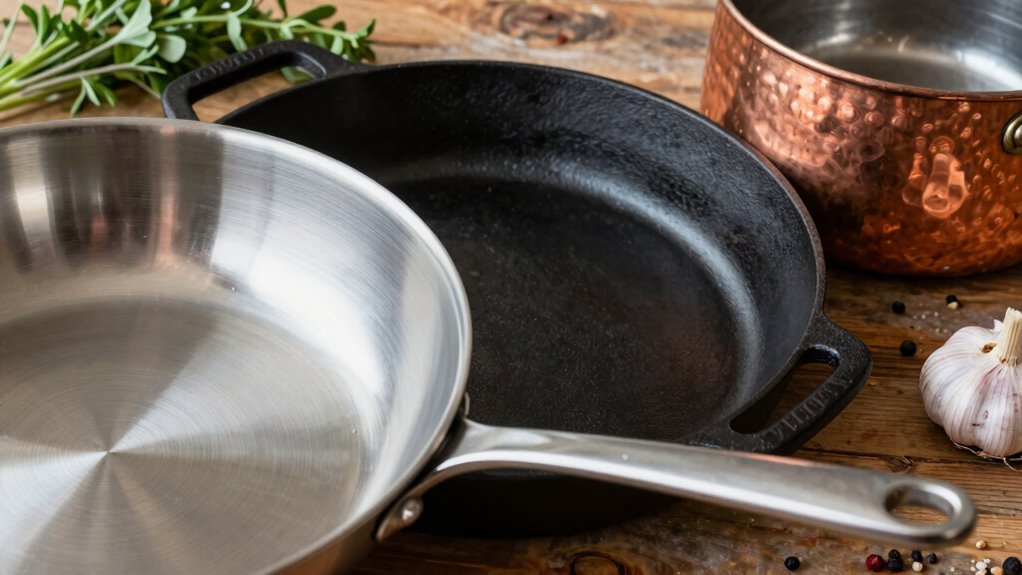
When choosing cookware for specific techniques, consider what works best for searing or delicate ingredients. For searing, you’ll want materials that heat evenly and can withstand high temperatures. If you’re cooking sensitive items like fish or eggs, opt for softer materials that prevent sticking and preserve texture. Additionally, understanding safe installation practices can help ensure your cookware setup is optimal and secure. Properly selecting and maintaining your cookware based on heat conduction properties can also greatly enhance your cooking results. Being aware of material durability can inform your choice for long-term use and consistent performance. Recognizing the thermal response of different materials can help you achieve precise control for various recipes, and considering cooking technique compatibility ensures that your cookware complements your culinary style.
Best for Searing Techniques
For searing, the key is to use cookware that can reach and maintain high temperatures without warping or sticking. Cast iron and copper excel here because they heat quickly and hold heat evenly. Stainless steel is also a good choice if it’s of high quality and properly preheated. Avoid non-stick coatings for searing, as they can’t endure the high heat needed for perfect browning. Keep in mind, some stainless steel cookware offers dishwasher safety, making cleanup easier after your searing session. For the best results, choose cookware that provides durability, even heat distribution, and the ability to handle high temperatures without damage. High-temperature resilience is essential for achieving optimal searing results. Additionally, selecting cookware with excellent heat retention can help maintain consistent temperatures during the searing process.
Ideal for Sensitive Ingredients
Are you cooking delicate ingredients that require gentle handling? If so, you’ll want cookware with non reactive surfaces to prevent unwanted flavors or chemical interactions. Copper cookware is ideal here because it offers even heat distribution, ensuring your ingredients cook uniformly without hot spots. Stainless steel also performs well, especially if it has a non reactive interior, protecting sensitive foods from metallic tastes. Cast iron, while durable, can react with acidic ingredients, so it’s less suitable for delicate tasks unless properly seasoned. For gentle simmering, poaching, or delicate sauces, copper and high-quality stainless steel provide the control and safety you need. These materials help preserve the natural flavors of your ingredients while offering precise temperature management.
What Is the Cost and Investment Value of Stainless Steel, Cast Iron, and Copper Cookware
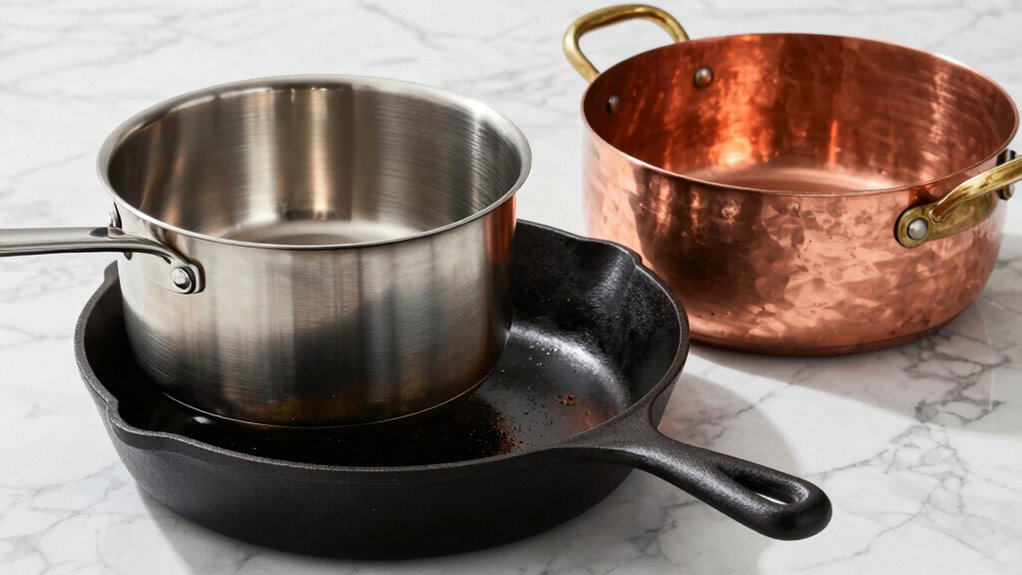
Stainless steel, cast iron, and copper cookware each come with distinct costs and long-term value, making it essential to weigh their initial investment against their durability and performance. When considering the cost comparison, you’ll find that stainless steel offers a moderate price point with excellent longevity, providing good investment value. Cast iron tends to be the most affordable upfront and lasts for generations, making it a cost-effective choice over time. Copper cookware, however, is often the most expensive initially, but its superior heat conductivity can justify the price for serious chefs. Keep in mind these key points:
Stainless steel, cast iron, and copper cookware offer varying costs and long-term value considerations.
- Initial purchase price varies markedly
- Durability influences long-term savings
- Maintenance costs differ among materials
- Resale value can be higher for quality pieces
- Performance benefits may outweigh cost for dedicated cooks
- For those interested in heat conduction, copper stands out as an optimal choice.
How Do Style, Compatibility, and Practicality Affect Your Cookware Choice

Choosing cookware isn’t just about cost; style, compatibility, and practicality also influence your choice. Your kitchen aesthetic matters—color options like vibrant reds or sleek stainless steel can match your decor. Compatibility ensures your cookware works with your stove type; for example, copper requires magnetic bases for induction. Practicality involves durability and ease of cleaning, which vary across materials. A reputable brand enhances confidence in quality and support. Additionally, understanding the field‑of‑view of your cookware can help you select pieces that fit your kitchen space and cooking style. Here’s a quick comparison:
| Feature | Style & Color Options | Compatibility | Practicality & Brand Reputation |
|---|---|---|---|
| Stainless Steel | Sleek, modern, versatile | Compatible with induction, gas | Easy to clean, durable, trusted brands |
| Cast Iron | Classic, rustic look | Compatible with most stoves | Very durable, requires seasoning |
| Copper | Elegant, shiny finish | Needs specific cookware bases | Excellent heat conduction, high-end brands |
Your choice hinges on how these factors align with your needs.
How to Choose the Best Cookware Material for Your Cooking Style and Lifestyle
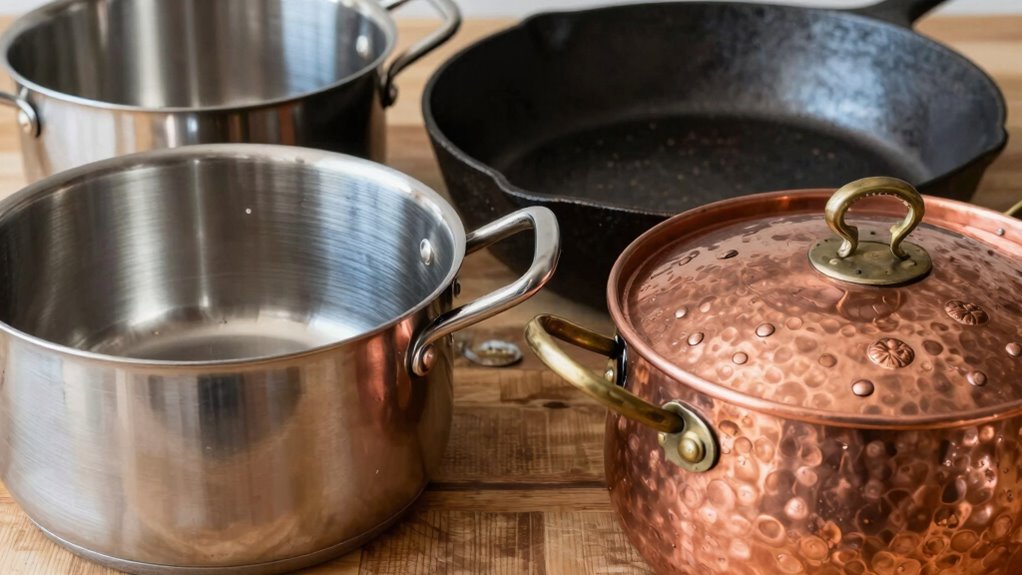
Choosing the right cookware material depends on your cooking style and how much maintenance you’re willing to do. If you cook often and need durability, some materials might suit you better than others. Consider your lifestyle to find a balance between performance and upkeep. Additionally, understanding the thermal behavior of each material can help you achieve consistent high-heat results essential for outdoor cooking.
Cooking Style Compatibility
Your cooking style and daily routine play a crucial role in selecting the right cookware material. If you prefer quick, easy cleanup, non-stick coatings are ideal, making cooking and cleaning effortless. For slow, precise techniques like simmering or searing, thick copper or cast iron offers excellent heat retention and control. If you’re environmentally conscious, eco-friendly options like stainless steel or cast iron are durable, long-lasting, and free from harmful chemicals. Consider your storage space and maintenance habits too—copper requires polishing, while cast iron needs seasoning. Your choice should align with your culinary needs and lifestyle. Durability and safety are also important factors to consider when choosing cookware materials, especially for those concerned about long-term use and potential health impacts. Additionally, understanding the impact of different materials on health can help guide safer, more informed decisions.
Lifestyle Maintenance Needs
Selecting cookware that fits your lifestyle means considering how much time you want to spend on maintenance and how often you’ll use your pots and pans. For busy routines, low-maintenance options like stainless steel require straightforward cleaning routines—simply wash and dry. Cast iron, however, needs regular seasoning and careful cleaning to prevent rust, which might be too demanding if you prefer minimal upkeep. Copper cookware often demands delicate cleaning to maintain its shine and may require specialized storage considerations to prevent tarnishing. Think about storage too; cast iron is heavy and best stored in a dry place, while stainless steel and copper can be more versatile. Matching your cleaning routines and storage needs with your lifestyle ensures you choose cookware that’s easy to care for and enjoyable to use.
Frequently Asked Questions
How Do Stainless Steel, Cast Iron, and Copper Cookware Impact Food Flavor?
Stainless steel, cast iron, and copper cookware each impact food flavor differently. Stainless steel generally offers neutral flavor, but metal leaching can occur, subtly affecting taste over time. Cast iron enhances flavors through seasoning and adds a slight metallic note, which can intensify certain dishes. Copper provides excellent heat conduction, but its metal can leach into food, possibly altering flavors. Your choice depends on balancing flavor enhancement with potential metal leaching concerns.
Are There Health Considerations When Using Different Cookware Materials?
Using the right cookware can be a game-changer for your health. Stainless steel and copper are non-reactive, so they won’t leach chemicals into your food, ensuring safety. Cast iron, while durable, may release small amounts of iron, which can be beneficial or excessive depending on your needs. Be mindful of chemical leaching from certain non-stick coatings, and always choose cookware that prioritizes your well-being over aesthetics.
Can These Cookware Materials Be Used on Induction Stoves?
Yes, all three cookware materials—stainless steel, cast iron, and copper—can be used on induction stoves if they are induction-compatible. To guarantee proper cookware installation, check that your pots and pans have a magnetic base, which is essential for effective induction cooking. Stainless steel with a magnetic layer is ideal, while cast iron naturally works. Copper requires a magnetic bottom or an induction disc for compatibility.
How Eco-Friendly Are Stainless Steel, Cast Iron, and Copper Cookware Options?
Stainless steel, cast iron, and copper cookware all have decent eco-friendly qualities. Stainless steel and cast iron score high on durability, lasting for years and reducing waste through recycling potential. Copper is also recyclable but requires more energy to produce. Your choice depends on durability and recycling potential; cast iron and stainless steel are especially eco-friendly because they’re long-lasting and easily recycled, making them better options for the environment.
What Are the Best Practices for Cleaning and Storing These Cookware Types?
To keep your cookware in top shape, use gentle cleaning techniques like hand washing with mild soap for stainless steel, avoiding abrasive scrubbers. For cast iron, clean with a brush and dry thoroughly to prevent rust, then reseason if needed. Copper cookware benefits from a soft cloth and specialized cleaner. Store each type properly: stainless in a dry place, cast iron with a light coating of oil, and copper in a cool, dry area to prevent tarnishing.
Conclusion
Choosing the right cookware isn’t just about the materials—it’s about discovering what truly elevates your cooking. Will you prioritize durability, heat performance, or style? Each option has its perks and pitfalls, but only one can unleash your culinary potential. The real question is, are you ready to make the switch that could transform your kitchen experience forever? The choice is yours—dive in and see what’s possible when you select the perfect cookware for your lifestyle.