To guarantee sous vide safety, you need to keep precise temperatures and cook times for different foods, like 140°F for poultry or 130°F for steak, for enough time to pasteurize and kill harmful bacteria. Always handle ingredients with clean hands, vacuum seal properly, and monitor water temperature closely. Proper chilling and storage after cooking are vital to prevent spoilage. Stick to these rules, and you’ll master safe sous vide cooking—more tips await if you continue exploring.
Key Takeaways
- Maintain precise water bath temperatures based on food type and hold for recommended times to ensure pasteurization and safety.
- Use reliable, calibrated sous vide equipment to prevent temperature fluctuations that could compromise food safety.
- Handle ingredients properly by sanitizing surfaces and vacuum-sealing correctly to prevent cross-contamination.
- Cool cooked foods quickly and store at 40°F (4°C) or below, consuming within safe timeframes to prevent spoilage.
- Regularly verify water temperature and sanitize equipment to ensure consistent safe cooking conditions.

Anova Culinary Sous Vide Precision Cooker 3.0 (WiFi), 1100 Watts, Stainless Steel
Pros have been doing it for years, and now you can too. Sous vide (pronounced sue-veed) is a…
As an affiliate, we earn on qualifying purchases.
As an affiliate, we earn on qualifying purchases.
What Are the Key Principles of Sous Vide Food Safety?

Understanding the key principles of sous vide food safety is essential to guarantee foodborne illnesses and assure you get the best results from your cooking. The main goal is to prevent foodborne pathogens from thriving. You do this through proper temperature control, which is vital for safely cooking food. Maintaining the correct temperature inhibits bacteria growth and kills harmful microorganisms. It’s important to understand that different foods require specific temperature ranges to be safe. Always start with fresh ingredients and handle them properly to avoid cross-contamination. Using a reliable sous vide device helps you monitor and maintain precise temperatures. Proper temperature management is crucial for consistent results and food safety. Additionally, understanding microbial behavior can help you better grasp how proper temperature and time combinations prevent foodborne illnesses. Proper food handling practices, including hygiene and storage, also play a significant role in overall safety. Incorporating temperature thresholds based on scientific research can further optimize safety protocols. Recognizing pathogen growth patterns enables better planning of cooking times and temperatures to ensure safety. By following these principles—especially focusing on temperature control—you minimize risks and achieve perfectly cooked, safe, and delicious meals every time.

Chef Preserve Compact Vacuum Sealer for Food (Vacuum Sealer Machine + 30 Reusable Vacuum Bags) Powerful Handheld Vacuum Sealer Machine, Seal Meal Saver, Portable Food Sealer
💰 REDUCE WASTE AND SAVE MONEY: Chef Preserve keeps FOOD FRESH 5 TIMES LONGER than non-vacuum storage methods….
As an affiliate, we earn on qualifying purchases.
As an affiliate, we earn on qualifying purchases.
What Are the Safe Temperatures for Cooking Different Foods Sous Vide?
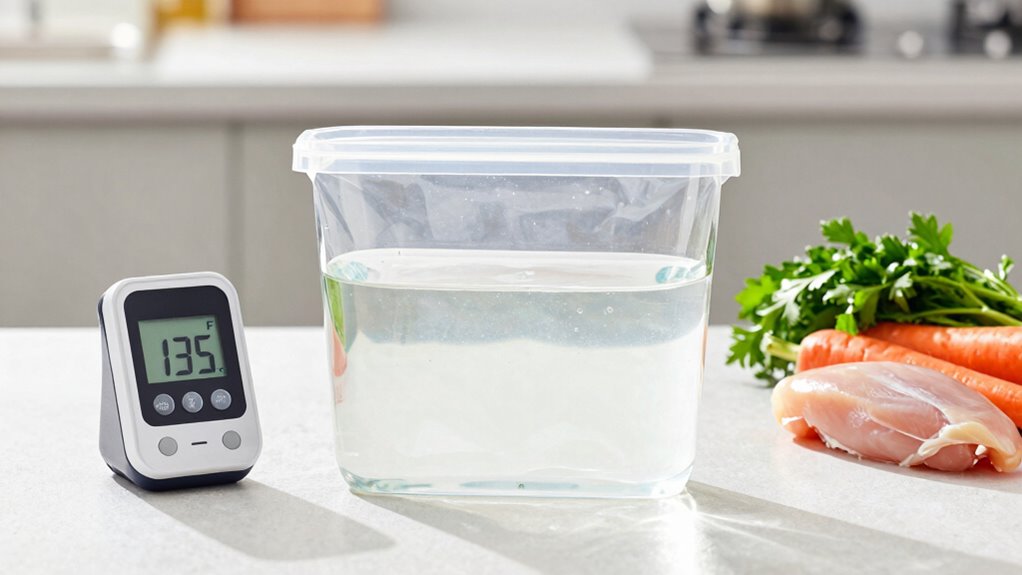
Have you ever wondered what the ideal temperatures are for safely cooking different foods sous vide? Temperature control is key to guaranteeing foodborne pathogens are eliminated without overcooking. For example, poultry should be cooked at 140°F (60°C) for at least 1.5 hours to kill harmful bacteria, while beef can be safely cooked at 130°F (54°C) for 2-4 hours for medium-rare. Fish and seafood typically require 130°F (54°C) to 140°F (60°C) for safe consumption, depending on texture preferences. Vegetables often need higher temperatures around 183°F (84°C) to achieve proper safety and texture. Knowing the correct temperature for each food type helps prevent foodborne illness and ensures a safe, delicious result. Proper temperature control is essential for safe sous vide cooking, and understanding food safety principles helps you make informed decisions. Additionally, consulting temperature guidelines can help you optimize cooking times and safety measures for various foods.

HiLetgo 5pcs Digital LCD Thermometer Temperature Digital LCD Fridge Thermometer Water Temperature with Probe Fahrenheit
Digital LCD Fridge Thermometer, It only suitable for Fahrenheit,not for Celsius
As an affiliate, we earn on qualifying purchases.
As an affiliate, we earn on qualifying purchases.
How Long Should You Cook Various Foods to Ensure Safety?
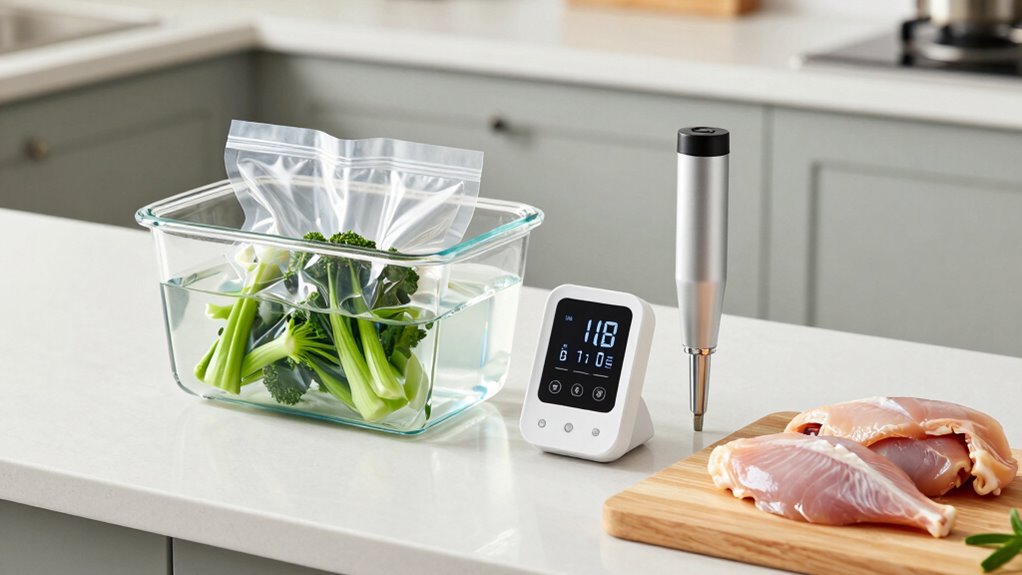
To guarantee your food is safe, you need to follow proper cooking times and temperature guidelines. Cooking for too little time can leave harmful bacteria alive, while overcooking may affect quality. Be mindful of cross-contamination risks to keep your meals both safe and delicious. Additionally, understanding smart appliances and connected cooking techniques can help you monitor and maintain optimal safety conditions throughout the process. Incorporating automated monitoring systems can further enhance food safety by providing real-time updates and alerts during cooking, ensuring you stay within the recommended temperature ranges for various foods. Utilizing proper storage practices also plays a crucial role in maintaining safety from the moment ingredients are purchased through to serving.
Safe Cooking Times
Wondering how long to cook different foods to guarantee they’re safe? Safe cooking times depend on destroying foodborne pathogens without overcooking. Proper equipment calibration guarantees accurate temperatures, vital for safety. Use the following table as a quick reference:
| Food | Minimum Time & Temp | Notes |
|---|---|---|
| Chicken | 165°F (74°C) for 1-4 hours | Ensures pathogen kill |
| Fish | 145°F (63°C) for 30 minutes | Maintains quality |
| Beef Steak | 130°F (54°C) for 1-3 hours | Achieves safety & tenderness |
Always verify your sous vide device is calibrated. Cooking times vary to target specific pathogens, making precise timing essential for safe, delicious results. Incorporating proper food handling practices is also crucial to prevent cross-contamination and ensure overall safety.
Temperature Guidelines
Knowing the correct temperature and cooking duration is essential to guarantee your food is safe and properly prepared. To destroy foodborne pathogens, you must cook foods at specific temperatures for the right amount of time. For example, cooking poultry at 140°F for 27.5 minutes or 165°F instantly kills pathogens. Maintaining a consistent temperature is vital because temperature fluctuations can allow bacteria to survive or multiply. Using precise sous vide equipment helps keep the water bath at a steady temperature, ensuring safety. Always follow recommended guidelines for different foods, as undercooking increases the risk of foodborne illness. Remember, proper temperature control is your best defense against harmful bacteria, so invest in reliable equipment and monitor it closely during cooking.
Cross-Contamination Risks
Since undercooking can leave harmful bacteria alive and increase cross-contamination risks, it’s crucial to cook foods for the appropriate amount of time at safe temperatures. Proper timing reduces surface contamination, minimizing bacteria that can transfer to other foods or surfaces. To prevent cross-contact, always handle raw ingredients carefully, using separate bags or containers, and clean your equipment thoroughly between uses. When cooking different foods together, ensure they reach the necessary temperature for their safety. Avoid partial cooking or leaving foods at unsafe temperatures for extended periods. Maintaining proper food storage practices and adhering to recommended cook times further reduce the risk of cross-contamination and guarantee your sous vide meals are safe to enjoy. Additionally, understanding decoding slang can help you better interpret food labels and instructions for safe preparation. Being aware of time-temperature guidelines also plays a vital role in food safety, ensuring your cooking process effectively eliminates harmful bacteria. Recognizing temperature control as a key factor can help you adjust cooking times precisely for optimal safety and quality.

Rubbermaid Commercial Products Space Saving Square Food Storage Container 12 Quart Clear for Kitchen/Sous Vide/Meal Prep
QUALITY ENGINEERING: Its commercial grade, break-resistant, polycarbonate material allows for greater durability, product visibility, and a smooth surface,…
As an affiliate, we earn on qualifying purchases.
As an affiliate, we earn on qualifying purchases.
How to Set and Maintain Precise Temperatures During Sous Vide?

To set and maintain precise temperatures during sous vide, you’ll want to use a reliable immersion circulator. Accurate temperature control is essential to ensure food safety and achieve desired results. First, check that your equipment is properly calibrated by following the manufacturer’s instructions or testing it with a known temperature source, like a thermometer. This step guarantees your circulator heats accurately. Set the target temperature on the device, making sure it matches your recipe’s recommended temperature. Keep an eye on the display during cooking to confirm it stays steady. If your circulator has a calibration feature, use it to fine-tune the temperature. Proper calibration ensures your equipment heats accurately, providing safe and reliable results every time. Additionally, regularly verifying your setup with temperature validation methods helps maintain consistent performance throughout your cooking process. Consistent temperature accuracy is key to both food safety and achieving perfect sous vide results. To further enhance safety, consider monitoring your water bath, especially during longer cook times, to prevent fluctuations that could compromise food safety. Incorporating regular equipment checks can also help identify and correct any issues before they affect your cooking.
How to Handle and Vacuum Seal Food Safely Before Cooking?
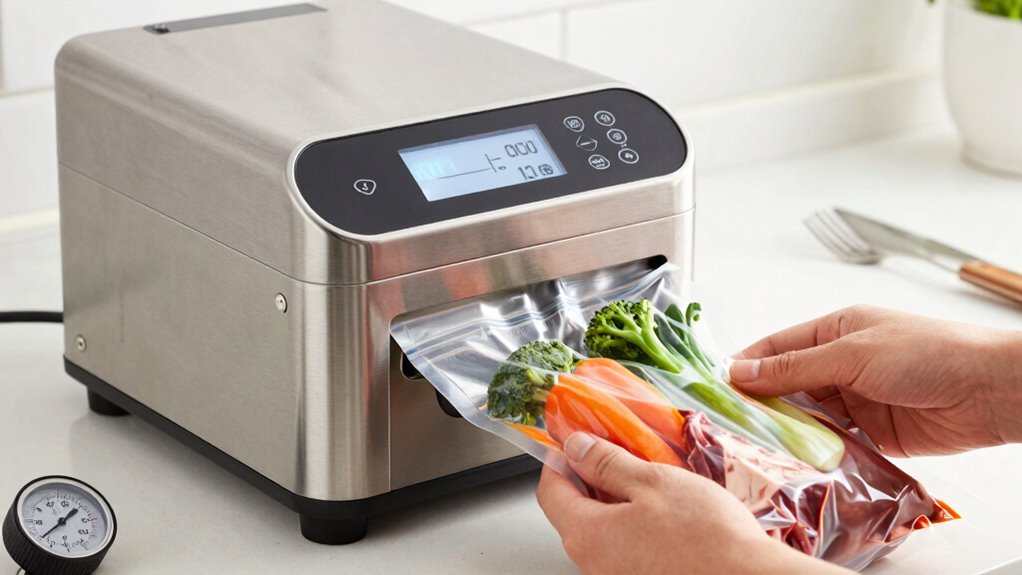
Handling and vacuum sealing food properly before cooking helps guarantee safety and quality during your sous vide process. Use proper vacuum sealing techniques to remove as much air as possible, preventing bacteria growth and ensuring even heat transfer. Before sealing, handle food with clean hands and sanitize surfaces to maintain food handling safety. If you’re sealing raw meats, consider marinating them first, then patting them dry to avoid excess moisture that might compromise the seal. Ensure the bag is undamaged and free of leaks. When sealing, leave enough space at the edges to create a secure vacuum. Proper technique minimizes contamination risks and keeps your food fresh. Additionally, understanding food safety guidelines can help you avoid cross-contamination and ensure your sous vide dishes are safe to enjoy. Incorporating essential oils with antimicrobial properties can also provide an extra layer of protection against bacteria during storage. Always check the seal after vacuuming, and refrigerate or freeze sealed items promptly until cooking.
How Does Pasteurization Work in Sous Vide Cooking?

When you cook sous vide, pasteurization diminishes harmful bacteria by holding food at specific temperatures for set periods. The key is understanding how temperature and time work together to ensure safety. By controlling these factors, you effectively eliminate most bacteria without overcooking your food.
Bacterial Reduction Process
In sous vide cooking, pasteurization occurs as the precise temperature held over a specific time kills harmful bacteria in the food. This process guarantees fermentation safety and prevents foodborne illnesses. By maintaining the correct storage temperature during cooking, you reduce bacterial load effectively. The reduction process depends on both temperature and time; higher temps kill bacteria faster.
| Temperature (°F) | Minimum Time | Bacteria Reduction Level |
|---|---|---|
| 130 | 112 minutes | Moderate |
| 140 | 28 minutes | Significant |
| 150 | 1 minute | High |
Proper control of these factors guarantees safe, delicious results while keeping bacteria at bay.
Temperature and Time Roles
Have you ever wondered how precise temperature and time work together to guarantee food safety in sous vide cooking? It’s all about temperature control—maintaining specific temperatures for set periods to effectively pasteurize your food. The right combination ensures harmful bacteria are eliminated without overcooking. For example, holding a steak at 135°F for a certain time reduces pathogens while preserving texture and flavor. Time is just as critical as temperature; shorter times at higher temps can be effective, but longer times at lower temps also achieve safety. This careful balance guarantees that your food reaches safe levels without sacrificing quality. By understanding how temperature and time interact, you can confidently cook safer, more consistent dishes every time.
What Are Common Mistakes That Lead to Unsafe Sous Vide Food: And How to Avoid Them?
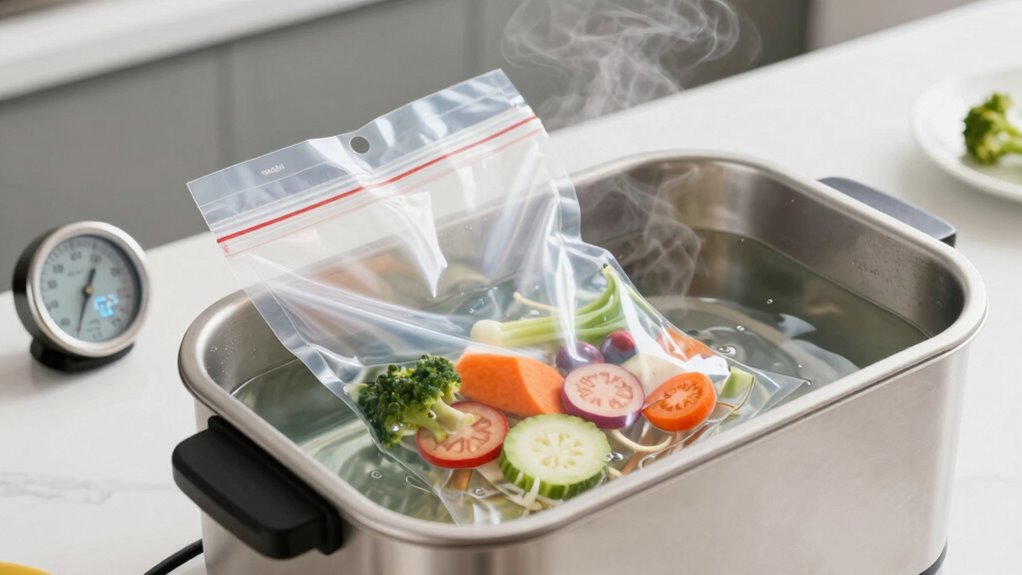
One of the most common mistakes that can make sous vide food unsafe is failing to properly monitor and control temperature. Without precise temperature control, you risk bacterial growth or undercooking, which jeopardizes food safety and impacts sous vide flavor. Additionally, neglecting equipment maintenance can lead to inconsistent heating and contamination. To avoid these issues, always verify your device’s calibration and keep it clean. Use the table below to understand how temperature and maintenance impact safety:
| Issue | Solution |
|---|---|
| Inaccurate temperature | Regularly calibrate your sous vide device |
| Poor equipment maintenance | Clean and inspect your equipment after each use |
| Temperature fluctuations | Use reliable, high-quality equipment |
| Contaminated water | Change water frequently and keep it covered |
How to Properly Chill and Store Your Sous Vide Meals for Safety?

To guarantee your sous vide meals remain safe to eat, it’s essential to chill and store them promptly after cooking. Use effective chilling techniques, such as placing the sealed bags in an ice bath to quickly reduce temperature, preventing bacterial growth. Once cooled, transfer the meals into appropriate storage containers—preferably airtight and food-grade—to maintain freshness and prevent cross-contamination. Ensure your containers are clean and leak-proof. Label each package with the date to track storage time. Store the meals in the refrigerator at 40°F (4°C) or below, and consume within a few days. Proper chilling and storage are critical steps to keep your sous vide creations safe, flavorful, and ready for reheating later.
How Can You Detect Signs of Unsafe Food and When Should You Discard It?
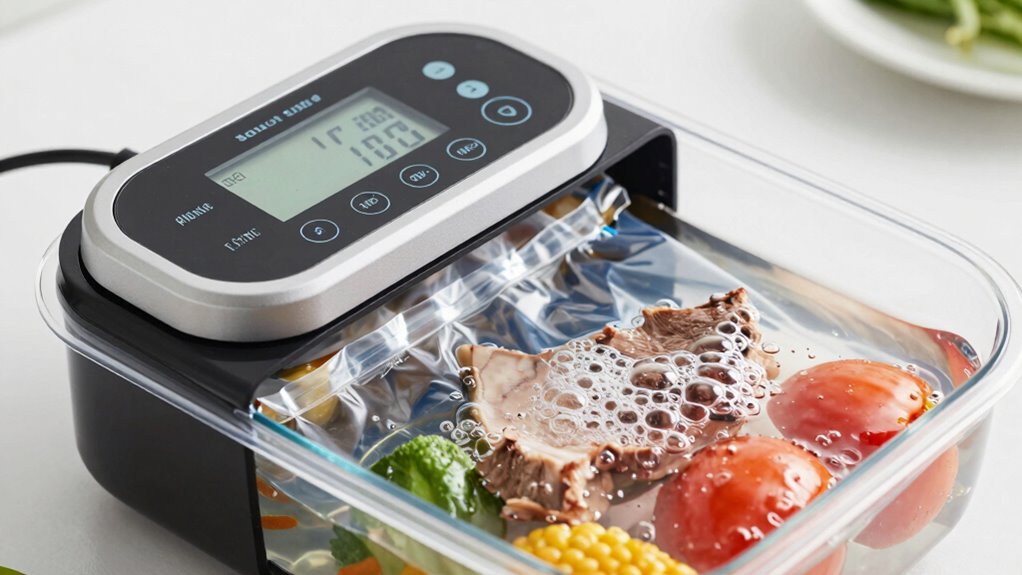
How can you tell if your stored sous vide food has gone bad? Look for food spoilage indicators like foul odors, slimy textures, discoloration, or an off-putting taste. If the food smells sour or rotten, it’s a clear sign to discard it immediately. Sliminess or a sticky surface also indicates bacterial growth, which poses health risks. Discoloration or mold growth are additional warning signs that the food is unsafe. Follow consumer safety tips by trusting your senses—when in doubt, throw it out. Proper storage and timely inspection are essential for safety. Remember, consuming spoiled food can lead to food poisoning, so always prioritize safety over saving leftovers. When any doubt exists, discard the food to protect your health.
What Are the Best Cleaning and Sanitization Tips for Your Sous Vide Equipment?

Maintaining clean and sanitized sous vide equipment is essential for ensuring food safety and ideal performance. Establishing regular cleaning routines helps prevent bacteria buildup and cross-contamination. After each use, wash the device, bags, and accessories with warm, soapy water, paying attention to seals and corners. Use a soft brush or cloth for thorough cleaning. For equipment maintenance, periodically descale and inspect for damage or wear, replacing parts as needed. Sanitize your sous vide setup by running a vinegar or sanitizing solution through the water bath or wiping down the machine with alcohol-based disinfectant. Proper cleaning and sanitation not only extend your equipment’s lifespan but also ensure your food remains safe and free from harmful bacteria. Consistent upkeep is key to safe, high-quality sous vide cooking.
Frequently Asked Questions
Can Sous Vide Cooking Eliminate All Bacteria and Pathogens?
Sous vide cooking can considerably reduce bacteria and pathogens, but it may not eliminate all bacterial spores. To guarantee food safety, you need to cook at the right temperature for the appropriate time, which kills most harmful bacteria and pathogens. However, bacterial spores can survive and become active again if not properly handled. So, follow recommended sous vide safety rules to minimize risks and ensure your food is safe to eat.
What Are the Risks of Undercooking Sous Vide Foods?
You risk foodborne illness if you undercook sous vide foods, especially if cross contamination occurs or if the bag isn’t properly sealed. Undercooking can leave bacteria alive, so it’s vital to follow recommended time and temperature guidelines. Always make certain your bags are properly sealed and keep raw foods separate from cooked ones to minimize risks. Properly cooked sous vide foods are safe and delicious when you stick to these safety practices.
How Does Altitude Affect Sous Vide Temperature Settings?
Did you know that at higher altitudes, water boils at lower temperatures? This affects your sous vide cooking because altitude adjustments are necessary to reach precise temperatures. You should increase your target temperature slightly to compensate for the lower boiling point. For example, at 5,000 feet, water boils around 202°F instead of 212°F, so adjusting your sous vide temps guarantees your food cooks safely and thoroughly.
Is It Safe to Reuse Vacuum-Sealed Bags for Sous Vide?
Yes, you can reuse vacuum-sealed bags for sous vide if they’re designed for reuse and bag safety is maintained. Make sure to thoroughly clean and inspect reusable bags for tears or damage before each use. Avoid reusing single-use bags, as they may not withstand heat or could harbor bacteria. Proper cleaning and careful inspection guarantee your reusable bags stay safe and effective for future sous vide cooking sessions.
How Can I Tell if My Sous Vide Equipment Is Calibrated Correctly?
You can tell if your sous vide equipment is calibrated correctly by using a reliable thermometer to check the water’s temperature. Fill your container with water, set your device, and after it stabilizes, compare the water temperature to the reading on your thermometer. If there’s a discrepancy, adjust your equipment’s calibration settings if available. Regular calibration ensures your temperature accuracy, which is vital for safe, perfectly cooked dishes.
Conclusion
Think of sous vide safety like tending a delicate garden—you need to give it the right conditions, regular attention, and patience. When you follow proper temperatures, timing, and handling tips, you guarantee your food stays fresh and safe, just like a thriving plant. Skip a step, and it’s like neglecting your garden—problems can sprout. Stay vigilant, and your culinary garden will flourish with safe, delicious meals every time.