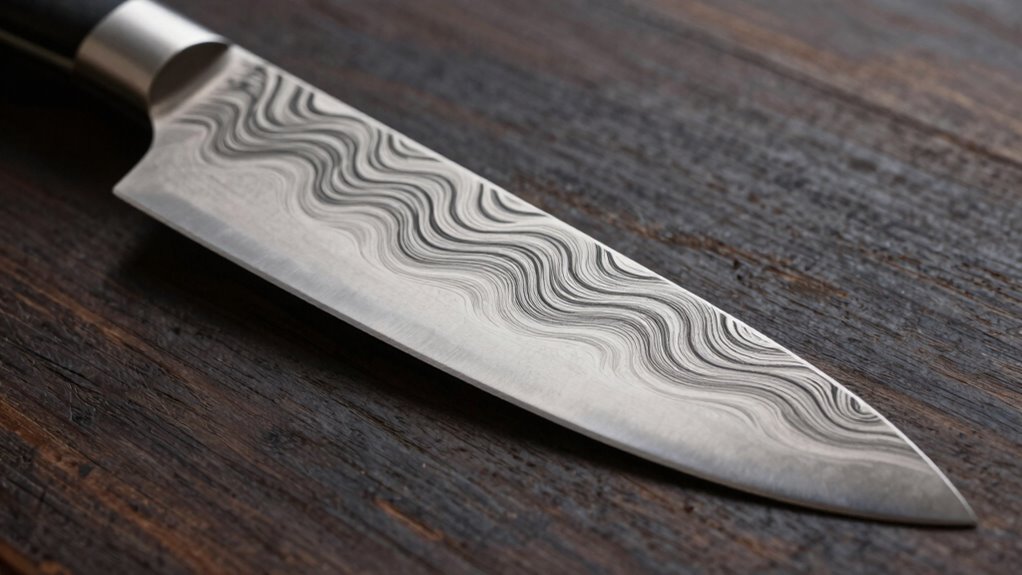

Damascus steel is famed for its beautiful layered patterns, but this doesn’t mean it’s better for performance. Its aesthetics come from forging multiple steel types together, creating unique designs, while the actual blade quality depends on the steel’s composition and heat treatment. Many modern Damascus blades prioritize looks over durability or sharpness, so understanding that patterning isn’t a performance measure helps you choose wisely. If you want to learn more, you’ll discover how to identify quality Damascus and better alternatives.
Key Takeaways
- Damascus steel’s patterns are aesthetic, not indicative of superior performance compared to high-quality modern steels.
- Steel composition and heat treatment determine knife durability and edge retention more than pattern complexity.
- Authentic historical Damascus is rare; most modern versions are layered steels with varying quality.
- Pattern clarity and craftsmanship influence appearance but don’t affect cutting ability or toughness.
- Choosing the right steel grade and proper heat treatment are more critical for performance than Damascus patterning.
high carbon stainless steel kitchen knives
As an affiliate, we earn on qualifying purchases.
As an affiliate, we earn on qualifying purchases.
What Is Knife Steel and Why Does It Matter?
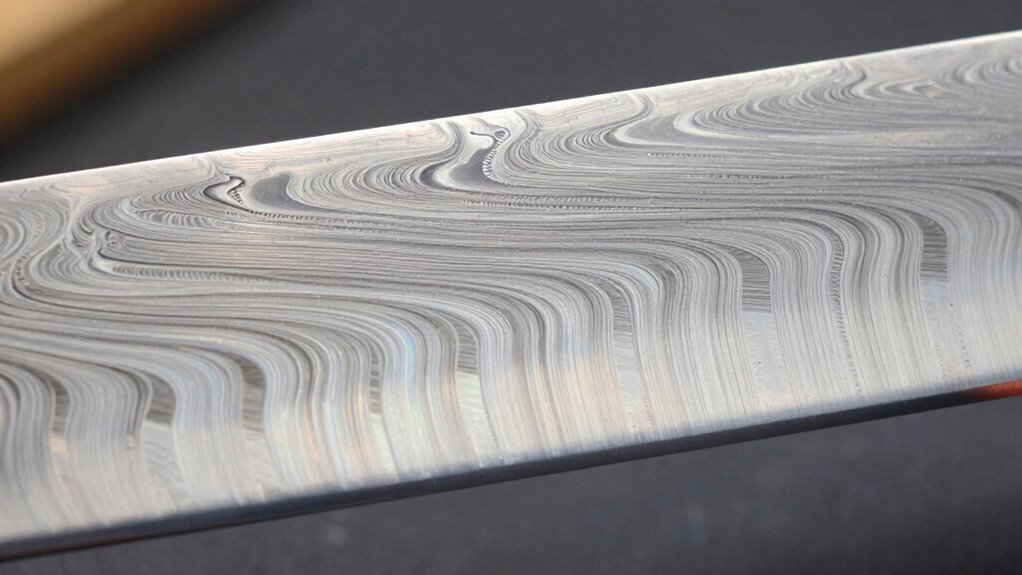
Have you ever wondered what makes a knife perform well or fail quickly? The answer lies in the quality of the knife steel. Good steel ensures blade durability, meaning your knife stays sharp longer and resists chipping or breaking. It also affects the aesthetic appeal, giving your knife a sleek, polished look or a unique pattern. The right steel balances hardness and toughness, so it cuts efficiently without becoming brittle. Different types of steel contain various alloy metals that influence performance and appearance. Choosing the right knife steel isn’t just about looks; it’s about how well it holds an edge, resists corrosion, and endures regular use. Understanding steel composition can help you make more informed choices, ensuring your knife meets your specific needs. Additionally, factors like heat treatment and manufacturing processes significantly impact the steel’s overall performance and longevity. Recognizing steel types can guide you toward selecting the best material for your intended use, while appreciating the nuances of steel quality can help you identify superior options in the market. Moreover, knowing about steel properties related to hardness, toughness, and corrosion resistance can further refine your selection process.
Japanese VG10 chef knife
As an affiliate, we earn on qualifying purchases.
As an affiliate, we earn on qualifying purchases.
The Origins and Popularity of Damascus Steel
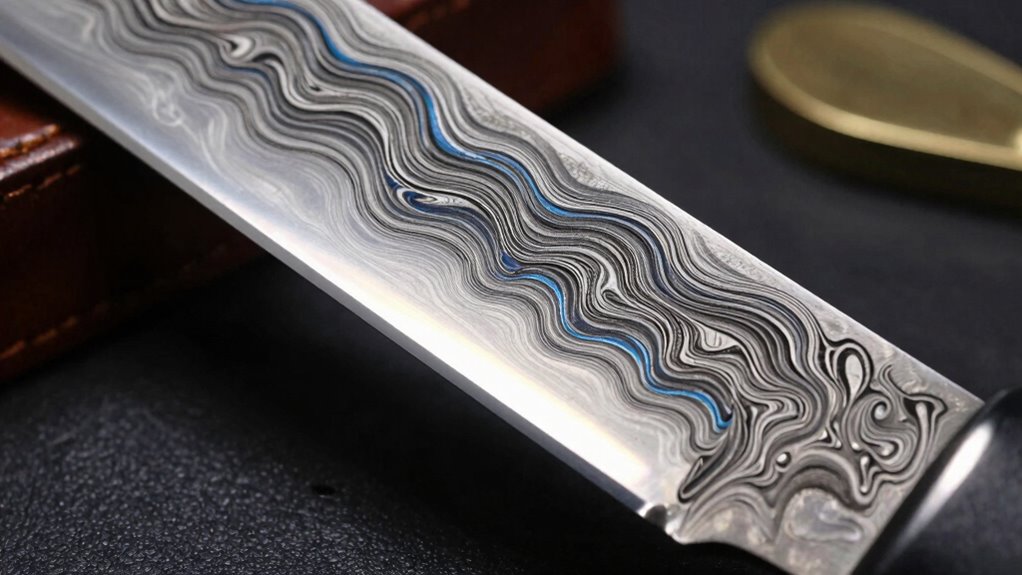
Did you know that Damascus steel has a legendary history dating back over a thousand years? Its historical origins trace to ancient Middle Eastern forging techniques, producing blades renowned for strength and striking patterns. These blades became highly sought after by warriors and nobility, fueling their legendary status. Today, Damascus steel’s modern popularity stems from its distinctive look and perceived quality, making it a favorite among knife enthusiasts and collectors. While genuine historical Damascus steel is rare and difficult to reproduce exactly, modern techniques create patterned steels inspired by its legendary reputation. The patterned steel crafted today often differs in composition and durability compared to authentic centuries-old Damascus blades. Additionally, advancements in metallurgical processes have enabled manufacturers to replicate the appearance while varying in performance characteristics. The aesthetic appeal and historical mystique of Damascus continue to attract attention, contributing to its enduring popularity. People are drawn to Damascus’s aesthetic appeal and historical mystique, fueling its continued allure. Moreover, material composition plays a critical role in determining the actual strength and longevity of modern Damascus-style blades, which can vary widely depending on manufacturing methods. To ensure quality, many buyers now rely on testing and certification to verify the authenticity and durability of Damascus steel products. However, it’s important to understand that not all modern versions match the original’s legendary qualities or craftsmanship.
Damascus steel kitchen knife
As an affiliate, we earn on qualifying purchases.
As an affiliate, we earn on qualifying purchases.
How Are Damascus Blades Made? : An Inside Look
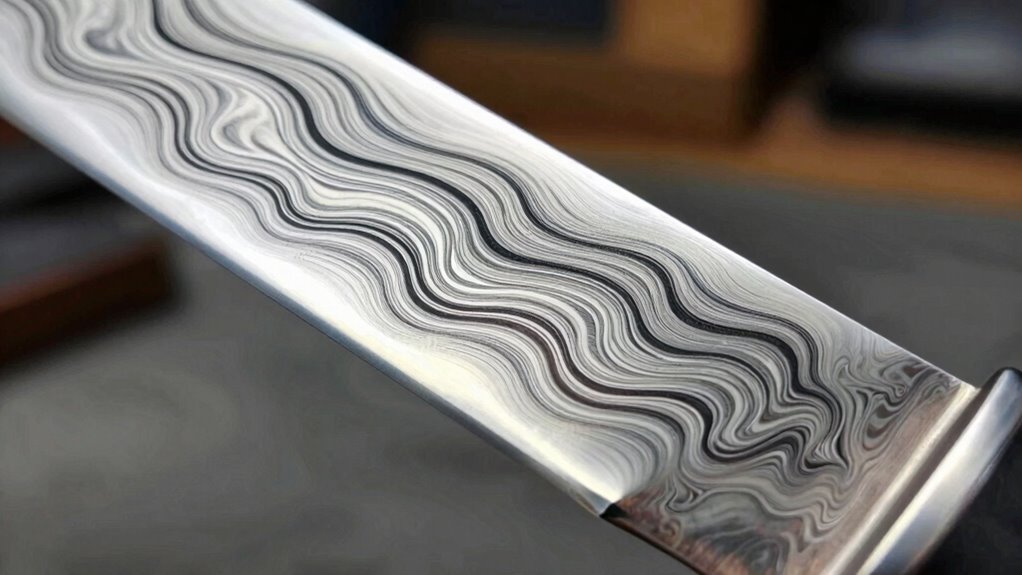
The process of making Damascus blades combines traditional forging techniques with modern innovations to recreate the iconic layered patterns. You start with two or more types of steel, each with different properties. By stacking and forge-welding these steels together, you create multiple layers through steel layering. As you forge and fold the billet repeatedly, the layers multiply, forming a complex structure. Pattern formation occurs during this process, influenced by how you manipulate the steel—twisting, folding, or acid etching. This results in the distinctive, mesmerizing patterns seen on Damascus blades. The layering not only creates visual appeal but also enhances blade strength and flexibility. Layering techniques play a crucial role in achieving both the aesthetic and functional qualities of Damascus steel. Through skillful forging, you can produce a blade that beautifully combines aesthetic patterns with functional durability, often incorporating modern metallurgical research to optimize performance. Additionally, understanding the properties of different steels allows for customization of blade characteristics to suit specific uses. Proper heat treatment is essential to maximize the benefits of layered steel structures and ensure the blade’s longevity.
professional chef knife set
As an affiliate, we earn on qualifying purchases.
As an affiliate, we earn on qualifying purchases.
The Main Types of Steel Used in Damascus Knives
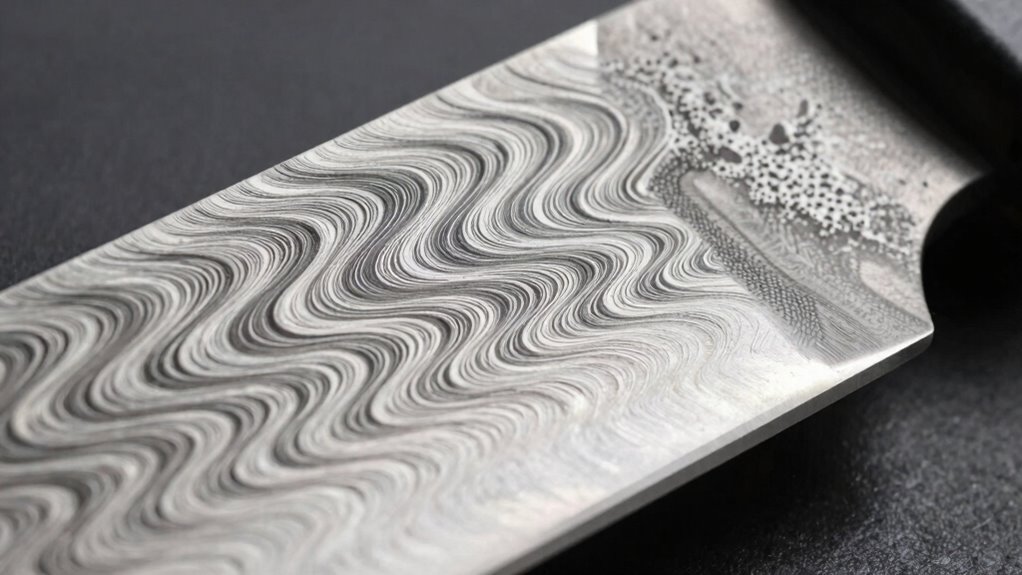
Damascus knives typically incorporate a combination of different steels to achieve their unique balance of strength, flexibility, and edge retention. Pattern-welded steels, blending softer and harder layers, add aesthetic appeal and historical significance, reflecting ancient forging techniques. Each steel type influences the knife’s performance and visual appeal distinctly. Here’s a quick comparison:
| Steel Type | Characteristics |
|---|---|
| 1095 | Hard, retains edge, easy to sharpen |
| O1 | Tough, good edge retention |
| Pattern-welded | Unique patterns, historical craftsmanship |
| 15N20 | Bright contrast, high toughness |
| L6 | Resilient, used in vintage Damascus blades |
Understanding these steels helps you appreciate both their functional and aesthetic qualities. For example, the choice of steel composition can significantly impact the durability and appearance of a Damascus knife, and knowing the steel properties can guide you in selecting the best blade for your needs. Recognizing the layering techniques involved in pattern welding also highlights the craftsmanship behind each blade. Additionally, the forging process plays a critical role in shaping the final qualities of a Damascus knife. Moreover, awareness of heat treatment methods can further influence the steel’s performance and longevity.
What Makes Some Damascus Steel Better Than Others?
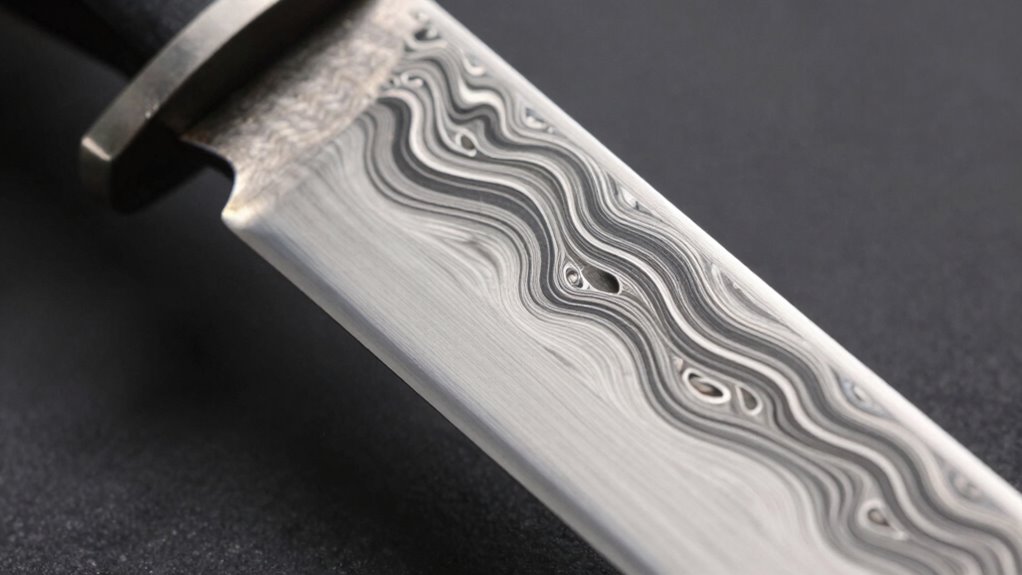
The quality of Damascus steel depends largely on the pattern’s complexity and clarity, which reflect the craftsmanship involved. The materials used also matter—premium steels produce a stronger, more durable blade. Additionally, the manufacturing processes and techniques directly influence the steel’s overall performance and appearance. Properly controlled heat treatment is essential to achieving optimal hardness and flexibility. Cold medications can also impact the steel’s properties if improperly handled during manufacturing, emphasizing the importance of precise techniques. Furthermore, the selection of steel alloys plays a crucial role in determining the final strength and corrosion resistance of the blade. Understanding the layering process helps explain the unique patterns that make Damascus steel so sought after, highlighting the significance of forging techniques in achieving high-quality results.
Pattern Complexity and Clarity
While intricate patterns can make Damascus steel visually stunning, their complexity and clarity also reveal the quality of the forging process. High-quality Damascus features sharp, well-defined lines that showcase the pattern complexity clearly, enhancing blade aesthetics. If the pattern appears muddled or inconsistent, it indicates less precise forging or poor layering techniques. The clarity of these patterns demonstrates craftsmanship and attention to detail, making the blade more attractive and desirable. A well-executed pattern reveals the contrasting layers of steel, highlighting the unique textures and designs. Conversely, overly complicated patterns may become confusing or lose definition, diminishing blade appeal. Ultimately, the balance between pattern complexity and clarity determines whether a Damascus steel blade stands out as a masterpiece or a poorly executed imitation.
Quality of Materials Used
The quality of materials used in making Damascus steel directly influences the blade’s strength, durability, and visual appeal. High-quality steel composition ensures the layered forging process produces consistent, resilient layers. The better the steel, the more refined the pattern and performance you’ll get. Poor-quality materials may cause weak spots or uneven layers, compromising longevity. When selecting Damascus steel, pay attention to the steel composition—carbon content, alloying elements, and impurities all matter. Skilled smiths often choose superior steels for layered forging to maximize toughness and corrosion resistance. A well-chosen steel makes a noticeable difference in how your knife performs and ages over time. Ultimately, the right materials are key to crafting a blade that’s both functional and beautiful.
- Steel composition impacts strength and corrosion resistance
- Layered forging enhances pattern clarity and durability
- High-quality steels resist wear and chipping
- Impurities weaken the layered structure
- Consistent steel grades produce better patterns
Manufacturing Processes and Techniques
Manufacturing processes and techniques play a crucial role in determining the quality of Damascus steel. The way layers are forged, folded, and heat-treated directly impacts blade aesthetics and overall performance. Skilled artisans employ artisanal craftsmanship to carefully manipulate the steel, creating intricate patterns that distinguish high-quality Damascus. Precise layering and consistent forging ensure the pattern’s clarity and durability, making the blade both beautiful and resilient. Proper heat treatment enhances the steel’s hardness and edge retention, while careful finishing highlights the unique patterns. Variations in techniques can lead to noticeable differences in quality, meaning some Damascus blades offer superior strength and visual appeal. Ultimately, craftsmanship and meticulous processes elevate a blade from ordinary to extraordinary, making manufacturing techniques a key factor in what makes some Damascus steel better than others.
Does the Damascus Pattern Improve Knife Performance?
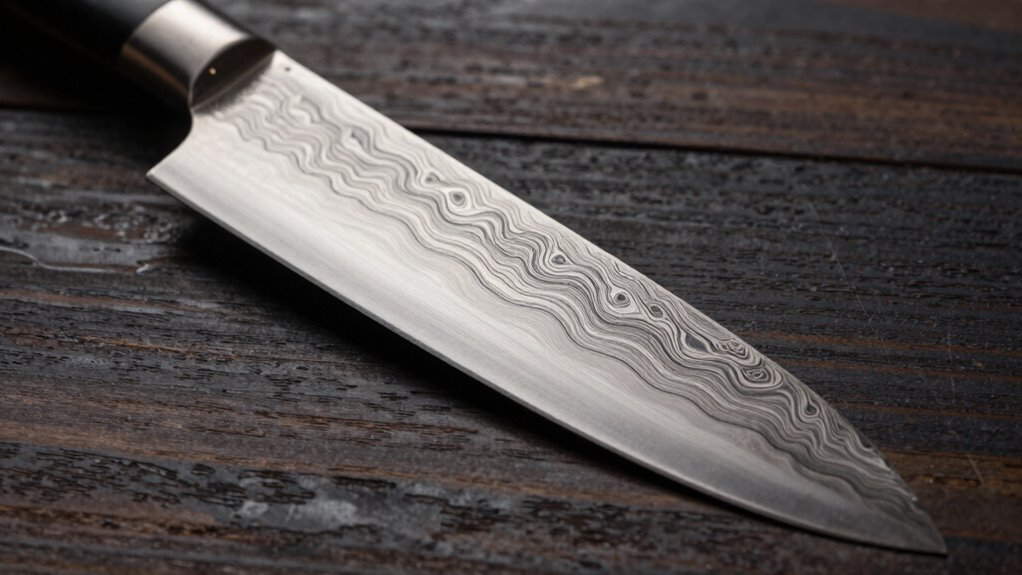
Many believe that the Damascus pattern enhances a knife’s performance, but the visual appeal alone doesn’t guarantee better functionality. While the pattern contributes to blade aesthetics and pattern uniqueness, it doesn’t inherently improve cutting ability or durability. In fact, the layered forging process mainly affects appearance and craftsmanship.
You should consider that:
- The pattern doesn’t influence the steel’s hardness or edge retention.
- Manufacturing quality and steel composition matter more for performance.
- Damascus blades often come from high-quality steels, but the pattern itself isn’t a performance factor.
- Blade aesthetics and pattern uniqueness may boost confidence but don’t replace proper steel selection.
- The pattern’s primary benefit lies in visual appeal, not functional superiority.
Key Factors to Consider When Choosing Knife Steel
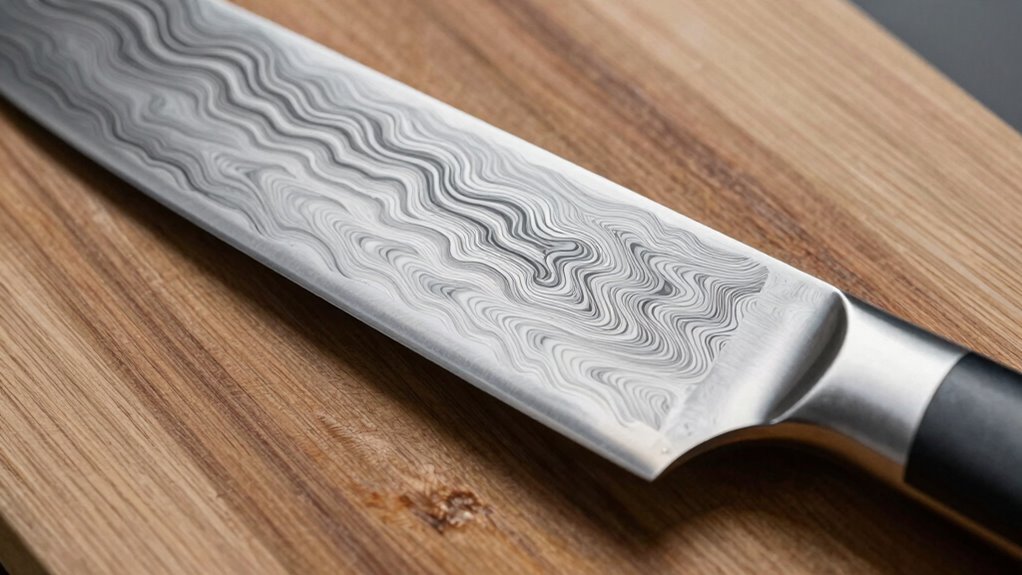
When choosing knife steel, you should consider how hard the steel is and how well it retains its edge over time. It’s also important to evaluate its resistance to corrosion and how much maintenance it requires. Balancing these factors helps you pick the right steel for your specific needs and usage.
Hardness and Edge Retention
Hardness and edge retention are essential factors because they directly impact a knife’s cutting performance and longevity. Higher steel hardness typically means a sharper edge that stays sharper longer, boosting blade durability. However, overly hard steel can become brittle and prone to chipping. To optimize these factors, consider the following:
- Steel hardness ratings, usually measured on the Rockwell scale
- The balance between hardness and toughness
- The type of steel alloy used for durability
- How well the steel retains its edge over time
- The impact of heat treatment on blade performance
Choosing a steel with the right hardness ensures your knife maintains a keen edge without sacrificing durability, making it a critical aspect of selecting the best blade for your needs.
Corrosion Resistance and Maintenance
Choosing the right knife steel involves considering how well it resists rust and corrosion, especially if you use your knife in humid or outdoor conditions. Steels with high corrosion resistance require less maintenance and keep their aesthetic appeal longer. Some steels, like VG-10 or AUS-8, offer good corrosion resistance and blade durability, making them easier to care for. Others, such as high-carbon steels, need regular cleaning and oiling to prevent rust. Here’s a quick comparison:
| Steel Type | Corrosion Resistance | Maintenance Tips |
|---|---|---|
| VG-10 | High | Wipe dry, oil periodically |
| High-Carbon | Low | Frequent cleaning, oiling |
| AUS-8 | Moderate | Rinse after use, dry |
| Damascus | Varies | Regular maintenance needed |
Choose wisely to balance your needs for blade durability and aesthetic appeal.
Common Myths About Damascus Steel Debunked
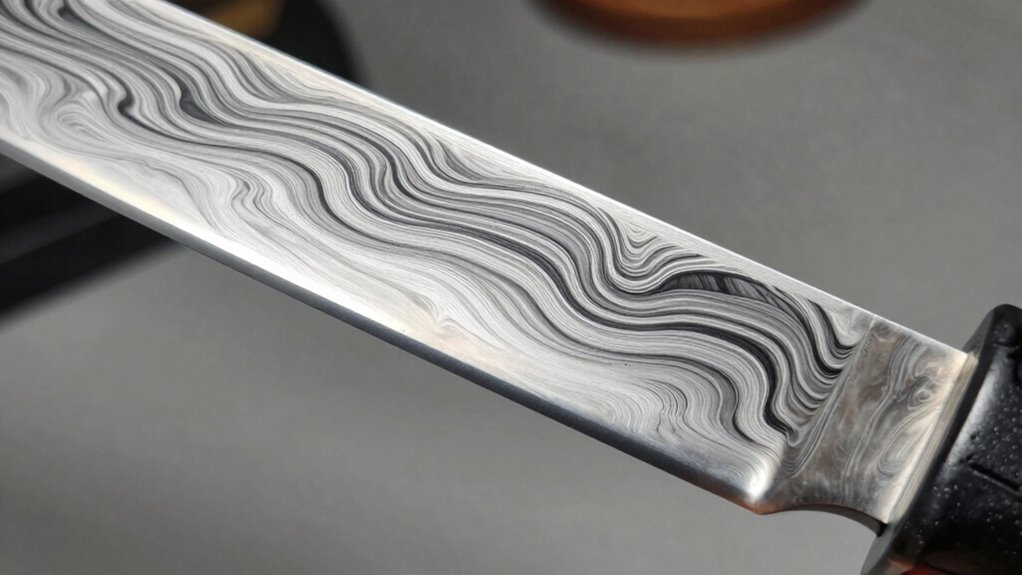
Many myths surround Damascus steel, leading people to believe it’s more mystical than scientific. As myth busters, you should know that some material misconceptions persist. For example, many think Damascus is a unique, ancient secret recipe, but it’s actually pattern-welded steel that’s still produced today. Others believe Damascus always offers superior strength and durability, which isn’t true—quality varies. Some assume Damascus is inherently rust-proof, yet it requires proper maintenance like any steel. There’s also a myth that Damascus is rare and exclusive; in reality, high-quality pattern-welded steels are more accessible than you might think. Recognizing these misconceptions helps you make smarter choices and understand what really matters when selecting a knife.
How to Spot High-Quality Damascus and Other Good Alternatives
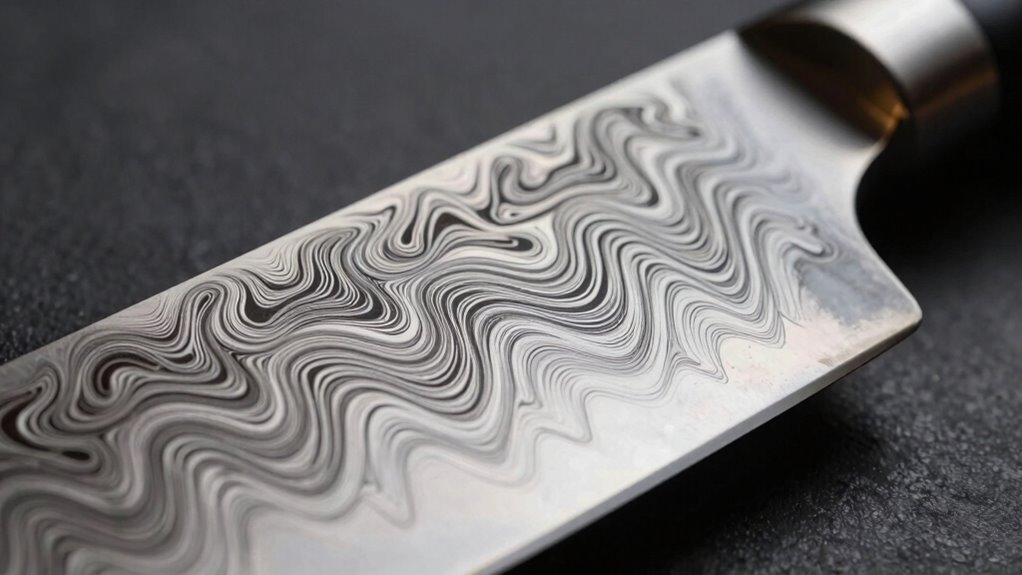
Understanding what sets high-quality Damascus steel apart is key to making smart choices when selecting a knife. Look for blades with excellent blade flexibility, which indicates durability without brittleness. High-quality Damascus often features consistent, intricate patterns that enhance aesthetic appeal, showing skilled craftsmanship. Check for a well-balanced, tight layering pattern—faint or uneven patterns may signal lower quality. Feel the blade’s weight and flexibility; a flexible yet sturdy blade suggests good forging. Avoid blades with surface corrosion or inconsistent patterning.
| Feature | What to Look For | Why It Matters |
|---|---|---|
| Pattern Consistency | Clear, intricate, uniform layers | Indicates quality craftsmanship |
| Blade Flexibility | Slight bend without cracking | Shows durability and resilience |
| Aesthetic Appeal | Sharp, attractive patterning | Reflects skilled forging |
Should You Choose Damascus Steel? Making an Informed Decision
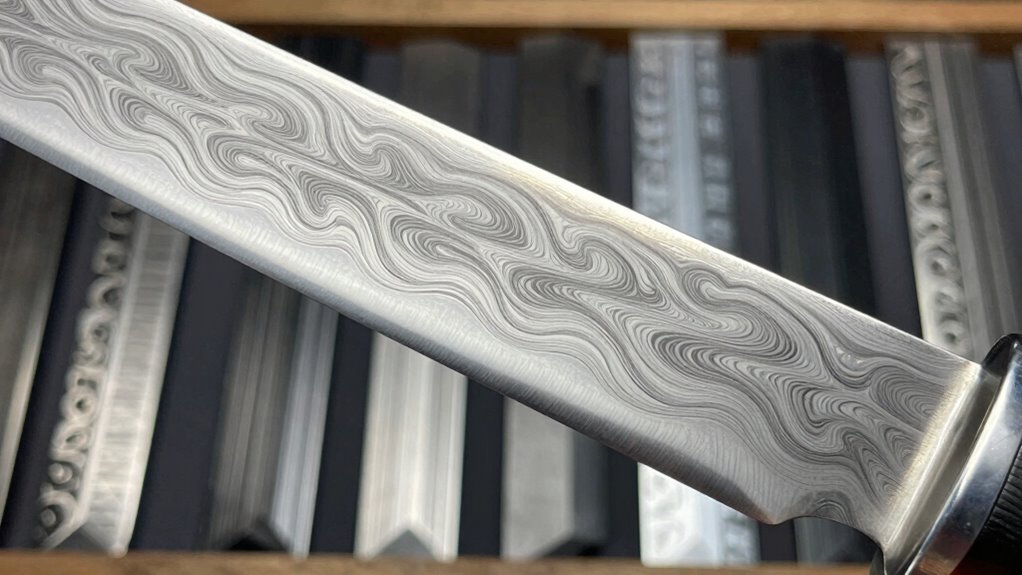
Deciding whether to go with Damascus steel depends on your priorities and expectations for a knife. If you value blade aesthetics and the historical significance behind the pattern-welding process, Damascus could appeal to you. However, it’s important to recognize that not all Damascus blades are inherently better in performance. Consider your main use—if you need durability and sharpness, other steels might serve better. Also, weigh the maintenance requirements; Damascus often needs careful care to preserve its pattern. Here are some points to help you decide:
- Appreciating the unique blade aesthetics
- Valuing the historical significance and craftsmanship
- Seeking a balance of beauty and function
- Understanding maintenance needs
- Comparing cost and durability
Making an informed choice ensures you get a knife that meets your expectations.
Frequently Asked Questions
Can Damascus Steel Rust More Easily Than Other Steels?
Yes, Damascus steel can rust more easily than other steels because of its rust susceptibility. While its layered design looks stunning, it often lacks the corrosion resistance of high-quality stainless steels. You need to regularly clean and oil Damascus knives to prevent rust. If you want a more corrosion-resistant option, consider steels specifically treated or coated for better corrosion resistance, especially if you use the knife frequently or in humid environments.
Is All Damascus Steel Made With the Same Materials?
Think of Damascus steel like a snowflake—no two are exactly alike. Not all Damascus steels are made with the same materials; their composition variability means each piece can have different properties. This results in aesthetic differences, with some blades showcasing intricate patterns, while others are plainer. So, when choosing Damascus, remember, its unique blend influences not just looks but also how it performs and rusts.
How Does Heat Treatment Affect Damascus Steel’s Durability?
Heat treatment plays a vital role in determining Damascus steel’s durability. By carefully controlling the heat treatment process, you can optimize the alloy composition’s properties, making the steel harder, tougher, and more resistant to chipping or breaking. Proper heat treatment also relieves internal stresses, ensuring your Damascus knife maintains its edge longer. So, your choice of heat treatment directly impacts how well your Damascus steel performs and lasts over time.
Are There Ethical Concerns Related to Damascus Steel Production?
You should consider ethical concerns related to Damascus steel production, especially regarding sustainable sourcing and ethical labor practices. Some manufacturers may use conflict minerals or exploit workers, raising ethical issues. To guarantee you’re making an ethical choice, look for brands committed to sustainable sourcing of raw materials and fair labor conditions. Supporting these practices helps promote responsible craftsmanship and reduces harm to the environment and communities involved in production.
What Maintenance Is Required to Keep a Damascus Knife in Top Condition?
You’ll want to keep your Damascus knife in top shape by regularly honing the blade and performing blade sharpening when needed. Coincidentally, proper storage solutions, like a magnetic strip or knife block, prevent accidental damage and corrosion. To guarantee longevity, clean and dry your knife after each use, apply a light coat of oil, and avoid dishwasher cleaning. These simple steps keep your Damascus knife sharp, beautiful, and ready for any task.
Conclusion
So, next time you’re dazzled by a Damascus blade’s beauty, remember: looks can be deceiving. While it might seem like the ultimate choice, quality varies wildly—sometimes hiding behind that legendary pattern. Don’t be swayed by hype or appearances. Instead, focus on what truly matters: the steel’s performance and your needs. Because after all, in the world of knives, it’s what’s inside that really counts—no matter how stunning the outside looks.