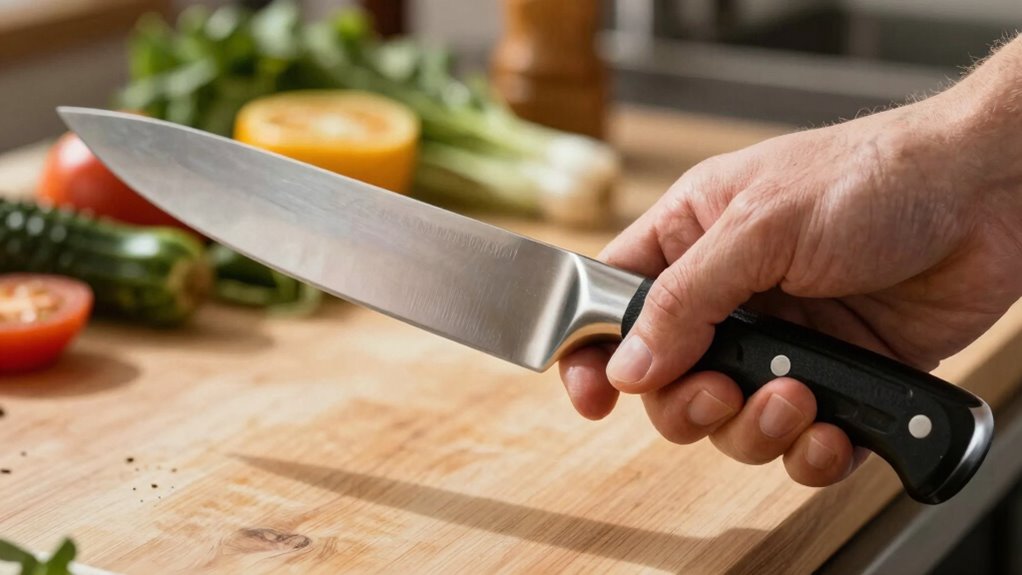

A comfortable, well-balanced knife is key to making cutting easier and safer. When a knife fits your grip naturally, it reduces fatigue and improves control, helping you cut more precisely. Good balance prevents uneven pressure and minimizes wrist strain, especially during long tasks. Durable materials keep the knife feeling consistent over time, maintaining safety and performance. If you want to discover how to choose a knife that feels just right, keep exploring these important details.

Get your wardrobe favorites delivered free with Prime
- Fast, free delivery on millions of items
- Prime Video, Amazon Music and more included
- Member-only deals all year
Key Takeaways
- A well-balanced knife reduces user fatigue, allowing for safer, more precise cuts over extended periods.
- Ergonomic handles improve grip comfort, minimizing wrist strain and enhancing control during cutting tasks.
- Durable materials maintain balance and grip integrity, ensuring consistent performance and reducing the need for replacements.
- Comfort and balance together decrease the risk of slips and accidents, promoting safer kitchen operation.
- Combining ergonomic design and quality materials enhances overall control, safety, and enjoyment of knife use.
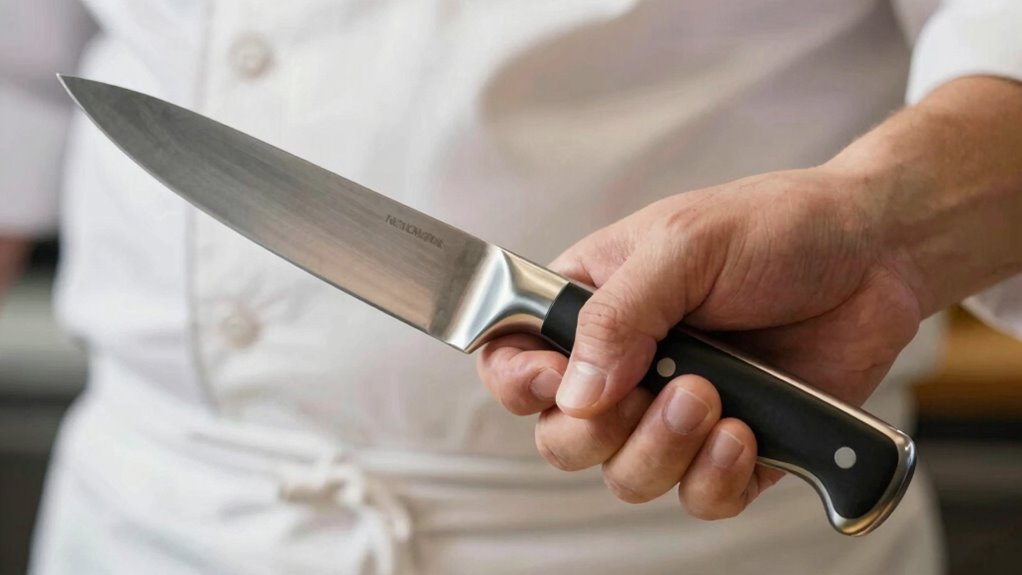
A well-balanced knife and a proper grip are essential for safe and efficient cutting. When you handle a knife with good balance, you reduce fatigue and gain better control, making your tasks safer and more comfortable. This balance also influences the overall precision and consistency of your cuts. The key to achieving this balance lies in the knife’s design, which should incorporate ergonomic principles that fit naturally in your hand. An ergonomic design ensures that the handle conforms to your grip, minimizing strain on your wrist and fingers during extended use. This comfort translates into more precise cuts and less risk of accidents caused by slipping or awkward handling. As you evaluate knives, pay attention to how comfortably the handle sits in your hand and whether it allows for a natural, relaxed grip. A well-designed handle also distributes weight evenly across the blade and handle, preventing uneven pressure that can cause fatigue or imbalance over time. Additionally, choosing materials that are material durable helps maintain the knife’s overall balance and grip integrity over time. Proper maintenance, including regular sharpening and cleaning, also plays a crucial role in preserving the knife’s balance and performance. Ensuring the ergonomic handle complements your grip can significantly improve your overall cutting experience.
Material durability is another critical factor that influences both the balance and grip of a knife. High-quality materials used in the handle and blade contribute to the overall sturdiness and longevity of the tool. Handles made from durable materials like pakkawood, reinforced resin, or stainless steel maintain their shape and grip even after prolonged use or exposure to moisture. This durability means you won’t have to replace the knife frequently, ensuring consistent performance and safety. The blade’s material should also be tough enough to maintain sharpness and resist chipping or bending, which affects the weight distribution and, consequently, the balance. When both handle and blade materials are durable, you’re more likely to enjoy a knife that feels stable, reliable, and comfortable in your hand, making your cutting tasks easier and more precise. Investing in a quality knife with durable components ultimately enhances your overall kitchen experience.
Choosing a knife that combines ergonomic design with material durability isn’t just about comfort; it’s about enhancing your safety and efficiency. When your grip feels natural and the knife feels balanced, you’re less prone to slips and mistakes. This confidence allows you to focus more on your task than on controlling the tool. A well-balanced knife with a comfortable grip also reduces the physical stress on your hand and wrist, preventing fatigue and injury over time. Remember, sharpness alone isn’t enough; the way a knife feels and performs during use makes all the difference. When you prioritize ergonomic design and durable materials, you invest in a tool that supports your skills, keeps you safe, and makes your cutting experience more enjoyable.
As an affiliate, we earn on qualifying purchases.
Frequently Asked Questions
How Often Should I Balance My Kitchen Knives?
You should balance your kitchen knives every few months or whenever you notice uneven cutting or a shift in weight. Proper knife storage helps maintain balance, preventing unnecessary wear. Regular sharpening frequency, about every 6 to 12 months depending on use, also supports balanced performance. Check your knives periodically, and if they feel off or aren’t cutting smoothly, it’s time to balance and sharpen for peak comfort and safety.
What Materials Improve Grip Comfort?
Research suggests that non-slip coatings and rubberized handles greatly improve grip comfort. These materials enhance safety by preventing slips and reduce hand fatigue during prolonged use. Rubberized handles conform to your grip, providing better control, while non-slip coatings on blades or handles add extra security. Opting for knives with these materials ensures a comfortable, confident cutting experience, making your kitchen tasks safer and more enjoyable.
Can Grip Style Affect Cutting Precision?
Yes, your grip style can greatly affect cutting precision. A proper grip enhances blade control, allowing you to make more accurate cuts. It also reduces hand fatigue, so you stay steady and focused longer. If your grip is too tight or awkward, you might struggle with precision and tire quickly. Adjusting your grip for comfort helps maintain consistent control, leading to cleaner cuts and better overall performance in the kitchen.
Are Ergonomic Handles Better for Long-Term Use?
Imagine a knife gliding effortlessly through ingredients, your hand wrapped comfortably around an ergonomic handle. Yes, ergonomic handles are better for long-term use because they reduce hand fatigue and strain. The handle design and knife weight work together, providing a balanced feel that minimizes pressure points. With this comfort, you’ll maintain precision and control longer, making prep work less tiring and more enjoyable.
How Do I Adjust My Grip for Different Knives?
You can adjust your grip for different knives by focusing on grip adjustment techniques and considering knife handle materials. For lighter, plastic handles, hold the knife more loosely to prevent fatigue. For heavier, wooden or ergonomic handles, grip firmly but comfortably, ensuring your hand isn’t strained. Experiment with different finger placements and pressure points, and choose handle materials that feel comfortable and secure in your hand for better control and reduced fatigue.
Conclusion
Think of your knife as an extension of your hand, where balance and grip are the roots anchoring your confidence. When comfort guides your hold, each cut becomes a dance, precise and effortless. Just as a tree’s strength lies in its roots, your skill depends on these foundational elements. Prioritize your connection to the knife—because a well-balanced grip isn’t just about ease; it’s about cultivating mastery and safety in every slice.
Fall Picks
fall essentials
As an affiliate, we earn on qualifying purchases.