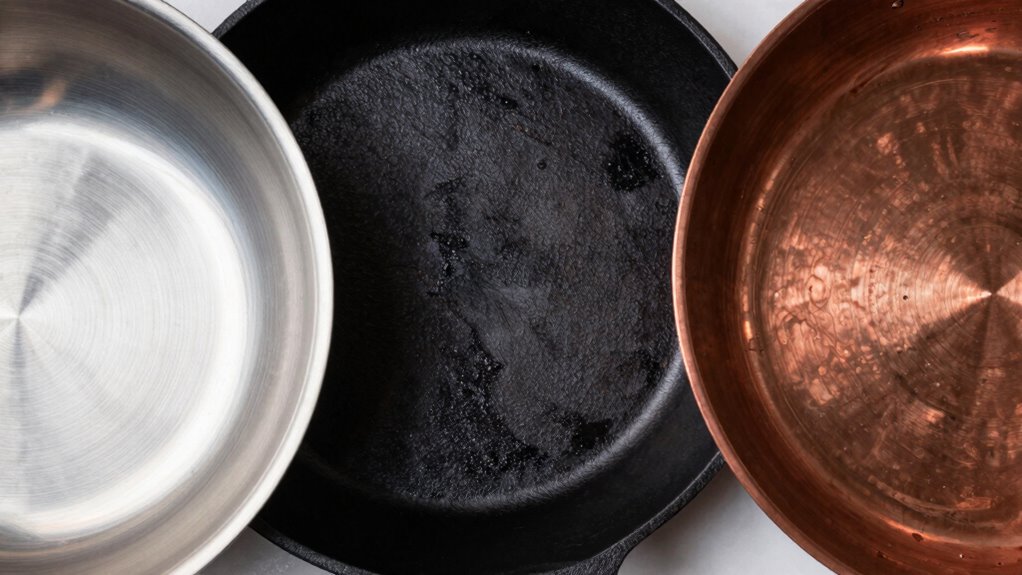

When comparing cookware metals, you’ll notice that stainless steel offers good heat response and is easy to maintain, resisting staining and corrosion. Aluminum heats quickly and provides excellent control but needs an anodized or coated surface to prevent reactions. Copper heats even faster and responds instantly, though it requires more upkeep. If you want to learn how different metals suit your cooking style and maintenance needs, keep exploring these options further.

Get your wardrobe favorites delivered free with Prime
- Fast, free delivery on millions of items
- Prime Video, Amazon Music and more included
- Member-only deals all year
Key Takeaways
- Copper offers superior heat responsiveness for precise temperature control, while stainless steel provides more moderate, consistent heating.
- Non-reactive surfaces like stainless steel resist staining and corrosion, making maintenance easier compared to reactive metals like aluminum or copper.
- Aluminum heats quickly and responds well to temperature changes but may require coating to prevent reactivity and ensure durability.
- Alloys like stainless steel combine strength and corrosion resistance, offering durable, low-maintenance cookware with decent heat conduction.
- Feel varies: copper feels smooth and responsive, while stainless steel offers a heavier, sturdier feel and aluminum provides a lightweight experience.
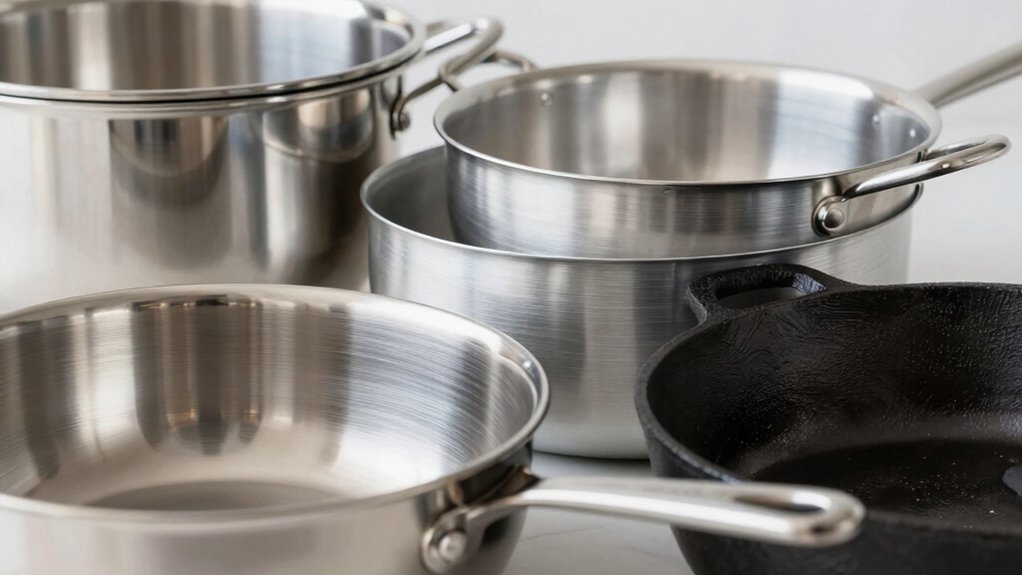
Have you ever wondered what makes some cookware more durable or better at conducting heat than others? The materials used in cookware play a crucial role in how well they perform and how long they last. When comparing different metals, you’ll notice that non reactive surfaces are a key factor. These surfaces prevent food from sticking or reacting with the metal, which can alter flavors or cause discoloration. For example, stainless steel offers a non reactive surface, making it ideal for cooking acidic dishes without worry. This feature also makes cleaning easier since it resists staining and corrosion. On the other hand, some metals like aluminum or copper can react with certain foods unless coated or treated, so understanding the non reactive qualities helps you choose cookware that’s both safe and easier to maintain. Additionally, metal composition influences how well a piece of cookware resists corrosion and maintains its appearance over time. The corrosion resistance of the metal is essential for longevity, especially in humid or acidic environments. Knowing about metal alloys** can help you select cookware that combines strength with excellent heat response. Alloy durability is another critical aspect to consider. Many high-quality cookware pieces are made from alloys—mixtures of metals designed to enhance strength and resistance to wear. For instance, stainless steel is an alloy that combines iron, carbon, and other elements to create a resilient surface that withstands daily use. This alloy durability means your cookware resists warping, scratching, and staining over time, making it a reliable choice for long-term cooking. Additionally, understanding the heat response of different metals can help you select cookware that heats efficiently and responds quickly to temperature adjustments. Moreover, certain alloys are engineered to optimize heat conductivity**, which improves cooking performance and energy efficiency.
Popular right now

Breville Barista Pro Espresso Machine with Grinder, Brushed Stainless Steel

Roborock Robot Vacuum and Mop with LiDAR Navigation and 10,000 Pa Suction

De'Longhi Linea Classic Espresso Machine with Adjustable Milk Frother
As an affiliate, we earn on qualifying purchases.
Frequently Asked Questions
Which Cookware Metal Is Most Affordable for Beginners?
You’ll find aluminum to be the most affordable option for beginners. It’s a beginner-friendly material because it heats quickly and distributes heat evenly, making cooking easier. Aluminum cookware is lightweight, easy to clean, and widely available at budget-friendly prices. If you’re starting out and want an affordable, reliable choice, aluminum cookware is a great option that balances cost and performance, helping you learn cooking basics without overspending.
Are There Health Risks Associated With Certain Cookware Metals?
Yes, some cookware metals pose health concerns due to metal leaching, especially when used improperly or with damaged surfaces. For instance, non-stick coatings can release fumes, and reactive metals like aluminum may leach into food, potentially affecting health. To minimize risks, choose high-quality, non-reactive materials like stainless steel or enameled cookware, and avoid using damaged or worn-out pieces. Proper care helps guarantee safe cooking and peace of mind.
How Long Does Cookware Typically Last Before Replacement?
Cookware typically lasts between 5 to 15 years, depending on its durability lifespan and how often you use and care for it. While high-quality materials like stainless steel and cast iron tend to endure longer, lower-grade options may need replacement more frequently. You’ll notice wear and tear—such as warping or coating damage—that signals it’s time to replace. Regular maintenance extends its life, but inevitable use leads to eventual replacement.
Can You Use Metal Utensils on All Types of Cookware?
You should check the utensil compatibility of your cookware before using metal utensils, as not all types are safe for metal utensil use. Generally, non-stick and ceramic-coated pans can be scratched or damaged by metal utensils, risking safety and longevity. For cast iron or stainless steel cookware, metal utensils are usually safe. Always follow the manufacturer’s recommendations to guarantee proper metal utensil safety and avoid damaging your cookware.
Which Metals Are Best for Induction Cooktops?
You might think all metals work on induction, but only magnetic ones do. Cast iron and certain stainless steels are the stars, thanks to their magnetic compatibility. They maximize induction efficiency, turning your stove’s energy into cooking power effectively. Aluminum and copper, however, are like the non-magnetic wallflowers—pretty but useless on induction. So, if you want quick, efficient cooking, stick with magnetic metals.
Conclusion
Choosing the right cookware metal is like tuning an instrument—you want perfect harmony between heat response, maintenance, and feel. Each metal offers its own unique tune, from the bright, quick notes of aluminum to the rich, steady hum of cast iron. By understanding these differences, you’ll find your kitchen symphony plays smoothly every time. So, pick your metal wisely, and let your cookware’s melody elevate every meal you create.