To choose and wear fragrances properly, select scents suited for the occasion, avoiding overly strong or too subtle options. Apply perfume lightly on pulse points like wrists and neck, and consider scent layering with complementary body products to enhance longevity. Use a moderate amount to avoid overwhelming others, and stay aware of your environment’s fragrance norms. Mastering these tips helps you leave a polished impression—discover more ways to perfect your perfume etiquette as you continue.
Key Takeaways
- Select subtle, appropriate scents for different occasions to avoid overwhelming others.
- Apply perfume sparingly on pulse points to ensure a refined and balanced fragrance.
- Layer scents with complementary body lotions or shower gels to enhance longevity and harmony.
- Use fragrance with good staying power, focusing on base notes like musk or amber for lasting effect.
- Be mindful of environment and context, adjusting scent strength to maintain courtesy and professionalism.
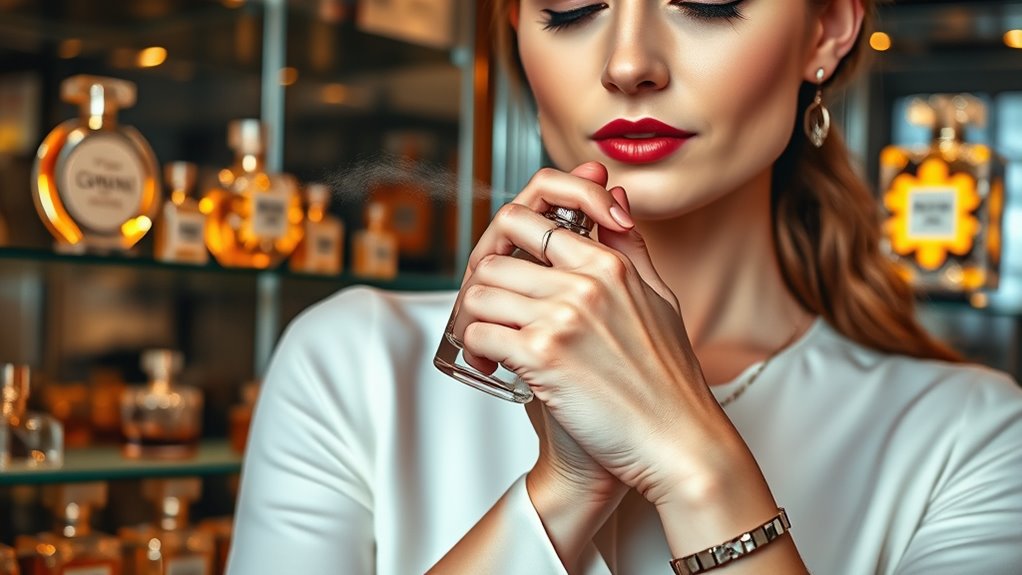
Perfume etiquette is essential to guarantee your scent enhances rather than overwhelms any setting. When you understand how to properly select and wear fragrances, you can make a positive impression without overpowering those around you. One key aspect of this is scent layering, which involves combining different scented products like body lotions, shower gels, and perfumes to create a harmonious and personalized aroma. Layering your scents carefully helps to intensify the fragrance’s presence without making it too strong, giving you more control over how your scent develops throughout the day. If done correctly, scent layering can also improve fragrance longevity, ensuring your perfume lasts longer from morning to night.
To achieve this, start with a scented body wash or lotion that complements your chosen perfume. This creates a subtle base that enhances the main scent without clashing or diluting it. When applying your fragrance, focus on pulse points—like your wrists, neck, and behind your ears—where blood flow helps diffuse the scent naturally. Using a light touch is indispensable; a heavy spritz can easily become overwhelming. Instead, aim for a moderate application, allowing the scent to develop gradually and subtly, rather than announcing your presence immediately. Additionally, choosing scents with good staying power—such as those with base notes like musk, amber, or sandalwood—can help maintain your fragrance throughout the day. These tend to cling to your skin longer and maintain their aroma longer.
Another way to boost fragrance longevity is to choose scents with good staying power—such as those with base notes like musk, amber, or sandalwood. These tend to cling to your skin longer and maintain their aroma throughout the day. Additionally, moisturized skin holds scents better, so applying a fragrance-free moisturizer beforehand can help your perfume last longer. When you combine scent layering with proper application and skin preparation, your fragrance’s longevity is naturally extended, meaning you don’t need to reapply as often. Incorporating expert voice actors into your routine by practicing your scent application and delivery can also help refine your overall perfume etiquette.
Frequently Asked Questions
Can I Wear Perfume to a Job Interview?
Yes, you can wear perfume to a job interview, but choose subtle fragrances that won’t overwhelm. Opt for a light scent with a small fragrance project scale, so it’s noticeable but not overpowering. Keep it understated to make a good impression. Remember, the goal is to complement your professionalism, not distract or annoy your interviewer. A gentle touch of fragrance can boost your confidence without taking center stage.
How Do I Store Perfume to Maintain Its Scent?
Imagine your perfume as a delicate flower, needing gentle care. Store your perfume in a cool, dark place away from sunlight and heat to maintain its scent. Keep the bottle tightly closed to prevent evaporation and contamination. Avoid bathroom storage, where humidity can degrade the fragrance. Proper perfume storage guarantees scent preservation, so each spray remains fresh and vibrant, like the first time you fell in love with its aroma.
Is It Okay to Layer Different Fragrances?
You can definitely experiment with scent blending to create your unique fragrance, but do so carefully to maintain fragrance harmony. Layering different fragrances can enhance your scent, but start with light, complementary notes to avoid overwhelming your senses or others. Always test a small amount first, and give the scents time to meld. When done thoughtfully, layering can become a fun way to personalize your signature aroma.
How Do I Identify My Signature Scent?
Imagine your scent as a personal melody that plays softly but leaves a lasting impression. To find your signature scent, explore fragrances with notes that resonate with your personality—fresh citrus, warm vanilla, or floral hints. Test them on your skin, noting scent longevity and how the fragrance evolves over time. When a scent feels like an extension of you, that’s your signature—your unique, memorable melody.
What Scents Are Appropriate for Formal Events?
For formal events, you want scents that are subtle and sophisticated. Opt for seasonal fragrances with moderate scent intensity, so you don’t overwhelm others. Light floral, citrus, or woody notes work well, keeping your presence elegant. You should avoid overly strong or sweet fragrances, as they can be distracting. By choosing refined scents that match the occasion, you’ll leave a polished impression without overpowering the atmosphere.
Conclusion
By following these perfume etiquette tips, you’ll make certain your fragrance enhances your presence without overwhelming the room. Think of your scent as a delicate whisper rather than a shout, leaving a memorable impression like a gentle breeze. When you choose and wear fragrances thoughtfully, you turn everyday moments into an artful dance. Remember, the right perfume is your signature—subtle, enchanting, and uniquely yours. So, wear it with confidence and let your scent tell your story.
Emma is a culinary expert from New York City, USA, with extensive experience in gourmet cooking and food journalism. She collaborates with prestigious food publications and high-end restaurants, bringing exquisite taste and culinary insights to the A Luxury Lifestyle platform. Emma’s expertise elevates our gastronomic offerings.