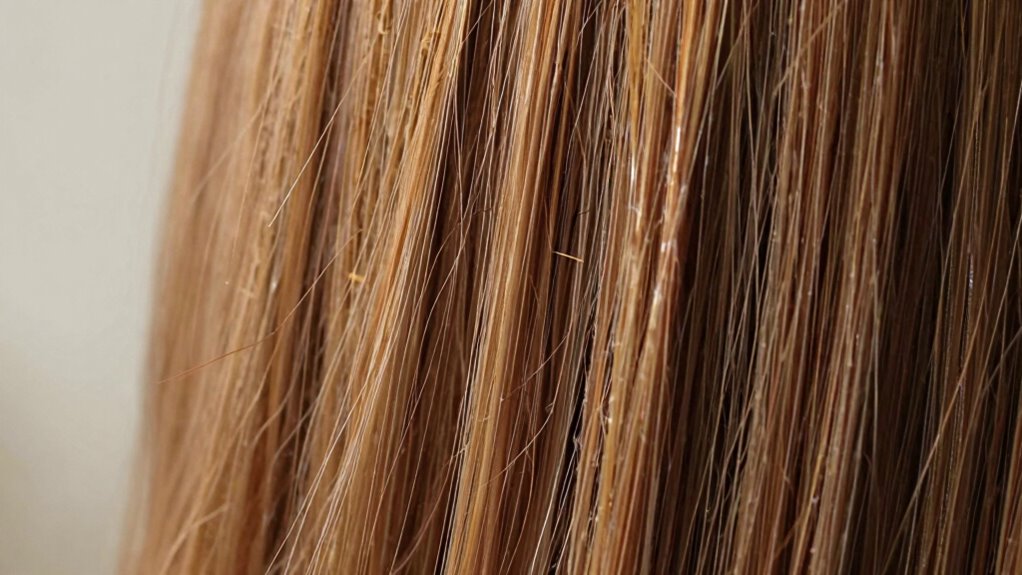

Many people ignore the vital temperature rules for styling tools, risking significant hair damage. To keep your hair healthy, avoid exceeding 375°F—most experts recommend staying between 300°F and 350°F, especially for fine or damaged hair. Using higher temperatures can cause dryness, breakage, and split ends. If you want your hair to stay shiny and strong, following proper heat guidelines is essential. Stay tuned to learn how to protect your hair from heat damage effectively.
Key Takeaways
- The ideal temperature range for styling is between 300°F and 350°F to prevent damage.
- Many people ignore the maximum safe limit of 375°F, risking irreversible hair damage.
- Fine or damaged hair should be styled at temperatures closer to 300°F, not higher.
- Exceeding 400°F significantly increases breakage, split ends, and scalp irritation.
- Using heat protectants and adjusting temperature settings based on hair type helps prevent damage.

OGX Repair & Protect Bond Protein Repair 450°F Heat Protect Spray, Weightless Repair Mist for Nonstop Damage Protection* for All Hair Types, Heat Spray Preps Hair for Styling, 6.5 fl. oz
YOUR HEAT DAMAGE FIX: OGX Repair & Protect Bond Protein Repair Heat Protection Spray from the #1 Hair…
As an affiliate, we earn on qualifying purchases.
As an affiliate, we earn on qualifying purchases.
Why Does Heat Damage Hair When Using Hot Tools?
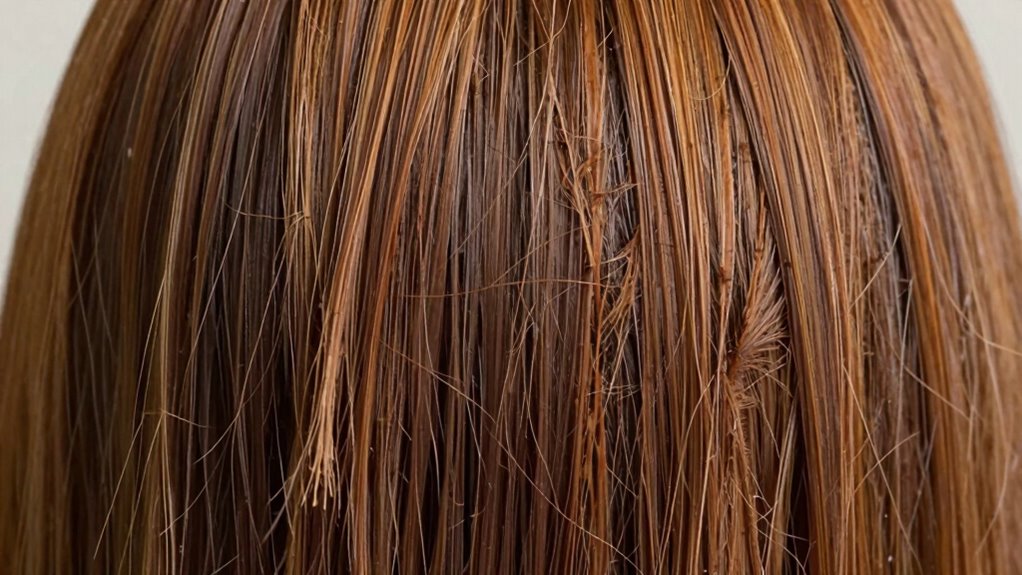
Heat damages hair because high temperatures can weaken and break down the hair’s natural structure. When you use hot tools, your hair is vulnerable to heat injury, which can cause irreversible damage. The intense heat causes the keratin proteins to lose moisture and become brittle, leading to breakage and frizz. This process increases styling risks, especially if you repeatedly expose your hair to high temperatures without protection. Over time, these effects can result in dull, lifeless hair that’s more prone to split ends. Understanding hair structure reveals how heat causes these changes and emphasizes the importance of careful styling. Using the correct temperature settings can significantly reduce the risk of damage, extending the life and health of your hair. Additionally, incorporating heat protectant products can create a barrier that minimizes direct heat contact and shields hair from excessive damage. To further safeguard your hair, limiting the frequency of heat styling and opting for lower temperatures whenever possible is recommended for healthier hair. In addition, choosing tools with precise temperature controls can help you maintain optimal heat levels and prevent accidental overheating during styling.

Remington Shine Therapy 1 inch Hair Straightener Iron, Flat Iron Infused with Argan Oil & Keratin, Professional Ceramic Flat Iron for Less Frizz, Shines and Smooth, Styling Tools
ADVANCED CERAMIC PLATES: Enjoy a superior styling experience with 9X more ceramic than standard Remington models. Infused with…
As an affiliate, we earn on qualifying purchases.
As an affiliate, we earn on qualifying purchases.
What Are Safe Temperature Ranges for Styling Your Hair?

Knowing the right temperature range is key to protecting your hair while styling. Your ideal heat setting depends on your hair type, so using the right level can prevent damage. Let’s explore how to choose safe temperatures and tips to keep your hair healthy. Using heat protectant sprays and serums can further minimize damage during styling. Sulfate-free shampoos help maintain color vibrancy and prevent dryness, supporting healthier highlighted hair. Being aware of ear wax odor or other unusual smells can also hint at underlying health issues that might affect your overall well-being. Additionally, understanding Free Floating concepts in hair care technology can help you optimize your styling routine for better results. Moreover, selecting a home theater projector with appropriate contrast ratio settings can improve visual clarity and protect your eyes from strain during long viewing sessions. Incorporating a temperature thermometer into your styling routine can also help you monitor and maintain safe heat levels consistently.
Ideal Heat Settings
To protect your hair from damage, it’s important to use styling tools within safe temperature ranges. Generally, keep your flat iron or curling wand between 300°F and 350°F to prevent hair color fading and maintain scalp health. For fine or damaged hair, stick closer to 300°F, while thicker hair can handle up to 350°F. Avoid going above 375°F, as higher temperatures increase the risk of breakage and scalp irritation. Using the right heat setting helps preserve your hair’s natural moisture and color vibrancy. Always test your tool on a small section first, and consider using a heat protectant spray. Staying within these ideal ranges ensures you style effectively without sacrificing hair health or color longevity. Incorporating energy-efficient tools can further minimize heat damage and promote healthier styling routines. Additionally, selecting tools with precise temperature controls allows for more consistent and safer styling outcomes.
Hair Type Considerations
Your hair type plays a crucial role in determining the safest temperature range for styling. For low porosity hair, keep temperatures below 350°F to avoid damage, as the cuticles resist moisture penetration. High porosity hair, which absorbs moisture quickly, can handle slightly higher temperatures around 370°F but still risks damage if overused. Sensitive scalps require lower heat levels, generally under 330°F, to prevent irritation and burns. Use the table below as a quick guide:
| Hair Porosity | Safe Temp Range | Scalp Sensitivity |
|---|---|---|
| Low porosity | Below 350°F | Under 330°F |
| High porosity | Up to 370°F | Under 330°F |
| Sensitive scalp | Under 330°F | N/A |
| Normal | 330-370°F | N/A |
Adjust based on your hair’s unique needs to prevent heat damage.
Damage Prevention Tips
Choosing the right temperature range when styling your hair can substantially reduce the risk of damage. Many hair myths suggest cranking up the heat for better results, but excessive heat often leads to breakage and dryness. To protect your hair, stick to safe temperature ranges—generally, 300°F to 350°F for fine or damaged hair, and up to 375°F for thicker hair. Stay aware of current styling trends that emphasize heatless or low-heat techniques, which help preserve hair health. Always use a heat protectant and avoid using high temperatures unnecessarily. Proper filtration of heat tools can also improve performance and safety, reducing the risk of uneven heat distribution. Remember, less is more; mastering the proper temperature can keep your hair shiny, healthy, and damage-free over time. Existential themes in personal care remind us that moderation and awareness are key to long-term well-being.

HH&LL Hair Clips for Women – Wide Teeth & Double-Hinged Design – Alligator Styling Sectioning Clips of Professional Hair Salon Quality – 10Pack (Mixing)
Multipurpose styling hair accessories: They don't slip and the grip is tight. Great for anyone who likes to…
As an affiliate, we earn on qualifying purchases.
As an affiliate, we earn on qualifying purchases.
How Can You Tell If Your Hair Is Damaged From Heat?
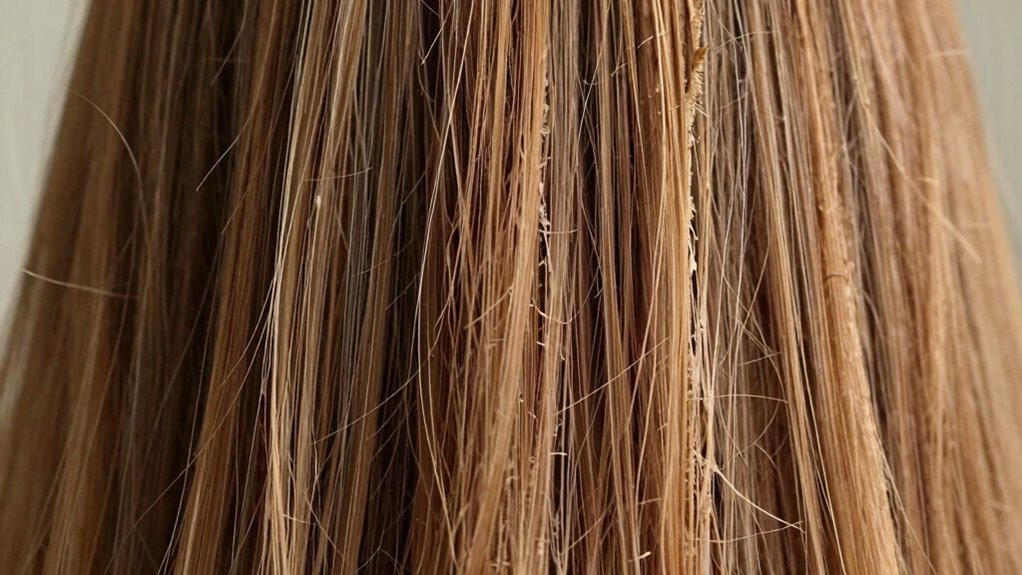
If you notice your hair feels more brittle or uneven in texture, it might be a sign of heat damage. Visible breakage or split ends are clear indicators that your hair has suffered from excessive heat. Additionally, a dull or lackluster shine often points to damage caused by heat styling. Being aware of styling product choices can help prevent further harm, as some products can offer heat protection and reduce damage. Moreover, understanding security system features can help you select the best tools and products to safeguard your hair from future heat-related injury. Recognizing the importance of fire-starting kits and other essential gear for emergencies can also promote overall preparedness, including protecting your hair from environmental stressors. Incorporating knowledge of local climate conditions can guide you in choosing appropriate styling routines to minimize damage. Staying informed about latest heat styling tools with advanced temperature controls can also assist in maintaining healthier hair.
Changes in Hair Texture
Heat damage can substantially alter your hair’s natural texture, making it feel coarse, brittle, or frizzy. You might notice your hair no longer feels soft or smooth but instead appears dry and rough. Changes in hair porosity can also signal damage; if your hair absorbs moisture unevenly or takes longer to dry, heat has likely affected its structure. Additionally, scalp sensitivity may increase, causing discomfort or irritation when you touch your scalp or style your hair. These texture changes aren’t always visible on the surface—sometimes the damage is deep within, affecting how your hair reacts to humidity or styling. Recognizing these subtle cues early can help you address heat damage before it worsens, protecting your hair’s health and restoring its natural texture. Understanding hair porosity can also help you determine the extent of damage and choose appropriate treatments. Being aware of hair porosity helps you tailor your hair care routine to minimize further damage and encourage recovery. To prevent ongoing damage, it’s important to avoid excessive heat exposure and adopt safe styling practices to maintain hair integrity. Moreover, adjusting your heat styling habits can significantly reduce the risk of further damage and promote healthier hair over time. Incorporating proper heat protectant use into your routine is essential for safeguarding your strands from high temperatures.
Visible Hair Breakage
Visible hair breakage is one of the clearest signs that your hair has suffered heat damage. You might notice strands snapping easily or falling out in clumps. Look closely at your ends; if they’re frayed or split, it’s a sign of weakened strands. Sometimes, heat causes scalp burns, leading to discomfort and further damage. To visualize, consider this table:
| Damage Signs | Description |
|---|---|
| Split ends | Frayed, frizzed hair tips |
| Excess breakage | Sudden increase in hair fall |
| Thinning strands | Noticeable scalp visibility |
| Scalp burns | Redness, soreness, or peeling skin |
| Frayed ends | Ragged, uneven hair tips |
If you see these signs, it’s time to adjust your heat styling habits. Understanding heat levels and how to manage them can help prevent further damage and keep your hair healthy.
Loss of Shine
When your hair loses its natural luster, it’s a clear sign that heat damage has taken its toll. You’ll notice a shine loss, making your hair appear dull and lifeless. As dullness increases, your hair no longer reflects light as it once did, giving it a lackluster appearance. This dullness isn’t just about looks; it indicates damage to the hair’s outer cuticle, which protects the inner layers. When the cuticle is compromised, moisture escapes, and your hair becomes less shiny and more prone to further damage. If you see your hair looking matte and lacking its usual glow, it’s time to evaluate your heat styling habits. Protecting your hair from excessive heat can help restore shine and prevent ongoing dullness increase.

CHI Infra Thermal Protective Treatment, Hair Serum For Protecting Color & Adding Superior Shine & Softness, Hydrating Formula, Sulfate-free, 6 Oz
SERUM FOR SOFTNESS & SHINE: CHI's Infra Thermal Protective Treatment uses infrared heat to penetrate the hair shaft,…
As an affiliate, we earn on qualifying purchases.
As an affiliate, we earn on qualifying purchases.
What Is the Temperature Rule for Protecting Your Hair?
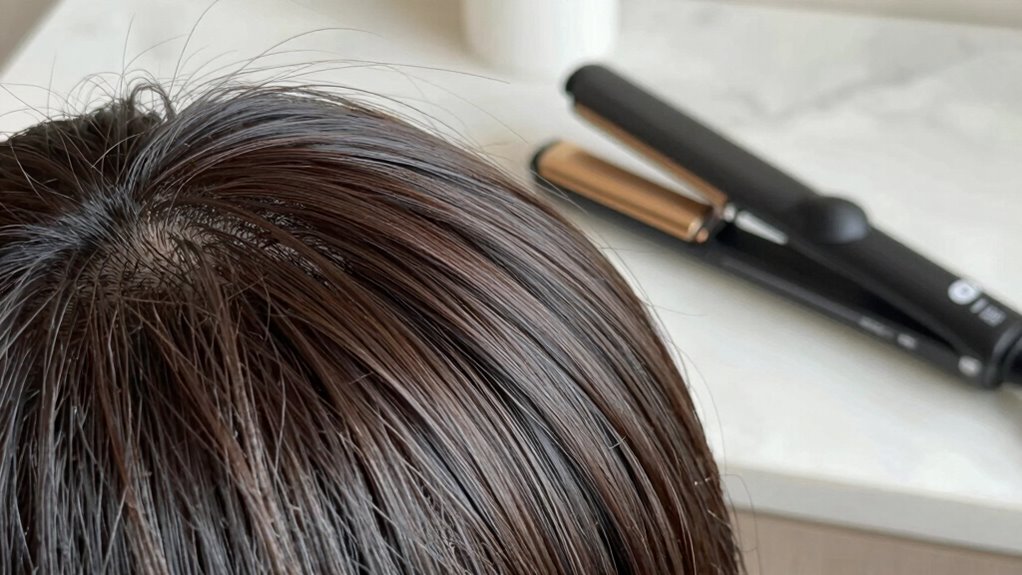
To protect your hair from damage, keeping the temperature of your styling tools in check is essential. The key is following temperature guidelines that prevent excessive heat exposure. Experts recommend using heat settings between 250°F and 350°F for most styling, with lower temperatures for fine or damaged hair. For thicker or coarse hair, slightly higher temps may be necessary, but never exceed 400°F. Practicing heat safety means monitoring your tools and avoiding the temptation to crank up the heat just to finish faster. Remember, the goal is to style effectively without compromising your hair’s health. Staying within these temperature rules helps maintain shine, strength, and overall hair integrity, reducing the risk of heat damage and breakage over time.
How to Use Heat Styling Tools Safely and Protectively
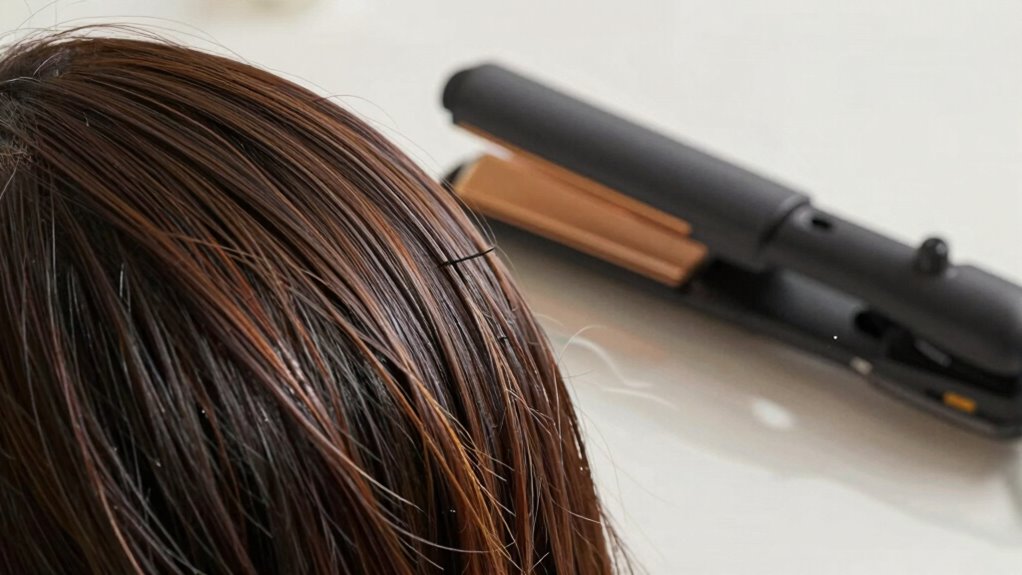
Using heat styling tools safely starts with preparing your hair properly and setting the right temperature. Understanding your hair porosity helps determine how much heat it can tolerate without damage, while considering scalp sensitivity ensures comfort during styling. To protect your hair, always start with clean, dry hair and use a heat protectant. Select a temperature suited for your hair type:
| Hair Porosity | Scalp Sensitivity | Recommended Temp |
|---|---|---|
| Low Porosity | Sensitive scalp | 250°F – 300°F |
| Normal Porosity | Average scalp | 300°F – 350°F |
| High Porosity | Less sensitive scalp | 350°F – 400°F |
Adjust heat accordingly, avoid high temperatures, and limit styling sessions to prevent heat damage and scalp discomfort.
Top Heat Protectants and Products to Prevent Damage
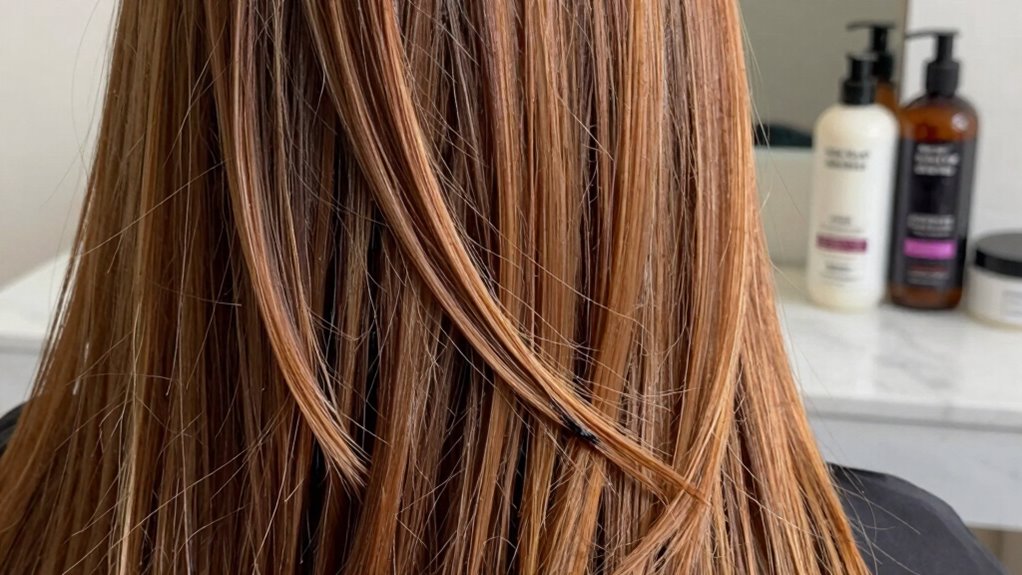
Protecting your hair from heat damage starts with choosing the right heat protectant products, which create a barrier between your strands and high temperatures. Look for heat protectants that suit your hair type and guarantee even application before styling. Styling serums can add extra protection and shine, helping to reduce frizz and static. Some top options include:
- Thermal spray protectants for all-over coverage
- Leave-in conditioners with heat protection
- Lightweight styling serums for smoothness
- Heat-activated creams for deep nourishment
- Multi-use products combining heat protection and hydration
These products help minimize damage while enhancing your style. Always apply protectants evenly, and remember, the right product can make a significant difference in maintaining healthy, shiny hair despite frequent heat styling.
Natural Alternatives to High-Heat Styling for Healthy Hair
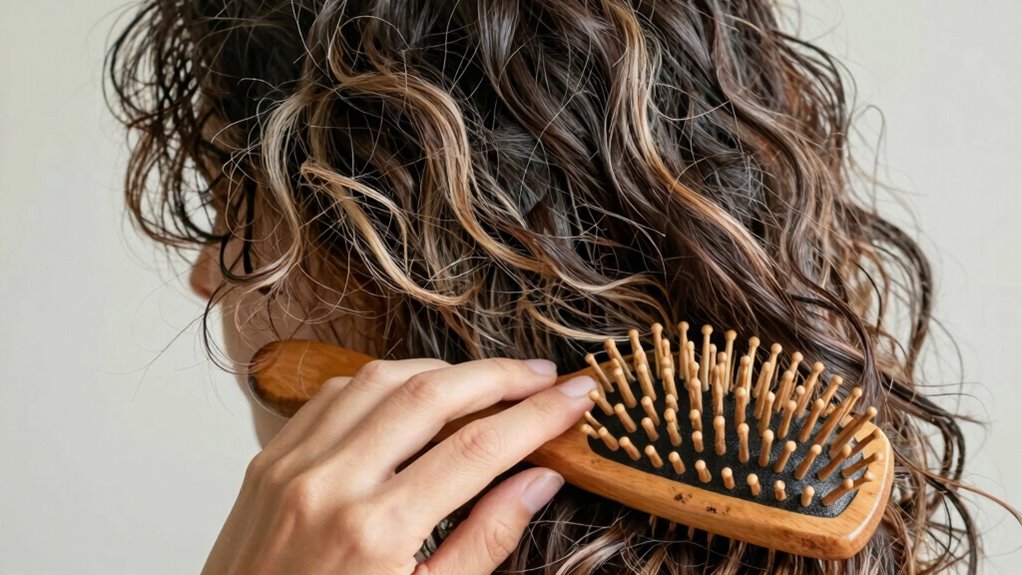
If you want healthy hair without exposing it to damaging heat, explore natural styling methods that minimize heat usage. Using natural oils like coconut, argan, or castor can add moisture and shine, reducing the need for heat-styling tools. You can embrace heatless styles such as braids, buns, or twists to create waves and volume without damage. These methods not only protect your hair’s health but also maintain its natural texture. Air-drying after applying natural oils keeps hair hydrated and prevents breakage caused by heat. Additionally, sleep-in curl techniques or using foam rollers can give you styled looks without heat. Switching to these natural alternatives helps preserve your hair’s integrity while still achieving stylish results.
Common Mistakes That Cause Heat Damage and How to Avoid Them
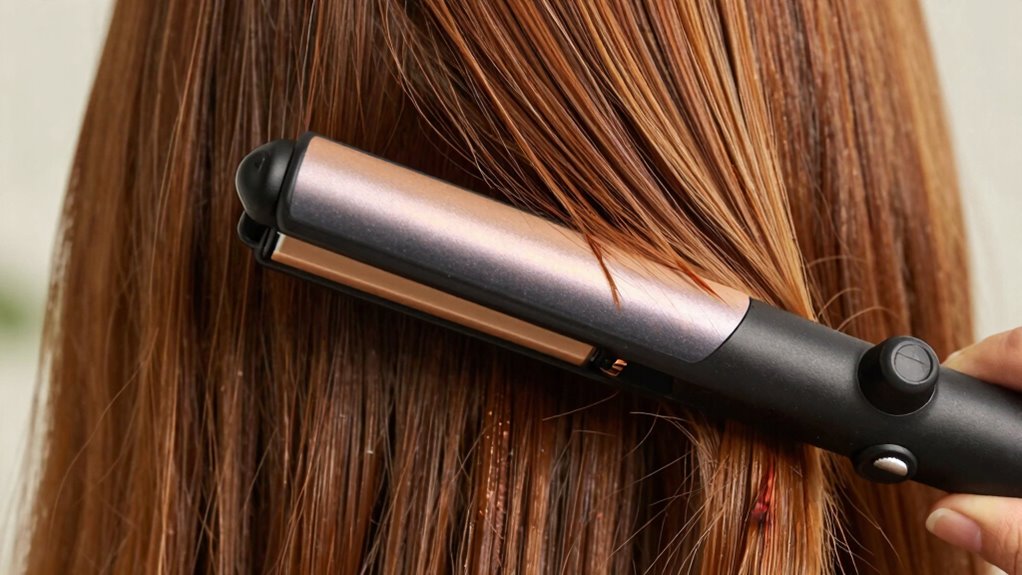
Many people unknowingly damage their hair by making common mistakes when using heat styling tools. One major error is falling for heat styling myths, like believing higher temperatures always mean better results. Temperature misconceptions often lead to overusing heat, causing unnecessary damage. To avoid this, consider these mistakes:
- Using the highest heat setting regardless of hair type
- Ignoring the recommended temperature limits for your hair
- Repeatedly applying heat without giving hair time to cool
- Skipping heat protectant products before styling
- Rushing through styling instead of working at a steady, safe temperature
Understanding heat styling myths and correcting temperature misconceptions helps preserve hair health. Proper technique and awareness ensure you achieve your style without compromising your hair’s integrity.
Frequently Asked Questions
How Often Should I Use Heat Styling Tools on My Hair?
You should limit heat styling to no more than 2-3 times a week to prevent damage. When you do use heat tools, apply a heat protectant with strong product ingredients like keratin or silicone. Also, try natural remedies like coconut oil or aloe vera to nourish your hair and reduce damage. Remember, giving your hair regular breaks and using the right products keeps it healthy and shiny.
Can Cold Styling Methods Damage Hair as Much as Heat?
Cold styling methods generally cause less damage than heat, but they can still harm your hair if used improperly. For example, tight braids or elastic bands can lead to breakage or traction alopecia over time. While cold styling usually isn’t as damaging as heat, excessive or harsh techniques may cause damage comparable to heat styling. Always handle your hair gently, regardless of the method, to keep it healthy.
Do Different Hair Types Require Different Heat Settings?
Do you realize that different hair types need different heat settings? Your hair porosity and curl pattern play essential roles in determining the right temperature. For fine or highly porous hair, lower heat prevents damage, while thicker or tightly curled hair may require slightly higher settings for effective styling. Adjusting your heat based on these factors helps protect your hair and achieve the best results without unnecessary damage.
Are There Specific Brands Known for Safer Heat Styling Tools?
Yes, some brands are known for safer heat styling tools based on professional recommendations and brand safety. You should look for brands like Dyson, ghd, and BaBylissPRO, which prioritize temperature control and incorporate advanced safety features. These brands often undergo rigorous testing, ensuring they minimize heat damage to your hair. By choosing reputable brands, you can enjoy effective styling while protecting your hair’s health.
How Long Should I Wait Between Heat Styling Sessions?
Think of your hair as a delicate garden that needs time to recover. You should wait at least 48 hours between heat styling sessions to give your hair a breather. During this time, use heat protection sprays to shield your strands. This gap helps prevent damage and keeps your hair healthy. Remember, giving your hair a break is the best way to maintain its shine and strength over the long run.
Conclusion
You might think skipping heat styling is impossible, but protecting your hair is easier than you think. By following the temperature rule and using proper heat protectants, you can achieve style without damage. Don’t let fear of change hold you back—try natural alternatives or lower heat settings instead. Your hair will thank you for it, and you’ll still get the gorgeous looks you love. Protect your hair today and enjoy healthy, shiny results tomorrow.