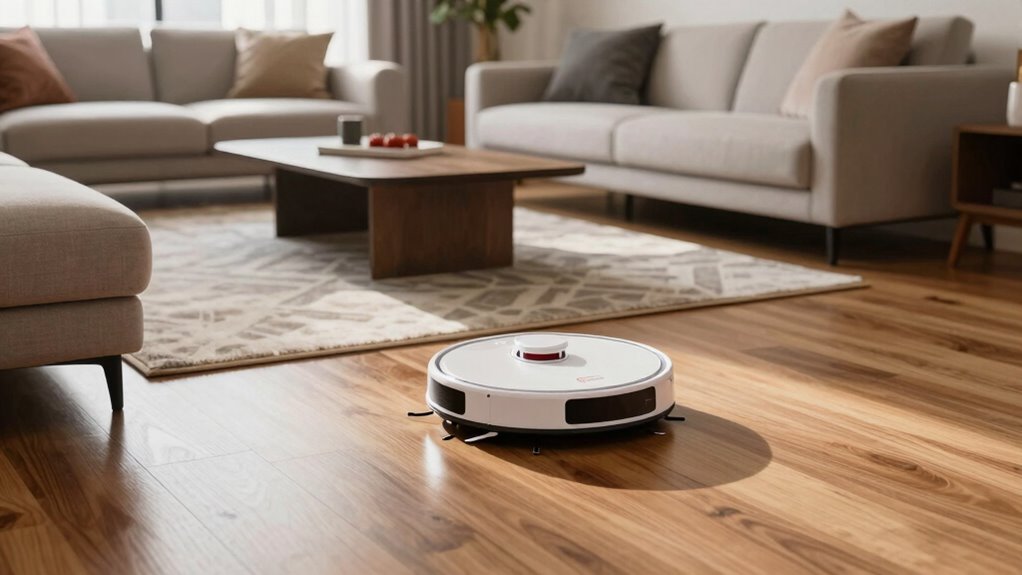

To set your home up for robot vacuum automation, start by clearing clutter such as cords and small objects, and organize furniture to prevent jams. Place sensors, boundary strips, and virtual walls to define no-go zones. Position the charging station on a flat, accessible surface in an open area. Running initial cleaning cycles helps build accurate maps for better route planning. Proper setup boosts efficiency and prolongs your vacuum’s life — learn more to master the process.
Key Takeaways
- Clear clutter and organize furniture to facilitate smooth navigation and prevent jams.
- Use boundary strips or virtual walls to designate off-limits areas.
- Position the charging station in an accessible, clutter-free, and stable location.
- Conduct initial cleaning cycles to create accurate floor maps for optimized routing.
- Regularly calibrate sensors and maintain the robot for reliable obstacle detection and navigation.
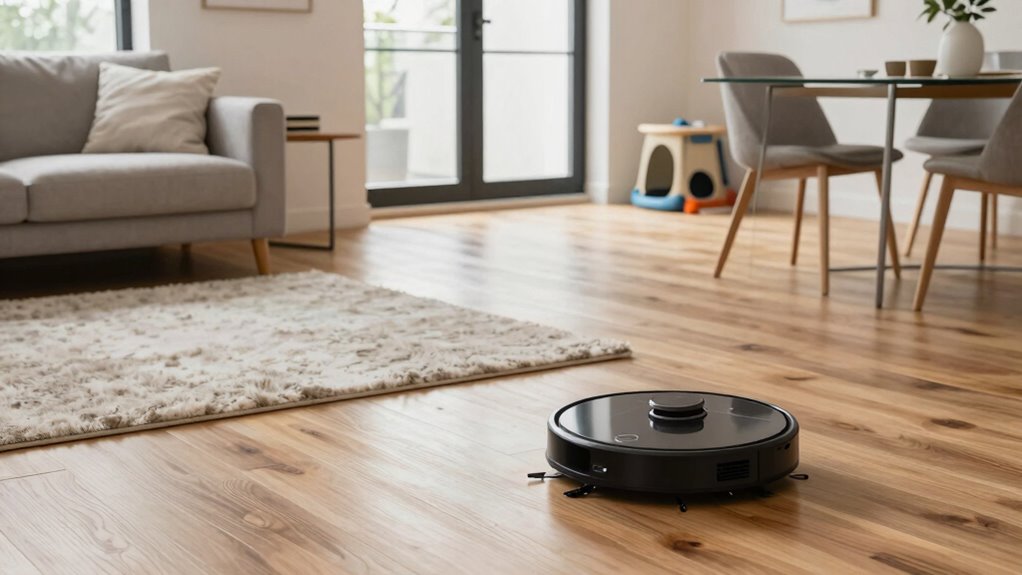
Robot vacuums have revolutionized how we approach cleaning by combining automation with smart floor planning. When you set up your home for a robotic cleaner, understanding how these devices work is essential. They rely heavily on smart sensors to navigate your space efficiently. These sensors detect obstacles, edges, and even changes in floor type, allowing the vacuum to adapt on the fly. With smart sensors, your robot can avoid furniture, walls, and fragile items, reducing the risk of collisions or falls. This technology ensures thorough cleaning without you having to supervise every move. Additionally, the effectiveness of these sensors depends on proper calibration and maintenance to keep them functioning optimally.
Robot vacuums use smart sensors to navigate, avoid obstacles, and adapt for thorough, hands-free cleaning.
Floor mapping is another critical element in optimizing your home for robotic vacuuming. Most modern robots create a detailed map of your space as they clean, either through visual SLAM (Simultaneous Localization and Mapping) or via infrared and ultrasonic sensors. This floor mapping feature allows the vacuum to remember the layout of your rooms, making future cleaning sessions faster and more efficient. Instead of randomly wandering, the robot follows a planned route, covering every inch systematically. It means fewer missed spots and less time spent cleaning. Plus, many models let you customize cleaning zones or set no-go areas directly through an app, giving you full control over where the robot works. Ensuring your home’s floor plan is accurate enhances the overall floor planning and efficiency of the cleaning process. Incorporating smart home integration can further streamline your cleaning routine by allowing remote control and scheduling.
To set your home up effectively, start by clearing clutter that could interfere with the sensors. Loose cords, small objects, or rugs with fringes can confuse the robot or cause it to get stuck. If you have delicate or valuable items, consider setting up boundary strips or virtual walls that the robot recognizes as off-limits. These are often available through the app and help define the areas you want the vacuum to avoid. Additionally, taking the time to organize furniture and fix uneven flooring helps the robot move smoothly and reduces the chance of accidental falls or jams. Properly home layout and organization are crucial components in maximizing your robot vacuum’s performance. Recognizing the importance of sensor technology can help you better understand how these devices adapt and navigate. Moreover, understanding how floor types impact sensor performance can help you optimize your setup further.
Think about the placement of charging stations as well. Position the dock in an open, accessible area away from clutter, and ensure it’s on a flat surface. A well-placed charging station helps the robot return easily after cleaning, maintaining its battery life and readiness for the next session. Once everything is in place, run a few initial cleaning cycles so the robot can build an accurate floor map and learn your home’s layout. Over time, as the map becomes detailed, your robot can optimize its routes, making each cleaning session more efficient.
In short, setting up your home for a robot vacuum involves understanding and leveraging smart sensors, creating accurate floor maps, and organizing your space thoughtfully. When done right, you’ll enjoy a cleaner home with less effort, thanks to a device that adapts intelligently to your environment.
As an affiliate, we earn on qualifying purchases.
Frequently Asked Questions
Can Robot Vacuums Identify and Avoid Pet Messes?
Robot vacuums generally can’t identify pet messes specifically, but many have pet mess detection features that help them recognize wet or messy areas. They also use obstacle avoidance to navigate around pet accidents without spreading dirt further. While they don’t fully understand pet messes like humans, these features help prevent spreading messes and keep your floors cleaner with minimal effort. Just make sure your vacuum has these capabilities for best results.
How Often Should I Update the Floor Plan for Optimal Cleaning?
You should update the floor plan regularly, ideally every few months, to guarantee ideal cleaning. Accurate floor plan accuracy improves automatic mapping, allowing your robot vacuum to navigate efficiently. When your home layout changes—like new furniture or renovations—update the map promptly. This helps prevent missed spots and ensures your vacuum adapts to your evolving space, maintaining thorough cleaning and smooth operation.
Do Robot Vacuums Work Well on All Flooring Types?
Robot vacuums work well on many flooring types, but their surface compatibility varies. They handle hardwood floors easily, gliding smoothly and cleaning thoroughly. However, on carpets, especially thick or plush ones, some models might struggle or need more frequent maintenance. To guarantee peak performance, choose a vacuum designed for your specific flooring type. Regularly check for debris and adjust settings if needed, so your robot can clean efficiently on both surfaces.
Is There a Recommended Cleaning Schedule for Different Rooms?
Did you know that a well-planned cleaning schedule can boost your robot vacuum’s efficiency by 30%? For room-specific cleaning, set scheduling routines based on usage—clean high-traffic areas daily or every other day, while bedrooms can be cleaned weekly. Customize routines for each room, ensuring your robot vacuum tackles messes when needed most, keeping your home spotless without unnecessary runs.
Can Robot Vacuums Detect and Navigate Around Fragile Items?
Yes, robot vacuums can detect and navigate around fragile items. Many models feature fragile item detection, which helps prevent accidental damage. They use advanced sensors for navigation precision, allowing them to identify obstacles and avoid delicate objects. To guarantee safety, set up virtual boundaries or use mapping features to guide your vacuum away from fragile decor. Regularly update your vacuum’s software to improve obstacle detection and navigation accuracy.
Conclusion
By planning your floors and choosing the right robot vacuum, you can enjoy a cleaner home with minimal effort. Did you know that 70% of homeowners who optimize their floor layout report a noticeable increase in cleaning efficiency? When you set up your space thoughtfully, you not only make cleaning easier but also extend your device’s lifespan. Embrace automation today—your smart, spotless home is just a few strategic adjustments away.