
In watch finishing, you notice the seamless movement of parts and intricate decorative touches that elevate a simple device into art. Look for reflections on polished surfaces, sharp beveled edges, and finely engraved patterns—each showcasing craftsmanship and attention to detail. These subtle yet deliberate details reveal patience and expertise, blending technical skill with artistry. By appreciating these elements, you’ll see how watchmakers turn precision into beauty. Keep exploring, and you’ll discover even more about this quiet, exquisite craft.

Get your wardrobe favorites delivered free with Prime
- Fast, free delivery on millions of items
- Prime Video, Amazon Music and more included
- Member-only deals all year
Key Takeaways
- Finishing elevates a watch from functional to artistic, showcasing craftsmanship and attention to detail.
- Decorative techniques like Geneva stripes and perlage serve both aesthetic and protective purposes.
- Polished surfaces, beveled edges, and engraved patterns highlight the watchmaker’s precision and dedication.
- The finishing process requires skill, patience, and specialized tools to ensure durability and visual harmony.
- Subtle details in finishing reflect the artistry and mastery that transform a timepiece into a work of art.
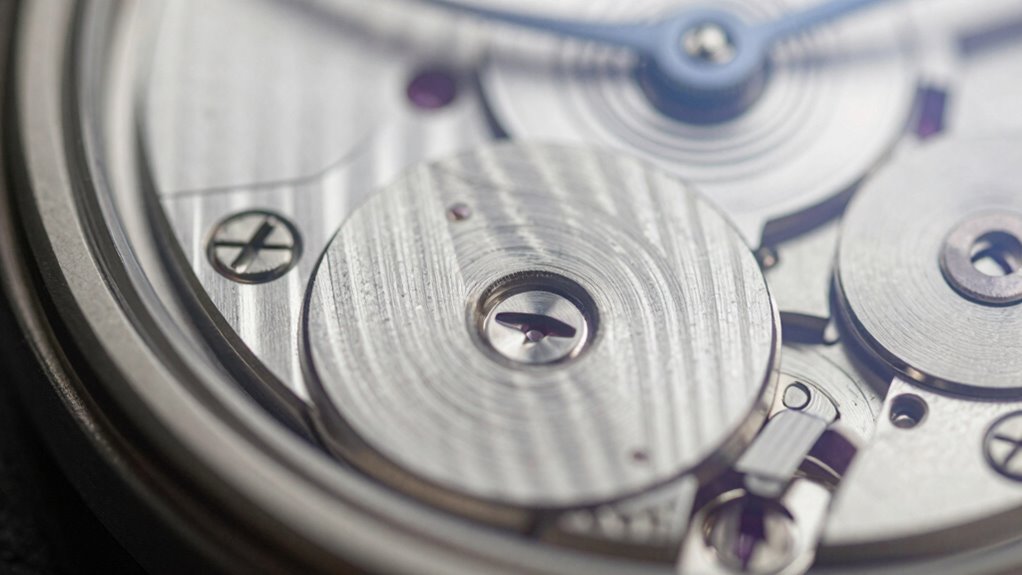
Watch finishing may seem like a subtle detail, but it’s the quiet art that elevates a timepiece from functional to extraordinary. When you look closely at a finely finished watch, you’re witnessing the culmination of skilled mechanical craftsmanship and meticulous decorative techniques. It’s the difference between a simple device and a masterpiece that reflects the watchmaker’s dedication to perfection. Mechanical craftsmanship involves more than just assembling tiny parts; it’s about ensuring each component moves seamlessly, with precision and durability. However, it’s the finishing touches—those decorative techniques—that truly set a watch apart, revealing the artisan’s attention to detail and their mastery of craft.
Every polished surface, brushed finish, or engraved pattern serves a purpose beyond aesthetics. These techniques protect the metal, reduce friction, and enhance longevity, but they also showcase the artisan’s skill. For example, Geneva stripes—beautiful parallel lines carefully brushed onto bridges and plates—highlight the watchmaker’s precision and patience. Similarly, perlage, a delicate circular graining pattern, not only adds visual interest but also minimizes surface imperfections. When you examine a watch’s movement, you can often see these decorative techniques, which demonstrate an unwavering commitment to excellence. They turn a functional mechanism into a work of art, inviting you to appreciate the craftsmanship behind every gear and screw. Finishing techniques are essential in transforming a movement from merely functional to visually captivating.
Geneva stripes and perlage showcase craftsmanship, transforming functional watch parts into intricate works of art.
The art of finishing a watch also involves polishing to achieve mirror-like surfaces, creating a contrast that accentuates the design. Sharp beveled edges, polished screw heads, and finely engraved patterns all contribute to a sense of harmony and craftsmanship. These details aren’t just for show—they reflect the watchmaker’s pride and meticulous attention. As you observe a well-finished watch, you notice how each element complements the others, revealing a balance of technical skill and decorative artistry. The process demands patience and steady hands, as even small imperfections can detract from the overall impression. Attention to detail plays a crucial role in elevating the quality of a finished watch and demonstrating the artisan’s dedication. Additionally, the decorative techniques involved often require specialized tools and years of experience to master.
Ultimately, the discreet art of watch finishing enhances both form and function. It transforms a precise mechanical instrument into something visually mesmerizing and enduring. When you wear or admire a finely finished watch, you’re not just appreciating its ability to keep time; you’re recognizing the harmony of mechanical craftsmanship and decorative techniques. It’s these subtle yet impactful details that remind you of the artistry and dedication embedded in every tick, making your timepiece truly extraordinary.
Popular right now

Vitamix Propel Series 750 Professional-Grade Blender, 4 Programs, Black

LG 85-inch QNED75B Mini LED Smart TV Bundle with HDMI and CPS Protection Plan

Ninja Foodi DZ201 8-Quart DualZone 6-in-1 Air Fryer
As an affiliate, we earn on qualifying purchases.
Frequently Asked Questions
How Does Finishing Impact a Watch’s Overall Value?
Finishing considerably impacts a watch’s overall value by showcasing luxury watch craftsmanship and horology artistry. When you notice meticulous polishing, beveled edges, and intricate engravings, it reflects the watchmaker’s dedication and skill. These fine details enhance the watch’s aesthetic appeal and indicate higher quality, making it more desirable and valuable. Essentially, superior finishing elevates the watch’s prestige, ensuring it stands out among other timepieces and retains or increases its worth over time.
What Tools Are Essential for Hand-Finishing Watches?
To hand-finish a watch, you need essential tools like polishing sticks for dial polishing and brushes for case brushing. These tools help you refine surfaces and add a professional touch, making the watch stand out. You also need files, loupe, and polishing compounds. Remember, a steady hand and patience are key—don’t bite off more than you can chew, or you’ll risk ruining the intricate details you’re trying to perfect.
Can Finishing Techniques Vary Between Watch Brands?
Finishing techniques definitely vary between watch brands, reflecting their unique brand heritage and desired finishing styles. You’ll notice that luxury brands often emphasize intricate details like Geneva stripes or perlage, showcasing their craftsmanship. Meanwhile, other brands might focus on a more minimalist or modern finish. This variation not only highlights each brand’s identity but also caters to different aesthetic preferences, making each watch distinct and special in its own right.
How Long Does It Typically Take to Finish a High-End Watch?
Finishing a high-end watch usually takes several hours, sometimes even days, depending on complexity. You’ll notice that watch polishing and case engraving are meticulous tasks that demand patience and precision. During this process, the craftsman carefully buffs surfaces for a mirror finish and engraves intricate patterns. These details elevate the watch’s elegance, showcasing the craftsmanship behind every piece. The time invested reflects the dedication to perfection in luxury watchmaking.
Is Watch Finishing a Skill That Can Be Learned at Home?
You can learn watch finishing at home, but it’s a delicate craft that blends patience with precision. While DIY craftsmanship might seem intimidating, beginner techniques like polishing and beveling can be practiced with the right tools and guidance. The key is to start small, focus on details, and develop a steady hand. With dedication, you’ll gradually master the art, transforming raw components into beautifully finished timepieces.
Conclusion
You now understand how essential watch finishing is to the craft, transforming a simple timepiece into a work of art. Did you know that over 60% of watch enthusiasts say the finishing details influence their buying decision the most? With such passion for craftsmanship, you’ll appreciate the tiny, meticulous touches that make each watch unique. Next time you admire a watch, remember it’s the finishing that truly makes it stand out.