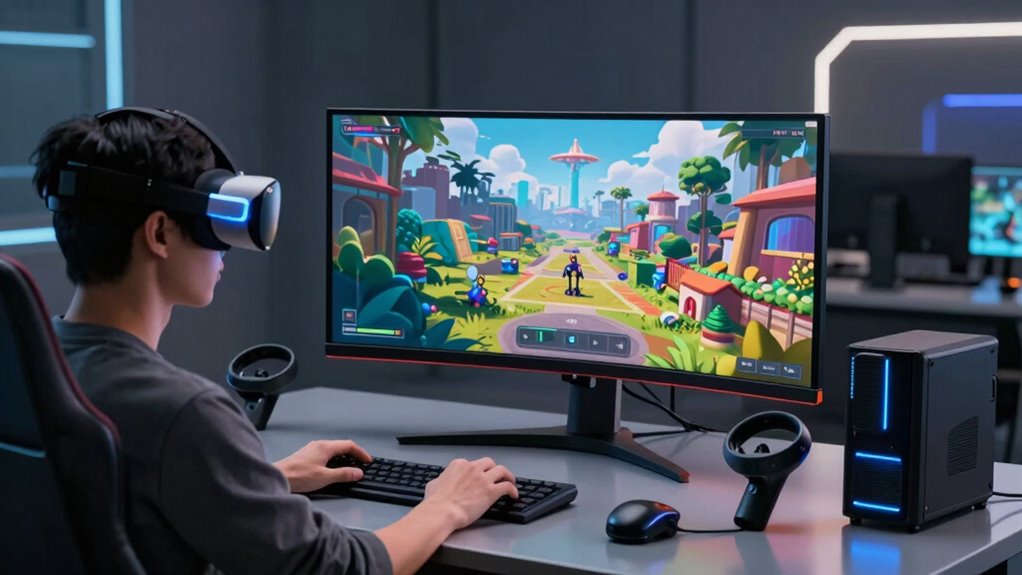

Finding the right VR headset for PC can feel overwhelming with so many options available. The Meta Quest 3 512GB stands out as the best overall choice, offering a strong balance of performance and versatility. For those prioritizing high-end visuals, the Pimax Crystal Light delivers an impressive 8K resolution per eye, though it comes with a higher price tag. Meanwhile, the HTC Vive Focus Vision provides a compelling mixed reality experience for users interested in both VR and AR. As you compare these options, you’ll need to weigh factors like display quality, tracking accuracy, comfort, and compatibility. Continue reading for a detailed breakdown of each headset to find the best fit for your needs.
Listen free for 30 days with Audible
Thousands of audiobooks and originals — cancel anytime.
Start your free trialAs an affiliate, we earn on qualifying purchases.
Complete the kit
Key Takeaways
- High resolution and FOV are key differentiators for premium VR experiences, with options like Pimax and Crystal leading in visuals.
- Tracking accuracy and base station compatibility significantly impact immersion, especially in fast-paced or precision-required VR applications.
- Built-in wireless capabilities versus tethered setups create tradeoffs between convenience and performance.
- Price varies widely; premium headsets often include advanced features but may be overkill for casual users.
- Compatibility with SteamVR and other platforms is critical for accessing diverse content libraries and accessories.
| Meta Quest 3S 128GB VR Headset |  | Best Overall for Wireless Freedom | Storage: 128GB | Memory: 8GB RAM | Battery Life: 2+ hours | VIEW ON AMAZON | See Our Full Breakdown |
| HTC Vive Focus Vision — Mixed Reality and PC VR Headset with Controllers |  | Best for Advanced Mixed Reality and Versatility | Display: 5K resolution (2448 x 2448 per eye) | Field of View: up to 120° | Refresh Rate: 90 Hz | VIEW ON AMAZON | See Our Full Breakdown |
| Pimax Crystal Light VR Headset for PC, 2880×2880 per Eye, 8K QLED Display with Local Dimming, Inside-Out Tracking |  | Best for High-Resolution Visuals and Comfort | Resolution: 2880×2880 per eye | Display Technology: QLED with local dimming and HDR | Refresh Rate: Up to 120Hz | VIEW ON AMAZON | See Our Full Breakdown |
| DPVR E4 PC VR Headset, Virtual Reality Headset for PC, SteamVR, 120Hz |  | Best for Versatile and Affordable PC VR | Display Resolution: 3664 × 1920 | Refresh Rate: 72Hz, 90Hz, 120Hz | Field of View: 116° | VIEW ON AMAZON | See Our Full Breakdown |
| Oculus Rift S PC-Powered VR Gaming Headset |  | Best for Wide VR Library and Ease of Use | Display: Next-generation lenses | Tracking: Oculus Insight room-scale | Controllers: Oculus Touch | VIEW ON AMAZON | See Our Full Breakdown |
| Meta Quest 3 512GB Virtual Reality Headset (Renewed Premium) |  | Best Overall for Wireless, High-Resolution VR | Storage: 512GB | Display: 4K Infinite Display | Resolution: Nearly 30% sharper | VIEW ON AMAZON | See Our Full Breakdown |
| HTC Vive XR Elite with Deluxe Pack – Mixed Reality and PC VR Headset + Controllers |  | Best for Versatility with Mixed Reality and Standalone Use | Resolution: 3840 x 1920 | Field of View: 110° | Refresh Rate: 90Hz | VIEW ON AMAZON | See Our Full Breakdown |
| Valve Index Full VR Kit with Headphones, Base Station, and Controllers for Steam VR |  | Best for High-Fidelity, Precise PC VR Gaming | Compatibility: HTC Vive, Vive Pro | Sensors: 87 sensors for hand and finger tracking | Controller Features: Force sensors, finger tracking, customizable buttons | VIEW ON AMAZON | See Our Full Breakdown |
| Pimax Crystal Super VR Headset, 3840×3840 per Eye, Ultrawide, 140° FOV, Eye-Tracking, PC Connection |  | Best for Ultra-High-Resolution, Wide FOV VR | Resolution: 3840×3840 per eye | Field of View: 140° | Display Technology: QLED & Mini-LED with Local Dimming | VIEW ON AMAZON | See Our Full Breakdown |
| HTC Vive SteamVR Base Station 2.0 (Single) |  | Best for Precise Room-Scale Tracking | Includes: One base station, power adapter | Mounting: Standard threaded points | Cord Length: 8′ 2″ | VIEW ON AMAZON | See Our Full Breakdown |
| vr headsets for pc | Refresh Rate | Compatibility |
|---|---|---|
| Meta Quest 3S 128GB VR Headset | — | — |
| HTC Vive Focus Vision | 90 Hz | — |
| Pimax Crystal Light VR Headset | Up to 120Hz | SteamVR, Valve Index, HTC VIVE |
| DPVR E4 PC VR Headset | 72Hz, 90Hz, 120Hz | SteamVR, Windows 10/11 |
| Oculus Rift S PC-Powered VR Ga | — | PC-based VR gaming |
| Meta Quest 3 512GB Virtual Rea | — | — |
| HTC Vive XR Elite with Deluxe | 90Hz | — |
| Valve Index Full VR Kit with H | — | HTC Vive, Vive Pro |
| Pimax Crystal Super VR Headset | 90Hz and beyond | — |
| HTC Vive SteamVR Base Station | — | Vive Pro, Cosmos Elite |
More Details on Our Top Picks
Meta Quest 3S 128GB VR Headset
The Meta Quest 3S stands out as the premier choice for users who prioritize untethered VR experiences. Its wireless design eliminates the clutter of cables, offering greater freedom of movement compared to the Oculus Rift S, which requires a wired connection to a PC. The Quest 3S’s next-generation Snapdragon XR2 Gen 2 processor ensures smoother graphics and quicker load times, making it ideal for immersive gaming and mixed reality. The 128GB of storage balances ample space for games and apps, while the included 3-month Meta Horizon+ trial expands entertainment options. However, its reliance on battery power means it needs regular charging, and the premium price might be a barrier for budget-conscious buyers. If you want a portable, wireless VR headset with access to a large content library, this is the best pick.
Pros:- Wireless, untethered experience for unrestricted movement
- Enhanced graphics with next-gen processor for smoother gameplay
- Includes 3-month Meta Horizon+ trial with access to 40+ games
Cons:- Battery life limits extended gameplay sessions
- Premium pricing may be prohibitive for some users
Best for: Gamers and VR enthusiasts seeking a wireless, standalone experience with rich mixed reality features.
Not ideal for: Power users who prefer the highest graphical fidelity and customization, as the Quest 3S’s performance may lag behind high-end tethered options like the Valve Index.
- Storage:128GB
- Memory:8GB RAM
- Battery Life:2+ hours
- Processor:Snapdragon XR2 Gen 2
- Cameras:Dual RGB color cameras
- Included Trial:3 months of Meta Horizon+
Our verdict“The Meta Quest 3S is ideal for those who want a high-quality, wireless VR experience without sacrificing access to a broad content library.”
HTC Vive Focus Vision — Mixed Reality and PC VR Headset with Controllers
The HTC Vive Focus Vision appeals to users wanting a versatile mixed reality experience that supports both standalone and PC VR. Its impressive 5K resolution offers stunning visuals that surpass the clarity of the Oculus Rift S, especially in detailed environments. The device’s advanced eye, hand, face, and body tracking provide a level of realism that is hard to match, making it suitable for professional applications or highly immersive gaming. The hot-swappable batteries extend usage, but the setup can be complex because of multiple connectivity options, which might be overwhelming for newcomers. Its high price and limited info on PC compatibility may deter some potential buyers. This headset makes the most sense for experienced users who demand high fidelity and comprehensive tracking in mixed reality and PC VR.
Pros:- High-resolution 5K display delivers vivid, detailed visuals
- Advanced tracking for face, hand, eye, and body enhances realism
- Supports standalone and PC VR with flexible connectivity
Cons:- Setup complexity due to multiple connection options
- High cost may be a barrier for casual users
- Limited clarity on broad platform compatibility
Best for: Professional users and enthusiasts seeking high-resolution visuals and full-body tracking for demanding applications.
Not ideal for: Casual gamers or newcomers who prefer simple, plug-and-play VR without complex setup or high costs.
- Display:5K resolution (2448 x 2448 per eye)
- Field of View:up to 120°
- Refresh Rate:90 Hz
- Tracking:eye, hand, face, body
- Connectivity:Wi-Fi, Ethernet, DisplayPort
- Battery:Hot-swappable with reserve front battery
Our verdict“This headset is best suited for users who need high-end visuals and comprehensive tracking for immersive mixed reality experiences.”
Pimax Crystal Light VR Headset for PC, 2880×2880 per Eye, 8K QLED Display with Local Dimming, Inside-Out Tracking
The Pimax Crystal Light is tailored for users wanting ultra-sharp visuals and vibrant colors, thanks to its 2880×2880 per eye 8K QLED display with local dimming. Compared to the Oculus Rift S, which offers good but lower resolution, the Crystal Light provides a richer, more detailed image, ideal for flight sims and detailed virtual environments. Its lightweight design (815 grams) favors comfort during long sessions, but some may find it less adjustable or padded. The inside-out tracking simplifies setup, yet it demands a capable PC and compatible controllers for full functionality. The high refresh rate of up to 120Hz ensures smooth motion, though some may find the weight cumbersome for extended use. If you prioritize stunning visuals and comfort, this pick excels, especially for experienced VR users.
Pros:- High-resolution 8K QLED display offers vivid, detailed images
- Lightweight and ergonomic for prolonged use
- Wide compatibility with SteamVR, Valve Index, HTC VIVE
Cons:- Relatively heavy for some users at 815 grams
- Limited info on adjustable fit or padding
- Requires a powerful PC and compatible setup
Best for: High-end VR users and enthusiasts focused on visual fidelity and immersive experience for gaming or simulations.
Not ideal for: Casual users or those sensitive to headset weight, as the device is relatively heavy and may lack adjustable padding.
- Resolution:2880×2880 per eye
- Display Technology:QLED with local dimming and HDR
- Refresh Rate:Up to 120Hz
- Weight:815 grams
- Tracking:Inside-Out Camera Tracking
- Compatibility:SteamVR, Valve Index, HTC VIVE
Our verdict“This headset is perfect for VR enthusiasts demanding high-resolution visuals and comfort for extended gaming or simulation sessions.”
DPVR E4 PC VR Headset, Virtual Reality Headset for PC, SteamVR, 120Hz
The DPVR E4 offers a compelling entry point for PC VR users who want a balance of quality and affordability. Its high-resolution display (3664 × 1920) surpasses many standard headsets, including the Oculus Rift S, delivering sharp visuals. The adjustable refresh rate up to 120Hz allows for smoother motion, which is key for fast-paced gaming or professional training. Its flip-up design makes it easy to switch between virtual and real worlds, a feature less prominent in tethered headsets like the Valve Index. However, it demands a potent PC with specific hardware to run effectively, and its lightweight build (285g) might compromise durability. This headset suits users who want a flexible, high-quality PC VR experience without the premium price tag.
Pros:- High-resolution display with sharp visuals
- Adjustable refresh rates up to 120Hz for smooth gameplay
- Flip-up design for easy VR-to-reality transition
Cons:- Requires a high-performance PC with specific hardware
- Limited to SteamVR applications
- Lightweight frame might reduce durability
Best for: VR gamers and professionals seeking a high-resolution, versatile headset with a quick transition between virtual and real environments.
Not ideal for: Users with less powerful PCs or those seeking a more durable, rugged device for extended use.
- Display Resolution:3664 × 1920
- Refresh Rate:72Hz, 90Hz, 120Hz
- Field of View:116°
- Weight:285g
- Tracking:6DoF
- Compatibility:SteamVR, Windows 10/11
Our verdict“This headset is well-suited for users who need a high-res, flexible PC VR device with quick transition features, provided their PC can support it.”
Oculus Rift S PC-Powered VR Gaming Headset
The Oculus Rift S is a reliable choice for gamers who want a straightforward, PC-powered VR setup. Its improved optics provide sharper visuals compared to older models, and the room-scale Oculus Insight tracking system eliminates the need for external sensors, simplifying setup—something the HTC Vive Focus Vision lacks. The ergonomic halo headband ensures comfort during long gaming sessions, while the Oculus Touch controllers deliver precise interaction. However, the need for a Facebook account and the absence of standalone functionality may deter privacy-conscious users or those seeking a truly wireless experience. Additionally, system requirements can be demanding for optimal performance. Overall, the Rift S makes sense for gamers who want a large game library and an easy-to-use VR headset without fussing over complex configurations.
Pros:- Large selection of VR games available
- Sharper optics improve visual clarity
- Room-scale tracking without external sensors
Cons:- Requires a Facebook account, raising privacy concerns
- No standalone mode, needs PC connection
- Higher system requirements for optimal performance
Best for: Casual to mid-level gamers seeking a broad library and simple setup for PC VR gaming.
Not ideal for: Power users who prefer the latest in tracking or wireless features, as the Rift S is tethered and less advanced in tracking technology.
- Display:Next-generation lenses
- Tracking:Oculus Insight room-scale
- Controllers:Oculus Touch
- Design:Ergonomic Halo headband
- Compatibility:PC-based VR gaming
- Account Requirement:Facebook account required
Our verdict“This headset is best for gamers who want a wide game library with straightforward setup and reliable room-scale tracking, accepting the need for a PC connection.”
Meta Quest 3 512GB Virtual Reality Headset (Renewed Premium)
The Meta Quest 3 stands out for delivering nearly 30% sharper visuals with its 4K Infinite Display, making it ideal for immersive experiences that benefit from high resolution. Its wireless design offers freedom of movement unmatched by tethered models like the Valve Index, which requires a wired connection that can limit physical range. The upgraded Snapdragon XR2 Gen 2 graphics chip and 8GB RAM mean smoother gameplay, but the tradeoff is slightly limited battery life, which may not suit extended sessions. As a renewed product, some wear might be present, but overall it provides a compelling package for casual and serious VR users alike. While not perfect for those with limited play space or extended gaming marathons, its portability and high-res visuals make it a versatile choice for many.
Pros:- High-resolution 4K display for immersive visuals
- Wireless design enabling unrestricted movement
- Enhanced graphics and 8GB RAM for smooth performance
- Includes a 3-month trial of 40+ games
Cons:- Battery life may be insufficient for extended sessions
- Requires a compatible play space for optimal use
- Renewed product may show some wear
Best for: VR enthusiasts seeking wireless freedom and high resolution in a standalone headset
Not ideal for: Gamers who prioritize long battery life or have limited space for setup
- Storage:512GB
- Display:4K Infinite Display
- Resolution:Nearly 30% sharper
- Graphics Processor:Snapdragon XR2 Gen 2
- Memory:8GB RAM
- Battery Life:2+ hours
Our verdict“This headset is perfect for those wanting high-res, wireless VR without tethering constraints, provided battery life isn’t a primary concern.”
HTC Vive XR Elite with Deluxe Pack – Mixed Reality and PC VR Headset + Controllers
The HTC Vive XR Elite offers a compelling blend of high-resolution visuals and mixed reality features, with a resolution of 3840 x 1920 and a 110° FOV that rivals the Pimax Crystal’s expansive view. Its standalone capability means it’s more portable than tethered options like the Valve Index, yet it still supports PC VR via wired connection. The swappable battery extends usage, but with only up to 2 hours per charge, it might not satisfy those seeking prolonged play. Its full-color passthrough and hand tracking make it suitable for mixed reality applications, unlike the Valve Index which lacks passthrough. However, battery life and the dependence on a VR-ready PC for some features limit its all-in-one appeal.
Pros:- High-resolution display with immersive graphics
- Standalone design with no base stations needed
- Swappable battery for extended use
- Full-color passthrough for mixed reality
Cons:- Battery life may limit longer gaming sessions
- Hand tracking depends heavily on VR titles
- Requires a VR-ready PC for full PC VR experience
Best for: Mixed reality creators and gamers who want flexibility in portable and PC VR modes
Not ideal for: Players expecting long extended sessions or those with limited PC compatibility
- Resolution:3840 x 1920
- Field of View:110°
- Refresh Rate:90Hz
- Battery Life:Up to 2 hours
- Adjustments:Stepless IPD and diopter
- Features:Mixed Reality, Hand Tracking, Hot-swappable Battery
Our verdict“Ideal for users who want a versatile mixed reality headset that works both portably and with a PC, despite some battery limitations.”
Valve Index Full VR Kit with Headphones, Base Station, and Controllers for Steam VR
The Valve Index stands out for its advanced controllers with finger tracking and high-fidelity audio, making it a favorite among dedicated gamers who value precise hand input. Its comfort and customizable controls surpass many tethered headsets like the Meta Quest 3, but setup complexity can be a hurdle, especially for newcomers. The need for external base stations for room-scale tracking adds to the installation time and cost, but ensures very accurate motion tracking in large spaces. Compared to the Pimax Crystal, the Valve Index offers a more straightforward setup and excellent software support, though it sacrifices the ultra-wide FOV and higher resolution of the Pimax. It suits serious VR players willing to invest in a premium experience.
Pros:- Advanced sensors enable precise hand and finger tracking
- Comfortable, sweat-wicking straps for long sessions
- Customizable buttons for tailored gameplay
- Excellent compatibility with Steam VR ecosystem
Cons:- Complex setup with external base stations required
- Limited compatibility outside Steam VR platforms
Best for: Dedicated PC gamers seeking precise tracking and premium audio in a wired setup
Not ideal for: Casual users or those with limited space or technical expertise for setup
- Compatibility:HTC Vive, Vive Pro
- Sensors:87 sensors for hand and finger tracking
- Controller Features:Force sensors, finger tracking, customizable buttons
- Material:High-quality, sweat-wicking
Our verdict“Best suited for serious PC gamers who prioritize tracking accuracy and audio quality over ease of setup.”
Pimax Crystal Super VR Headset, 3840×3840 per Eye, Ultrawide, 140° FOV, Eye-Tracking, PC Connection
The Pimax Crystal offers an ultra-sharp visual experience with 3840×3840 pixels per eye and an expansive 140° FOV, making it ideal for immersive flight and racing simulations. Its high-resolution display substantially reduces the screen-door effect, outperforming the Meta Quest 3 in clarity but demanding a powerful PC to handle the graphics load. The eye-tracking feature adds realism and interaction depth, while the ergonomic design ensures comfort during extended play. The complex setup and high cost mean it’s best suited for enthusiasts with a capable system and specific needs for visual fidelity. If you prioritize peripheral awareness and visual detail, this headset stands out, but it’s less practical for casual users.
Pros:- Ultra-sharp 3840×3840 per eye resolution minimizes screen-door effect
- Expansive 140° FOV enhances peripheral immersion
- High-fidelity spatial audio and noise-canceling mic
- Ergonomic, balanced design for long sessions
Cons:- Requires a very powerful PC to fully utilize high-resolution display
- High cost and complex setup may deter beginners
- Potentially heavy for extended wear
Best for: VR enthusiasts with high-end PCs seeking maximum visual fidelity and wide FOV
Not ideal for: Casual gamers or users with limited PC hardware capacity
- Resolution:3840×3840 per eye
- Field of View:140°
- Display Technology:QLED & Mini-LED with Local Dimming
- Refresh Rate:90Hz and beyond
- Eye-Tracking:Yes
- Connection:DisplayPort (DP)
Our verdict“Perfect for users who demand the highest visual fidelity and wide FOV, balanced against the need for a powerful PC and technical setup.”
HTC Vive SteamVR Base Station 2.0 (Single)
The Vive SteamVR Base Station 2.0 is essential for accurate room-scale tracking in a PC VR setup, especially when paired with headsets like the Valve Index. Its precise spatial positioning makes it invaluable for large, dedicated VR spaces, but only one station is included, which limits coverage unless additional units are purchased. Mounting setup is required, adding to installation time. Compared with the Meta Quest 3, which is wireless and standalone, the base station provides unmatched tracking accuracy for wired setups, making it a key component for serious VR gaming and development. It’s less suited for casual or portable VR configurations, where simplicity and mobility are priorities.
Pros:- Provides highly accurate room-scale tracking
- Compatible with multiple HTC Vive headsets
- Includes essential mounting accessories
Cons:- Only one base station included, additional units needed for larger areas
- Requires detailed mounting and calibration
Best for: VR users with dedicated room-scale spaces seeking optimal tracking accuracy
Not ideal for: Casual or mobile VR users who prefer wireless and plug-and-play solutions
- Includes:One base station, power adapter
- Mounting:Standard threaded points
- Cord Length:8′ 2″
- Compatibility:Vive Pro, Cosmos Elite
Our verdict“Ideal for dedicated VR setups where precise room-scale tracking is a priority, provided users are prepared for installation complexity.”
How We Picked
Our evaluation focused on performance, comfort, build quality, and value. We prioritized headsets that offer reliable tracking, high-resolution displays, and broad compatibility with PC-based VR content. Ease of setup and user interface were also key considerations, especially for newcomers. The ranking reflects a balance between high-end features and affordability, ensuring options suit various budgets and experience levels. We aimed to highlight products that stand out for their innovation, usability, and longevity in the evolving VR landscape.| vr headsets for pc | Compatibility |
|---|---|
| Meta Quest 3S 128GB VR Headset | — |
| HTC Vive Focus Vision | — |
| Pimax Crystal Light VR Headset | SteamVR, Valve Index, HTC VIVE |
| DPVR E4 PC VR Headset | SteamVR, Windows 10/11 |
| Oculus Rift S PC-Powered VR Ga | PC-based VR gaming |
| Meta Quest 3 512GB Virtual Rea | — |
| HTC Vive XR Elite with Deluxe | — |
| Valve Index Full VR Kit with H | HTC Vive, Vive Pro |
| Pimax Crystal Super VR Headset | — |
| HTC Vive SteamVR Base Station | Vive Pro, Cosmos Elite |
Factors to Consider When Choosing Vr Headsets For Pc
Choosing the right VR headset for PC involves more than just looking at specs. It’s important to consider how the headset’s features align with your use case, whether gaming, professional work, or social VR. The right device should balance performance with comfort, and be compatible with your existing hardware and ecosystem. Being aware of potential pitfalls, like overpaying for unnecessary features or choosing incompatible accessories, can save you time and money. This guide will walk you through key factors to consider for a satisfying VR experience.Display Quality and Resolution
Display resolution directly impacts visual clarity, making high-res headsets ideal for immersive experiences and reducing eye strain. Models like Pimax and Crystal offer 8K or higher resolutions, but they often come with increased cost and processing needs. Lower-resolution options can still be enjoyable but might compromise on detail and realism. Consider your PC’s graphics capabilities and whether you prioritize visual fidelity or smoother performance, especially if you plan to use VR intensively or professionally.
Tracking and Sensors
Accurate tracking ensures your movements are precisely reflected in the virtual environment. Headsets that use external base stations, like HTC Vive and Valve Index, typically offer superior fidelity but require more setup space. Inside-out tracking, found in newer headsets like Meta Quest 3, simplifies setup but may sacrifice some precision. Think about your play area size, the type of VR activities you prefer, and whether you need room-scale tracking for full-body immersion.
Comfort and Fit
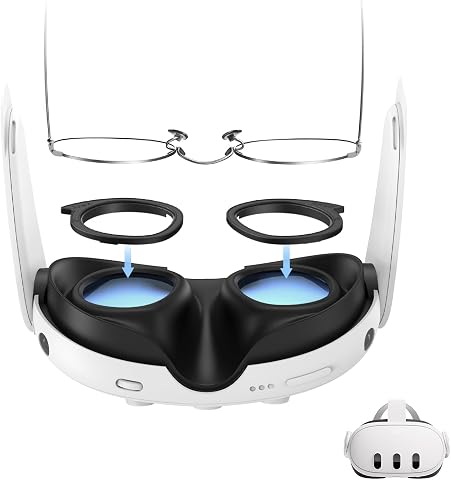
Comfort is often overlooked but crucial for extended VR sessions. Heavier headsets or those with poorly balanced weight distribution can cause fatigue or discomfort. Adjustable straps, padding, and ventilation help. If you have a larger head or glasses, check for compatibility and ergonomic features. Remember, a comfortable headset encourages longer, more enjoyable VR experiences, especially during extended gaming or training sessions.
Wired vs Wireless
Wired headsets generally offer better performance with lower latency and higher fidelity, but can restrict movement and create cable clutter. Wireless options provide freedom of movement but might involve tradeoffs like slightly reduced visual quality or increased latency. Consider your activity type—fast-paced games or professional CAD work may benefit from wired setups, while casual or social VR can lean toward wireless for convenience.
Platform Compatibility and Content Library
Ensure the headset is compatible with your preferred PC platform, whether SteamVR, Oculus PC, or others. Some headsets, like Meta Quest series, rely on software bridges or wireless streaming to connect to PCs, which can introduce lag or setup complexity. A broad content library enhances your experience, so check what games and applications are supported natively or through compatibility layers. This consideration helps you avoid frustrations and ensures access to your favorite VR content.
Frequently Asked Questions
Can I use a standalone VR headset like Meta Quest 3 for PC VR gaming?
Yes, many standalone headsets like Meta Quest 3 can connect to a PC via Oculus Link or Air Link, enabling you to access PC VR content. However, this setup requires a compatible, high-quality USB cable or a strong Wi-Fi connection for wireless streaming. Keep in mind that performance may vary depending on your PC specs and network stability. For the smoothest experience, a dedicated wired connection generally offers lower latency and higher quality, but wireless options improve mobility and ease of use.
Is it worth investing in the highest-resolution headsets like Pimax or Crystal?
High-resolution headsets like Pimax and Crystal provide stunning visuals and greater immersion, especially for detailed simulations or professional use. However, they often demand more from your PC hardware, including a powerful GPU and CPU, and can be more expensive. If your PC isn’t equipped for high-end VR or you’re mainly interested in casual gaming, a lower-resolution but more affordable headset might serve you better. Consider your intended use and hardware capacity before opting for ultra-high-resolution devices.
How important is tracking accuracy for different types of VR experiences?
Tracking accuracy is vital for fast-paced gaming, competitive VR, and applications requiring precise movement, like CAD or training simulations. External sensors or base stations typically offer superior tracking fidelity, which enhances immersion and reduces frustrations caused by lag or lost signals. For casual or social VR, inside-out tracking may suffice, offering easier setup but potentially less precision. Matching your tracking needs with your VR activities ensures a satisfying experience.
What should I prioritize: comfort or performance?
While performance in terms of display quality and tracking is essential, comfort often determines how long you can enjoy VR sessions. A headset that causes discomfort after a short period can limit your overall experience. Look for adjustable straps, light weight, and breathable padding. If you plan to use VR extensively, investing in a comfortable model with high performance makes sense, but don’t overlook ergonomics in favor of specs alone.
Are base stations necessary for a good PC VR experience?
Base stations provide highly accurate tracking and are preferred for high-end VR setups, especially in larger play areas. They enable precise tracking of controllers and full-body movement, which enhances immersion. However, they require more space and setup time. Alternatively, inside-out tracking headsets eliminate the need for external sensors, offering greater convenience at some cost to tracking fidelity. Your choice depends on your space, budget, and the level of tracking precision you need.
Conclusion
If you’re a casual user or just starting with VR, the Meta Quest 3 offers great versatility and ease of use. For demanding gamers seeking high-fidelity visuals and precise tracking, the Valve Index or Pimax Crystal represent premium choices. Professionals or enthusiasts needing the best clarity and immersion might lean toward the Pimax Crystal Light or Crystal Super. Budget-conscious buyers should consider the DPVR E4 for solid performance at a lower price point. Ultimately, your decision should align with your specific needs, space, and hardware compatibility, ensuring a satisfying VR experience in 2026.
As an affiliate, we earn on qualifying purchases.Flea & tick season Picks
flea and tick prevention