
Among these tankless reverse osmosis undersink systems, I’d lead with the Waterdrop G3P800 for its high stated capacity and established feature balance; the iSpring RO500AK stands out for alkaline remineralization, while the GLACIER FRESH GFU03 offers an electric-free alternative. The main choice is between higher daily output and added features such as mineralization, alongside practical differences in plumbing, filter replacement, and wastewater ratios. A tankless design saves storage space, but it still needs room for its filter body and access to a drain and power when the model requires them. I also separate the renewed Waterdrop G2P600 listing from the new G2P600 because condition can affect what a buyer receives. Read on for the full breakdown of all 15 systems and how I’d match them to different kitchens.

Get your wardrobe favorites delivered free — and shop member deals
- Fast, free delivery on millions of items
- Access to Prime Big Deal Days deals on October 6–7
- Prime Video, Amazon Music and more included
Key Takeaways
- The G3P800 and G5P700A lead on stated capacity: Their 800 and 700 GPD figures suit households with heavier water demand, but capacity alone does not establish actual faucet flow or output under every water condition.
- Alkaline and mineralization features define several distinct options: The iSpring RO500AK, Waterdrop G5P700A, WD-T4-A, X8-WAN, G5P500A, and T3-M add a remineralization angle, while the G3P800 and plain G2P600 keep the choice focused on RO filtration.
- The electric-free GFU03 is the outlier: It may suit buyers who want to avoid powered operation, but it should not be compared with powered high-capacity systems as if their installation and output claims were interchangeable.
- Same-family names need close inspection: The renewed G2P600 and standard G2P600 share a model name, while G3P600, G3P800, and G5P500A are separate choices with different stated capacities or features.
- Flow rate is only one part of fit: Filter availability, replacement steps, required power, drain connection, and the space under the sink can matter more day to day than a higher GPD figure.
| GLACIER FRESH GFU03 Electric-Free Reverse Osmosis Water Filter 800 GPD |  | Best for Power-Free Installation | Filtration: 5-stage reverse osmosis | Pure-to-drain ratio: 3:1 | Maximum flow rate: 0.6 GPM | VIEW ON AMAZON | See Our Full Breakdown |
| VonWater 600 GPD Tankless Under-Sink Reverse Osmosis Water Filtration System |  | Best for Straightforward Filter Changes | Brand and model: VonWater V2-600N | Filtration: 7-stage PC + RO | Flow rate: 0.42 GPM | VIEW ON AMAZON | See Our Full Breakdown |
| Waterdrop G2P600 Reverse Osmosis System, TDS Reduction, 7 Stage Water Filtration, NSF/ANSI 372 Certified, 600 GPD Tankless RO System, Under Sink, 2:1 Pure to Drain (Renewed) |  | Best Renewed-System Option | Condition: Professionally renewed | Filtration: 7-stage reverse osmosis | Pure-to-drain ratio: 2:1 | VIEW ON AMAZON | See Our Full Breakdown |
| iSpring RO500AK Alkaline Tankless Reverse Osmosis System, 500 GPD |  | Best for Alkaline Remineralization | Certification: NSF/ANSI 58 | Flow rate: Up to 0.4 GPM | Pure-to-waste ratio: 2:1 | VIEW ON AMAZON | See Our Full Breakdown |
| Waterdrop G5P700A Tankless Alkaline Reverse Osmosis Water Filter, 700 GPD |  | Best for Appliance Connections | Model: Waterdrop G5P700A | Filtration: 8-stage reverse osmosis with alkaline mineralization | RO membrane: 0.0001 μm | VIEW ON AMAZON | See Our Full Breakdown |
| Waterdrop WD-T4-A 10-Stage Alkaline Tankless Reverse Osmosis Water Filter System |  | Best for Two Water Options | Filtration stages: 10 | Capacity: 450 gallons per day | Pure-to-drain ratio: 2:1 | VIEW ON AMAZON | See Our Full Breakdown |
| Waterdrop X8-WAN Alkaline Mineral Tankless Reverse Osmosis System |  | Best High-Capacity Alkaline Pick | Filtration: 10-stage; 0.0001 μm RO membrane | Capacity: 800 gallons per day | Pure-to-drain ratio: 2:1 | VIEW ON AMAZON | See Our Full Breakdown |
| Waterdrop T3-C Tankless Reverse Osmosis Water Filtration System, 450 GPD |  | Best Compact Installation Flexibility | Filtration stages: 8 | RO membrane: 0.0001 μm | Flow capacity: 450 gallons per day | VIEW ON AMAZON | See Our Full Breakdown |
| Waterdrop G3P800 Tankless Reverse Osmosis Water Filter System |  | Best for High Output and Water Efficiency | Filtration stages: 10 | Capacity: 800 gallons per day | Pure-to-drain ratio: 3:1 | VIEW ON AMAZON | See Our Full Breakdown |
| Waterdrop G5P500A Tankless Reverse Osmosis System with Alkaline Mineralization |  | Best Mid-Capacity Mineralizing Pick | Filtration: 8-stage reverse osmosis | RO membrane: 0.0001 μm | Flow capacity: 500 gallons per day | VIEW ON AMAZON | See Our Full Breakdown |
| Philips 600 GPD Tankless Reverse Osmosis Water Filtration System |  | Best for Efficient, Low-Maintenance Filtration | Model: AUT9360/37 | Purification method: Reverse osmosis, carbon block, post-carbon block | Production capacity: 600 GPD | VIEW ON AMAZON | See Our Full Breakdown |
| Waterdrop G2P600 Tankless Under-Sink Reverse Osmosis Water Filtration System | | Best Value for Straightforward High Output | Filtration: 7-stage reverse osmosis | Maximum production: 600 gallons per day | Maximum flow rate: 25 milliliters per second | VIEW ON AMAZON | See Our Full Breakdown |
| Waterdrop T3-M Remineralization Reverse Osmosis Water Filter, 450 GPD |  | Best for Remineralized RO Water | Model: WD-RT34-WMA | Filtration stages: 9-stage | Flow rate: 450 GPD | VIEW ON AMAZON | See Our Full Breakdown |
| VIOMI V6 600GPD Under Sink Tankless Reverse Osmosis Water Filtration System | 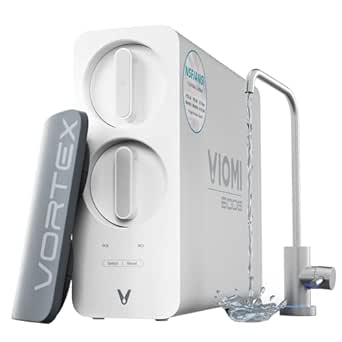 | Best Certified Pick for Lead Reduction | Capacity: 600 GPD | Filtration: 9-stage reverse osmosis | Pure-to-drain ratio: 3:1 | VIEW ON AMAZON | See Our Full Breakdown |
| Waterdrop G3P600 Tankless Reverse Osmosis Water Filter System, 600 GPD |  | Best for Smart Faucet Monitoring | Filtration stages: 8 | Daily capacity: 600 gallons | Maximum flow rate: 0.42 gpm | VIEW ON AMAZON | See Our Full Breakdown |
| tankless reverse osmosis undersink system | Pure-to-drain ratio | Dimensions | Filtration |
|---|---|---|---|
| GLACIER FRESH GFU03 Electric-F | 3:1 | 13.58 × 8.27 × 16.54 inches | 5-stage reverse osmosis |
| VonWater 600 GPD Tankless Unde | 2:1 | 13.9 × 4.9 × 16.2 inches | 7-stage PC + RO |
| Waterdrop G2P600 Reverse Osmos | 2:1 | 17.3 × 5.8 × 14 inches | 7-stage reverse osmosis |
| iSpring RO500AK Alkaline Tankl | — | 17.5 × 5.2 × 16.25 inches | — |
| Waterdrop G5P700A Tankless Alk | 2:1 | — | 8-stage reverse osmosis with alkaline mineralization |
| Waterdrop WD-T4-A 10-Stage Alk | 2:1 | 16.54 × 6.22 × 17.95 in | — |
| Waterdrop X8-WAN Alkaline Mine | 2:1 | 18.2 × 6.25 × 16.72 in | 10-stage; 0.0001 μm RO membrane |
| Waterdrop T3-C Tankless Revers | 2:1 | 13.39 × 6.22 × 17.95 in | — |
| Waterdrop G3P800 Tankless Reve | 3:1 | 18.12 × 5.67 × 17.72 in | — |
| Waterdrop G5P500A Tankless Rev | 2:1 | 16.69 × 5.69 × 13.9 in | 8-stage reverse osmosis |
| Philips 600 GPD Tankless Rever | 2.3:1 | 15.8 × 4.3 × 12.3 in | — |
| Waterdrop G2P600 Tankless Unde | 2:1 | 17.3 × 5.9 × 14 in | 7-stage reverse osmosis |
| Waterdrop T3-M Remineralizatio | 2:1 | 13.39 × 6.22 × 17.95 in | — |
| VIOMI V6 600GPD Under Sink Tan | 3:1 | 16.3 × 5 × 12.8 in | 9-stage reverse osmosis |
| Waterdrop G3P600 Tankless Reve | — | — | — |
More Details on Our Top Picks
GLACIER FRESH GFU03 Electric-Free Reverse Osmosis Water Filter 800 GPD
The GFU03 stands apart by operating without electricity, making it the clearest fit here for buyers who want a tankless RO system but lack a convenient outlet under the sink. Its listed 800 GPD capacity is higher than the 600 GPD VonWater and renewed Waterdrop G2P600, though actual flow depends on inlet pressure and the manufacturer recommends at least 40 PSI. The advertised 3:1 pure-to-drain ratio also beats those models’ 2:1 ratios on paper. The tradeoff is a larger cabinet footprint than some compact systems, and installation still calls for drilling a faucet hole. Its claims of broad contaminant reduction and standards compliance may appeal to filtration-focused households, but buyers should verify the certifications relevant to their needs. Choose it for a high-capacity, outlet-free setup; skip it if your cabinet is tight or drilling is not an option.
Pros:- Water-powered design needs no electrical outlet and is described as quiet.
- 800 GPD stated capacity exceeds the 600 GPD VonWater and renewed Waterdrop G2P600.
- Advertised 3:1 purified-water-to-drain ratio uses less drain water per volume of purified water than the 2:1 alternatives listed here.
- Pull-out cartridge design is intended to make filter changes quick.
Cons:- Actual output depends on inlet pressure; the manufacturer recommends at least 40 PSI for better flow.
- Faucet installation requires drilling a 1/2- to 1-inch hole.
- Its 16.54-inch height may not suit compact under-sink cabinets.
Best for: Households seeking high stated capacity and a tankless RO system that does not need an under-sink electrical outlet.
Not ideal for: Renters or owners with limited cabinet clearance who cannot drill a faucet hole or accommodate a 16.54-inch-tall unit.
- Filtration:5-stage reverse osmosis
- Pure-to-drain ratio:3:1
- Maximum flow rate:0.6 GPM
- Power:Water-powered; no electricity
- Dimensions:13.58 × 8.27 × 16.54 inches
- Operating pressure:0.25–0.7 MPa
- Temperature range:41–100 °F
- Listed standards:NSF/ANSI 58, 372, and 401
Our verdict“Choose the GFU03 if you want high stated capacity and no electrical connection, provided your cabinet fits and you can drill for its faucet.”
VonWater 600 GPD Tankless Under-Sink Reverse Osmosis Water Filtration System
The VonWater pairs a 600 GPD rating with seven filtration stages, putting it in the same capacity class as the renewed Waterdrop G2P600 without the refurbished-product status. Its tool-free filter replacement is the main everyday convenience: routine cartridge changes should involve less fiddling than systems that rely on more involved filter access. A 2:1 pure-to-drain ratio is competitive with the iSpring RO500AK, while the stated 0.42 GPM flow rate gives a useful point of comparison. The tradeoffs are practical rather than subtle: installation needs two drilled holes and an electrical outlet, so it is a poor match for many rentals or sinks without spare counter space. Its listed NSF/ANSI 372 certification covers lead-free materials, not a broad contaminant-reduction certification. Pick it for convenient maintenance, not for an outlet-free or drilling-free setup.
Pros:- Seven-stage filtration and a stated reduction of up to 99% of listed contaminants.
- Tool-free filter replacement simplifies routine cartridge changes.
- 2:1 pure-to-drain ratio matches the listed ratio of the iSpring RO500AK.
- Tankless format avoids the footprint of a separate storage tank.
Cons:- Installation requires drilling two holes for faucet and drain connections.
- Requires an electrical outlet under the sink.
- NSF/ANSI 372 certification is for lead-free materials, not a broad performance claim.
Best for: Homeowners who can drill for a faucet and drain connection and want a 600 GPD system with tool-free filter replacement.
Not ideal for: Renters, kitchens without an accessible outlet, or buyers seeking a system whose listed certification covers contaminant reduction rather than lead-free materials.
- Brand and model:VonWater V2-600N
- Filtration:7-stage PC + RO
- Flow rate:0.42 GPM
- Pure-to-drain ratio:2:1
- Dimensions:13.9 × 4.9 × 16.2 inches
- Filter life:RO filter: 12–24 months; PC filter: 6–12 months
- Certification:NSF/ANSI 372 lead-free materials
- Installation requirements:Two drilled holes and an electrical outlet
Our verdict“Choose the VonWater if easy filter changes matter most and you have the outlet and drilling access its installation requires.”
Waterdrop G2P600 Reverse Osmosis System, TDS Reduction, 7 Stage Water Filtration, NSF/ANSI 372 Certified, 600 GPD Tankless RO System, Under Sink, 2:1 Pure to Drain (Renewed)
This professionally renewed G2P600 offers a 600 GPD rating, seven-stage filtration, and a 2:1 pure-to-drain ratio in a tankless format. Against the new VonWater 600 GPD system, the key distinction is not capacity or drain ratio: it is that this Waterdrop listing is refurbished, with two filters included according to the product description. That may suit a buyer comfortable with a renewed unit, but it makes condition and support details especially relevant to check before purchase. The system’s NSF/ANSI 372 certification applies to lead-free materials, and the supplied information does not establish NSF/ANSI 58 performance certification. Its listed dimensions and 25.4-pound weight also call for a cabinet-fit check. I would shortlist it when the renewed status is acceptable and the included filters fit your plans; buyers wanting a new unit should compare the VonWater instead.
Pros:- 600 GPD rated capacity and 2:1 pure-to-drain ratio.
- Seven-stage filtration in a tankless under-sink design.
- Two filters are included according to the product description.
- NSF/ANSI 372 certification covers lead-free materials.
Cons:- Professionally renewed rather than sold as a new unit.
- The listed certification is for lead-free materials; the supplied details do not show NSF/ANSI 58 performance certification.
- At 25.4 pounds and 17.3 inches long, it needs a careful cabinet-fit check.
Best for: Buyers comfortable choosing a professionally renewed appliance who want a 600 GPD tankless system and two filters included in the package.
Not ideal for: Shoppers who require a new system, want clearly stated performance certification for contaminant reduction, or have limited cabinet space.
- Condition:Professionally renewed
- Filtration:7-stage reverse osmosis
- Pure-to-drain ratio:2:1
- Maximum flow rate:25 mL/s
- Dimensions:17.3 × 5.8 × 14 inches
- Weight:25.4 lb
- Certification:NSF/ANSI 372
- Included filters:Two filters
Our verdict“Choose this renewed G2P600 if refurbished status is acceptable and its included filters and dimensions suit your installation; otherwise, compare it with the new VonWater.”
iSpring RO500AK Alkaline Tankless Reverse Osmosis System, 500 GPD
The iSpring RO500AK is the lower-capacity, feature-focused choice for buyers who want remineralized water rather than the highest output in this group. Its NSF/ANSI 58 certification gives it a distinct documentation advantage over the VonWater and renewed Waterdrop G2P600, whose supplied certification details cover lead-free materials. The iSpring also adds an alkaline remineralization stage, plus auto-flush and filter-change alerts—useful touches for people who want system prompts and mineral addition without choosing the 700 GPD Waterdrop G5P700A. The tradeoff is its 500 GPD rating, below every other system in this batch, and it still needs electricity. Its 17.5-inch length may also limit cabinet fit. Choose it for its certification, remineralization, and alerts; skip it if raw capacity or outlet-free operation is your priority.
Pros:- NSF/ANSI 58 certified for TDS reduction.
- Alkaline filter adds minerals back to treated water.
- Auto-flush and filter-change alerts add maintenance prompts.
- 2:1 pure-to-waste ratio and up to 0.4 GPM flow rate.
Cons:- 500 GPD rating is lower than the other systems in this batch.
- Requires a corded electrical connection.
- Filter cartridges need periodic replacement.
Best for: Buyers who prioritize NSF/ANSI 58 certification, alkaline remineralization, and automatic flush and filter reminders over maximum capacity.
Not ideal for: Large households focused on the highest listed output, or kitchens without an electrical outlet under the sink.
- Certification:NSF/ANSI 58
- Flow rate:Up to 0.4 GPM
- Pure-to-waste ratio:2:1
- Contaminant reduction:Up to 99% of listed contaminants
- Dimensions:17.5 × 5.2 × 16.25 inches
- Operating pressure:15–70 psi
- Maximum supported TDS:1000 ppm
- Power and features:Corded electric; alkaline remineralization, auto-flush, and filter reminder
Our verdict“Choose the iSpring if certification and remineralization matter more to you than the higher capacity offered by the Waterdrop G5P700A.”
Waterdrop G5P700A Tankless Alkaline Reverse Osmosis Water Filter, 700 GPD
The Waterdrop G5P700A combines 700 GPD capacity with alkaline mineralization, making it a middle ground between the 800 GPD electric-free GLACIER FRESH GFU03 and the lower-capacity, remineralizing iSpring RO500AK. Its 8-stage filtration adds calcium, magnesium, sodium, and potassium after RO treatment, while appliance connections for a refrigerator or ice maker make it more flexible than systems presented primarily for a dedicated drinking-water faucet. The 2:1 pure-to-drain ratio is solid, though it does not match the GFU03’s advertised 3:1 ratio. This system also requires electricity and countertop drilling for its faucet, and its 500 ppm maximum supported TDS is worth checking against your source water. It makes the most sense for buyers who want mineralized RO water routed to appliances, not for anyone seeking a power-free setup or the lowest-drain option.
Pros:- 700 GPD rated capacity is higher than the iSpring RO500AK’s 500 GPD.
- Alkaline stage adds calcium, magnesium, sodium, and potassium.
- Connections support compatible refrigerators and ice makers.
- NSF/ANSI 58 and 372 certifications are listed.
Cons:- Requires a corded electrical connection.
- Faucet installation requires drilling the countertop.
- Listed maximum supported water TDS is 500 ppm.
Best for: Homeowners who want remineralized RO water and plan to supply a refrigerator, ice maker, or other compatible water-using appliance.
Not ideal for: Renters unable to drill a faucet hole, homes without an under-sink outlet, or buyers whose source water exceeds the listed 500 ppm TDS limit.
- Model:Waterdrop G5P700A
- Filtration:8-stage reverse osmosis with alkaline mineralization
- RO membrane:0.0001 μm
- Pure-to-drain ratio:2:1
- Maximum flow rate:1.31 L/min
- Operating pressure:14.5–87 psi
- Maximum supported water TDS:500 ppm
- Certifications:NSF/ANSI 58 and 372
Our verdict“Choose the G5P700A if you want high capacity, mineralized water, and appliance connections, and can accommodate its power and drilling requirements.”
Waterdrop WD-T4-A 10-Stage Alkaline Tankless Reverse Osmosis Water Filter System
The WD-T4-A’s separate standard and alkaline water streams make it the most flexible pick here for households that want a choice at the faucet rather than mineralization in every glass. Its 450 GPD capacity and 2:1 pure-to-drain ratio suit everyday kitchen use, while the tankless body avoids the storage tank that can crowd a cabinet. Compared with the Waterdrop X8-WAN, it has lower stated capacity and lacks the X8’s smart faucet TDS display, but its two distinct water options give it a different kind of control. Filter alerts also help flag maintenance. The tradeoffs are practical: it needs an electrical connection, and faucet installation calls for countertop drilling, so renters or owners reluctant to alter a counter should skip it.
Pros:- Offers separate standard RO-purified and alkaline mineral-enhanced water streams
- 450 GPD capacity and a 2:1 pure-to-drain ratio
- Tankless design leaves out a bulky storage tank
- Filter-change lights and buzzer alerts flag maintenance needs
Cons:- Requires an electrical connection under the sink
- Faucet installation requires drilling the countertop
- Lower stated capacity than the 800 GPD Waterdrop X8-WAN and G3P800
Best for: Households that want both conventional RO water and a separate alkaline mineral-enhanced stream from one undersink system.
Not ideal for: Renters or kitchens without an accessible outlet, since operation needs power and the included faucet requires countertop drilling.
- Filtration stages:10
- Capacity:450 gallons per day
- Pure-to-drain ratio:2:1
- Water options:Standard RO-purified and alkaline mineral-enhanced
- Filter life:CF: 6 months; RO membrane: 24 months; CB: 12 months; alkaline mineralizer: 12 months
- Dimensions:16.54 × 6.22 × 17.95 in
- Power:Electrical connection required
- Certification:NSF/ANSI 372
Our verdict“Choose the WD-T4-A if having separate standard and alkaline water options matters more than maximum flow or a smart TDS display.”
Waterdrop X8-WAN Alkaline Mineral Tankless Reverse Osmosis System
The 800 GPD capacity makes the X8-WAN a stronger fit for busy kitchens than the 450 GPD WD-T4-A, especially when several people fill bottles or cook with filtered water throughout the day. It combines reverse osmosis with alkaline mineralization, adding calcium, magnesium, sodium, and potassium, and its smart faucet shows TDS levels and filter life at a glance. That display offers more live information than the alert-focused Waterdrop T3-C, though the T3-C has a narrower body and can be wall-mounted. The X8-WAN’s 2:1 pure-to-drain ratio is useful, but its higher flow does not remove the need for a drain connection or routine filter changes. It also requires corded power and countertop drilling, and its larger footprint may be harder to fit than the T3-C.
Pros:- 800 GPD stated capacity for high-demand kitchens
- Adds calcium, magnesium, sodium, and potassium through mineralization
- Smart faucet displays TDS levels and filter life
- NSF/ANSI 42, 58, and 372 certifications are listed
Cons:- Requires corded electrical power
- Faucet installation requires drilling a countertop hole
- Wider than the Waterdrop T3-C, which may limit cabinet placement
Best for: Larger households that want high stated output, alkaline mineralized water, and visible TDS and filter-life information at the faucet.
Not ideal for: Small or rental kitchens where countertop drilling, a power cord, or the system’s wider cabinet footprint is a problem.
- Filtration:10-stage; 0.0001 μm RO membrane
- Capacity:800 gallons per day
- Pure-to-drain ratio:2:1
- Mineralization:Adds calcium, magnesium, sodium, and potassium
- Dimensions:18.2 × 6.25 × 16.72 in
- Maximum supported TDS:500 ppm
- Certifications:NSF/ANSI 42, 58, and 372
- Power:Corded electric
Our verdict“Pick the X8-WAN for high-capacity alkaline water and faucet-side status information, provided your cabinet and countertop can accommodate it.”
Waterdrop T3-C Tankless Reverse Osmosis Water Filtration System, 450 GPD
The T3-C is the lineup’s compact placement pick: at 13.39 inches long and 6.22 inches wide, it is narrower than the WD-T4-A and can be installed under the sink or wall-mounted. That flexibility can matter more than extra stages when plumbing or stored items already compete for cabinet space. Its 450 GPD output, automatic flushing, and filter alerts cover practical daily-use needs without alkaline mineralization or the smart TDS faucet found on the Waterdrop X8-WAN. The X8-WAN is a better match for households seeking higher capacity and mineralized water; the T3-C instead keeps its feature set focused on RO filtration and fit. It still needs electricity and a drilled faucet opening, and its plastic construction and NSF/ANSI 372 certification do not provide the broader certification list stated for some alternatives.
Pros:- Compact 13.39-inch length and wall-mount installation option
- 450 GPD stated flow capacity
- Automatic flushing and smart filter alerts
- 2:1 pure-to-drain ratio
Cons:- Requires an electrical connection
- Included faucet requires countertop drilling
- Does not add minerals or provide the X8-WAN’s live TDS display
Best for: People with a crowded undersink cabinet who want a 450 GPD RO system that can also be wall-mounted.
Not ideal for: Buyers seeking alkaline mineralization, an 800 GPD system, or a faucet with live TDS readings.
- Filtration stages:8
- RO membrane:0.0001 μm
- Flow capacity:450 gallons per day
- Pure-to-drain ratio:2:1
- Installation:Under-sink or wall-mounted
- Filter life:CF: 6 months; CB: 12 months; RO: 24 months
- Dimensions:13.39 × 6.22 × 17.95 in
- Certification:NSF/ANSI 372
Our verdict“Choose the T3-C when cabinet fit and wall-mount flexibility matter more than alkaline water or high-capacity output.”
Waterdrop G3P800 Tankless Reverse Osmosis Water Filter System
The G3P800 stands apart from the alkaline models with 800 GPD output and a 3:1 pure-to-drain ratio: for every three cups of purified water, the listed ratio indicates one cup goes to drain. That makes it the clearest choice here for households that want high stated capacity while limiting wastewater relative to the 2:1 Waterdrop X8-WAN and G5P500A. Its smart LED faucet reports TDS and water-quality status, and the system carries NSF/ANSI 42, 53, 58, and 372 certifications. Unlike the X8-WAN, it does not add alkaline minerals, so buyers wanting mineralized water should choose that model instead. Installation is another tradeoff: the G3P800 requires two drilled holes and an electrical connection, so it is less suitable for rental kitchens or counters that cannot be modified.
Pros:- 800 GPD stated capacity for high-demand use
- 3:1 pure-to-drain ratio, better than the 2:1 ratio listed for the X8-WAN
- Smart LED faucet displays TDS and water-quality status
- NSF/ANSI 42, 53, 58, and 372 certifications are listed
Cons:- Requires drilling two holes for installation
- Needs corded electrical power
- Does not provide alkaline mineralization and still sends water to drain
Best for: High-use households that prioritize 800 GPD capacity, a 3:1 pure-to-drain ratio, and faucet-side TDS information over mineralized water.
Not ideal for: Renters or buyers who want alkaline water, lack an electrical outlet, or cannot drill the required two countertop holes.
- Filtration stages:10
- Capacity:800 gallons per day
- Pure-to-drain ratio:3:1
- Certifications:NSF/ANSI 42, 53, 58, and 372
- Dimensions:18.12 × 5.67 × 17.72 in
- Maximum supported TDS:500 ppm
- Temperature range:41–100 °F
- Power:Corded electric
Our verdict“The G3P800 suits busy households seeking high output and a more favorable stated pure-to-drain ratio, but not buyers who want mineralized water or a drill-free install.”
Waterdrop G5P500A Tankless Reverse Osmosis System with Alkaline Mineralization
The G5P500A is a 500 GPD middle ground for buyers who want alkaline mineralization but do not need the 800 GPD capacity of the Waterdrop X8-WAN or G3P800. Its 8-stage RO filtration and 2:1 pure-to-drain ratio pair with added calcium, magnesium, sodium, and potassium, giving it a mineral-enhanced option in a compact, tankless format. At 16.69 × 5.69 × 13.9 inches, it is shorter than the X8-WAN, which may help when cabinet height is tight. The tradeoff is a basic mechanical faucet rather than the X8-WAN’s smart display, and the supplied details list two pre-installed filters rather than three. It also needs corded power and a drilled countertop opening, so the form factor does not make installation modification-free.
Pros:- 500 GPD capacity exceeds the 450 GPD WD-T4-A and T3-C
- Adds calcium, magnesium, sodium, and potassium
- Shorter listed height than the Waterdrop X8-WAN
- 2:1 pure-to-drain ratio and NSF/ANSI 58 and 372 certifications
Cons:- Requires corded electrical power
- Faucet installation requires countertop drilling
- Mechanical faucet lacks the X8-WAN’s TDS and filter-life display
Best for: Households seeking mineralized RO water and moderate-to-high daily capacity in a shorter undersink unit.
Not ideal for: Buyers who need 800 GPD output, want faucet-side TDS and filter-life data, or cannot drill the countertop.
- Filtration:8-stage reverse osmosis
- RO membrane:0.0001 μm
- Flow capacity:500 gallons per day
- Pure-to-drain ratio:2:1
- Maximum flow rate:1.31 liters per minute
- Dimensions:16.69 × 5.69 × 13.9 in
- Certifications:NSF/ANSI 58 and 372
- Power:Corded electric
Our verdict“Choose the G5P500A for a shorter, mineralizing tankless system with more capacity than the 450 GPD options, not for smart faucet features or maximum output.”
Philips 600 GPD Tankless Reverse Osmosis Water Filtration System
The Philips AUT9360/37 is a strong fit for buyers who want high output without a storage tank and a system that asks little of them between filter changes. Its 2.3:1 pure-to-drain ratio and automatic flushing favor water efficiency, while tool-free filter replacement makes upkeep simpler than a more involved undersink setup. Compared with the Waterdrop G3P600, Philips specifies a lower operating-pressure range, but the G3P600 supports higher incoming TDS and includes a faucet display for monitoring TDS and filter life. Philips instead stands out with Aquaporin Inside membrane technology and a compact 4.3-inch width. The tradeoffs are a required power outlet and possible faucet-hole drilling; its 1/2-inch feed adapter may also need an additional adapter for some plumbing. I’d choose it for a tidy, lower-maintenance setup, not for built-in water monitoring.
Pros:- 600 GPD capacity with a 0.41 gpm maximum flow rate
- 2.3:1 pure-to-drain ratio and approximately 70% water recovery
- Automatic self-flushing and tool-free filter replacement
- Slim 4.3-inch width and up to 24-month life for the RO filter
Cons:- Requires a dedicated undersink power outlet
- Faucet installation may require drilling, and non-1/2-inch connections may need adapters
- No smart faucet TDS or filter-life display is specified
Best for: Households seeking a space-saving, high-capacity RO system with automatic flushing and straightforward filter changes.
Not ideal for: Renters or kitchens without an accessible undersink outlet or a suitable existing faucet hole.
- Model:AUT9360/37
- Purification method:Reverse osmosis, carbon block, post-carbon block
- Production capacity:600 GPD
- Maximum flow rate:0.41 gpm
- Pure-to-drain ratio:2.3:1
- Dimensions:15.8 × 4.3 × 12.3 in
- Operating pressure:14.5–58 psi
- Certifications:NSF/ANSI 372; UL 979/CSA C22.2 No. 68 listed; FCC certified
Our verdict“Choose the Philips if efficient water use and easy maintenance matter more to you than a display faucet or compatibility with existing faucets.”
Waterdrop G2P600 Tankless Under-Sink Reverse Osmosis Water Filtration System
The Waterdrop G2P600 makes sense for buyers who want the core benefits of a 600 GPD tankless RO system without paying for a smart faucet display or mineral add-back. Its 7-stage filtration, 2:1 pure-to-drain ratio, and tool-free twist-and-pull filters cover the basics, while filter-life indicators help take the guesswork out of replacement timing. Compared with the Philips AUT9360/37, it has a wider, taller listed footprint and a less water-efficient 2:1 ratio; Philips also lists a longer potential life for its RO filter. The G2P600’s appeal is its simpler feature set and included replacement filters, not a standout efficiency advantage. It still needs corded power and undersink installation, and its one-year warranty is shorter than some buyers may prefer. I’d pick it for practical filtration, not extra monitoring or remineralization.
Pros:- Up to 600 gallons per day of production
- 2:1 pure-to-drain ratio
- Twist-and-pull filters designed for tool-free replacement
- Filter-life indicators provide replacement reminders
Cons:- Requires an undersink electrical connection
- Listed dimensions are larger than the Philips AUT9360/37
- One-year warranty and no specified remineralization stage
Best for: Households that want a high-capacity tankless RO system with simple filter changes and replacement reminders.
Not ideal for: Buyers prioritizing a compact cabinet footprint, mineralized output, or a smart faucet with live TDS readings.
- Filtration:7-stage reverse osmosis
- Maximum production:600 gallons per day
- Maximum flow rate:25 milliliters per second
- Pure-to-drain ratio:2:1
- Maximum water TDS:500 ppm
- Dimensions:17.3 × 5.9 × 14 in
- Power source:Corded electric
- Warranty:1 year
Our verdict“Choose the G2P600 for simple, high-capacity filtration and easy filter swaps if you do not need a display faucet or mineral stage.”
Waterdrop T3-M Remineralization Reverse Osmosis Water Filter, 450 GPD
The T3-M is the pick in this group for buyers who want calcium and magnesium added back after reverse osmosis. Its 9-stage design pairs that taste-focused feature with 450 GPD output, automatic flushing, and a 2:1 pure-to-drain ratio. That capacity is below the 600 GPD Philips AUT9360/37 and Waterdrop G2P600, so it is a less compelling match for households drawing large quantities quickly. In return, the T3-M offers a feature those models do not specify: remineralization. Smart filter alerts also make maintenance easier to track, though the listed filter lives vary from six months for the CF filter to 24 months for the RO filter. You’ll need an outlet and a drilled countertop faucet hole, and the 17.95-inch height can complicate a crowded cabinet. I’d favor it for taste preference over maximum throughput.
Pros:- Remineralization stage adds calcium and magnesium
- 450 GPD flow capacity in a tankless design
- 2:1 pure-to-drain ratio and automatic flushing
- Smart filter replacement alerts
Cons:- Lower stated capacity than the 600 GPD Philips AUT9360/37 and Waterdrop G2P600
- Requires plug-in power and countertop faucet-hole drilling
- Filter replacement intervals range from six to 24 months
Best for: RO users who prefer mineralized-tasting water and want filter alerts in a tankless undersink system.
Not ideal for: High-volume households seeking the greatest listed daily capacity, or kitchens without room for a tall unit and faucet drilling.
- Model:WD-RT34-WMA
- Filtration stages:9-stage
- Flow rate:450 GPD
- Pure-to-drain ratio:2:1
- Filter life:CF: 6 months; CB: 12 months; RO: 24 months
- Dimensions:13.39 × 6.22 × 17.95 in
- Power source:Plug-in required
- Certification:NSF/ANSI 372
Our verdict“Choose the T3-M if you want remineralized RO water and can trade some capacity for that taste-focused feature.”
VIOMI V6 600GPD Under Sink Tankless Reverse Osmosis Water Filtration System
The VIOMI V6 stands out for buyers who put specific contaminant-reduction claims and certifications ahead of faucet flexibility. Its listed NSF/ANSI 42 and 53 certifications cover stated reductions including lead, chlorine, taste, and odor; the product information also reports reductions for PFAS compounds. At 600 GPD, it matches the capacity of the Waterdrop G3P600, while its stated 3:1 pure-to-drain ratio is less water-efficient than the G3P600’s 2:1 ratio. The compact 5-inch width helps, but installation is unusually restrictive: it works only with the included faucet, calls for two holes, and needs rear tubing clearance plus an outlet. Its long stated RO filter life may reduce replacement frequency, but actual life depends on use. I’d choose it when certification detail matters and the included-faucet arrangement suits the kitchen.
Pros:- NSF/ANSI 42, 53, and 372 certifications are specified
- 600 GPD capacity with a stated 0.0001 μm membrane
- Compact 5-inch listed width
- Smart LED faucet provides filter-change reminders
Cons:- Compatible only with the included faucet; no refrigerator or ice-maker connection
- Requires two installation holes, a dedicated outlet, and rear clearance for tubing
- Stated 3:1 pure-to-drain ratio is less efficient than the 2:1 Waterdrop G3P600
Best for: Households seeking a certified tankless RO system with stated lead and chlorine reduction, and willing to use its dedicated faucet.
Not ideal for: Buyers who want to connect an existing faucet, refrigerator, or ice maker, or who cannot drill two holes and provide an outlet.
- Capacity:600 GPD
- Filtration:9-stage reverse osmosis
- Pure-to-drain ratio:3:1
- Dimensions:16.3 × 5 × 12.8 in
- Maximum supported TDS:800 ppm
- Filter life:RO filter: up to 48 months; PCB filter: up to 24 months
- Certifications:NSF/ANSI 42, 53, and 372
Our verdict“Choose the VIOMI V6 if its certification claims and compact width fit your priorities, and its dedicated faucet and two-hole installation work for your kitchen.”
Waterdrop G3P600 Tankless Reverse Osmosis Water Filter System, 600 GPD
The G3P600 earns its place for buyers who want useful information at the tap, not just filtered water. Its smart faucet shows TDS and filter life, making it easier to check system status without opening the cabinet or relying on a calendar. The system pairs that display with 600 GPD output, an 8-stage process, and a 2:1 pure-to-drain ratio. Compared with the VIOMI V6, it offers a more water-efficient stated ratio and does not have the same listed restriction to the included faucet; the VIOMI, however, specifies NSF/ANSI 53 certification and a narrower body. The G3P600’s 18.12-inch length and 31-pound weight call for careful cabinet measurements, and corded power is required. Its smart display is the differentiator, but buyers who do not value monitoring may prefer the slimmer Philips AUT9360/37.
Pros:- Smart faucet displays TDS and filter life
- 600 GPD capacity and up to 0.42 gpm flow rate
- 2:1 pure-to-drain ratio
- Tool-free filter replacement
Cons:- Requires an undersink electrical connection
- 31-pound unit and 18.12 × 5.67 × 17.72-inch dimensions require careful space planning
- Operating pressure is listed at 87 psi
Best for: Homeowners who want a 600 GPD tankless RO system with at-a-glance TDS and filter-life information at the faucet.
Not ideal for: Small or crowded undersink cabinets, or buyers who prefer a simpler system without a display faucet.
- Filtration stages:8
- Daily capacity:600 gallons
- Maximum flow rate:0.42 gpm
- Pure-water-to-drain ratio:2:1
- Maximum supported water TDS:1500 ppm
- Operating pressure:87 psi
- Dimensions and weight:18.12 × 5.67 × 17.72 in; 31 lb
- Certifications:NSF/ANSI 42, 58, and 372; FCC; EU and UKCA standards
Our verdict“Choose the G3P600 if faucet-side TDS and filter monitoring are worth the cabinet space and electrical connection to you.”

How We Picked
I compared the listed systems as tankless under-sink RO options, not as general-purpose water filters. The main criteria were stated daily capacity, whether the system adds alkaline or mineralization stages, how clearly the listing describes filtration and water use, and how well the design appears suited to common household needs. I also looked at practical ownership factors buyers should verify before purchase: required power, plumbing connections, under-sink dimensions, filter replacement availability, and whether the listing is for a new or renewed unit.
The order favors useful balance over the highest number on a specification sheet. Higher-capacity models rank well for households that draw water frequently, but they do not automatically outrank simpler or more specialized picks; an electric-free design, remineralization, or a clear beginner fit can matter more for the right buyer. I distinguish closely named products rather than treating a model family as one system, and I avoid making unsupported claims about contaminant removal or certification beyond details included in the product names. Before buying, I’d check the current manufacturer specifications for performance, certifications, replacement filters, and installation requirements.
Factors to Consider When Choosing Tankless Reverse Osmosis Undersink Systems
The product differences are useful only when matched to your kitchen, water use, and willingness to maintain the system. I’d start with fit and ownership requirements, then use capacity and added treatment stages to narrow the shortlist.
Match Capacity to Real Household Use
A stated GPD figure describes a rated daily production capacity, not a promise that the faucet will deliver water at that rate. Household demand depends on how many people fill bottles, cook with filtered water, or use the system throughout the day. A high-capacity model such as the G3P800 may offer useful headroom, while 450–600 GPD models may be adequate for lighter use. Water pressure, temperature, and feed-water conditions can affect real output, so compare the manufacturer’s test conditions rather than assuming one GPD figure tells the whole story. Avoid paying for extra capacity if your household rarely draws much water. If usage varies sharply, also check whether the system can replenish output quickly after a large draw.
Check the Installation Before Choosing a Tankless Design
Tankless systems save the space a storage tank would take, but they still need room for the filtration unit, tubing, and filter access. Measure the cabinet around the sink, including the clearance needed to remove cartridges; a compact-looking product can be awkward if plumbing blocks the service side. Many powered systems need an outlet, and RO systems commonly need a drain connection, so check both before ordering. Do not assume an existing faucet will work: some systems include a dedicated faucet or require a particular connection. Renters and buyers avoiding electrical work may need to weigh an electric-free model against the broader range of powered options. A few minutes spent checking the installation diagram can prevent a unit from arriving that cannot fit the available setup.
Decide Whether Mineralization Is Worth the Extra Stage
RO water treatment and remineralization serve different purposes: the RO stage reduces dissolved material, while a mineral stage adds minerals back to the treated water. Models such as the RO500AK, G5P700A, and T3-M may appeal if you specifically prefer that feature. A mineral stage does not, by itself, prove better contaminant reduction, so compare the system’s filtration and certification information separately. Added stages can also mean another cartridge to replace and another part to track. If your priority is a simpler filtration setup, a non-alkaline model may be the more direct fit. Choose mineralization for a clear preference, not because the stage count sounds like a performance score.
Compare Water Efficiency Using the Same Measure
RO systems send some water to the drain while producing filtered water, so the pure-to-drain ratio can affect household water use. A listing’s ratio is useful only when you know how it was measured and under what feed-water conditions. For example, the Waterdrop G2P600 listing names a 2:1 pure-to-drain ratio, but buyers should confirm that the exact version they are ordering carries the same specification. Compare ratios on a like-for-like basis rather than treating marketing numbers from different test setups as directly equivalent. Homes with high water costs or conservation goals may give this factor more weight than an extra few hundred GPD of rated capacity. Also check whether the stated ratio changes with water pressure or other operating conditions.
Plan for Filter Replacement and Long-Term Ownership
A tankless system is a continuing maintenance commitment, not a one-time appliance purchase. Before choosing a model, look up the exact replacement cartridge set, replacement intervals, and the manufacturer’s current availability for your region. A system with a convenient filter change can be easier to live with than one that offers a higher rated output but requires harder-to-source parts. Count the number of stages, but do not assume more stages automatically mean higher maintenance cost or better results; cartridge design and service life matter too. If you are considering the renewed G2P600, check what condition, warranty, and included components apply to that specific listing. I’d make replacement-filter access part of the purchase decision rather than leaving it until the first service date.
Verify Certifications and Claims for Your Water Concern
Choose a system based on the contaminants you want to reduce, not only the words “RO” or “multi-stage” in its title. Check the exact model’s certification, the standard covered, and the specific contaminant reduction claims in the manufacturer’s documentation. Certification of a material or component is not automatically proof that the full system has been certified for every reduction claim. If your concern comes from a municipal water report or a private-well test, compare that result with the system’s documented capabilities. Buyers with a specific health or safety concern may want guidance from a qualified water-treatment professional. This extra check helps avoid buying a system whose headline feature does not address the issue that prompted the search.
Frequently Asked Questions
Should I choose a 600 GPD system or pay more attention to other specifications?
I would treat 600 GPD as a capacity clue, not a complete measure of quality or fit. The 600 GPD models in this roundup differ in features, listing details, and mineralization options, so their shared rating does not make them interchangeable. Check the manufacturer’s stated operating conditions and rated faucet output, then consider your household’s actual draw. A system with a lower rating may still fit a small household well, while frequent bottle filling can make extra headroom useful. Compare filter access, installation needs, and verified treatment claims before choosing between capacity figures.
Is the Waterdrop G2P600 renewed listing the same choice as the standard G2P600?
They share a model name, but the listings should not be treated as identical buying options. The renewed listing signals a different product condition, which can affect included parts, packaging, warranty coverage, or return terms. Read the exact listing and confirm what components come with the unit before comparing it with the standard G2P600. Also verify that filter compatibility and performance specifications match the version you intend to buy. If you want the clearest path to a new unit and its stated support terms, the standard listing is the simpler comparison.
Do I need an alkaline or remineralization stage after reverse osmosis?
No; it is a preference, not a requirement for every buyer. Several choices here add alkaline or mineralization features, while other systems focus on RO filtration without that emphasis. A mineral stage may suit someone who prefers water with added minerals, but it should not be used as a substitute for checking the system’s contaminant-reduction claims. It can also add a cartridge to maintain. If you do not have a clear reason to want remineralization, compare the simpler models and put more attention on certified performance, installation, and filter supply.
Can a tankless RO system fit under any kitchen sink?
No. Tankless removes the storage tank, but the filtration unit still needs cabinet space, room for tubing, and enough clearance to change filters. Powered models also need an appropriate electrical outlet, and the system generally needs access to a drain connection. Measure the cabinet and review the installation diagram for the exact model, including the faucet requirements. Tight plumbing, a disposal, or stored cleaning products can make a nominally compact unit difficult to service. If the setup is uncertain, confirm fit with the manufacturer or installer before ordering.
How should I judge a system’s water-saving or pure-to-drain claim?
Compare the ratio only after checking how the manufacturer defines it and the conditions used for the test. Feed-water pressure, temperature, and other water conditions can affect the amount sent to the drain, so a headline ratio may not match every home. The G2P600 listing includes a 2:1 pure-to-drain claim, but confirm it for the precise model and version being sold. A more favorable ratio can matter for households focused on water use, though it should be weighed alongside documented filtration, maintenance, and real capacity needs. If two listings use different test methods, their ratios may not be a fair direct comparison.
Conclusion
For the broadest mix of stated output and everyday features, I’d start with the Waterdrop G3P800 as best overall, then confirm its installation and performance details against your water conditions. The best value candidate is the standard Waterdrop G2P600 if its capacity and feature set fit your needs; I’d treat the renewed version as a separate choice and check its condition and terms closely. For best premium-style capacity with mineralization, the G5P700A is the more targeted pick, while the iSpring RO500AK is a sensible place for beginners who want an alkaline option without sorting through the many Waterdrop model names. Choose the GLACIER FRESH GFU03 for a specific interest in electric-free operation, and compare its requirements carefully with powered systems. If you want mineralization at a lower stated capacity, look at the T3-M or G5P500A; if you prefer RO without that added stage, compare the G3P600, G3P800, and standard G2P600. Before deciding, verify the exact model’s documented treatment claims, replacement filters, installation fit, and listing condition.
Halloween Picks
halloween
As an affiliate, we earn on qualifying purchases.