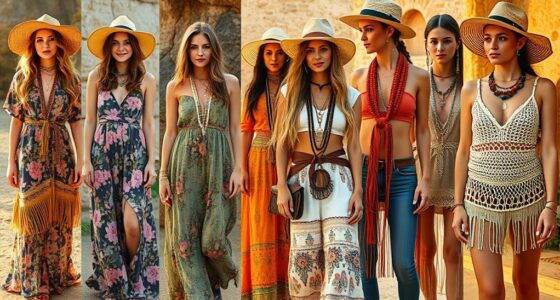
Choosing fair trade fashion in your boho wardrobe means supporting brands that prioritize fair wages, safe working conditions, and environmental responsibility. Look for certifications like Fair Trade, GOTS, or Fair Wear Foundation that verify ethical practices across the supply chain. By making informed choices, you help promote transparency, empower artisans, and reduce ecological impact. If you want to explore more ways to build an ethical boho style and make impactful purchases, stay tuned for helpful tips.
Key Takeaways
- Look for certifications like Fair Trade, GOTS, or Fair Wear Foundation to ensure ethical sourcing and fair labor practices.
- Choose brands that prioritize eco-friendly materials such as organic cotton, hemp, or recycled fabrics in their boho collections.
- Support companies committed to transparent supply chains that respect artisans and promote safe working conditions.
- Educate yourself on the brand’s sourcing practices to ensure they minimize environmental impact and promote sustainability.
- Wearing ethically certified boho fashion helps advocate for fair wages, environmental responsibility, and social justice globally.

Have you ever wondered where your clothing comes from and how it impacts the people who make it? When you shop for fashion, especially boho styles that emphasize free spirit and natural materials, it’s easy to overlook the journey each piece has taken. Choosing ethical boho fashion means considering more than just looks; it’s about supporting sustainable sourcing and ensuring the brands you buy from hold ethical certifications. These certifications serve as proof that the company adheres to fair labor practices, environmental responsibility, and transparent supply chains.
By prioritizing brands with ethical certifications, you’re making a conscious decision to support those committed to fair wages, safe working conditions, and environmental stewardship. Certifications like Fair Trade, GOTS (Global Organic Textile Standard), and Fair Wear Foundation are more than just labels—they’re a promise that the company values people and planet equally. When you opt for clothing made with sustainable sourcing, you’re also reducing the environmental impact. Sustainable sourcing involves carefully selecting materials and production methods that conserve resources, minimize waste, and reduce pollution. This could mean choosing organic cotton, hemp, or recycled fabrics that are cultivated and processed with minimal ecological harm.
Understanding the importance of these certifications and sourcing practices empowers you as a consumer. It means your dollars go toward brands that prioritize ethical standards and environmental responsibility, rather than exploitative labor or harmful production methods. When you buy from companies with transparent supply chains, you get peace of mind knowing that every step— from raw material extraction to final stitching— aligns with your values. This is especially significant with boho fashion, which often celebrates natural and artisanal qualities. Supporting brands that emphasize sustainable sourcing respects the artisans and communities involved in creating your wardrobe, fostering a more equitable fashion industry.
Making thoughtful choices also encourages other brands to adopt sustainable and ethical practices. As more consumers demand transparency and responsibility, companies are motivated to obtain and display ethical certifications, improve their sourcing strategies, and reduce their environmental footprint. Additionally, being aware of potential regulatory compliance challenges ensures that your purchases support companies that meet legal standards. So, by choosing ethical boho fashion, you’re not just enhancing your style; you’re contributing to a movement that values fair treatment of workers and the planet. It’s about creating a positive impact with every piece you wear, turning your wardrobe into a statement of your commitment to a fairer, more sustainable world.
As an affiliate, we earn on qualifying purchases.
Frequently Asked Questions
How Can I Verify if a Brand Truly Practices Fair Trade?
You can verify if a brand practices fair trade by checking their supply chain transparency and certification standards. Look for clear information on their website about where and how their products are made. Trust brands that carry recognized certifications like Fair Trade Certified or GOTS, as these standards ensure ethical practices. Don’t hesitate to ask customer service questions about their sourcing and labor policies—transparency is key to authentic fair trade practices.
Are Fair Trade Clothes More Affordable Than Fast Fashion?
Fair trade clothes often cost more than fast fashion because of better wages and sustainable materials. For example, a fair trade cotton T-shirt might be $30, while a fast fashion one costs around $10. The key is brand transparency; some brands offer affordable options with clear ethical practices. While they may not always be cheaper, you’ll often find fair trade clothing provides better value for ethical production and quality.
Does Choosing Fair Trade Impact the Quality of Clothing?
Choosing fair trade clothing doesn’t mean sacrificing quality. You’ll find that fabric durability remains high, ensuring your clothes last longer. Additionally, color longevity is often better, so your garments stay vibrant through multiple washes. By opting for fair trade, you support ethical practices without compromising on the durability or appearance of your clothes. This way, you enjoy sustainable fashion that looks great and stands the test of time.
Can Fair Trade Fashion Be Sustainable for the Environment?
Yes, fair trade fashion can be sustainable for the environment. You help by choosing brands that prioritize sustainable dyeing processes and use eco-friendly materials like organic cotton or recycled fabrics. These practices reduce water pollution, lower carbon emissions, and minimize waste. When you support fair trade, you’re encouraging ethical production methods that protect natural resources and promote long-term environmental health, making your fashion choices more sustainable overall.
How Do Fair Trade Practices Support Local Artisans?
Fair trade practices support local artisans by promoting artisan empowerment and community development. When you choose fair trade fashion, you help guarantee artisans receive fair wages, gain access to resources, and improve their skills. This fosters economic stability and self-sufficiency within their communities. Your support helps preserve traditional craftsmanship, encourages sustainable growth, and creates a positive cycle of empowerment that benefits both artisans and their local environments.
Conclusion
By choosing fair trade fashion, you’re not just dressing stylishly—you’re joining a movement that echoes the timeless wisdom of giving back. Like the artisans whose hands craft each piece, your choices ripple outward, shaping a more just world. Remember, every garment is a story, and you hold the pen. So, embrace ethical boho fashion and become part of a legacy that’s as beautiful and enduring as the earth itself.

Born in Dubai to Pakistani parents, Aisha deeply understands Middle Eastern and South Asian luxury markets. She excels in forging strategic partnerships with top-tier luxury brands worldwide, fostering cross-cultural collaborations that enhance our global presence.