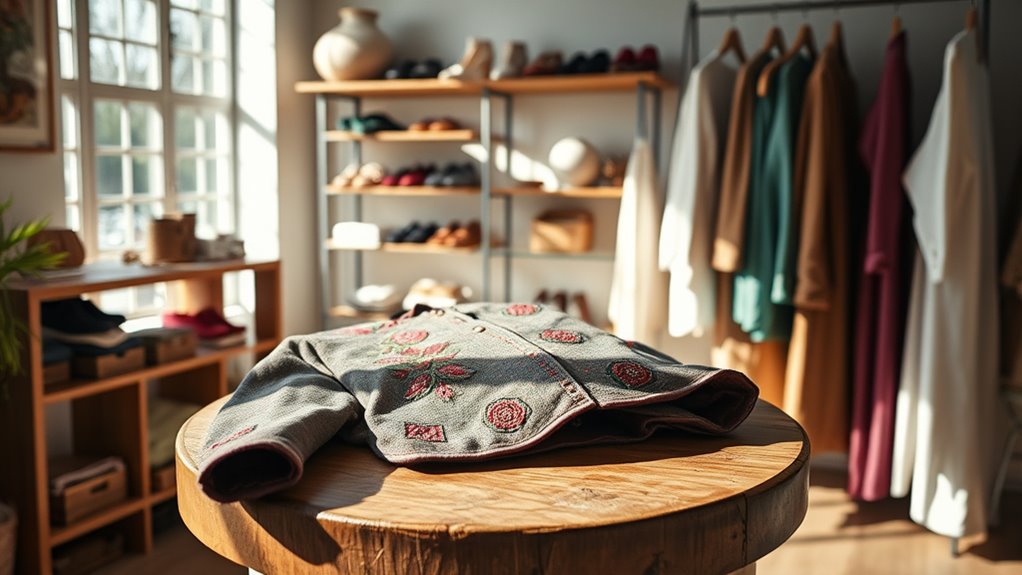

Circular fashion encourages you to adopt sustainable habits like repairing, reselling, and renting clothes. By fixing tears or replacing buttons, you extend your garments’ life and reduce waste. Reselling pre-loved items helps circulate clothing and minimizes the demand for new production. Renting allows you to enjoy trendy pieces without buying, conserving resources. These practices support a more eco-friendly wardrobe, and exploring further will show you how each choice makes a real difference.
Key Takeaways
- Circular fashion promotes extending garment life through repair, reducing waste and the need for new production.
- Resale platforms enable secondhand clothing circulation, decreasing demand for new resources and supporting sustainable consumption.
- Clothing rental services offer access to trendy, high-quality pieces without ownership, minimizing waste and resource use.
- Industry innovations focus on biodegradable fabrics, durability, and recyclability to support a circular fashion system.
- Participating in repair, resale, and rental aligns with sustainable practices, reducing environmental impact and fostering eco-friendly fashion habits.
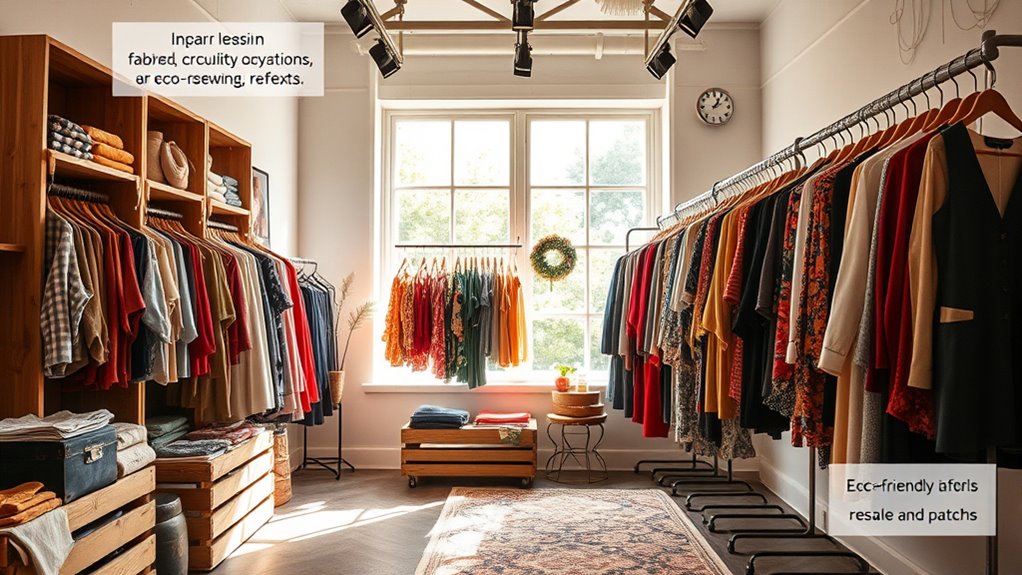
Have you ever wondered how fashion can become more sustainable? It’s a question many of us are asking as the industry faces mounting pressure to reduce its environmental impact. One way to make a difference is by embracing circular fashion, which focuses on repairing, reselling, and renting clothing rather than constantly producing new items. This approach not only extends the life of garments but also promotes a more responsible way to consume fashion. A key element behind these efforts is the use of sustainable fabrics, which are designed to lessen the ecological footprint of clothing. These fabrics can be made from organic cotton, hemp, Tencel, or recycled fibers, all of which help reduce reliance on resource-intensive materials. When you choose garments made from sustainable fabrics, you’re supporting fashion innovation that prioritizes environmental health and resource efficiency.
By repairing clothes instead of discarding them, you participate in a cycle that saves materials and minimizes waste. Repairing can be as simple as sewing up a tear or replacing worn-out buttons, but it can also involve professional refurbishment for more damaged pieces. When you take the time to repair your clothing, you’re extending its usefulness and avoiding the environmental costs of manufacturing new garments. Many brands now offer repair services or provide guidance on how to mend items at home, making it easier for you to contribute to this sustainable practice. Resale platforms further support circular fashion by giving your pre-loved items a second life. Selling or buying secondhand clothes reduces demand for new production, lowering the overall environmental impact. It also fosters a community of conscious consumers who value quality over quantity. Renting clothes is another innovative solution that allows you to enjoy current fashion trends without the guilt of fast fashion’s wastefulness. Instead of buying a new outfit for each occasion, you can rent high-quality pieces that are carefully maintained and shared among many users. This model minimizes waste, conserves resources, and promotes a shift toward more thoughtful consumption.
All these practices are driven by ongoing fashion innovation, which continuously seeks smarter, more sustainable ways to produce and enjoy clothing. From developing biodegradable fabrics to designing for durability and recyclability, the industry is evolving rapidly. Your choices—opting for repair, resale, or rental—align with this movement, helping to reshape fashion into a more circular, sustainable system. Supporting sustainable fabrics is an essential part of this effort, as it encourages the industry to adopt environmentally friendly materials and practices. By making conscious decisions, you become part of a larger effort to reduce waste, conserve resources, and support brands that prioritize sustainability. Circular fashion isn’t just a trend; it’s a necessary shift toward a more responsible and innovative industry that values the planet as much as style.

Coquimbo Sewing Kit for Adults, Christmas Stocking Stuffers for Teen Girls
- Ideal Gift for Travelers and Loved Ones: Great for moms, grandmothers, teens, and travelers
- Complete Basic Sewing Tools: Includes thread, needles, scissors, and accessories
- User-Friendly Sewing Starter Kit: Suitable for beginners and professionals alike
As an affiliate, we earn on qualifying purchases.
As an affiliate, we earn on qualifying purchases.
Frequently Asked Questions
How Does Circular Fashion Impact Overall Clothing Production?
Circular fashion reduces overall clothing production by extending the clothing lifecycle and promoting sustainable manufacturing. When you choose to repair, resale, or rent clothes, you minimize demand for new items, cutting down resource use and waste. This approach encourages brands to focus on durability and eco-friendly practices, ultimately decreasing environmental impact. By participating, you help shift the industry toward a more sustainable model that values reuse over constant new production.
What Are the Environmental Benefits of Rental Fashion Services?
Imagine a closet where each piece is a story, not just waste. Rental fashion services cut your carbon footprint by reducing the need for new clothing production, saving resources, and lowering emissions. By using sustainable materials, these services help protect the environment, ensuring cleaner air and water. You contribute to a greener future, making stylish choices that minimize waste and promote responsible consumption.
How Can Consumers Ensure the Quality of Secondhand Items?
To guarantee the quality of secondhand items, you should look for quality assurance from sellers and prioritize shops that offer authenticity verification. Check detailed photos, read reviews, and ask questions about the item’s condition and history. Trust reputable platforms with clear return policies and certifications. This way, you can confidently purchase secondhand items knowing they meet your standards and are genuinely authentic.
What Are the Challenges Faced by Repair-Focused Fashion Brands?
Like a modern-day David facing Goliath, repair-focused fashion brands struggle with unpredictable supply chains, making it tough to source quality parts consistently. You might find it hard to maintain brand loyalty when customers worry about repair costs or turnaround times. Additionally, balancing eco-friendly practices with profitability is a constant challenge. These hurdles can slow growth, but your commitment to sustainability and craftsmanship keeps you fighting the good fight.
How Do Resale Platforms Authenticate Designer or Luxury Items?
You can verify designer or luxury items on resale platforms through various authentication methods, such as expert inspections, detailed photos, and serial number checks. These platforms often use technology like AI and blockchain for counterfeit prevention, ensuring authenticity. By trusting reputable resale sites that prioritize rigorous authentication, you reduce the risk of buying counterfeit products and protect your investment in high-end fashion.
Conclusion
By embracing circular fashion, you’re turning your wardrobe into a circle of sustainability, where repair, resale, and rental keep clothes alive and vibrant. Think of it as planting seeds for a greener future, where every outfit you choose helps reduce waste and conserve resources. You’re not just wearing fashion—you’re shaping a cycle of renewal that benefits everyone. So, step into this loop and become part of the change that makes the planet smile.

Born in Dubai to Pakistani parents, Aisha deeply understands Middle Eastern and South Asian luxury markets. She excels in forging strategic partnerships with top-tier luxury brands worldwide, fostering cross-cultural collaborations that enhance our global presence.