
Did you know rubies and sapphires form deep in Earth’s crust over millions of years under intense heat and pressure? Rarity and regional sources like Myanmar, Kashmir, and Burma considerably influence their value, with untreated stones fetching higher prices. They’re incredibly durable, but treatments like heat can impact worth. Market trends shift due to supply disruptions and discoveries. Want to uncover more surprising facts about these stunning gems? Keep exploring to learn the full story.
Key Takeaways
- Both rubies and sapphires are varieties of corundum, formed over millions of years deep within Earth’s crust under intense heat and pressure.
- The vibrant red of rubies is caused by traces of chromium, while sapphires can display a spectrum of colors depending on trace elements.
- High-quality rubies from Myanmar and sapphires from Kashmir or Burma are among the most valuable due to their rarity and desirability.
- Treatments like heat or dyeing can enhance gemstone appearance but may affect long-term value; untreated stones are more prized.
- The market value of rubies and sapphires fluctuates based on supply, regional deposits, geopolitical factors, and new gemstone discoveries.
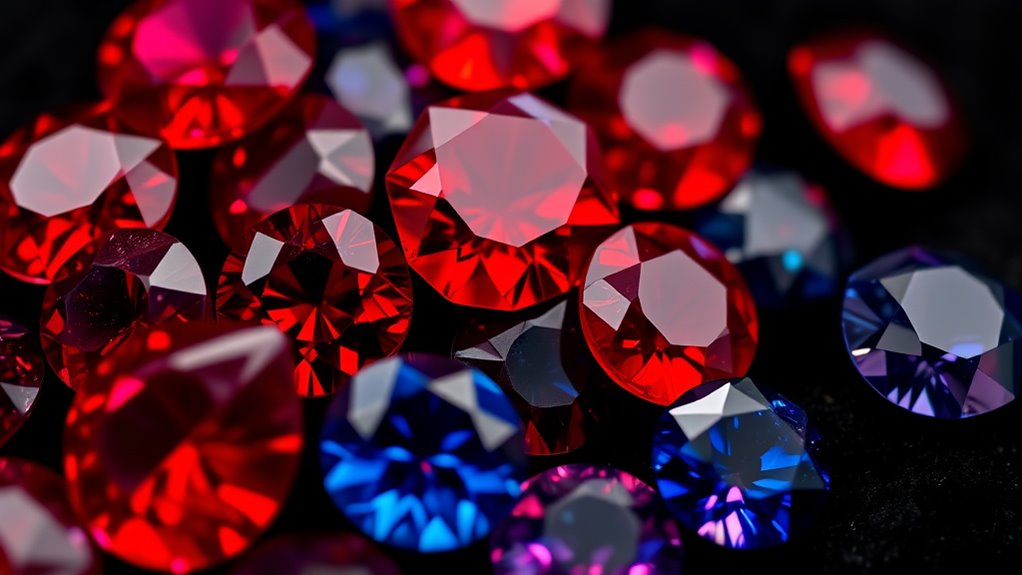
Rubies and sapphires are among the most cherished gemstones, but many people don’t realize just how fascinating their origins and characteristics truly are. When you explore gemstone formation, you’ll discover that both rubies and sapphires are varieties of corundum, a mineral that forms deep within the Earth’s crust under intense heat and pressure. This process can take millions of years, during which aluminum oxide crystals develop slowly, often in volcanic rocks or metamorphic environments. The specific conditions during gemstone formation influence the color, clarity, and overall quality of each stone. For example, rubies owe their vibrant red hue to traces of chromium, while sapphires can appear in a rainbow of colors depending on the trace elements present. Understanding gemstone formation helps you appreciate why these stones are so unique and valuable.
As you explore the market, you’ll notice that market value trends for rubies and sapphires fluctuate based on factors like rarity, size, color intensity, and clarity. Historically, high-quality rubies with deep, vivid red color and minimal inclusions fetch top dollar, especially those originating from regions like Myanmar. Similarly, sapphires from Kashmir or Burma tend to command premium prices, reflecting their rarity and desirability. Market value trends can shift due to supply disruptions, geopolitical factors, or new discoveries. For instance, when a significant deposit is found or when synthetic versions flood the market, prices can dip temporarily, but natural, untreated stones often maintain or increase their worth over time. It’s important to stay informed about these trends if you’re considering investing in or purchasing these gemstones.
The formation process also influences the gemstone’s durability and how well it withstands wear. Rubies and sapphires rank high on the Mohs scale of hardness, making them ideal for jewelry that lasts generations. Yet, their market value trends can be affected by treatments—such as heat treatment or dyeing—that enhance appearance but may impact long-term worth. When buying, you should always verify whether a gemstone has undergone any enhancements, as untreated stones generally command higher prices.

GEMHUB Untreated Raw Rough Ruby 23.00 Ct. Certified Uncut Healing Crystal Natural Red Ruby Gem
- Gemstone Type: Natural untreated raw ruby
- Color: Pink to blood-red hue
- Carat Weight: 23.00 Ct.
As an affiliate, we earn on qualifying purchases.
As an affiliate, we earn on qualifying purchases.
Frequently Asked Questions
Are Rubies or Sapphires More Valuable Historically?
You might wonder whether rubies or sapphires hold more value historically. Historically, rubies often surpass sapphires in cultural value due to their association with power, passion, and vigor. Their historical significance in royal jewelry and symbolism of wealth made them more prized. Sapphires, while also valuable, are often linked to wisdom and protection, but rubies tend to have greater cultural and monetary importance across different eras.
Can Heat Treatment Affect a Ruby’S or Sapphire’S Value?
Heat treatment can notably affect a ruby’s or sapphire’s value. This common gemstone enhancement improves color and clarity, making the stone more attractive. However, it’s essential to know that untreated stones often hold higher value, as collectors prefer natural gems. If you’re buying or selling, understanding how heat treatment impacts value preservation helps you make informed decisions and ensures transparency in the gemstone’s quality.
Do Synthetic Rubies and Sapphires Have the Same Qualities?
Your curiosity is a diamond in the rough! Synthetic rubies and sapphires can look and feel just like natural stones, but they differ in origin—lab-grown vs natural. While they share similar qualities, lab-grown gemstones often have fewer imperfections and are more affordable. Gemstone enhancement techniques may be used on both, but synthetic stones usually undergo less treatment. So, their beauty and durability are comparable, but their value and origin set them apart.
Which Region Produces the Rarest Colored Sapphires?
You might find that the rarest colored sapphires come from regions with unique geological conditions, making regional mining vital. Specifically, the Kashmir region produces some of the most geographically rare sapphires, known for their striking deep blue hue. This geographical rarity adds to their value. So, when you’re seeking rare sapphires, consider regional mining locations like Kashmir, Madagascar, or Sri Lanka, which are renowned for their exceptional, highly sought-after sapphires.
How Can I Distinguish a Natural Gemstone From a Fake?
Identifying a natural gemstone is like spotting a genuine diamond among imitations. You should look for signs like high diamond clarity, which means few inclusions, and check gemstone fluorescence under UV light—natural stones often glow uniquely. Use a jeweler’s loupe or ask a professional for testing. Fake gems usually lack these authentic traits, so trusting expert verification is your safest bet to distinguish real from counterfeit.
Conclusion
Now that you’ve learned these surprising facts about rubies and sapphires, isn’t it fascinating how much history, science, and mystery are woven into these gemstones? From their unique origins to the incredible ways they’re valued, there’s always more to discover. So next time you see one, will you see just a beautiful stone or a treasure full of stories waiting to be uncovered? Keep exploring — gemstones have endless surprises in store.

Emma is a culinary expert from New York City, USA, with extensive experience in gourmet cooking and food journalism. She collaborates with prestigious food publications and high-end restaurants, bringing exquisite taste and culinary insights to the A Luxury Lifestyle platform. Emma’s expertise elevates our gastronomic offerings.