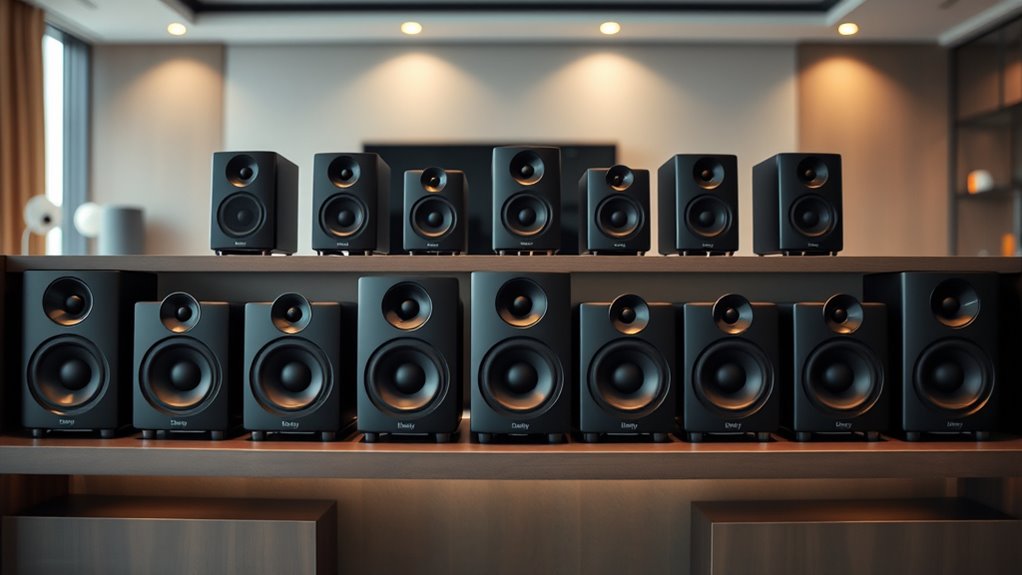

For a traditional home theater, the Klipsch Reference Cinema 5.1.4 is my best overall pick because it brings a complete speaker layout with dedicated height channels. The ELAC Debut 2.0 A4.2 and Polk Monitor XT90 stand out for buyers who already have compatible speakers and want to add up-firing height effects. The main choice is between a full system, add-on modules that depend on your existing setup, and all-in-one wireless options such as the Sonos Era 300. Room shape, ceiling height, receiver support, and willingness to run speaker wire all affect how convincing Atmos sounds. Read on for the full breakdown and a pick matched to your setup.

Get your wardrobe favorites delivered free with Prime
- Fast, free delivery on millions of items
- Prime Video, Amazon Music and more included
- Member-only deals all year
Key Takeaways
- The Klipsch Reference Cinema 5.1.4 is the most complete home theater route. It includes a multi-speaker layout with four height channels, while the add-on modules require a compatible system around them.
- Up-firing modules make sense only when the room can return their sound to the listening area. ELAC, Polk, Sony, and several Klipsch options depend on suitable ceiling conditions for reflected height effects.
- Atmos products here are not interchangeable. This list ranges from single pairs and a four-pack to soundbars, a wireless smart speaker, and complete surround systems.
- Ease of setup comes with layout tradeoffs. TCL and ULTIMEA soundbar systems bundle more of the system, while component speakers give a receiver-based setup more control over placement and upgrades.
- Klipsch offers several distinct upgrade paths, not one universal winner. The RP-140SA and RP-500SA sit in its Reference Premiere line, while R-40SA and R-41SA options target different package sizes and system needs.
| ELAC Debut 2.0 A4.2 Dolby Atmos Module Speakers, Black (Pair) |  | Best for Matching ELAC Systems | Driver type: Concentric driver | Tweeter: 0.5-inch polymer | Woofer: 4-inch aramid fiber | VIEW ON AMAZON | See Our Full Breakdown |
| Klipsch RP-140SA Dolby Atmos Elevation Speaker |  | Best for Flexible Placement | Model: RP-140SA | Speaker type: Dolby Atmos elevation speaker | Speaker size: 4 inches | VIEW ON AMAZON | See Our Full Breakdown |
| Klipsch Reference Cinema 5.1.4 Dolby Atmos System |  | Best Complete Atmos Home Theater | Audio channels: 5.1.4 | Speaker type: Satellite | Number of items: 6 | VIEW ON AMAZON | See Our Full Breakdown |
| Klipsch Reference Next Generation R-40SA Dolby Atmos Surround Speaker Pair |  | Best for Detailed Height Effects | Package: 2 speakers (pair) | Speaker type: Dolby Atmos-enabled surround speaker | Horn: 90° × 90° Tractrix | VIEW ON AMAZON | See Our Full Breakdown |
| TCL S65K 5.1-Channel Soundbar System with Dolby Atmos and Wireless Surround Speakers |  | Best Beginner-Friendly Atmos System | Audio channels: 5.1 | Maximum output power: 630 watts | Subwoofer driver: 6.5 inches | VIEW ON AMAZON | See Our Full Breakdown |
| Polk Audio Monitor XT90 Height Speaker Pair, Midnight Black |  | Best for Polk System Expansion | Speaker type: Height module | Quantity: 2 speakers | Woofer diameter: 4 inches | VIEW ON AMAZON | See Our Full Breakdown |
| Sonos Era 300 Wireless Smart Speaker with Dolby Atmos – Black |  | Best for Wireless Atmos Music | Drivers: Six | Connectivity: Wi-Fi, Bluetooth, auxiliary | Supported audio format: Dolby Atmos | VIEW ON AMAZON | See Our Full Breakdown |
| Klipsch RP-500SA Dolby Atmos Surround Speakers, Pair, Ebony |  | Best for Flexible Elevation Placement | Quantity: Pair | Tweeter: 1-inch titanium LTS vented tweeter with hybrid Tractrix horn | Woofer: 5.25-inch spun copper Cerametallic | VIEW ON AMAZON | See Our Full Breakdown |
| ULTIMEA Poseidon M60 5.1-Channel Dolby Atmos Soundbar System |  | Best for Simple TV Home Theater | Audio output: 5.1-channel surround sound | Audio encoding: Dolby Atmos | Peak power: 300W | VIEW ON AMAZON | See Our Full Breakdown |
| ULTIMEA 7.1ch Dolby Atmos Surround Sound System for TV with 4 Surround Speakers and Subwoofer |  | Best for Expanded Surround Coverage | Audio output mode: 7.1-channel surround | Speaker type: Dolby Atmos soundbar system with subwoofer | Surround speakers: Four, with wireless rear speakers | VIEW ON AMAZON | See Our Full Breakdown |
| Klipsch R-41SA Dolby Atmos Home Speakers, Pair, Black |  | Best for Flexible Placement | Quantity: 2 speakers | Tweeter: 1-inch aluminum LTS | Woofer: 4-inch spun copper IMG | VIEW ON AMAZON | See Our Full Breakdown |
| Sony SS-CSEM2 Dolby Atmos Enabled Upfiring Height Speakers (Pair) |  | Best for Matching a Sony System | Quantity: Pair | Speaker type: Dolby Atmos enabled upfiring height speakers | Driver: 3.94-inch full-range | VIEW ON AMAZON | See Our Full Breakdown |
| Klipsch Reference R-41SA Dolby Atmos Elevation Speakers, 4-Pack |  | Best for Front-and-Rear Height Effects | Quantity: 4 speakers (2 pairs) | Tweeter: 1-inch aluminum LTS | Woofer: 4-inch spun-copper IMG | VIEW ON AMAZON | See Our Full Breakdown |
| dolby atmos speaker | Connectivity | Mounting |
|---|---|---|
| ELAC Debut 2.0 A4.2 Dolby Atmo | — | — |
| Klipsch RP-140SA Dolby Atmos E | Wired | Floor or shelf |
| Klipsch Reference Cinema 5.1.4 | Wired; RCA | Wall mount |
| Klipsch Reference Next Generat | — | — |
| TCL S65K 5.1-Channel Soundbar | Bluetooth, USB, Wi-Fi, HDMI, wireless | Wall mount |
| Polk Audio Monitor XT90 Height | — | Wall mount or speaker-top placement |
| Sonos Era 300 Wireless Smart S | Wi-Fi, Bluetooth, auxiliary | — |
| Klipsch RP-500SA Dolby Atmos S | Wired | Wall mount with keyhole mounting |
| ULTIMEA Poseidon M60 5.1-Chann | HDMI eARC, optical, Bluetooth 5.4 | — |
| ULTIMEA 7.1ch Dolby Atmos Surr | — | Tabletop or wall mount |
| Klipsch R-41SA Dolby Atmos Hom | Single gold-plated binding posts | Wall mount |
| Sony SS-CSEM2 Dolby Atmos Enab | — | Wall-mountable |
| Klipsch Reference R-41SA Dolby | Wired; no wireless connection | — |
More Details on Our Top Picks
ELAC Debut 2.0 A4.2 Dolby Atmos Module Speakers, Black (Pair)
The ELAC Debut 2.0 A4.2 is a focused way to add height effects to an existing home theater, especially one built around compatible ELAC speakers. Its concentric driver combines a polymer tweeter with a 4-inch aramid-fiber woofer, a design intended to keep sound coherent as it reaches the listening area. Unlike the Klipsch Reference Cinema 5.1.4, which bundles a full surround system, this is a pair of add-on modules, so you can upgrade a system you already own without replacing its other speakers. That flexibility comes with a clear limit: the A4.2 is not a standalone speaker and needs a compatible Dolby Atmos receiver or processor. Setup may also take extra care to get the height effect right. It suits a planned home theater upgrade more than a simple plug-and-play TV audio fix.
Pros:- Adds Dolby Atmos height effects to a compatible home theater
- Concentric driver is designed for smooth, coherent audio response
- Aramid-fiber woofer offers stiffness and damping
- Sold as a pair for adding a matched height-speaker layer
Cons:- Requires a compatible Dolby Atmos receiver or processor
- Designed as add-on speakers rather than a complete or standalone system
- May need careful or professional setup for effective height effects
Best for: Home theater owners with compatible ELAC speakers and an Atmos-ready receiver who want to add height effects incrementally
Not ideal for: Shoppers building a complete system from scratch or anyone without a compatible Atmos receiver, since these modules cannot work as standalone speakers
- Driver type:Concentric driver
- Tweeter:0.5-inch polymer
- Woofer:4-inch aramid fiber
- Package:Pair
- Color:Black
- Speaker role:Dolby Atmos add-on module
Our verdict“Choose the ELAC A4.2 if you want to expand a compatible home theater with a matched pair of Atmos modules and already have the required receiver.”
Klipsch RP-140SA Dolby Atmos Elevation Speaker
The Klipsch RP-140SA is an elevation speaker for adding Atmos effects to a home theater with compatible floor-standing or bookshelf speakers. Its floor or shelf mounting gives it placement options that a dedicated surround bundle such as the Klipsch Reference Cinema 5.1.4 does not need to leave open: you can add this speaker to an existing setup instead of buying a full system. The listed 4-inch driver and 8-ohm impedance give buyers useful compatibility details, though the supplied data does not specify a matched pair or a complete channel configuration. It is a wired speaker, so placement still depends on routing cable neatly. Choose it when you want an incremental Klipsch home theater upgrade and can confirm your receiver and speaker layout support it; skip it if you expect a self-contained Atmos solution.
Pros:- Adds Dolby Atmos effects to a compatible home theater
- Works with compatible floor-standing or bookshelf speakers
- Supports floor or shelf mounting
- Listed 8-ohm impedance helps buyers check system compatibility
Cons:- Wired connection requires planning for speaker cable
- Requires a compatible home theater setup
- Supplied product data does not specify a complete system or channel configuration
Best for: Home theater owners with compatible Klipsch floor-standing or bookshelf speakers who want a flexible floor or shelf placement option
Not ideal for: Buyers looking for wireless surround sound or an all-in-one Atmos system, since this is a wired elevation speaker
- Model:RP-140SA
- Speaker type:Dolby Atmos elevation speaker
- Speaker size:4 inches
- Impedance:8 ohms
- Audio channels:1
- Connectivity:Wired
- Mounting:Floor or shelf
- Dimensions:6 × 11.3 × 7 inches
- Color:Black
Our verdict“Pick the RP-140SA if your compatible home theater needs a Klipsch elevation speaker with floor or shelf placement flexibility.”
Klipsch Reference Cinema 5.1.4 Dolby Atmos System
For buyers who want the whole surround layout in one package, the Klipsch Reference Cinema 5.1.4 makes a stronger starting point than add-on pairs such as the ELAC Debut 2.0 A4.2. Its 5.1.4 configuration includes four Atmos satellite speakers for front and rear height effects, so the central appeal is a ready-made multichannel home theater rather than a single upgrade component. Klipsch’s Tractrix horn technology and aluminum tweeters are intended to preserve high-frequency detail, while the included subwoofer has an all-digital amplifier. The tradeoff is a larger, wired system that requires room for its speakers and cable runs; it also has no wireless capability. This pick fits buyers prepared to build a dedicated home theater around a complete surround package, not listeners seeking a compact or cable-light setup.
Pros:- 5.1.4 channel layout includes four speakers for height effects
- Bundles a complete multichannel home theater system
- Tractrix horn technology and aluminum tweeters are designed for high-frequency detail
- Subwoofer uses an all-digital amplifier
Cons:- Wired connectivity means planning several cable runs
- Large system may be difficult to fit in a small room
- No wireless capability
Best for: Home theater builders who want a bundled 5.1.4 speaker layout with front and rear Atmos height effects
Not ideal for: Buyers with limited space or those who want wireless speakers and minimal cable routing
- Audio channels:5.1.4
- Speaker type:Satellite
- Number of items:6
- Maximum output power:300 watts
- Speaker size:5.25 inches
- Subwoofer diameter:4 inches
- Connectivity:Wired; RCA
- Mounting:Wall mount
- Wireless:No
Our verdict“Choose the Reference Cinema 5.1.4 if you want a bundled wired home theater system with four Atmos height speakers.”
Klipsch Reference Next Generation R-40SA Dolby Atmos Surround Speaker Pair
The Klipsch R-40SA pair focuses on adding overhead detail to a home theater, with a 90° × 90° Tractrix horn, aluminum tweeters, and spun-copper woofers. That combination gives this pair a distinct role beside the Klipsch RP-140SA: the R-40SA product data highlights its horn and driver materials, while the RP-140SA listing gives explicit floor and shelf mounting options. As a pair of Atmos-enabled surround speakers, the R-40SA is intended to expand a compatible system rather than replace it. Its 12.7-inch depth and 7-inch height also call for placement space, so it may be awkward in a small room. Buyers should confirm compatibility with their home theater before choosing; this option makes the most sense when speaker detail and a two-speaker height layer matter more than compact size.
Pros:- Pair adds Dolby Atmos overhead effects to a compatible setup
- 90° × 90° Tractrix horn is designed for directed sound
- Aluminum tweeters and spun-copper woofers are specified
- MDF cabinet has a modern appearance
Cons:- Requires a compatible home theater setup
- Cabinet depth may challenge placement in smaller rooms
- Supplied specs do not list impedance or driver dimensions
Best for: Home theater owners seeking a pair of Atmos-enabled speakers with horn-loaded tweeters and room for larger cabinets
Not ideal for: Small-room buyers or anyone seeking a complete sound system without existing compatible home theater equipment
- Package:2 speakers (pair)
- Speaker type:Dolby Atmos-enabled surround speaker
- Horn:90° × 90° Tractrix
- Tweeter:Aluminum
- Woofer:Spun copper
- Dimensions:7 × 5.75 × 12.7 inches
- Cabinet material:MDF
Our verdict“Choose the R-40SA pair if you have a compatible home theater and want a dedicated height layer with Klipsch horn and driver details.”
TCL S65K 5.1-Channel Soundbar System with Dolby Atmos and Wireless Surround Speakers
The TCL S65K offers a simpler route into room-filling home theater sound than separate elevation speakers such as the Klipsch RP-140SA. It combines a 5.1-channel soundbar system with Dolby Atmos and DTS:X, wireless surround speakers, and a wireless subwoofer, reducing the speaker-cable work associated with a conventional wired setup. AI Sonic room calibration is designed to adapt the sound to the space, while a built-in center channel supports dialogue clarity. It also connects by HDMI eARC and supports Bluetooth streaming. The tradeoff is less flexibility than building a receiver-based system from separate speakers, and ChoruSound requires a compatible TCL TV. Buyers who want an easier, bundled TV upgrade may prefer it to standalone Atmos modules; enthusiasts planning a custom 5.1.4 layout should look at a component system instead.
Pros:- Combines Dolby Atmos and DTS:X in a 5.1-channel system
- Wireless surround speakers and subwoofer reduce cable clutter
- AI Sonic calibration adapts sound to the room
- HDMI eARC and Bluetooth support TV and music connections
Cons:- Requires corded electric power
- ChoruSound requires a compatible TCL TV
- Less suited to buyers who want to build a custom receiver-based speaker layout
Best for: TV owners who want a bundled Atmos soundbar, wireless surrounds, and simpler setup for home theater listening
Not ideal for: Home theater enthusiasts who want a receiver-based 5.1.4 speaker layout or shoppers who need ChoruSound without a compatible TCL TV
- Audio channels:5.1
- Maximum output power:630 watts
- Subwoofer driver:6.5 inches
- Connectivity:Bluetooth, USB, Wi-Fi, HDMI, wireless
- Power source:Corded electric
- Mounting:Wall mount
- Control method:Remote
- Surround speakers:Wireless
- Room calibration:AI Sonic
Our verdict“Pick the TCL S65K if you want an easier bundled Atmos home theater upgrade with wireless surrounds and room calibration.”
Polk Audio Monitor XT90 Height Speaker Pair, Midnight Black
The Monitor XT90 makes the most sense for a buyer who already has compatible Polk speakers and wants to add height effects without replacing the home theater system. Its compact wood enclosures can sit atop compatible Polk speakers or mount on a wall, giving it more placement flexibility than the Klipsch RP-500SA, whose reflected Atmos effect depends on a suitable ceiling. Polk also specifies Dolby Atmos, DTS:X, and DTS Virtual:X support, plus compatibility with 4- and 8-ohm amplifiers, so it can fit a range of receiver setups. The tradeoff is that these are height modules, not a self-contained Atmos system: the stated ceiling-channel use needs an AV receiver with at least seven channels. I’d choose the XT90 for a matched Polk setup, but buyers building from scratch should compare complete systems instead.
Pros:- Supports Dolby Atmos, DTS:X, and DTS Virtual:X content.
- Can sit on compatible Polk speakers or mount on a wall.
- Works with 4- and 8-ohm amplifiers.
- Timbre matched to Polk Monitor XT speakers for consistent system sound.
Cons:- Requires an AV receiver with at least seven channels for the described ceiling-channel use.
- Its value depends on having compatible speakers and a suitable surround system.
- Not water resistant.
Best for: Home theater owners with compatible Polk Monitor XT speakers and a multichannel AV receiver who want to add height effects.
Not ideal for: Buyers seeking a standalone Atmos solution or those without a compatible receiver and speakers to complete the system.
- Speaker type:Height module
- Quantity:2 speakers
- Woofer diameter:4 inches
- Supported formats:Dolby Atmos, DTS:X, DTS Virtual:X
- Mounting:Wall mount or speaker-top placement
- Amplifier compatibility:4- and 8-ohm
- Dimensions:6 × 7 × 8 inches
- Enclosure material:Wood
Our verdict“Choose the XT90 to add matching height channels to a compatible Polk home theater, but skip it if you need a complete Atmos system.”
Sonos Era 300 Wireless Smart Speaker with Dolby Atmos – Black
The Era 300 is the most flexible pick here for listeners who want Dolby Atmos streaming in a wireless smart speaker rather than a traditional home theater build. Its six drivers are positioned to create spacious, multidirectional audio, while Wi-Fi streaming, Bluetooth, and an auxiliary input cover more listening situations than the wired Klipsch RP-500SA pair. That convenience also changes the use case: the Era 300 is a single smart speaker, not a pair of height modules for expanding a receiver-based surround system. Compared with the ULTIMEA Poseidon M60, it puts more emphasis on streaming and voice control than on a dedicated subwoofer and multichannel TV setup. I’d shortlist it for Atmos music and simple room-filling playback; buyers focused on movie surround should look at a system built for that job.
Pros:- Six drivers support spacious, multidirectional sound.
- Wi-Fi streaming, Bluetooth pairing, and auxiliary input offer varied playback options.
- Voice control supports hands-free use.
- Software updates can add ongoing feature support.
Cons:- Requires Wi-Fi for full functionality.
- Does not provide the dedicated subwoofer and surround-speaker layout of a home theater system.
- Limited color options.
Best for: Listeners who want a wireless smart speaker for Dolby Atmos music, streaming services, and voice control.
Not ideal for: Home theater builders who need dedicated rear channels, a subwoofer, or height modules integrated with an AV receiver.
- Drivers:Six
- Connectivity:Wi-Fi, Bluetooth, auxiliary
- Supported audio format:Dolby Atmos
- Features:Voice control, software updates
- Color:Black
Our verdict“Pick the Era 300 for convenient Atmos streaming and smart-speaker use, not for building a conventional multichannel home theater.”
Klipsch RP-500SA Dolby Atmos Surround Speakers, Pair, Ebony
The RP-500SA suits home theater buyers who want one pair that can handle reflected Atmos effects or serve as wall-mounted elevation or surround speakers. Its 5.25-inch spun copper woofer and horn-loaded titanium tweeter distinguish it from the smaller Polk Monitor XT90, while a switchable crossover lets owners change between Atmos and surround use. That flexibility is useful when a room’s ceiling or speaker layout makes upward reflection a poor fit. The tradeoff is that ceiling-reflected effects depend on room geometry, so the result is less predictable than a placement plan based on direct wall mounting. Unlike the ULTIMEA Poseidon M60, this is a wired speaker pair that needs the rest of a receiver-based system. I’d favor it for a configurable component theater, especially when the option to remount later matters.
Pros:- Can create overhead effects by reflecting sound off the ceiling.
- Switchable crossover supports Atmos or surround use.
- Keyhole mounts allow wall installation as elevation or surround speakers.
- Uses a 5.25-inch woofer and a horn-loaded titanium tweeter.
Cons:- Reflected Atmos performance depends on a suitable room and ceiling.
- Requires a compatible wired receiver-based system.
- Not water resistant.
Best for: Home theater owners who want a wired pair that can switch between reflected Atmos, elevation, and surround roles.
Not ideal for: Buyers in rooms with unsuitable ceilings for reflected sound or anyone looking for a self-contained soundbar system.
- Quantity:Pair
- Tweeter:1-inch titanium LTS vented tweeter with hybrid Tractrix horn
- Woofer:5.25-inch spun copper Cerametallic
- Maximum output power:75 watts
- Mounting:Wall mount with keyhole mounting
- Connectivity:Wired
- Weight:7.9 pounds
- Warranty:5 years
Our verdict“Choose the RP-500SA if you want a configurable speaker pair for a receiver-based theater and your room supports the placement you plan to use.”
ULTIMEA Poseidon M60 5.1-Channel Dolby Atmos Soundbar System
The Poseidon M60 is the straightforward home theater choice for buyers who want a single soundbar system with a subwoofer, rather than separate Atmos modules and an AV receiver. HDMI eARC supports Dolby Atmos, while VoiceMX processing targets dialogue clarity and the app provides a 10-band EQ and adjustable surround levels. Compared with the ULTIMEA 7.1ch system, the M60 uses a 5.1-channel layout and a wired subwoofer, which may appeal to buyers who prefer a simpler speaker arrangement but still want control over sound tuning. Its 300W peak output and 5.25-inch subwoofer add a dedicated bass channel; the placement cost is a wire that must reach the subwoofer. I’d put it ahead of component pairs for TV-focused setups, but not for buyers planning to build a receiver-based theater over time.
Pros:- HDMI eARC supports Dolby Atmos audio.
- VoiceMX processing is designed to improve dialogue clarity.
- App includes a 10-band EQ, 121 presets, and adjustable surround levels.
- Includes a wired wooden subwoofer with BassMX technology.
Cons:- The subwoofer connects by wire, which limits placement flexibility.
- A soundbar system offers less component-by-component upgrade flexibility than separate receiver speakers.
Best for: TV owners who want a single 5.1-channel Dolby Atmos system with app-based sound tuning and a dedicated subwoofer.
Not ideal for: Buyers who need a wireless subwoofer or want separate passive speakers for a receiver-based system.
- Audio output:5.1-channel surround sound
- Audio encoding:Dolby Atmos
- Peak power:300W
- Speaker drivers:Five built-in speakers and one wired subwoofer
- Subwoofer:5.25-inch driver, 5.3L tuned wooden cabinet
- Frequency response:45 Hz–18 kHz
- Connectivity:HDMI eARC, optical, Bluetooth 5.4
- Equalizer:10-band graphic EQ, 121 presets, 13 surround levels
Our verdict“Choose the Poseidon M60 for a tunable, subwoofer-equipped TV home theater that keeps setup simpler than separate speaker components.”
ULTIMEA 7.1ch Dolby Atmos Surround Sound System for TV with 4 Surround Speakers and Subwoofer
The ULTIMEA 7.1ch system is aimed at buyers who want a broader home theater layout without assembling separate passive speakers and a receiver. Four surround speakers and a subwoofer give it a more distributed setup than the 5.1-channel Poseidon M60, while wireless rear speakers can reduce cable runs across the room. App-based tuning adds a 10-band EQ and 121 presets, so owners can adjust sound around their room and preferences. The room guidance is a meaningful limit: the supplied data recommends spaces of 108 to 270 square feet, making this a less convincing fit for very large theaters. Full customization also relies on the app. Compared with the Sonos Era 300, this system is clearly designed around TV surround rather than flexible smart-speaker listening. I’d pick it for a dedicated, moderate-size viewing room where expanded coverage matters.
Pros:- 7.1-channel layout includes four surround speakers and a subwoofer.
- Wireless rear speakers reduce cable runs across the room.
- App offers a 10-band EQ, 121 presets, and multiple listening modes.
- Designed for home theater and projector use.
Cons:- Recommended for rooms of 108 to 270 square feet, which may limit use in larger spaces.
- Full customization requires app control.
- The subwoofer is wired.
Best for: TV and projector owners setting up a moderate-size home theater who want multiple surround speakers and wireless rear connections.
Not ideal for: People with very large listening rooms or buyers who want full sound customization without using an app.
- Audio output mode:7.1-channel surround
- Speaker type:Dolby Atmos soundbar system with subwoofer
- Surround speakers:Four, with wireless rear speakers
- Subwoofer diameter:4 inches
- Equalizer:10-band EQ, 121 presets
- Mounting:Tabletop or wall mount
- Maximum range:15 meters
- Power source:Corded electric
Our verdict“Choose this ULTIMEA system for expanded TV surround in a moderate-size room if you are comfortable tuning it through the app.”
Klipsch R-41SA Dolby Atmos Home Speakers, Pair, Black
The R-41SA pair suits home theater buyers who want height effects from speakers that can sit on compatible towers or mount on a wall. Its 90° x 90° Tractrix horn and aluminum LTS tweeter are designed for detailed sound, while the reinforced MDF cabinet helps limit vibration. Compared with the Klipsch R-41SA 4-Pack, this pair is a more focused way to add one height channel pair without committing to front and rear effects at once. The tradeoff is that these are wired passive speakers, so a compatible receiver and speaker cable are part of the setup. Their listed frequency response begins at 83 Hz, which also means buyers seeking fuller low-end impact will need other speakers or a subwoofer to handle bass.
Pros:- Can support overhead and surround effects in a home theater
- Tractrix horn and aluminum LTS tweeter are designed for detailed playback
- Can be placed on compatible speakers or wall-mounted
- Reinforced MDF cabinets with removable magnetic grilles
Cons:- Requires wired connections and compatible amplification
- A pair alone does not provide both front and rear height channels
Best for: Home theater owners with a compatible receiver who want a pair of height speakers for an incremental Atmos upgrade.
Not ideal for: Buyers seeking a wireless, powered setup or a complete front-and-rear height speaker package.
- Quantity:2 speakers
- Tweeter:1-inch aluminum LTS
- Woofer:4-inch spun copper IMG
- Horn:90° x 90° Tractrix
- Power handling:50 W continuous / 100 W peak
- Impedance:8 ohms
- Mounting:Wall mount
- Connectivity:Single gold-plated binding posts
Our verdict“Choose this pair for a flexible, receiver-based home theater upgrade when you want to add height effects without buying four speakers.”
Sony SS-CSEM2 Dolby Atmos Enabled Upfiring Height Speakers (Pair)
The SS-CSEM2 pair is aimed at Sony owners building a compact Atmos setup around the SSCS5M2 or SSCS3M2 CS speakers. Each unit uses a 3.94-inch full-range driver, and the wall-mountable design gives buyers another placement option when stacking modules on speakers is impractical. Compared with the Klipsch R-41SA pair, Sony’s stated appeal is its system match and compact full-range driver, while the Klipsch lists a dedicated horn-loaded tweeter and woofer. The supplied information does not specify power handling, impedance, or frequency response, so it is harder to judge amplifier fit and output limits from these details alone. This is a targeted add-on for a compatible Sony home theater, rather than a broadly specified choice for mixing into unrelated speaker systems.
Pros:- Designed to match specified Sony CS speakers
- Compact pair intended for Dolby Atmos height audio
- Wall-mountable for flexible placement
- Reinforced cellular cone is designed for undistorted audio
Cons:- Compatibility information names specific Sony speaker models
- Provided product data omits power handling, impedance, and frequency response
Best for: Sony SSCS5M2 or SSCS3M2 CS owners adding compact upfiring height speakers to a matched home theater.
Not ideal for: Buyers assembling a non-Sony speaker system or those who need detailed power and frequency specifications before choosing.
- Quantity:Pair
- Speaker type:Dolby Atmos enabled upfiring height speakers
- Driver:3.94-inch full-range
- Cone:Reinforced cellular cone
- Mounting:Wall-mountable
- Compatible speakers:Sony SSCS5M2 and SSCS3M2 CS speakers
Our verdict“Pick the SS-CSEM2 if you already own the specified Sony speakers and want a compact, matching route to upfiring height audio.”
Klipsch Reference R-41SA Dolby Atmos Elevation Speakers, 4-Pack
For a home theater that needs height speakers at both the front and rear, this four-speaker set gives buyers two pairs of passive R-41SA modules in one package. Each speaker combines a Tractrix horn, aluminum LTS tweeter, and 4-inch spun-copper woofer, much like the two-speaker R-41SA option, but the larger set supports a more complete height-channel layout from the start. The speakers can sit on compatible units or mount on walls; the stated keyhole mounts are not for ceiling installation. That placement and the wired design require planning, a compatible receiver or amplifier, and speaker wire. Compared with the Sony SS-CSEM2 pair, this set offers four speakers and more extensive published specifications, but it is a larger system commitment and is less tailored to a specific matched speaker family.
Pros:- Four speakers can support front and rear height effects
- Can sit on compatible speakers or mount on walls
- Horn-loaded tweeter and spun-copper woofer are designed to reduce distortion
- Compact MDF cabinets with removable magnetic grilles
Cons:- Requires a compatible receiver or amplifier and speaker wire
- Keyhole mounts are for walls, not ceilings
- Not water resistant
Best for: Home theater builders with a compatible receiver who want four wired elevation speakers for front and rear height effects.
Not ideal for: Buyers who need wireless speakers, ceiling mounts, or only one pair of height modules.
- Quantity:4 speakers (2 pairs)
- Tweeter:1-inch aluminum LTS
- Woofer:4-inch spun-copper IMG
- Horn:90° x 90° Tractrix
- Power handling:50 W continuous / 100 W peak
- Impedance:8 ohms
- Dimensions per speaker:7 x 5.75 x 13 inches
- Weight per speaker:About 6 pounds
- Connectivity:Wired; no wireless connection
Our verdict“Choose the four-pack if your receiver-based home theater needs both front and rear height speakers and you can accommodate wired wall or speaker-top placement.”
How We Picked
I ranked these options by how directly they help a buyer build or improve a Dolby Atmos listening setup. I weighed whether each product is a complete system or an add-on, how many channels or speakers it supplies, the setup demands it places on the buyer, and whether its format suits a home theater, a soundbar-based room, or standalone listening. For height modules, compatibility with an existing receiver and the room’s ability to support reflected sound matter more than a model’s Atmos label alone.
The ranking favors complete, clearly defined paths for buyers who want home theater sound, followed by flexible add-ons for owners who already have compatible gear. Bundled soundbar systems rank by their convenience and included surround components, with the understanding that they offer less component-level flexibility. Premium and compact picks serve narrower needs, so they are not ranked as universal replacements for a full surround system. Product names and listed configurations guide this comparison; the right choice still depends on the rest of the buyer’s equipment and room.
| dolby atmos speaker | Mounting |
|---|---|
| ELAC Debut 2.0 A4.2 Dolby Atmo | — |
| Klipsch RP-140SA Dolby Atmos E | Floor or shelf |
| Klipsch Reference Cinema 5.1.4 | Wall mount |
| Klipsch Reference Next Generat | — |
| TCL S65K 5.1-Channel Soundbar | Wall mount |
| Polk Audio Monitor XT90 Height | Wall mount or speaker-top placement |
| Sonos Era 300 Wireless Smart S | — |
| Klipsch RP-500SA Dolby Atmos S | Wall mount with keyhole mounting |
| ULTIMEA Poseidon M60 5.1-Chann | — |
| ULTIMEA 7.1ch Dolby Atmos Surr | Tabletop or wall mount |
| Klipsch R-41SA Dolby Atmos Hom | Wall mount |
| Sony SS-CSEM2 Dolby Atmos Enab | Wall-mountable |
| Klipsch Reference R-41SA Dolby | — |
Factors to Consider When Choosing Dolby Atmos Speakers
Before choosing a Dolby Atmos speaker, decide what role it will play in your room. The name alone does not tell you whether you are buying a pair of height modules, a full surround package, or a wireless speaker that handles Atmos content in its own way. These checks can help narrow the options before you commit to a system layout.
Match the product to the system you already own
Start with the equipment, not the speaker listing: check whether you have an AV receiver, a soundbar, or neither. Passive height modules such as the ELAC, Polk, Sony, and Klipsch pairs need a compatible amplification and channel setup; they do not create a complete Atmos system by themselves. A soundbar package follows its own compatibility path and may limit later changes to the included components. Wireless speakers simplify placement in some setups, though they may use a different ecosystem and connection method. Write down your receiver model and supported speaker layout before shopping. This avoids buying a pair that your system cannot assign to height channels.
Choose reflected or overhead placement for your room
Up-firing modules bounce sound off the ceiling, so the result depends on the room above your listening position. A flat, reflective ceiling and a clear path between speaker and ceiling generally suit that approach better than a highly angled, open, or heavily treated surface. Direct overhead speakers can provide a more controlled placement, but installation may mean extra wiring and mounting work. Room dimensions and seating position matter too: a wide seating area can make reflected effects less consistent across seats. Measure the listening area and note obstacles before choosing. Do not assume every Atmos-branded option creates the same sense of height.
Count the channels you need before comparing packages
A system’s channel layout describes how many speaker positions it can address, including height channels, and it can be more useful than a broad Atmos label. A 5.1.4 package and a 5.1-channel soundbar system are different propositions for placement, coverage, and upgrade plans. Check the receiver’s supported layout and whether the listed speakers are included or sold separately. Buyers focused on a dedicated theater may value separate surround and height speakers; buyers who want a simpler TV setup may prefer a bundled bar. Extra channels also mean more placement decisions and, in many systems, more cable runs. Select a layout that fits both the room and the equipment you intend to keep.
Decide how much setup work you will accept
Component speakers can let you shape the system around the room, but they ask you to plan placement, wire, amplification, and calibration. A bundled soundbar system reduces the number of separate purchases and setup decisions, though the included layout may offer fewer ways to change the system later. Wireless designs can cut some cable runs, but they still need power and may depend on a particular app or platform. Think about where the subwoofer and surround speakers can actually sit before choosing a package. If the room is shared or difficult to wire, convenience may matter more than the flexibility of separate components. If you enjoy building around a receiver, modular speakers may suit you better.
Spend more for a clear system benefit
Pay more when a higher-tier option solves a real need, such as a more complete channel layout, a system that better fits your room, or an upgrade path that works with gear you already own. A premium badge alone cannot fix a ceiling that reflects sound poorly or a receiver that lacks the needed channels. Conversely, a lower-complexity package may be a sensible choice when the goal is a straightforward TV setup rather than a component-based theater. Compare what is included, what else must be purchased, and what your current system can support. Include cabling, mounting, and setup effort in your decision, not just the speaker count. That gives you a clearer picture of the actual system you are building.
Frequently Asked Questions
Can I add an Atmos speaker pair to my existing home theater receiver?
Often, but the receiver must support Dolby Atmos and have available amplified channels for the added speakers. Check its supported layouts, speaker terminals, and setup menu before choosing a pair. Also confirm whether the modules are intended for up-firing placement or direct height placement, since those routes involve different room and installation requirements. A speaker pair alone will not add Atmos decoding or create a height channel if the receiver cannot process one. If your receiver is already at its channel limit, a complete system or a different upgrade may make more sense.
Will up-firing Atmos modules work with a vaulted or high ceiling?
They may produce weaker or less focused height effects when the ceiling is too high, angled, or open above the listening area. Up-firing models rely on sound reflecting from the ceiling, so the ceiling’s shape and surface affect what reaches the seats. Check the speaker maker’s placement guidance against your room dimensions before buying. If the ceiling does not suit reflected sound, consider a system with direct height speakers or another Atmos layout that fits the room. A product’s Atmos label cannot overcome an unsuitable reflection path.
Should I buy a complete Atmos system or add height speakers to my current setup?
An add-on pair is usually the more direct route when you already own a compatible receiver and a well-matched surround system. It can preserve your existing investment, but you need to confirm channel support, placement, and whether the speakers suit your room. A complete package such as a surround system or soundbar makes sense when you are starting from scratch or want fewer separate purchases. Bundles can limit later speaker choices, while receiver-based systems require more setup work. Compare the total layout and required equipment rather than counting only the Atmos-branded speakers.
Is a Dolby Atmos soundbar a good choice for a small living room?
A soundbar system can suit a small room when you want fewer separate components and a simpler TV-focused setup. Check where its surround speakers and subwoofer need to sit, since a compact room can still have placement constraints. A wireless smart speaker such as the Sonos Era 300 serves a different role from a multi-speaker home theater package, so decide whether you want room-filling TV surround or a standalone music speaker. Soundbars also offer less freedom to reposition individual channels than a receiver-based setup. Choose based on the listening area and how much system expansion you expect.
Do I need four height speakers, or is a pair enough?
A pair can add height effects to a compatible layout and may be a practical first step when you are upgrading an existing system. Four height channels can support a more complete overhead layout, but they require a receiver that can process and power that configuration plus suitable placement in the room. The added channels bring more wiring and setup work, so they are not automatically the right choice for every space. Consider how many seats you want to cover and whether your equipment supports the extra channels. A properly matched pair can be a better fit than a four-speaker setup that your room or receiver cannot support.
Conclusion
For a dedicated home theater and a complete height-channel package, I would start with the Klipsch Reference Cinema 5.1.4 as the best overall pick. For best value within an existing receiver-based system, compare the ELAC Debut 2.0 A4.2 and Polk Monitor XT90 against your room and channel support before choosing. Buyers seeking a premium component route can look at the Klipsch RP-500SA or RP-140SA, while the TCL S65K is a more approachable bundled option for beginners who want a soundbar-centered setup. Choose the Sonos Era 300 for a standalone wireless listening role, or one of the four-speaker ULTIMEA systems when bundled surround components fit your TV room better than separate receiver-based speakers. The best choice is the one whose layout, connections, and placement work with the room and gear you actually have.